Loading...
Done
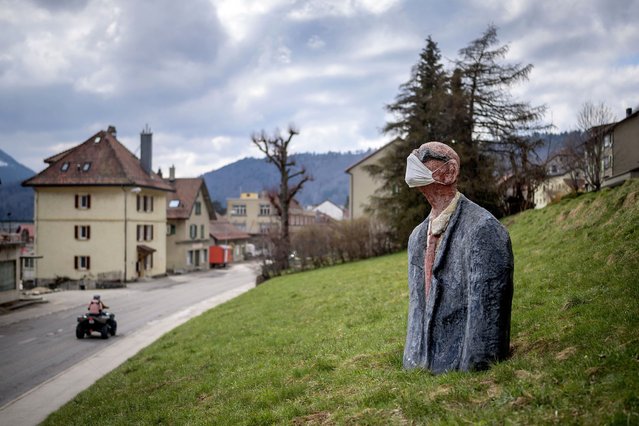
A picture taken on April 18, 2020 in Sainte-Croix shows a scultpure representing a man wearing a facemask as a preventive measure against the Covid-19 coronavirus in a field. (Photo by Fabrice Coffrini/AFP Photo)

A picture taken on April 18, 2020 in Sainte-Croix shows a scultpure representing a man wearing a facemask as a preventive measure against the Covid-19 coronavirus in a field. (Photo by Fabrice Coffrini/AFP Photo)
Details
02 May 2021 08:21:00
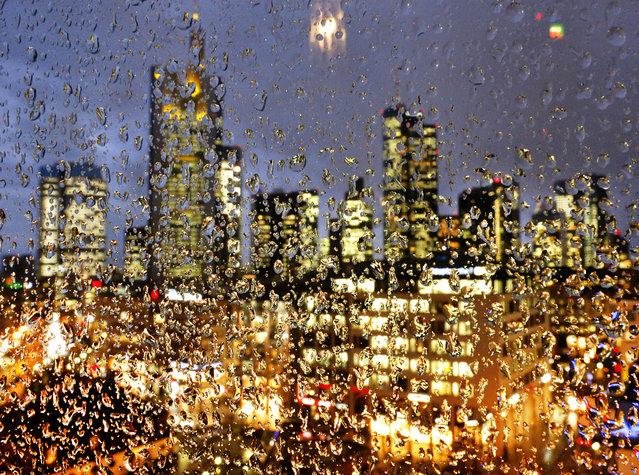
The buildings of the banking district are seen through thousands of rain drops on a glass railing in central Frankfurt, Germany, Wednesday, January 11, 2017. (Photo by Michael Probst/AP Photo)

The buildings of the banking district are seen through thousands of rain drops on a glass railing in central Frankfurt, Germany, Wednesday, January 11, 2017. (Photo by Michael Probst/AP Photo)
Details
27 Mar 2018 00:01:00
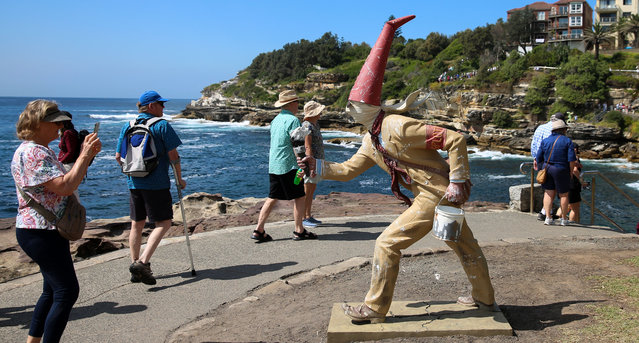
Visitors pass an exhibit for Sculpture by the Sea, along the coastal walk from Bondi to Tamarama in Sydney, Australia on October 24, 2025. The annual event is Australia’s largest annual outdoor sculpture exhibition. (Photo by Xinhua News Agency/Rex Features/Shutterstock)

Visitors pass an exhibit for Sculpture by the Sea, along the coastal walk from Bondi to Tamarama in Sydney, Australia on October 24, 2025. The annual event is Australia’s largest annual outdoor sculpture exhibition. (Photo by Xinhua News Agency/Rex Features/Shutterstock)
Details
29 Nov 2025 06:33:00
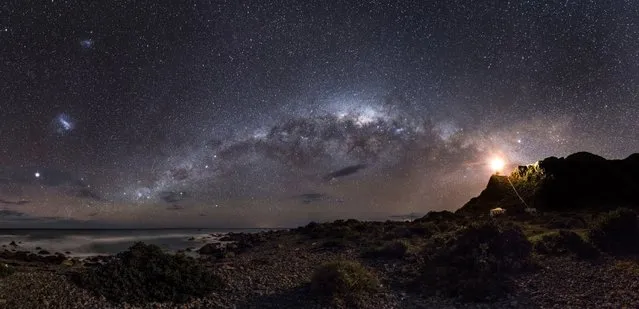
Astronomy Photographer Of The Year 2013 Part2

The Royal Observatory just announced its Astronomy Photographer Of The Year 2013 winners. Australian photographer Mark Gee was chosen among a thousand amateur and professional photographers around the globe to win the top title. His work is part of an exhibition of the winning photographers, which opened on Sept. 19 at the Royal Observatory Greenwich. The Royal Observatory shared with us the winners and notable mentions of the competition. Their descriptions of the prizewinners can be found below the images.
Details
05 Oct 2013 12:23:00
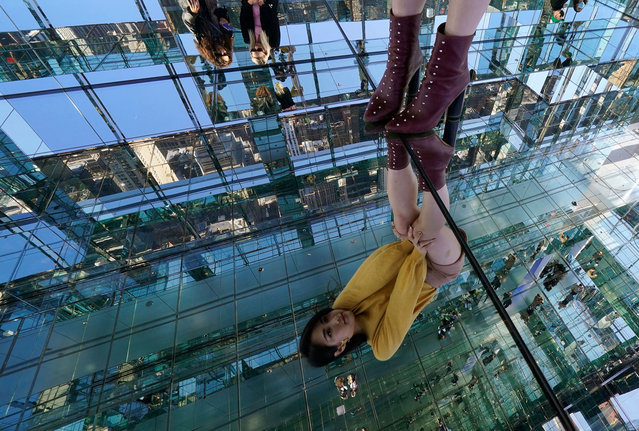
Content Creator Tina Lee poses for pictures during a media preview of Summit at One Vanderbilt in New York, October 1, 2021. The Summit viewing deck is spread across the top four floors on One Vanderbilt in Manhattan, the fourth tallest building in the city. (Photo by Timothy A. Clary/AFP Photo)

Content Creator Tina Lee poses for pictures during a media preview of Summit at One Vanderbilt in New York, October 1, 2021. The Summit viewing deck is spread across the top four floors on One Vanderbilt in Manhattan, the fourth tallest building in the city. (Photo by Timothy A. Clary/AFP Photo)
Details
11 Nov 2021 08:30:00
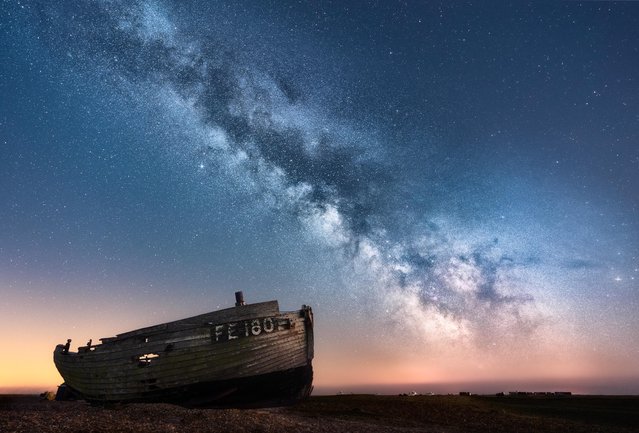
Paul Dixon is an engineer by day and an astrophotographer by night. He shot this broken boat on Dungeness beach, Kent in the last decade of August 2024, 17 times, stacking the images upon each other before combining them with a similar composite of the Milky Way. (Photo by Paul Dixon/Media Drum Images)

Paul Dixon is an engineer by day and an astrophotographer by night. He shot this broken boat on Dungeness beach, Kent in the last decade of August 2024, 17 times, stacking the images upon each other before combining them with a similar composite of the Milky Way. (Photo by Paul Dixon/Media Drum Images)
Details
10 Jul 2025 04:02:00
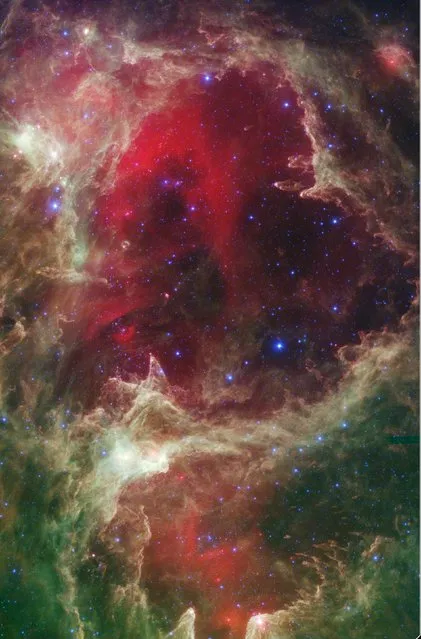
An infrared portrait from NASA's Spitzer Space Telescope which shows generations of stars is seen in this undated NASA handout image released February 14, 2013. In this wispy star-forming region, called W5, the oldest stars can be seen as blue dots in the centers of the two hollow cavities (other blue dots are background and foreground stars not associated with the region). Red shows heated dust that pervades the region's cavities, while green highlights dense clouds. (Photo by NASA/Reuters/JPL-Caltech/Harvard-Smithsonian/Handout)

An infrared portrait from NASA's Spitzer Space Telescope which shows generations of stars is seen in this undated NASA handout image released February 14, 2013. In this wispy star-forming region, called W5, the oldest stars can be seen as blue dots in the centers of the two hollow cavities (other blue dots are background and foreground stars not associated with the region). Red shows heated dust that pervades the region's cavities, while green highlights dense clouds. (Photo by NASA/Reuters/JPL-Caltech/Harvard-Smithsonian/Handout)
Details
03 Mar 2013 08:44:00
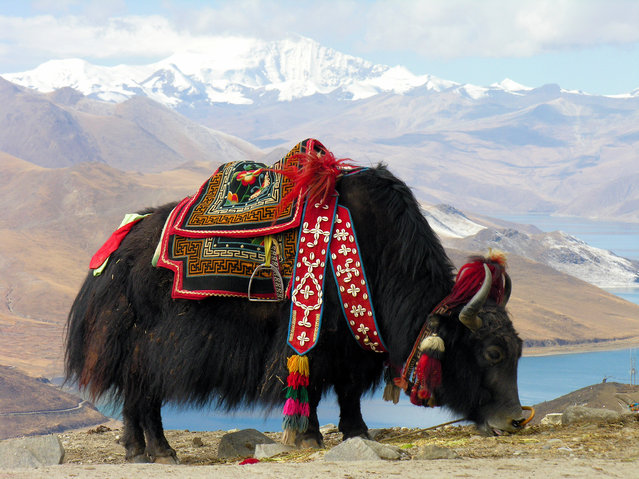
Yak near Yamdrok lake, Tibet. It is a long-haired bovinae found throughout the Himalayan region of south Central Asia, the Tibetan Plateau and as far north as Mongolia and Russia. The Tibetan economy is dominated by subsistence agriculture. Due to limited arable land, the primary occupation of the Tibetan Plateau is raising livestock, such as sheep, cattle, goats, camels, yaks, dzo, and horses. The Tibetan yak is an integral part of Tibetan life. (Photo by Dennis Jarvis)

Yak near Yamdrok lake, Tibet. It is a long-haired bovinae found throughout the Himalayan region of south Central Asia, the Tibetan Plateau and as far north as Mongolia and Russia. The Tibetan economy is dominated by subsistence agriculture. Due to limited arable land, the primary occupation of the Tibetan Plateau is raising livestock, such as sheep, cattle, goats, camels, yaks, dzo, and horses. The Tibetan yak is an integral part of Tibetan life. (Photo by Dennis Jarvis)
Details
10 Jun 2015 10:48:00