Loading...
Done
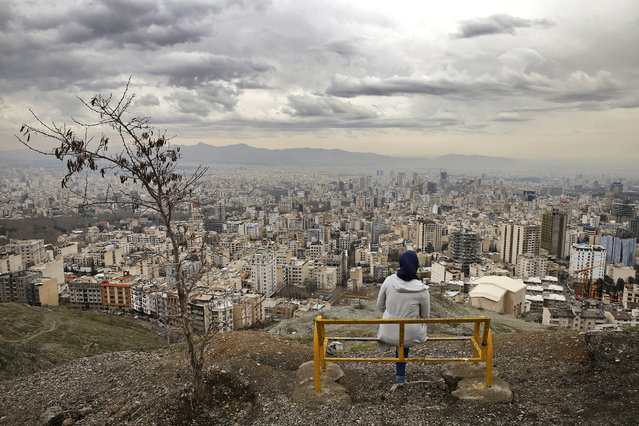
A woman spends her time outdoors to observe the ancient festival of Sizdeh Bedar, an annual public picnic day on the 13th day of the Iranian new year, at the Tochal mountainous area northern Tehran, Iran, Sunday, April, 2, 2017. Sizdeh Bedar, which comes from the Farsi words for “thirteen” and “day out”, is a legacy from Iran's pre-Islamic past that hard-liners in the Islamic Republic never managed to erase from calendars. (Photo by Ebrahim Noroozi/AP Photo)

A woman spends her time outdoors to observe the ancient festival of Sizdeh Bedar, an annual public picnic day on the 13th day of the Iranian new year, at the Tochal mountainous area northern Tehran, Iran, Sunday, April, 2, 2017. Sizdeh Bedar, which comes from the Farsi words for “thirteen” and “day out”, is a legacy from Iran's pre-Islamic past that hard-liners in the Islamic Republic never managed to erase from calendars. (Photo by Ebrahim Noroozi/AP Photo)
Details
21 Apr 2017 07:38:00
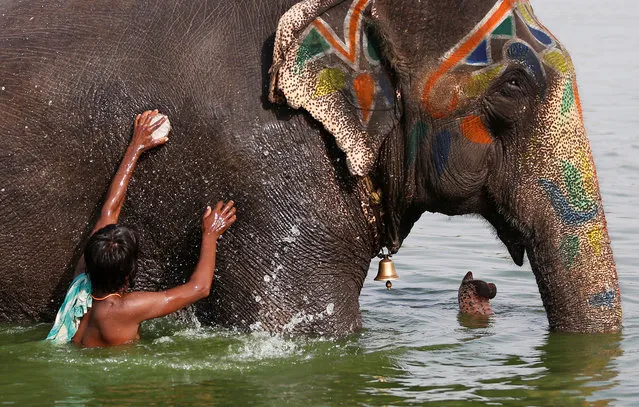
A mahout bathes his elephant in the river Sabarmati on a hot summer day in Ahmedabad, India May 21, 2017. (Photo by Amit Dave/Reuters)

A mahout bathes his elephant in the river Sabarmati on a hot summer day in Ahmedabad, India May 21, 2017. (Photo by Amit Dave/Reuters)
Details
31 May 2017 06:42:00
Geisha women parade down the street to Asakusa Shrine in the compound of Sensoji Temple Friday, May 19, 2017, in Tokyo prior to the annual Sanja Festival, one of the three major festivals in Tokyo. (Photo by Eugene Hoshiko/AP Photo)

Geisha women parade down the street to Asakusa Shrine in the compound of Sensoji Temple Friday, May 19, 2017, in Tokyo prior to the annual Sanja Festival, one of the three major festivals in Tokyo. (Photo by Eugene Hoshiko/AP Photo)
Details
01 Jun 2017 09:47:00
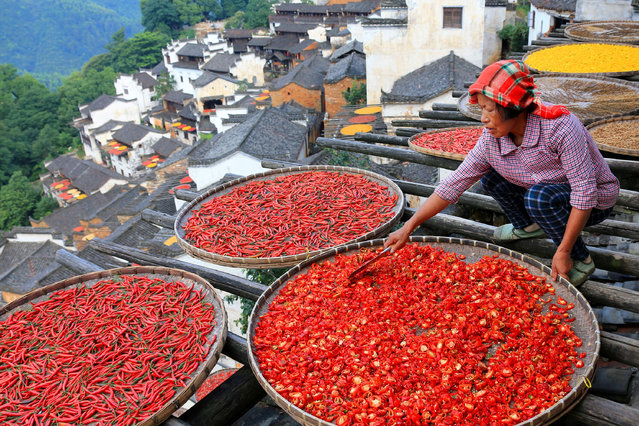
A woman dries chili peppers in the sun at a village in Wuyuan County, Jiangxi province, China July 21, 2017. (Photo by Reuters/China Stringer Network)

A woman dries chili peppers in the sun at a village in Wuyuan County, Jiangxi province, China July 21, 2017. (Photo by Reuters/China Stringer Network)
Details
22 Jul 2017 08:33:00
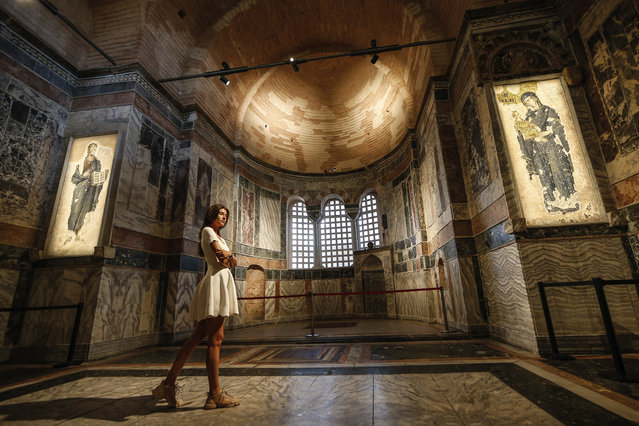
A woman visits St Savior in Chora church, known as Kariye in Turkish, in Istanbul, Friday, August 21, 2020. Turkey on Friday formally converted former Byzantine church, St Savior in Chora, into a mosque, a month after it similarly turned Istanbul's landmark Hagia Sophia into a Muslim house of prayer, drawing international rebuke. (Photo by Emrah Gurel/AP Photo)

A woman visits St Savior in Chora church, known as Kariye in Turkish, in Istanbul, Friday, August 21, 2020. Turkey on Friday formally converted former Byzantine church, St Savior in Chora, into a mosque, a month after it similarly turned Istanbul's landmark Hagia Sophia into a Muslim house of prayer, drawing international rebuke. (Photo by Emrah Gurel/AP Photo)
Details
09 Sep 2020 00:05:00
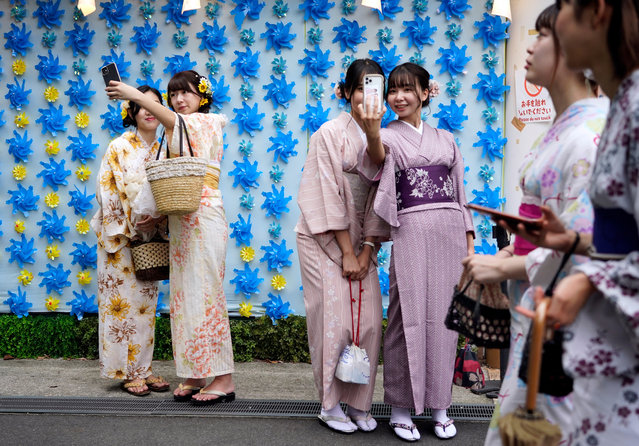
Japanese women wearing “yukata” casual summer kimono take selfies at Asakusa district in Tokyo, Japan, 13 September 2020. Asakusa is one of Tokyo's most-visited areas and is usually crowded with tourists. In Japan, the numbers of visitors from abroad fell by 99.9 percent from a year earlier in July due to the ban for entries of foreign visitors amid the coronavirus pandemic. (Photo by Franck Robichon/EPA/EFE)

Japanese women wearing “yukata” casual summer kimono take selfies at Asakusa district in Tokyo, Japan, 13 September 2020. Asakusa is one of Tokyo's most-visited areas and is usually crowded with tourists. In Japan, the numbers of visitors from abroad fell by 99.9 percent from a year earlier in July due to the ban for entries of foreign visitors amid the coronavirus pandemic. (Photo by Franck Robichon/EPA/EFE)
Details
24 Sep 2020 00:01:00
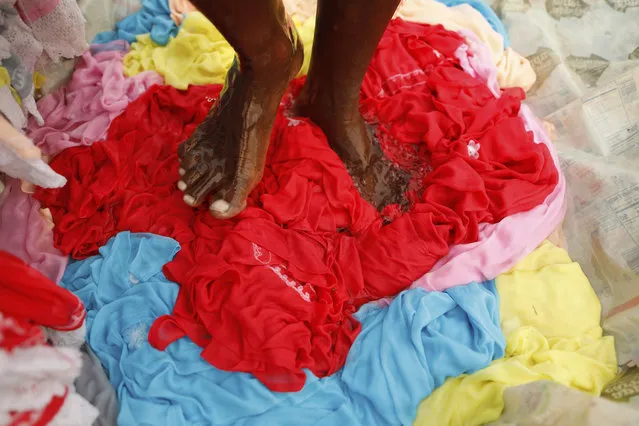
A dhobi, or a washerman washes cloths on the banks of the River Gomti in Lucknow, India, Saturday, September 12, 2020. Dhobis are traditional laundry workers who wash clothes by hand and dry them in the sun, an occupation which has been in existence for generations. Most cities in India have a Dhobi Ghat, or washermen's area, where the city's pile of clothes is laundered. This practice is still popular in India, despite of modern technology. Around 1,000 families work in Lucknow's Dhobi Ghat. However, in light of the novel coronavirus, their wages have decreased drastically. With each family earning around US$100-200 per month. (Photo by Rajesh Kumar Singh/AP Photo)

A dhobi, or a washerman washes cloths on the banks of the River Gomti in Lucknow, India, Saturday, September 12, 2020. Dhobis are traditional laundry workers who wash clothes by hand and dry them in the sun, an occupation which has been in existence for generations. Most cities in India have a Dhobi Ghat, or washermen's area, where the city's pile of clothes is laundered. This practice is still popular in India, despite of modern technology. Around 1,000 families work in Lucknow's Dhobi Ghat. However, in light of the novel coronavirus, their wages have decreased drastically. With each family earning around US$100-200 per month. (Photo by Rajesh Kumar Singh/AP Photo)
Details
25 Sep 2020 00:03:00
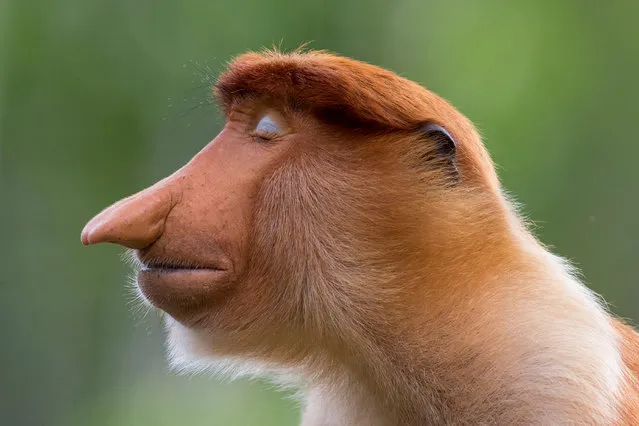
Winner – Animal Portraits: The pose by Mogens Trolle, Denmark. A young male proboscis monkey cocks his head slightly and closes his eyes. Unexpected pale blue eyelids now complement his immaculately groomed auburn hair. He poses for a few seconds as if in meditation. He is a wild visitor to the feeding station at Labuk Bay Proboscis Monkey Sanctuary in Sabah, Borneo – “the most laid-back character”, says Trolle, “quite unlike anything I’ve ever seen on another monkey” – connects us, he hopes, with a fellow primate. (Photo by Mogens Trolle/Wildlife Photographer of the Year 2020)

Winner – Animal Portraits: The pose by Mogens Trolle, Denmark. A young male proboscis monkey cocks his head slightly and closes his eyes. Unexpected pale blue eyelids now complement his immaculately groomed auburn hair. He poses for a few seconds as if in meditation. He is a wild visitor to the feeding station at Labuk Bay Proboscis Monkey Sanctuary in Sabah, Borneo – “the most laid-back character”, says Trolle, “quite unlike anything I’ve ever seen on another monkey” – connects us, he hopes, with a fellow primate. (Photo by Mogens Trolle/Wildlife Photographer of the Year 2020)
Details
16 Oct 2020 00:03:00