Loading...
Done
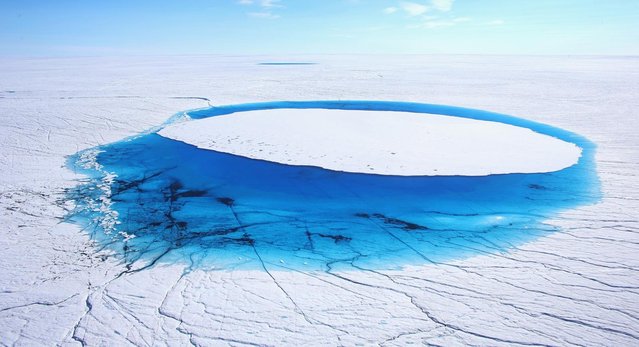
Water is seen on part of the glacial ice sheet that covers about 80 percent of the country is seen on July 17, 2013 on the Glacial Ice Sheet, Greenland. (Photo by Joe Raedle/Getty Images via The Atlantic)

Water is seen on part of the glacial ice sheet that covers about 80 percent of the country is seen on July 17, 2013 on the Glacial Ice Sheet, Greenland. As the sea levels around the globe rise, researchers affilitated with the National Science Foundation and other organizations are studying the phenomena of the melting glaciers and its long-term ramifications. The warmer temperatures that have had an effect on the glaciers in Greenland also have altered the ways in which the local populace farm, fish, hunt and even travel across land. In recent years, sea level rise in places such as Miami Beach has led to increased street flooding and prompted leaders such as New York City Mayor Michael Bloomberg to propose a $19.5 billion plan to boost the citys capacity to withstand future extreme weather events by, among other things, devising mechanisms to withstand flooding. (Photo by Joe Raedle)
Details
02 Aug 2013 10:51:00
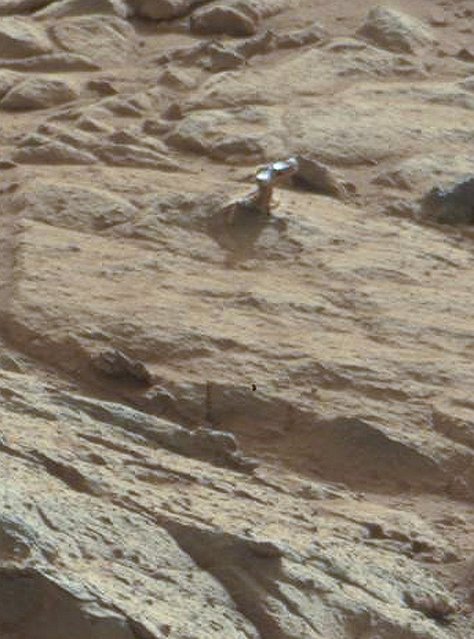
Another Weird Shiny Thing on Mars

“The Curiosity Mars rover has imaged a small metallic-looking protuberance on a rock. Visible (in the image below the green lines point to it), the protuberance appears to have a high albedo and even projects a shadow on the rock below...”
Details
06 Feb 2013 18:41:00
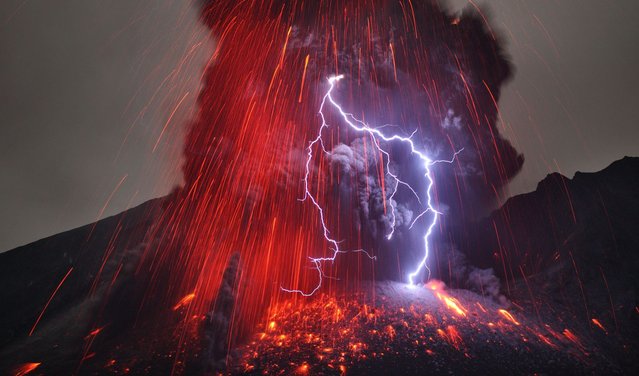
Lightning only ever strikes a volcanic eruption during heavy “vulcanian” or “plinian” explosions when the amount of red lava is very low. (Photo by Martin Rietze/Guzelian)

Martin Rietze is a “volcano-chaser”, a particular breed of photographer who takes big risks for big shots. He was able to capture destructive and beautiful forces of nature at work on a trip to Japan in February 2013. His photos show the Sakurajima Volcano, an active volcanic who's record-breaking 1914 eruption sent lava flows across the island. (Photo by Martin Rietze/Guzelian)
Details
08 Apr 2013 10:49:00
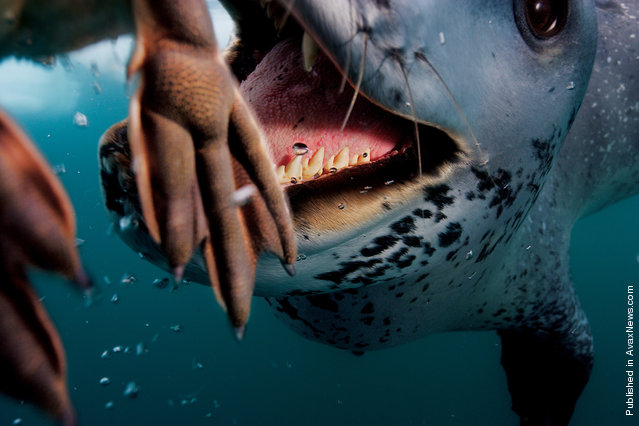
A leopard seal feeds Paul Nicklen a penguin

A leopard seal feeds Paul Nicklen a penguin. (Photo by Paul Nicklen/National Geographic). Antarctic Peninsula, 2011
Details
11 Apr 2012 13:39:00
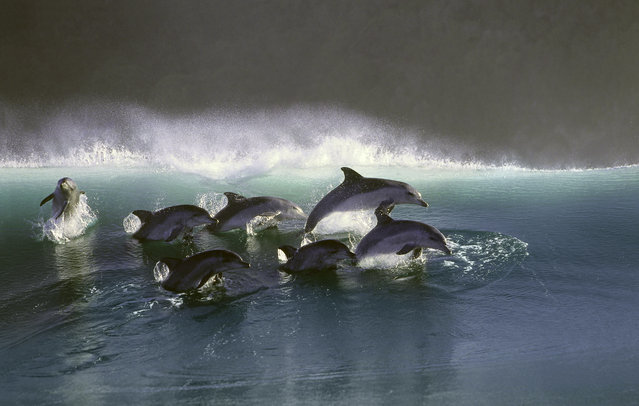
Pod of dolphins surf effortlessly through the waves in the wild traveling at speeds up to 20 mph

Pod of dolphins surf effortlessly through the waves in the wild traveling at speeds up to 20 mph. (Photo by Greg Huglin)
Details
01 May 2012 11:43:00
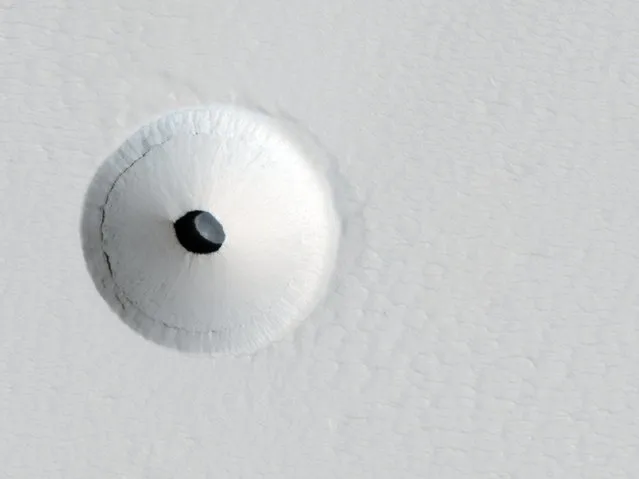
A Hole in Mars

“What created this unusual hole in Mars? The hole was discovered by chance on images of the dusty slopes of Mars' Pavonis Mons volcano taken by the HiRISE instrument aboard the robotic Mars Reconnaissance Orbiter currently circling Mars”. (Photo by NASA/JPL/University of Arizona)
Details
22 Jul 2012 07:49:00
Matthias Broda, inventor and designer of the wooden e-bike, cycles a prototype along a street in Berlin, November 20, 2014. The wooden e-bike produced by German company Aceteam from ash wood, will be launched on the market by spring 2015 and will cost around 3,950 euro (4,950 dollars). The e-bike will be equipped with an 250W e-bike motor for a range of up to 100 kilometer  (62 miles) with a rechargeable battery. (Photo by Fabrizio Bensch/Reuters)

Matthias Broda, inventor and designer of the wooden e-bike, cycles a prototype along a street in Berlin, November 20, 2014. The wooden e-bike produced by German company Aceteam from ash wood, will be launched on the market by spring 2015 and will cost around 3,950 euro (4,950 dollars). The e-bike will be equipped with an 250W e-bike motor for a range of up to 100 kilometer (62 miles) with a rechargeable battery. (Photo by Fabrizio Bensch/Reuters)
Details
21 Nov 2014 13:02:00
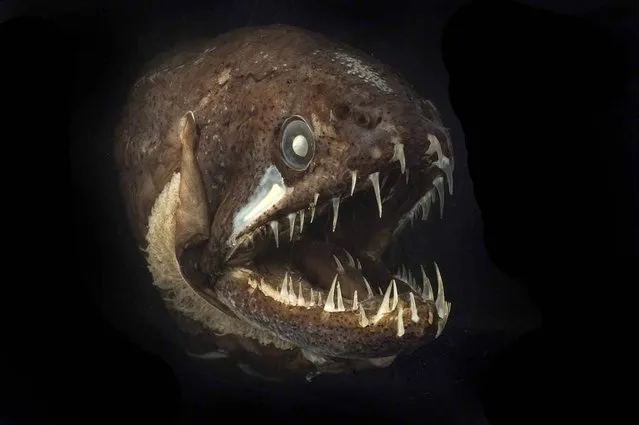
Imagine living in the sea where it is permanently dark, cold, and food is hard to find. For many animals at depth, it may be weeks to months between meals. If you find something to eat, you have to hang on to it

Imagine living in the sea where it is permanently dark, cold, and food is hard to find. For many animals at depth, it may be weeks to months between meals. If you find something to eat, you have to hang on to it. This is why so many deep-sea fishes have lots of big teeth. This dragonfish, spotted off the coast of Australia, even has teeth on its tongue. They would be terrifying animals ... if they weren’t the size of a banana. (Photo by Julian Finn/Museum Victoria)
Details
21 May 2012 12:14:00