Loading...
Done
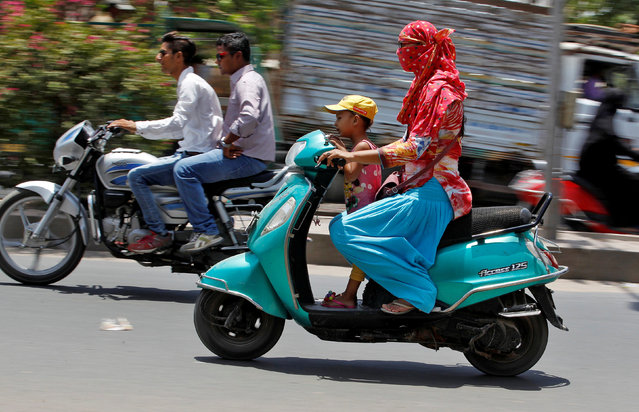
A woman shields her face from the sun as she rides her scooter in Ahmedabad, India May 20, 2016. (Photo by Amit Dave/Reuters)

A woman shields her face from the sun as she rides her scooter in Ahmedabad, India May 20, 2016. (Photo by Amit Dave/Reuters)
Details
23 May 2016 09:28:00
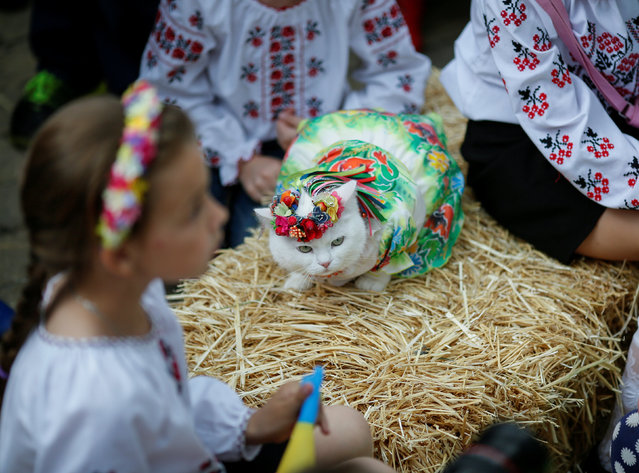
A cat dressed in a traditional Ukrainian embroidered shirt takes part in a parade in Kiev, Ukraine on May 28, 2016. (Photo by Gleb Garanich/Reuters)

A cat dressed in a traditional Ukrainian embroidered shirt takes part in a parade in Kiev, Ukraine on May 28, 2016. (Photo by Gleb Garanich/Reuters)
Details
30 May 2016 09:03:00
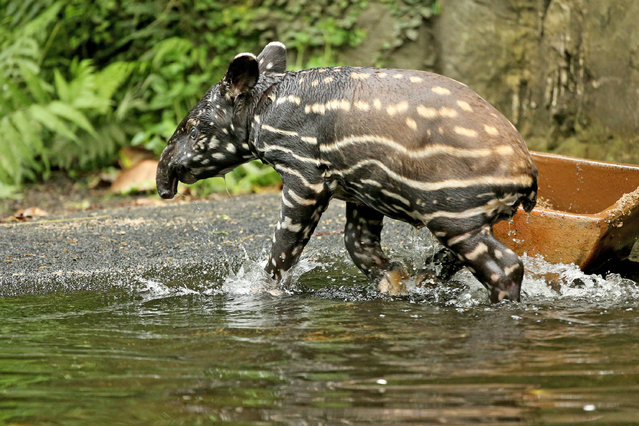
The nearly four-week-old Tapir cub bathes on June 28, 2016 in Gondwanaland at the zoo in Leipzig, Saxony. (Photo by Jan Woitas/DPA)

The nearly four-week-old Tapir cub bathes on June 28, 2016 in Gondwanaland at the zoo in Leipzig, Saxony. (Photo by Jan Woitas/DPA)
Details
03 Jul 2016 10:36:00
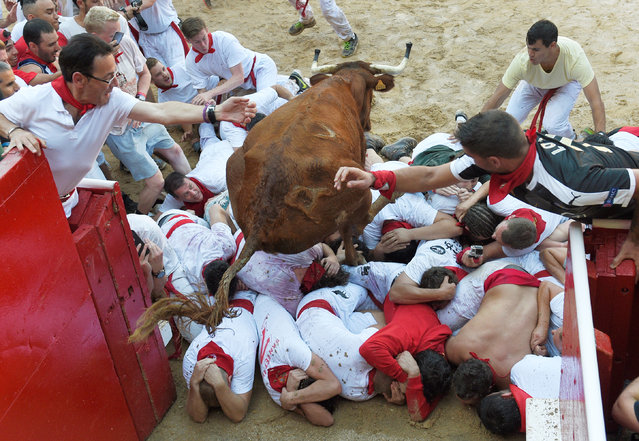
A wild cow jumps over revelers in the bullring after the first running of the bulls at the San Fermin festival in Pamplona, northern Spain, July 7, 2016. (Photo by Eloy Alonso/Reuters)

A wild cow jumps over revelers in the bullring after the first running of the bulls at the San Fermin festival in Pamplona, northern Spain, July 7, 2016. (Photo by Eloy Alonso/Reuters)
Details
09 Jul 2016 09:59:00
A visitor jumps for a photograph on the world's highest and longest glass-bottomed bridge  above a valley in Zhangjiajie in China's Hunan Province on August 21, 2016. The bridge, which opened to the public on a trial basis on Saturday, spans 430 meters (1,410 feet) and rises about 300 meters (984 feet) above a valley in a scenic zone, making it the world's highest and longest glass-bottomed bridge according to Chinese state media. (Photo by Fred Dufour/AFP Photo)

A visitor jumps for a photograph on the world's highest and longest glass-bottomed bridge above a valley in Zhangjiajie in China's Hunan Province on August 21, 2016. The bridge, which opened to the public on a trial basis on Saturday, spans 430 meters (1,410 feet) and rises about 300 meters (984 feet) above a valley in a scenic zone, making it the world's highest and longest glass-bottomed bridge according to Chinese state media. (Photo by Fred Dufour/AFP Photo)
Details
22 Aug 2016 13:19:00
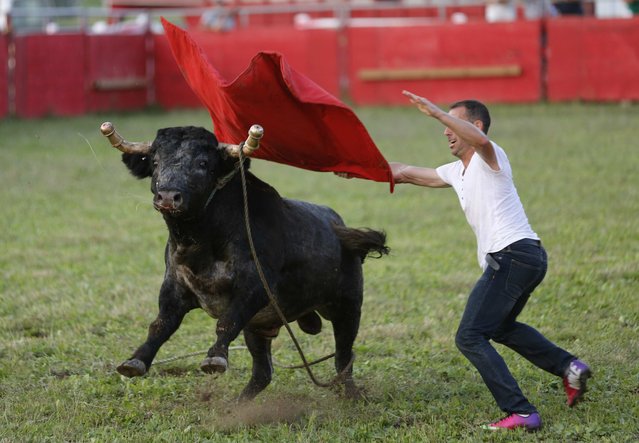
Matador Marco Espinola, who emigrated from the Azores two years ago, challenges a bull during an Azorean “tourada a corda” (bullfight by rope) in Brampton, Ontario August 15, 2015. (Photo by Chris Helgren/Reuters)

Matador Marco Espinola, who emigrated from the Azores two years ago, challenges a bull during an Azorean “tourada a corda” (bullfight by rope) in Brampton, Ontario August 15, 2015. Bulls in a tourada a corda are held by a rope controlled by a team of men to make sure the animal does not cause injury. Bulls are never killed, in contrast with bullfighting in Spain. The Portuguese population in Canada, numbering 429,000 in the 2011 census, mainly centers around Toronto with immigrants from the nine islands of the mid-Atlantic Azores archipelago. (Photo by Chris Helgren/Reuters)
Details
18 Aug 2015 13:39:00
Two women in traditional kimonos wear face masks to help curb the spread of the coronavirus as they visit the Sensoji temple in Tokyo on Friday, August 7, 2020. (Photo by Hiro Komae/AP Photo)

Two women in traditional kimonos wear face masks to help curb the spread of the coronavirus as they visit the Sensoji temple in Tokyo on Friday, August 7, 2020. (Photo by Hiro Komae/AP Photo)
Details
03 Sep 2020 00:01:00
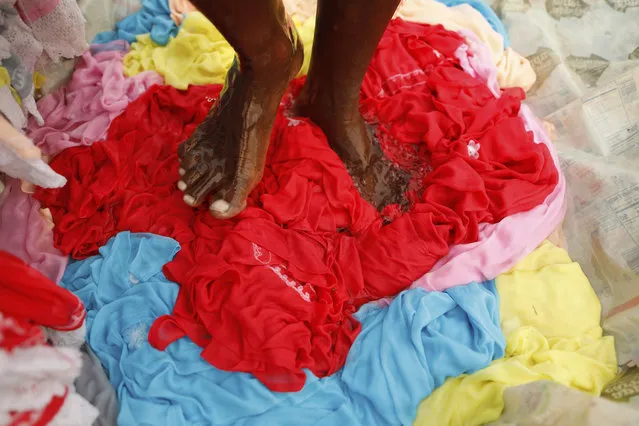
A dhobi, or a washerman washes cloths on the banks of the River Gomti in Lucknow, India, Saturday, September 12, 2020. Dhobis are traditional laundry workers who wash clothes by hand and dry them in the sun, an occupation which has been in existence for generations. Most cities in India have a Dhobi Ghat, or washermen's area, where the city's pile of clothes is laundered. This practice is still popular in India, despite of modern technology. Around 1,000 families work in Lucknow's Dhobi Ghat. However, in light of the novel coronavirus, their wages have decreased drastically. With each family earning around US$100-200 per month. (Photo by Rajesh Kumar Singh/AP Photo)

A dhobi, or a washerman washes cloths on the banks of the River Gomti in Lucknow, India, Saturday, September 12, 2020. Dhobis are traditional laundry workers who wash clothes by hand and dry them in the sun, an occupation which has been in existence for generations. Most cities in India have a Dhobi Ghat, or washermen's area, where the city's pile of clothes is laundered. This practice is still popular in India, despite of modern technology. Around 1,000 families work in Lucknow's Dhobi Ghat. However, in light of the novel coronavirus, their wages have decreased drastically. With each family earning around US$100-200 per month. (Photo by Rajesh Kumar Singh/AP Photo)
Details
25 Sep 2020 00:03:00