Loading...
Done
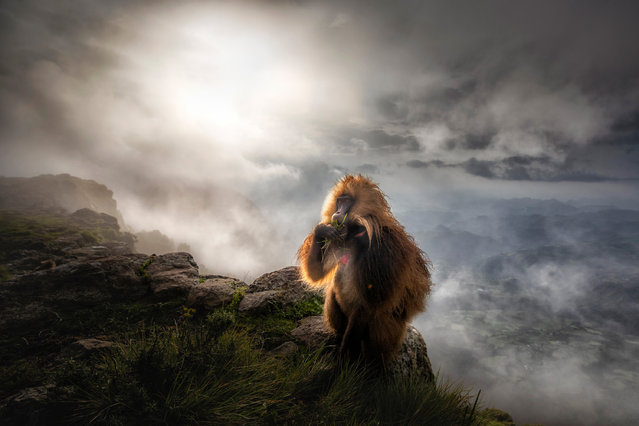
Highly commended, mammals: Gelada after the storm – Marco Gaiotti (Italy). “Gelada baboons are the only monkey species in the world that feed on grasses. They are native to the tableland of Ethiopia. Every morning large family groups wander from their sleeping places in the steep rock face, up to 1,000 metres high, to the feeding grounds at the tablelands. This image clearly depicts their feeding strategy: they pull out bunches of grass, sort the stalks and then lift them to their mouth. This shot was taken towards the end of the rainy season after a heavy storm”. (Photo by Marco Gaiotti/2019 GDT European Wildlife Photographer of the Year)

Highly commended, mammals: Gelada after the storm – Marco Gaiotti (Italy). “Gelada baboons are the only monkey species in the world that feed on grasses. They are native to the tableland of Ethiopia. Every morning large family groups wander from their sleeping places in the steep rock face, up to 1,000 metres high, to the feeding grounds at the tablelands. This image clearly depicts their feeding strategy: they pull out bunches of grass, sort the stalks and then lift them to their mouth. This shot was taken towards the end of the rainy season after a heavy storm”. (Photo by Marco Gaiotti/2019 GDT European Wildlife Photographer of the Year)
Details
31 Oct 2019 00:03:00


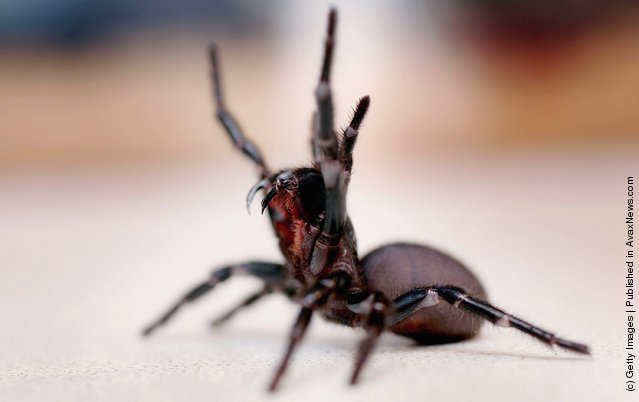
A Funnel Web spider is pictured at the Australian Reptile Park January 23, 2006 in Sydney, Australia. The Funnel Web is one of Australia's deadliest animals, with a venom that is packed with at least 40 different toxic proteins. A bite from a Funnel Web causes massive electrical over-load in the body's nervous system. Finally, fatalities occur from either heart attack or a pulmonary oedema, where the capillaries around the lungs begin to leak fluid and the patient effectively drowns. Death can come as quickly as two hours after a bite if no medical treatment is sought. Due to advances in anti-venom, there has been no death from a Funnel Web bite in Australia since 1980. Australia is home to some of the most deadly and poisonous animals on earth. (Photo by Ian Waldie/Getty Images)
Details
25 Apr 2011 07:49:00
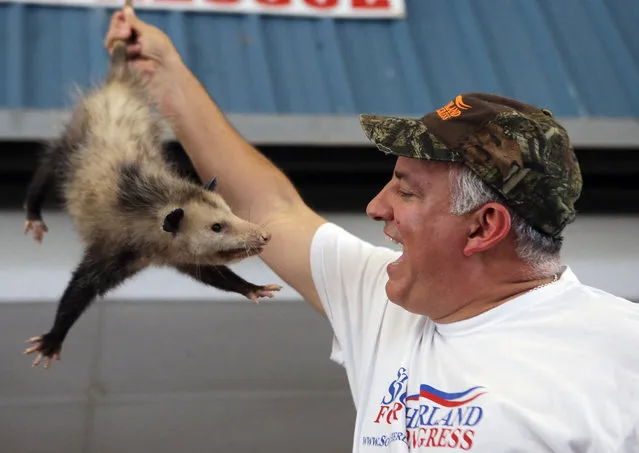
U.S. Rep Steve Southerland grins after winning an auctioned possum during the Wausau Possum Festival on Saturday, August 2, 2014, in Wausau, Fla. What is usually a must-attend event for statewide candidates was notably lacking of them this year, perhaps because candidates who now raise tens of millions of dollars focus more on television ads than making personal contact. (Photo by Heather Leiphart/AP Photo/The News Herald)

U.S. Rep Steve Southerland grins after winning an auctioned possum during the Wausau Possum Festival on Saturday, August 2, 2014, in Wausau, Fla. What is usually a must-attend event for statewide candidates was notably lacking of them this year, perhaps because candidates who now raise tens of millions of dollars focus more on television ads than making personal contact. But not attending is a missed opportunity, said Susan MacManus, a University of South Florida political science professor who drove more than 350 miles for the festival. (Photo by Heather Leiphart/AP Photo/The News Herald)
Details
17 Dec 2014 12:12:00
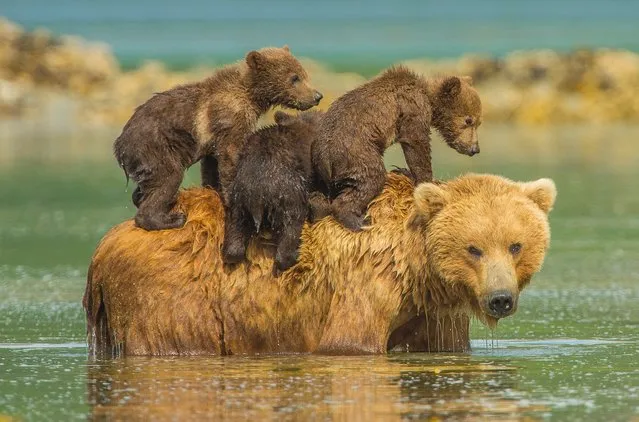
A mother bear takes a dip in the water to cool off in the warm summer sun but refuses to leave her three youngsters behind – so they climb aboard her back. (Photo by Jon Langeland/Solent News & Photo Agency)

A mother bear takes a dip in the water to cool off in the warm summer sun but refuses to leave her three youngsters behind – so they climb aboard her back. (Photo by Jon Langeland/Solent News & Photo Agency)
Details
13 Sep 2014 12:10:00
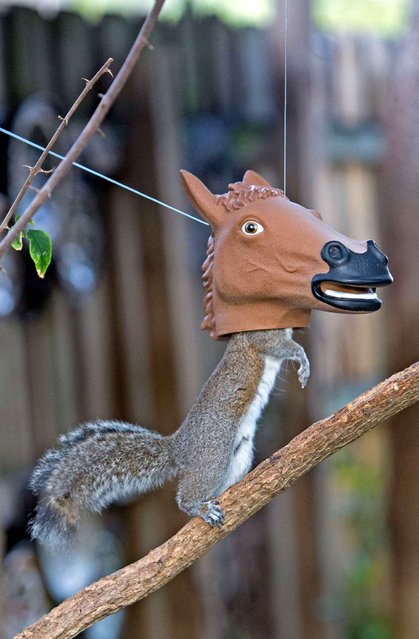
Photographer Jim Zielinski from Florida, USA, captured this hilarious moment when a squirrel spied a tasty treat inside a novelty horse's head bird feeder in his back garden. (Photo by Jim Zielinski/Caters News)

Photographer Jim Zielinski from Florida, USA, captured this hilarious moment when a squirrel spied a tasty treat inside a novelty horse's head bird feeder in his back garden. (Photo by Jim Zielinski/Caters News)
Details
24 Mar 2014 06:55:00
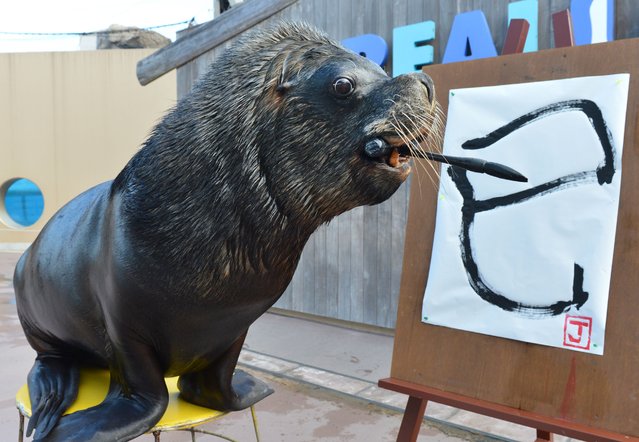
Sea lion “Jay” paints a Chinese character reading “the Serpent” at the Hakkeijima Sea Paradise aquarium in Yokohama, suburban Tokyo on January 3, 2013. The event, marking the forthcoming Chinese lunar calender year of the snake was held as part of a New Year's attraction. (Photo by Kazuhiro Nogi/AFP Photo)

Sea lion “Jay” paints a Chinese character reading “the Serpent” at the Hakkeijima Sea Paradise aquarium in Yokohama, suburban Tokyo on January 3, 2013. The event, marking the forthcoming Chinese lunar calender year of the snake was held as part of a New Year's attraction. (Photo by Kazuhiro Nogi/AFP Photo)
Details
19 Jan 2013 13:18:00
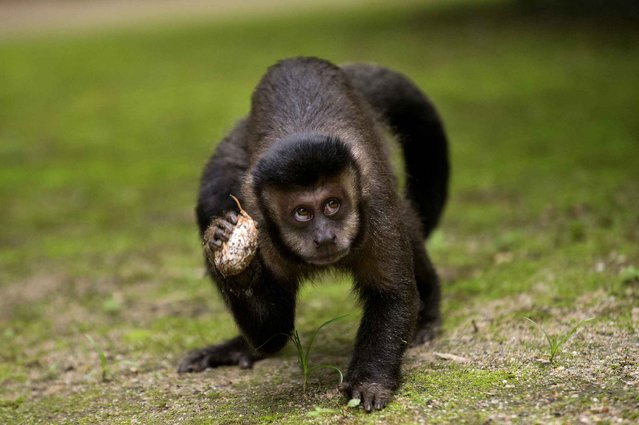
A brown capuchin monkey holds a fruit in the Botanic Garden of Rio de Janeiro, Brazil, on July 5, 2013. (Photo by Pablo Porciuncula/AFP Photo)

A brown capuchin monkey holds a fruit in the Botanic Garden of Rio de Janeiro, Brazil, on July 5, 2013. (Photo by Pablo Porciuncula/AFP Photo)
Details
06 Jul 2013 11:58:00
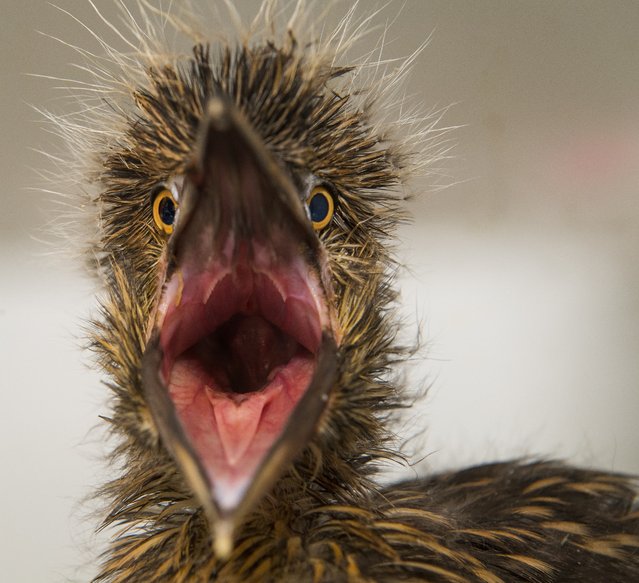
A baby Black-crowned Night Heron squawks in its incubator while being cared for at City Wildlife rescue and rehabilitation center in Washington, DC on May 31, 2017. The heron is one of several that have been brought to CW by the staff at The National Zoo over the past few years. The heron is a native bird and has made an established rookery inside the zoo grounds over a hundred years ago.  Every year at this time, some of the chicks get pushed or fall out of the nest and require human care.  Because the birds are native and not part of the Smithsonian collection, they partnered with CW to rehabilitate the herons for re-release back to the flock inside Zoo. They're reintroduced back to their flock so that they can migrate together in the Fall. The Black-crowned heron usually migrates from the DC area down to southeast North Carolina, some going as far as Jacksonville, FL in winter. The Black-crowned heron is the species of greatest conservation need in the District of Columbia because their numbers are in such rapid decline due to habitat loss. (Photo Linda Davidson/The Washington Post)

A baby Black-crowned Night Heron squawks in its incubator while being cared for at City Wildlife rescue and rehabilitation center in Washington, DC on May 31, 2017. The heron is one of several that have been brought to CW by the staff at The National Zoo over the past few years. (Photo Linda Davidson/The Washington Post)
Details
04 Jun 2017 08:04:00