Loading...
Done
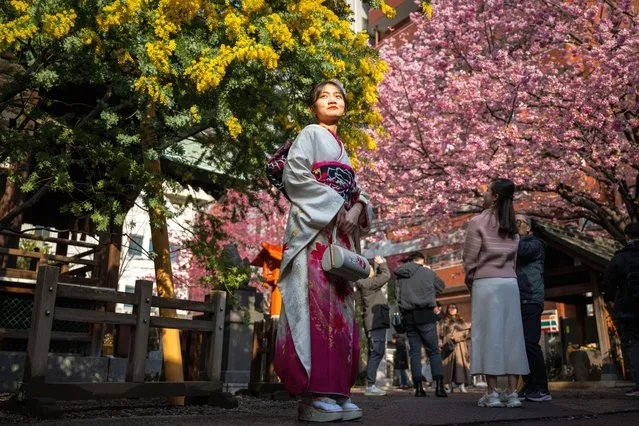
A woman in Kimono poses for photos in front of mimosa and cherry blossom trees in Tokyo on March 8, 2024. (Photo by Yuichi Yamazaki/AFP Photo)

A woman in Kimono poses for photos in front of mimosa and cherry blossom trees in Tokyo on March 8, 2024. (Photo by Yuichi Yamazaki/AFP Photo)
Details
18 Mar 2024 06:52:00
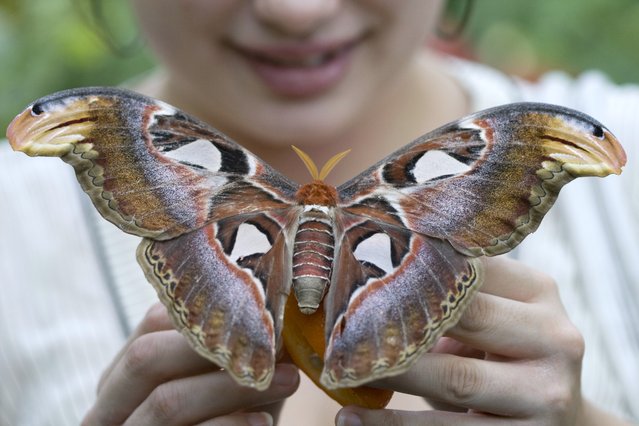
Atlas Moth @ Carleton. (Photo by Terri Oda)

“The Atlas moth (Attacus atlas) is a large saturniid moth found in the tropical and subtropical forests of Southeast Asia, and common across the Malay archipelago. Atlas moths are considered the largest moths in the world in terms of total wing surface area [upwards of c. 400 cm2 (62 sq in)]. Their wingspans are also amongst the largest, reaching over 25 cm (10 in). Females are appreciably larger and heavier”. – Wikipedia. Photo: Atlas Moth. (Photo by Terri Oda)


Details
10 Feb 2013 16:49:00
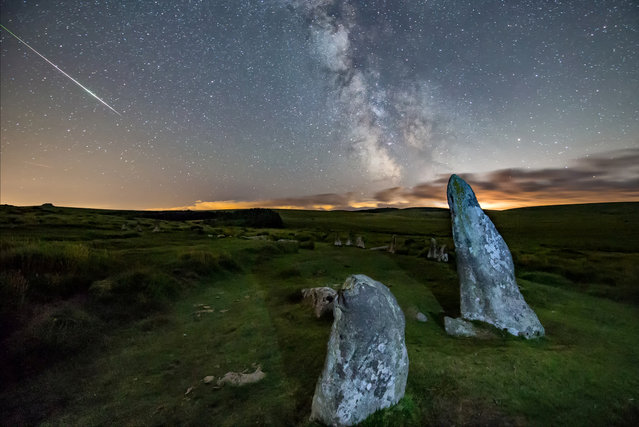
The Perseid Meteor Shower seen over The Scorhill Stone Circle in Dartmoor, Devon on August 2, 2016. (Photo by John Baker/SWNS.com)

The Perseid Meteor Shower seen over The Scorhill Stone Circle in Dartmoor, Devon on August 2, 2016. (Photo by John Baker/SWNS.com)
Details
08 Dec 2016 13:00:00
Revelers throw a woman to the air during the opening and the firing of the “Chupinazo” rocket which starts the 2014 Festival of the San Fermin Running of the Bulls on July 6, 2014 in Pamplona, Spain. The annual Fiesta de San Fermin, made famous by the 1926 novel of US writer Ernest Hemmingway entitled “The Sun Also Rises”, involves the daily running of the bulls through the historic heart of Pamplona to the bull ring. (Photo by Pablo Blazquez Dominguez/Getty Images)

Revelers throw a woman to the air during the opening and the firing of the “Chupinazo” rocket which starts the 2014 Festival of the San Fermin Running of the Bulls on July 6, 2014 in Pamplona, Spain. The annual Fiesta de San Fermin, made famous by the 1926 novel of US writer Ernest Hemmingway entitled “The Sun Also Rises”, involves the daily running of the bulls through the historic heart of Pamplona to the bull ring. (Photo by Pablo Blazquez Dominguez/Getty Images)
Details
12 Jul 2014 16:00:00
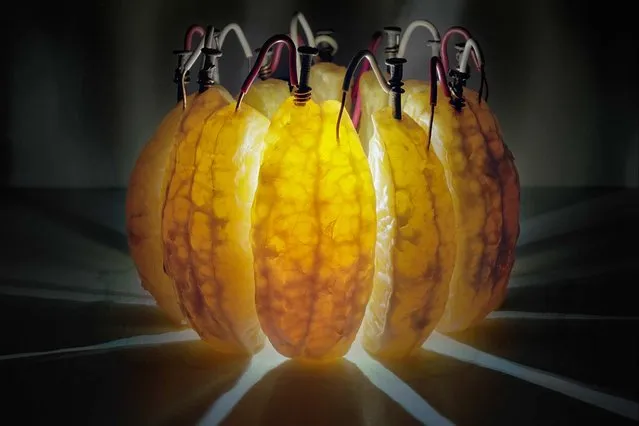
Wedges of an orange generate enough current and electrical juice – 3.5 volts – to power an LED. The fruit’s citric acid helps electrons flow from galvanized nails to copper wire in this 14-hour exposure. This image was published in September’s Visions of Earth, a trio of photos that appear in each issue of National Geographic. (Photo by Caleb Charland/National Geographic)

Wedges of an orange generate enough current and electrical juice – 3.5 volts – to power an LED. The fruit’s citric acid helps electrons flow from galvanized nails to copper wire in this 14-hour exposure. This image was published in September’s Visions of Earth, a trio of photos that appear in each issue of National Geographic. (Photo by Caleb Charland/National Geographic)
Details
06 Jan 2014 12:09:00
Performer Zhang Yashu from a Chinese ballet company perform during a photo shoot in front of the Australia's iconic landmarks Opera House (L) and Habour Bridge in Sydney on February 17, 2014. One of China's celebrated dance campanies is bringing one of the country's biggest ballet production to Australia for a series of performances in Sydney and Melbourne. (Photo by Saeed Khan/AFP Photo)

Performer Zhang Yashu from a Chinese ballet company perform during a photo shoot in front of the Australia's iconic landmarks Opera House (L) and Habour Bridge in Sydney on February 17, 2014. One of China's celebrated dance campanies is bringing one of the country's biggest ballet production to Australia for a series of performances in Sydney and Melbourne. (Photo by Saeed Khan/AFP Photo)
Details
22 Feb 2014 13:27:00
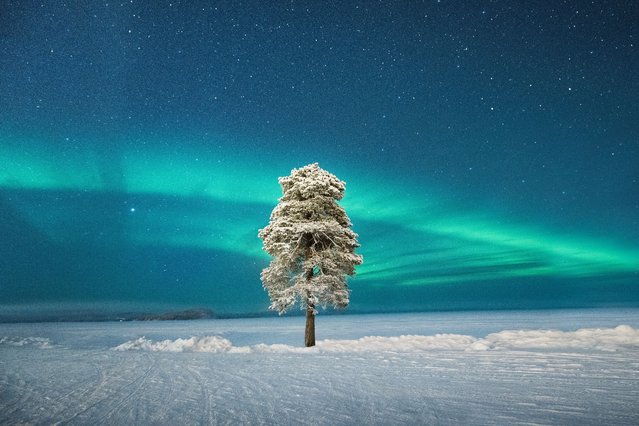
Aurorae category runner-up: Lone Tree under a Scandinavian Aurora by Tom Archer (UK). The photographer decided to explore the area around the hotel on a very crisp -35C evening in Finnish Lapland. When he found this tree, he decided to wait for the misty conditions to change and could not believe his luck when the sky cleared and the aurora came out in the perfect spot. Archer spent about an hour photographing it before his camera started to lock up because of the harsh conditions, but by then he was happy to call it a night. (Photo by Tom Archer/2020 Astronomy Photographer of the Year)

Aurorae category runner-up: Lone Tree under a Scandinavian Aurora by Tom Archer (UK). The photographer decided to explore the area around the hotel on a very crisp -35C evening in Finnish Lapland. When he found this tree, he decided to wait for the misty conditions to change and could not believe his luck when the sky cleared and the aurora came out in the perfect spot. Archer spent about an hour photographing it before his camera started to lock up because of the harsh conditions, but by then he was happy to call it a night. (Photo by Tom Archer/2020 Astronomy Photographer of the Year)
Details
17 Sep 2020 00:03:00
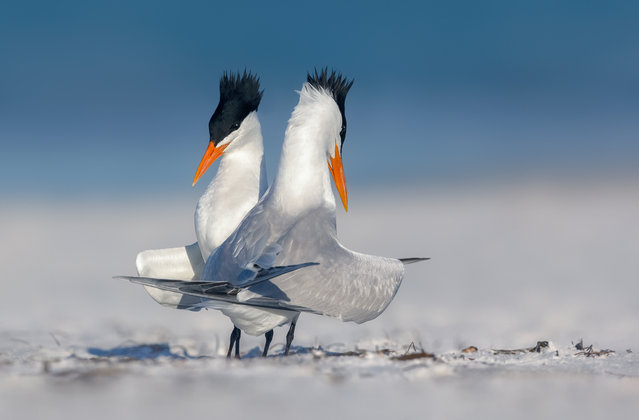
Behaviour winner: Courting Royals: two royal terns in courtship display by Kristian Bell. Another beautiful morning on a beautiful beach on the Gulf Coast of Florida seemed to prompt these two royal terns to commence an intricate courtship dance. The photograph was taken with a Canon 300mm lens and 2x extender. (Photo by Kristian Bell/Deakin University/Royal Society Publishing Photography Competition 2018)

Behaviour winner; Courting Royals: two royal terns in courtship display by Kristian Bell. Another beautiful morning on a beautiful beach on the Gulf Coast of Florida seemed to prompt these two royal terns to commence an intricate courtship dance. The photograph was taken with a Canon 300mm lens and 2x extender. (Photo by Kristian Bell/Deakin University/Royal Society Publishing Photography Competition 2018)
Details
06 Dec 2018 00:05:00