Loading...
Done
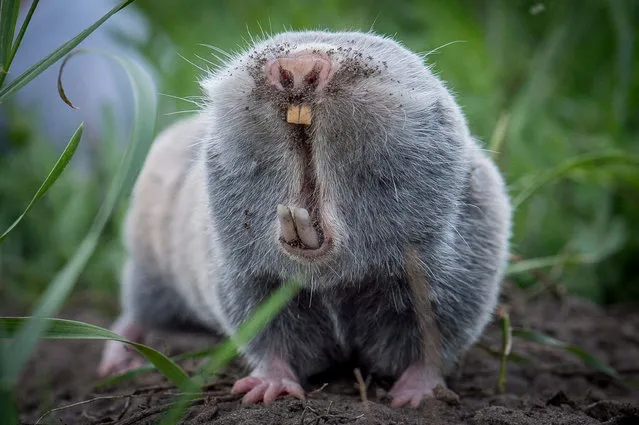
An adult specimen of Nannospalax (leucodon) montanosyrmiensis, a variant of the lesser mole-rat (Spalax leucodon) is pictured near Albertirsa, some 60 kilometers southeast of Budapest, Hungary, 12 May 2018. The critically endangered rodent lives in several isolated populations in the Carpathian Basin. (Photo by Sandor Ujvari/EPA/EFE)

An adult specimen of Nannospalax (leucodon) montanosyrmiensis, a variant of the lesser mole-rat (Spalax leucodon) is pictured near Albertirsa, some 60 kilometers southeast of Budapest, Hungary, 12 May 2018. The critically endangered rodent lives in several isolated populations in the Carpathian Basin. (Photo by Sandor Ujvari/EPA/EFE)
Details
20 May 2018 00:03:00
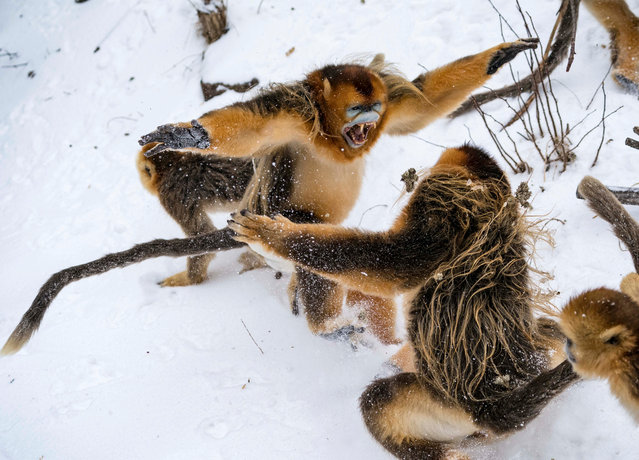
Golden monkeys play at a conservation base in Shennongjia, central China's Hubei Province, January 26, 2018. The golden monkey conservation base witnessed a snowfall recently. (Photo by Du Huaju/Xinhua/Barcroft Images)

Golden monkeys play at a conservation base in Shennongjia, central China's Hubei Province, January 26, 2018. The golden monkey conservation base witnessed a snowfall recently. (Photo by Du Huaju/Xinhua/Barcroft Images)
Details
04 Feb 2018 06:39:00
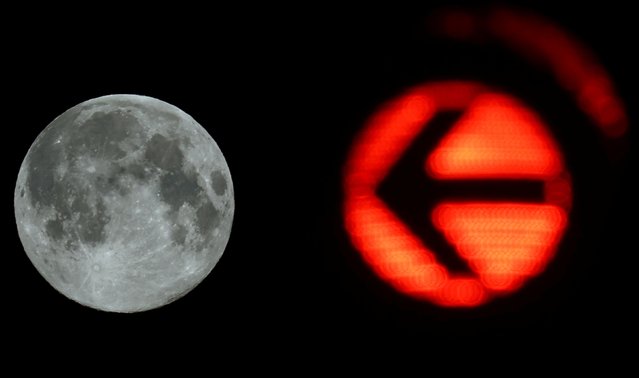
A traffic light is seen next to the Pink Supermoon in Frankfurt, Germany, April 8, 2020. (Photo by Kai Pfaffenbach/Reuters)

A traffic light is seen next to the Pink Supermoon in Frankfurt, Germany, April 8, 2020. (Photo by Kai Pfaffenbach/Reuters)
Details
10 Apr 2020 00:03:00
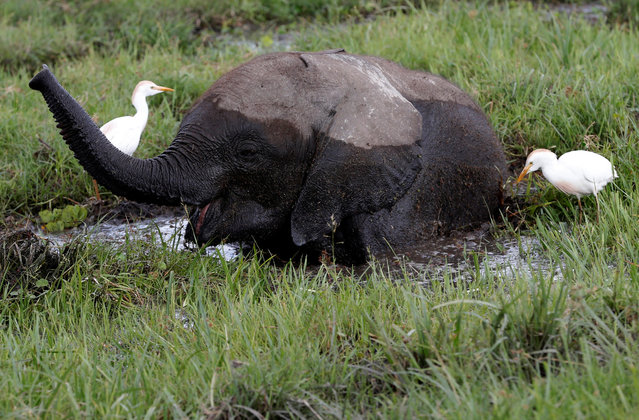
A baby elephant eats in a swamp in Amboseli national park, Kenya, March 19, 2017. (Photo by Goran Tomasevic/Reuters)

A baby elephant eats in a swamp in Amboseli national park, Kenya, March 19, 2017. (Photo by Goran Tomasevic/Reuters)
Details
26 Mar 2017 08:35:00
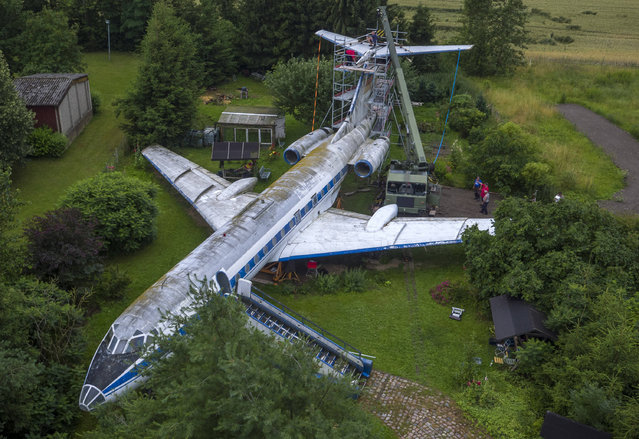
Cottbus Aviation Museum specialists prepare a Soviet Tupolev 134 A passenger plane for dismantlement in Gruenz, Germany, 10 July 2017. The team is preparing the 29 ton plane for transport from a garden in Gruenz to the Aviation Museum in Cottbus. The plane' s owner acquired it in 1991 and transported it with nine tractors and numerous helpers to his vegetable garden where he planned to open a cafe. The plane, formerly used by the East German Stasi for anti- terror operations training, is 30 metres long. (Photo by Jens Büttner/Zentralbild/DPA)

Cottbus Aviation Museum specialists prepare a Soviet Tupolev 134 A passenger plane for dismantlement in Gruenz, Germany, 10 July 2017. The team is preparing the 29 ton plane for transport from a garden in Gruenz to the Aviation Museum in Cottbus. The plane' s owner acquired it in 1991 and transported it with nine tractors and numerous helpers to his vegetable garden where he planned to open a cafe. The plane, formerly used by the East German Stasi for anti- terror operations training, is 30 metres long. (Photo by Jens Büttner/Zentralbild/DPA)
Details
12 Jul 2017 07:50:00
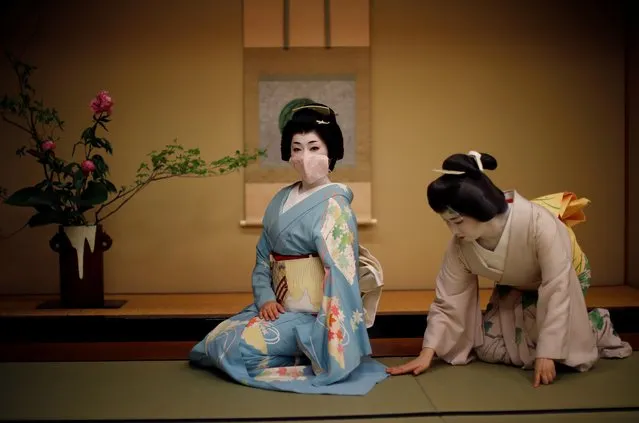
Mayu adjusts Koiku’s kimono, as Koiku wears a protective face mask while posing for a photograph, before they work at a party where they will entertain with other geisha at Japanese luxury restaurant Asada in Tokyo, Japan, June 23, 2020. The coronavirus pandemic has made Tokyo's geisha fear for their centuries-old profession as never before. Though the number of geisha - famed for their witty conversation, beauty and skill at traditional arts - has been falling for years, they were without work for months due to Japan's state of emergency and now operate under awkward social distancing rules. Engagements are down 95 percent, and come with new rules: no pouring drinks for customers or touching them even to shake hands, and sitting 2 meters apart. Masks are hard to wear with their elaborate wigs, so they mostly don't. “I was just full of anxiety”, said Mayu, 47. “I went through my photos, sorted my kimonos ... The thought of a second wave is terrifying”. (Photo by Kim Kyung-Hoon/Reuters)

Mayu adjusts Koiku’s kimono, as Koiku wears a protective face mask while posing for a photograph, before they work at a party where they will entertain with other geisha at Japanese luxury restaurant Asada in Tokyo, Japan, June 23, 2020. (Photo by Kim Kyung-Hoon/Reuters)
Details
23 Jul 2020 00:03:00
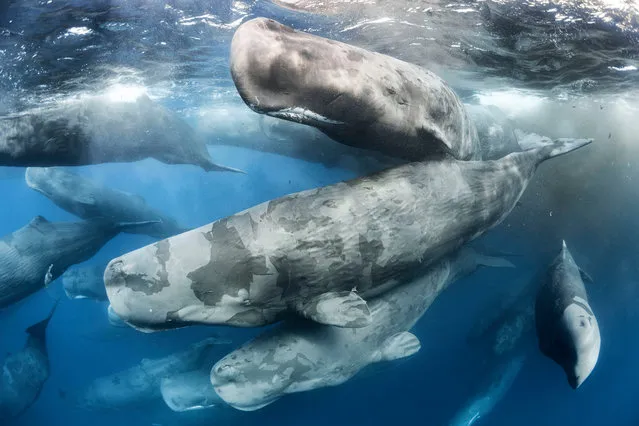
Behaviour: Mammals category. Giant Gathering by Tony Wu, USA. Dozens of sperm whales mingled noisily off Sri Lanka’s northeast coast, stacked as far down as Tony could see. This was a congregation of dozens of social units, like a gathering of the clans. Aggregations like this could be a critical part of the whales’ rich social lives but are rarely reported. Some two thirds of the population was wiped out before commercial whaling was banned in 1986. This kind of major gathering could be “a sign that populations are recovering”, says Tony. (Photo by Tony Wu/Wildlife Photographer of the Year 2017)

Behaviour: Mammals category. Giant Gathering by Tony Wu, USA. Dozens of sperm whales mingled noisily off Sri Lanka’s northeast coast, stacked as far down as Tony could see. This was a congregation of dozens of social units, like a gathering of the clans. Aggregations like this could be a critical part of the whales’ rich social lives but are rarely reported. Some two thirds of the population was wiped out before commercial whaling was banned in 1986. This kind of major gathering could be “a sign that populations are recovering”, says Tony. (Photo by Tony Wu/Wildlife Photographer of the Year 2017)
Details
19 Oct 2017 09:38:00
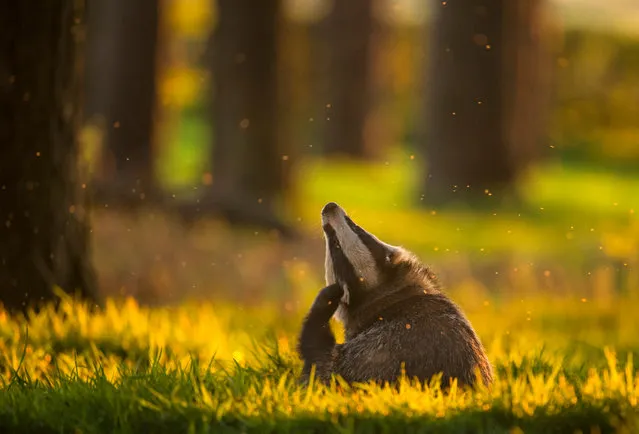
Andrew Parkinson, animal behaviour category winner: Crepuscular Contentment, Derbyshire. “In 15 years of working with badgers I’ve never seen a badger sit out in the open to have a scratch. I was sat concealed behind a tree and downwind so it was especially nice that the badger had his back to me, demonstrating just how inconspicuous and inconsequential my presence was”. (Photo by Andrew Parkinson/British Wildlife Photography Awards 2017)

Andrew Parkinson, animal behaviour category winner: Crepuscular Contentment, Derbyshire. “In 15 years of working with badgers I’ve never seen a badger sit out in the open to have a scratch. I was sat concealed behind a tree and downwind so it was especially nice that the badger had his back to me, demonstrating just how inconspicuous and inconsequential my presence was”. (Photo by Andrew Parkinson/British Wildlife Photography Awards 2017)
Details
10 Nov 2017 09:01:00