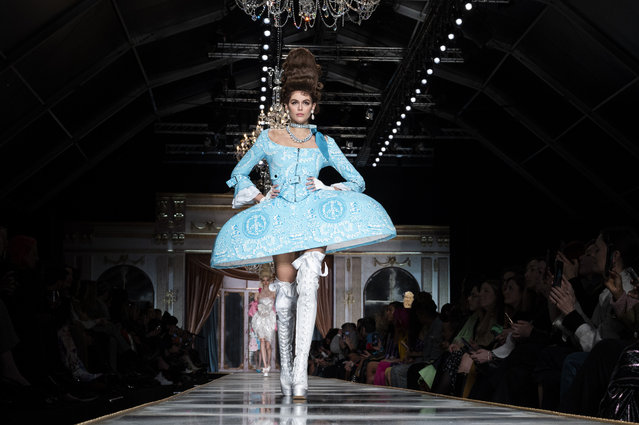
Kaia Gerber walks the runway during the Moschino fashion show as part of Milan Fashion Week Fall/Winter 2020-2021 on February 20, 2020 in Milan, Italy. (Photo by Pietro D'Aprano/Getty Images)
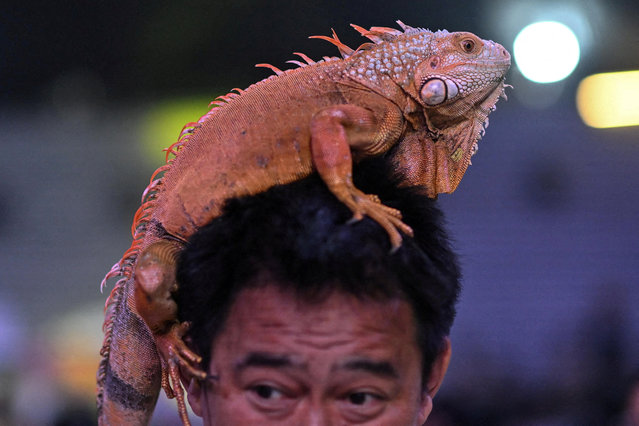
An iguana rests on a man's head during a pet blessing ceremony a day after World Animal Day, at a mall in Quezon City, Metro Manila, Philippines on October 5, 2025. (Photo by Noel Celis/Reuters)
People celebrate outside the Supreme Court, Friday, June 24, 2022, in Washington. The Supreme Court has ended constitutional protections for abortion that had been in place nearly 50 years, a decision by its conservative majority to overturn the court's landmark abortion cases. (Photo by Jacquelyn Martin/AP Photo)
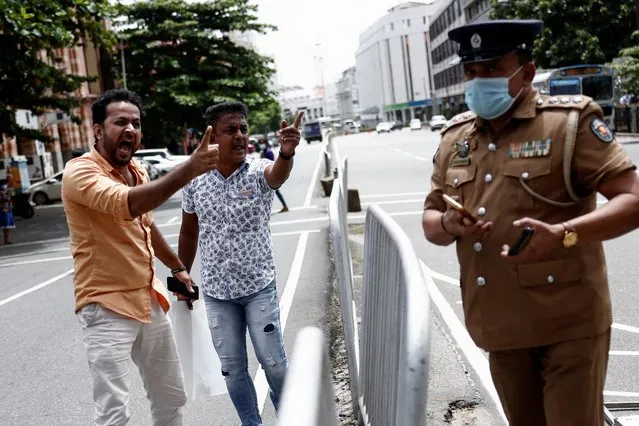
Demonstrators who blocked a main road with their vehicle to demand fuel near President Gotabaya Rajapaksa's residence, argue with a police officer, during the country's economic crisis, in Colombo, Sri Lanka on June 29, 2022. (Photo by Dinuka Liyanawatte/Reuters)
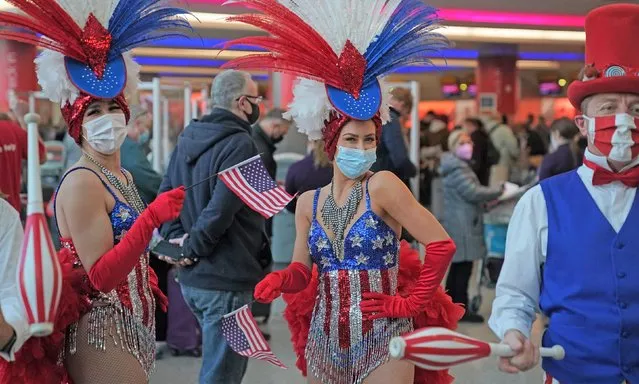
Performers entertain passengers at London Heathrow Airport's T3 on Monday, November 8, 2021, as the US reopens its borders to UK visitors in a significant boost to the travel sector. Thousands of travellers are jetting off on transatlantic flights for long-awaited reunions with family and friends. (Photo by Steve Parsons/PA Images via Getty Images)
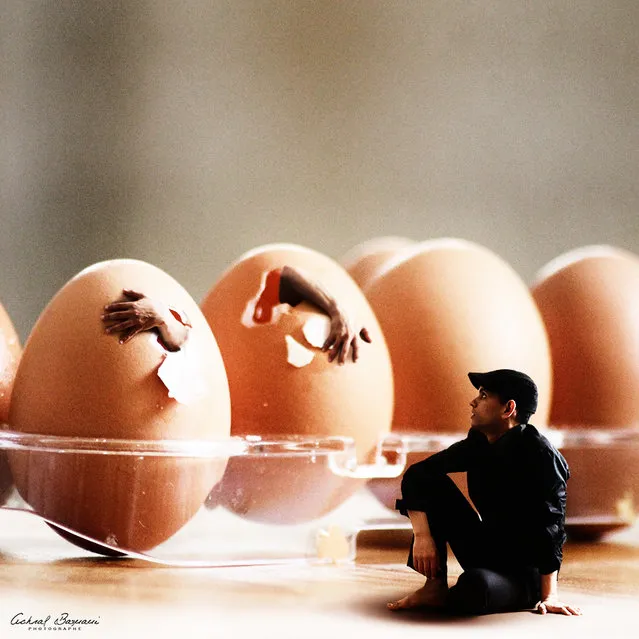
Moroccan photographer and filmmaker Achraf Baznani carries on the traditions of Surrealism with his wild, imaginative, and wholly impractical imagery. Among his inventive scenarios, small human figures—often the artist himself—appear trapped within glass jars or the size of a camera lens; in other works, Baznani more or less dissects his body, as for example, in one, he cleanly removes his brain from his cranium, or in another, twists off his hand, much as if it were a light bulb. Imparted throughout such works are strong senses of humor and wonder, and as such, Baznani’s art offers a Surrealistic take on life experience in the digital age.
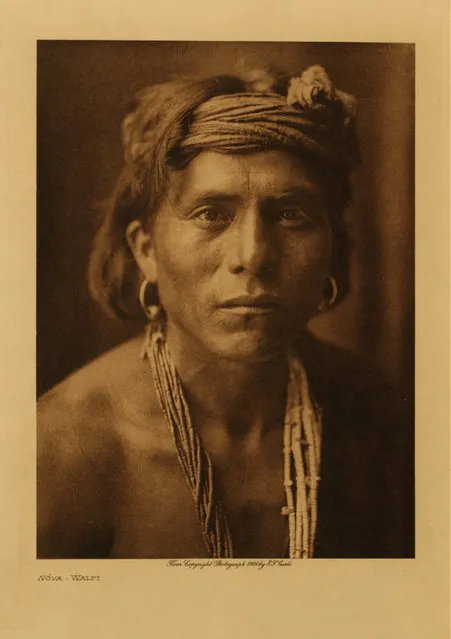
At the beginning of the 20th century, Edward S. Curtis set out to document what he saw as a disappearing race: the Native American. From 1907 to 1930, Curtis took more than 2,000 photos of 80 tribes stretching from the Great Plains to the Pacific Northwest and Alaska. He then published and sold these photos, along with narrative text, in 20 volumes of work known as “The North American Indian”. It is one of the most significant collections of its kind, “probably the most important photographic document of its age and its topic,” said Jeffrey Garrett, associate university librarian for Special Libraries at Northwestern University. (Photo by Edward S. Curtis)
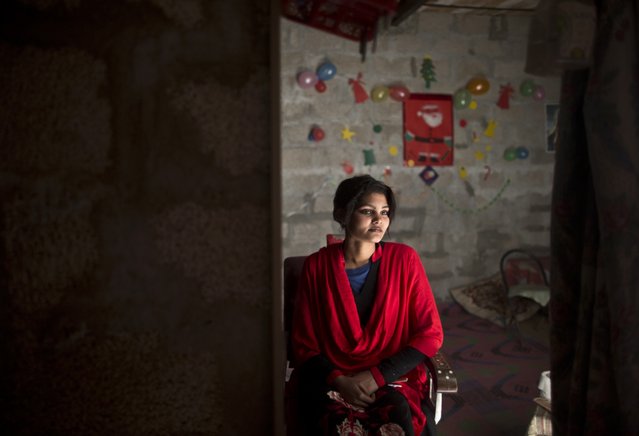
Pakistani Christian Maria Akbar, 15, checks herself in the mirror, after having her make up done by hairdresser Razia Rehmat, 39, in preparation for Christmas holiday, at a hair salon, in a slum that hosts Christian families, on the outskirts of Islamabad, Pakistan, Wednesday, December 24, 2014. (Photo by Muhammed Muheisen/AP Photo)