Loading...
Done
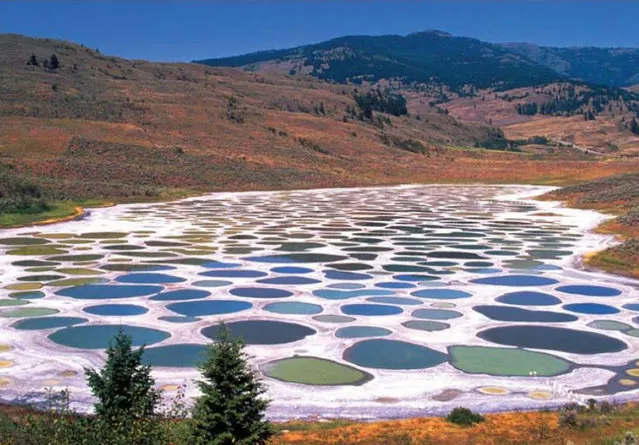
Kliluk, the Spotted Lake, Canada

Originally known to the First Nations of the Okanagan Valley as Khiluk, which was- and remains today revered as a sacred site producing therapeutic waters. During World War I the minerals of Spotted Lake were used in manufacturing ammunition. Later the area came under the control of the Ernest Smith Family, for a term of about 40 years. In 1979 Smith attempted to create interest in a spa at the lake. The First Nations responded with an effort to buy the lake; in October 2001 they finally struck a deal. First Nations arranged the purchase of 22 hectares of land for a total of $720,000, and contributed about 20% of the cost. The Indian Affairs Department paid the remainder.
Details
06 Mar 2015 12:59:00
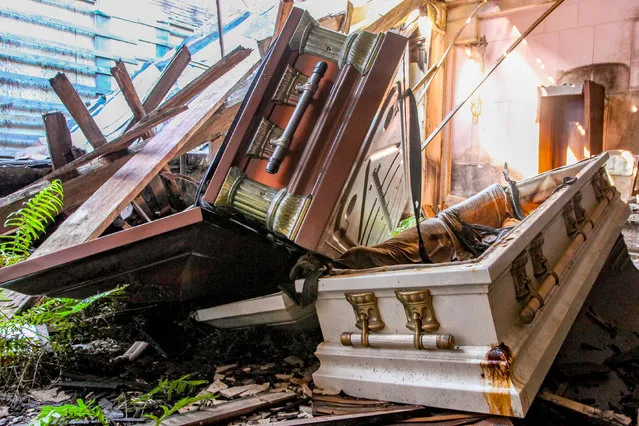
Urban Explorer Abandoned Southeast: “The place is pretty amazing, but I think my favorite part would be the upstairs storage area, where dozens of photos and books from the early 20th century were left behind”. (Photo by Abandoned Southeast/Caters News Agency)

The abandoned Moulton and Kyle Funeral Home in Jacksonville, Fla., which is more than 150 years old, was left to rot, with the premises eerily strewn with open caskets, a hearse and embalming chemicals. Much like the corpses that were laid to rest, the remains of this building too are slowly decomposing and decaying. Black mold has engulfed the walls, and chipped tiles from the collapsed ceilings cover many of the floors. (Photo by Abandoned Southeast/Caters News Agency)
Details
03 Apr 2018 00:03:00
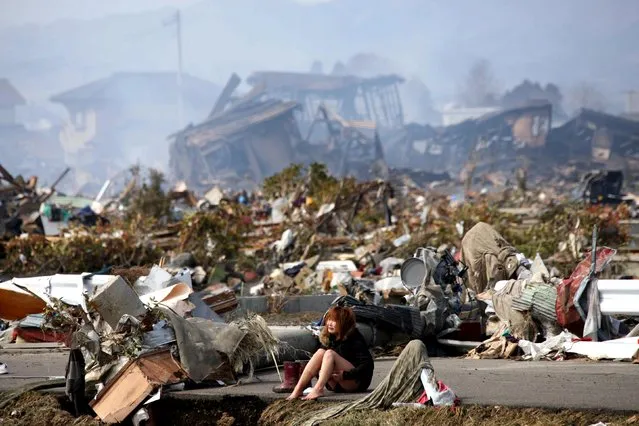
A woman cries while sitting on a road amid the destroyed city of Natori, Miyagi Prefecture in northern Japan March 13, 2011, after a massive earthquake and tsunami that are feared to have killed more than 10,000 people. (Photo by Asahi Shimbun/Reuters)

A woman cries while sitting on a road amid the destroyed city of Natori, Miyagi Prefecture in northern Japan March 13, 2011, after a massive earthquake and tsunami. Five years on from the tsunami that triggered meltdowns at Japan's Fukushima nuclear plant, the page is anything but turned. A magnitude 9 earthquake and towering tsunami on March 11, 2011 killed nearly 16,000 people along Japan's northeastern coast and left more than 2,500 missing. The 10-metre (33-foot) tsunami swept away everything in its path, including houses, ships, cars and farm buildings. (Photo by Asahi Shimbun/Reuters)
Details
09 Mar 2016 12:40:00
Commended. In late May, about a quarter of a million snow geese arrive from North America to nest on Wrangel Island, in northeastern Russia. They form the world's largest breeding colony of snow geese. Photographer Sergey Gorshkov spent two months on the remote island photographing the unfolding dramas. (Photo by Sergey Gorshkov/Veolia Environnement Wildlife Photographer)

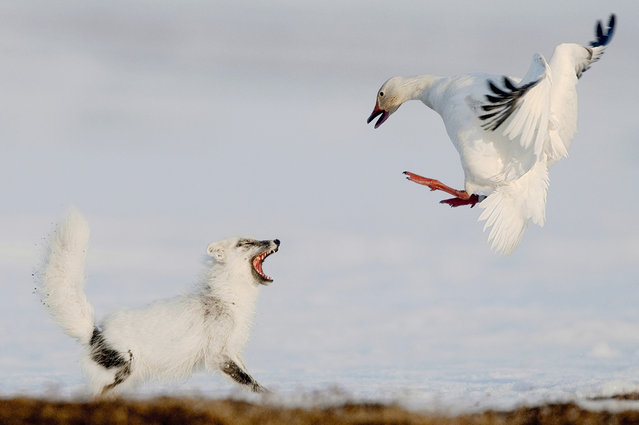
Commended. In late May, about a quarter of a million snow geese arrive from North America to nest on Wrangel Island, in northeastern Russia. They form the world's largest breeding colony of snow geese. Photographer Sergey Gorshkov spent two months on the remote island photographing the unfolding dramas. Arctic foxes take advantage of the abundance of eggs, caching surplus eggs for leaner times. But a goose (here the gander) is easily a match for a fox, which must rely on speed and guile to steal eggs. “The battles were fairly equal”, notes Sergey, “and I only saw a fox succeed in grabbing an egg on a couple of occasions, despite many attempts”. Surprisingly, “the geese lacked any sense of community spirit”, he adds, “and never reacted when a fox harassed a neighboring pair nesting close by”. (Photo by Sergey Gorshkov/Veolia Environnement Wildlife Photographer)
Details
16 Jun 2015 12:30:00
Winner. “This was taken in the South Ari Atolls, Maldives, as the south-west monsoon season was setting in. It features my partner – and dive buddy – Emma after surfacing at the end of the last dive of the day to find 1.5 metre swells and dark monsoon clouds. MICK RYAN, JUDGE: This beautiful portrait of a diver in an ocean swell below a menacing sky stands out this month for its emotional and elemental beauty. It is a reminder that while we may play among nature we are always dwarfed by its power and must be constantly on our guard”. (Photo by Simon Dunn/The Guardian)

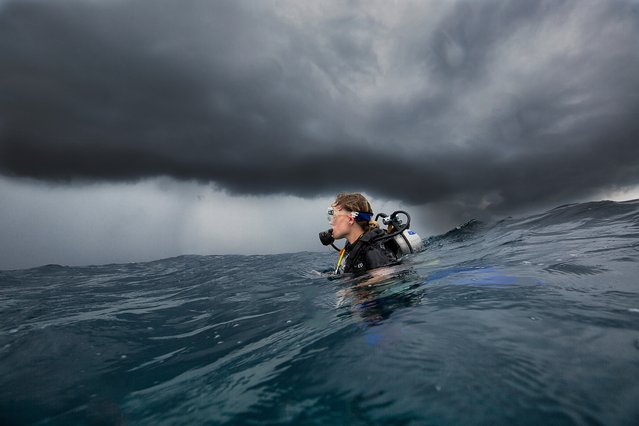
Winner. “This was taken in the South Ari Atolls, Maldives, as the south-west monsoon season was setting in. It features my partner – and dive buddy – Emma after surfacing at the end of the last dive of the day to find 1.5 metre swells and dark monsoon clouds. MICK RYAN, JUDGE: This beautiful portrait of a diver in an ocean swell below a menacing sky stands out this month for its emotional and elemental beauty. It is a reminder that while we may play among nature we are always dwarfed by its power and must be constantly on our guard”. (Photo by Simon Dunn/The Guardian)
Details
04 Oct 2016 10:55:00
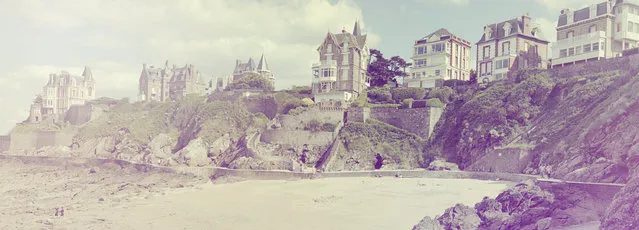
Panoramic Landscapes By Leo Caillard

The landscape series we’ve selected from Leo Caillard photography is a series of panoramic views of negative and information-filled spaces. The French photographer describes his remarkable work in the following terms: “a landscape series I chose to shoot in very high definition. A work about the action of humans in diverse types of environments; void of activity or full of information.


See Also: Street Stone By Alexis Persani And Leo Caillard
Details
14 Oct 2013 12:38:00
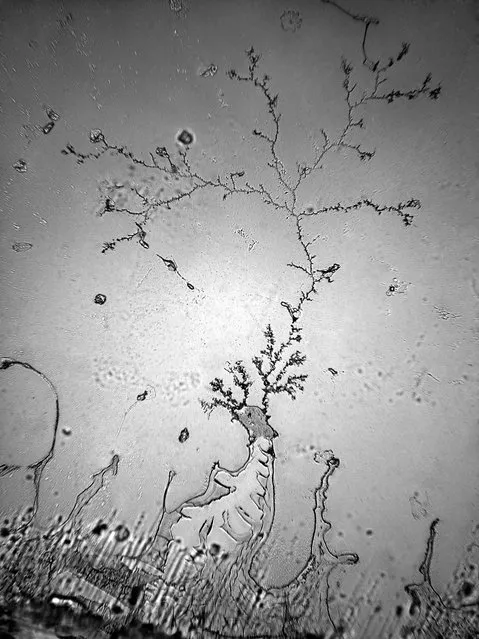
The Topography Of Tears By Rose-Lynn Fisher

Do tears of joy look the same as ones of woe—or ones from chopping onions? In “The Topography of Tears,” the Los Angeles-based photographer Rose-Lynn Fisher explores the physical terrain of one hundred tears emitted during a range of emotional states and physical reactions. Using a Zeiss microscope with an attached digital camera, she captures the composition of tears enclosed in glass slides, magnified between 10x and 40x. “There are many factors that determine the look of each tear image, including the viscosity of the tear, the chemistry of the weeper, the settings of the microscope, and the way I process the images afterwards,” she says.
Details
21 May 2014 17:46:00
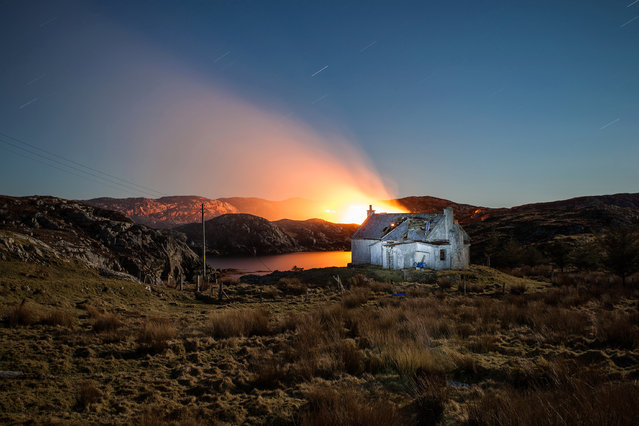
“Peat Fire”. Taken in March 2013 on the east coast of Harris. The fire is from muir-burning, when farmers burn off grasses and heather to improve grazing for their sheep. (Photo by John Maher/The Guardian)

Photographer John Maher, once the drummer with punk bank Buzzcocks, travelled to the Outer Hebrides to photograph abandoned crofters’ cottages – many of which, like this one, have seemingly been untouched since. Here: “Peat Fire”. Taken in March 2013 on the east coast of Harris. The fire is from muir-burning, when farmers burn off grasses and heather to improve grazing for their sheep. (Photo by John Maher/The Guardian)
Details
19 Aug 2016 11:39:00