Loading...
Done
People gather on a hill near the Chopin Airport to watch aeroplanes taking off, in Warsaw, Poland, Sunday, September 9, 2018. (Photo by Alik Keplicz/AP Photo)

People gather on a hill near the Chopin Airport to watch aeroplanes taking off, in Warsaw, Poland, Sunday, September 9, 2018. (Photo by Alik Keplicz/AP Photo)
Details
12 Sep 2018 08:55:00
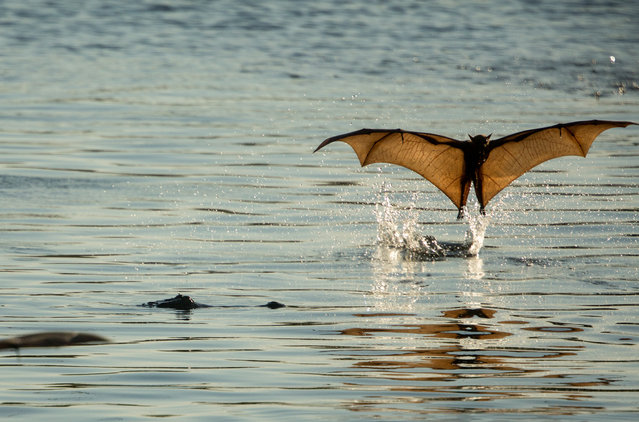
A little red flying fox dips a toe in a lake at the mouth of Katherine gorge in the Northern Territory, Nitmiluk national park, Australia on September 20, 2017. (Photo by Glenn Campbell/AAP)

A little red flying fox dips a toe in a lake at the mouth of Katherine gorge in the Northern Territory, Nitmiluk national park, Australia on September 20, 2017. (Photo by Glenn Campbell/AAP)
Details
24 Sep 2017 06:28:00
Student of Meiji University Yuki Hou licks a screen of Taste the TV (TTTV), a prototype lickable TV screen that can imitate the flavours of various foods, during its demonstration at the university in Tokyo, Japan, December 22, 2021. (Photo by Kim Kyung-Hoon/Reuters)

Student of Meiji University Yuki Hou licks a screen of Taste the TV (TTTV), a prototype lickable TV screen that can imitate the flavours of various foods, during its demonstration at the university in Tokyo, Japan, December 22, 2021. (Photo by Kim Kyung-Hoon/Reuters)
Details
06 Jan 2022 07:37:00
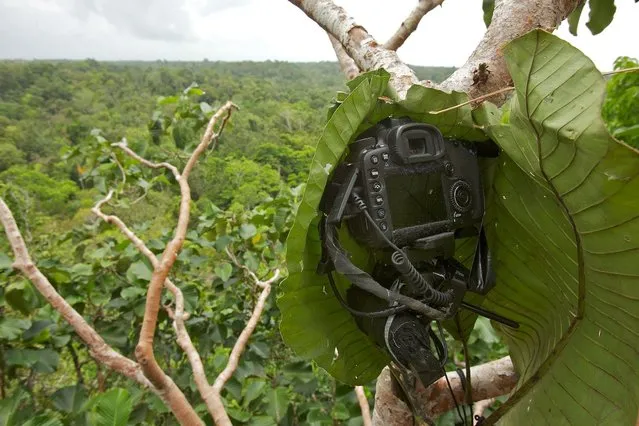
Tim Laman - Wildlife Photojournalist

Tim Laman is a field biologist and wildlife photojournalist. His pioneering research in the rain forest canopy in Borneo led to a PhD from Harvard and his first National Geographic article in 1997. Since then, he has pursued his passion for exploring wild places and documenting little-known and endangered wildlife by becoming a regular contributor to National Geographic. He has eighteen articles to his credit to date, all of which have had a conservation message. Some have focused on endangered species such as Orangutans or Hornbills, while others, such as a series of articles on Conservation International’s Biodiversity Hotspots, have highlighted regions under intense pressure.
Details
14 Sep 2013 10:13:00
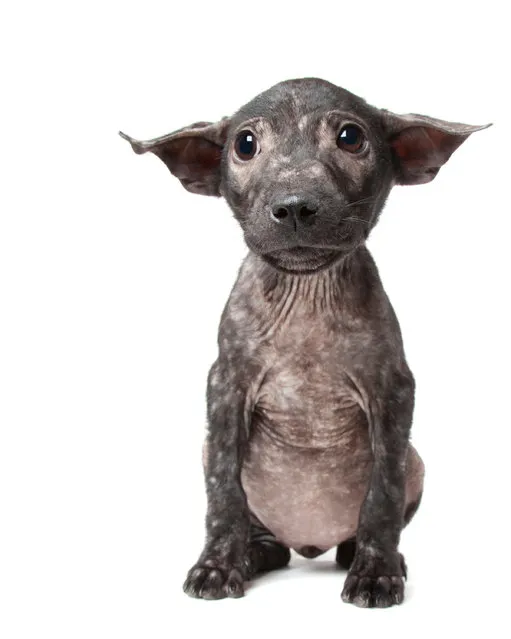
“Bali Pip”. Bali street dog. Had the skin condition mange. (Photo by Alex Cearns/The Guardian)

For her book “Perfect Imperfection”, the Australian pet photographer Alex Cearns set out to capture the personalities of animals who adapt to their damaged or different bodies without complaint. Part of the proceeds from sales of Perfect Imperfection go to the Australian Animal Cancer Foundation. Here: “Bali Pip”. Bali street dog. Had the skin condition mange. (Photo by Alex Cearns/The Guardian)
Details
06 Apr 2018 00:03:00
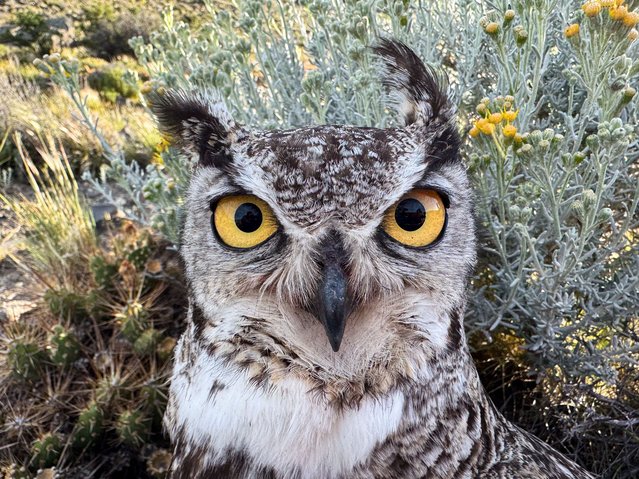
Lesser Horned Owl (Bubo magellanicus) is seen at the meadows of Patagonian valley in Santa Cruz, Argentina on December 21, 2024. Lesser Horned Owl is a large owl of the genus Bubo found in southern South America, with its distinctive “horns”, black-rimmed face and heavily striped abdomen. (Photo by Mehmet Emin Yogurtcuoglu/Anadolu via Getty Images)

Lesser Horned Owl (Bubo magellanicus) is seen at the meadows of Patagonian valley in Santa Cruz, Argentina on December 21, 2024. Lesser Horned Owl is a large owl of the genus Bubo found in southern South America, with its distinctive “horns”, black-rimmed face and heavily striped abdomen. (Photo by Mehmet Emin Yogurtcuoglu/Anadolu via Getty Images)
Details
12 Jan 2025 04:39:00
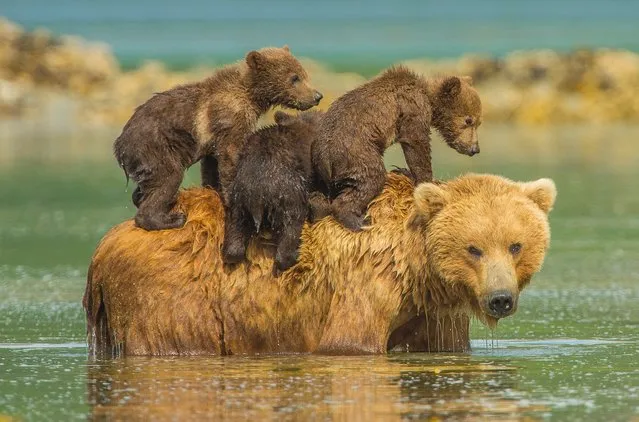
A mother bear takes a dip in the water to cool off in the warm summer sun but refuses to leave her three youngsters behind – so they climb aboard her back. (Photo by Jon Langeland/Solent News & Photo Agency)

A mother bear takes a dip in the water to cool off in the warm summer sun but refuses to leave her three youngsters behind – so they climb aboard her back. (Photo by Jon Langeland/Solent News & Photo Agency)
Details
13 Sep 2014 12:10:00
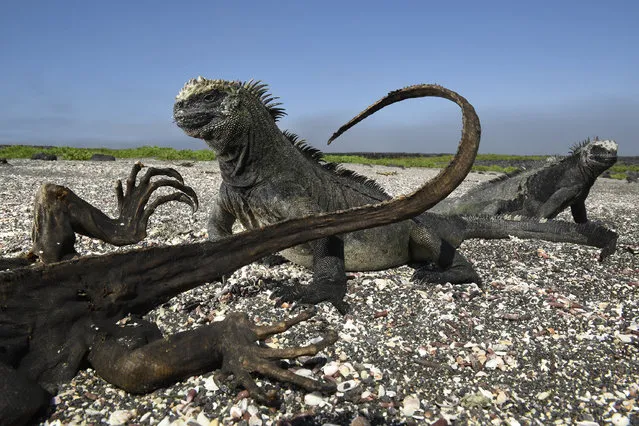
Galapagos – Rocking the Cradle: Four major ocean currents converge along the Galapagos archipelago, creating the conditions for an extraordinary diversity of animal life, April 25, 2016. The islands are home to at least 7,000 flora and fauna species, of which 97 percent of the reptiles, 80 percent of the land birds, 50 percent of the insects and 30 percent of the plants are endemic. The local ecosystem is highly sensitive to the changes in temperature, rainfall and ocean currents that characterize the climatic events known as El Niño and La Niña. These changes cause marked fluctuations in weather and food availability. Many scientists expect the frequency of El Niño and La Niña to increase as a result of climate change, making the Galapagos a possible early-warning location for its effects. (Photo by Thomas P. Peschak for National Geographic/World Press Photo)

Galapagos – Rocking the Cradle: Four major ocean currents converge along the Galapagos archipelago, creating the conditions for an extraordinary diversity of animal life, April 25, 2016. The islands are home to at least 7,000 flora and fauna species, of which 97 percent of the reptiles, 80 percent of the land birds, 50 percent of the insects and 30 percent of the plants are endemic. (Photo by Thomas P. Peschak for National Geographic/World Press Photo)

Details
16 Apr 2018 00:01:00