Loading...
Done
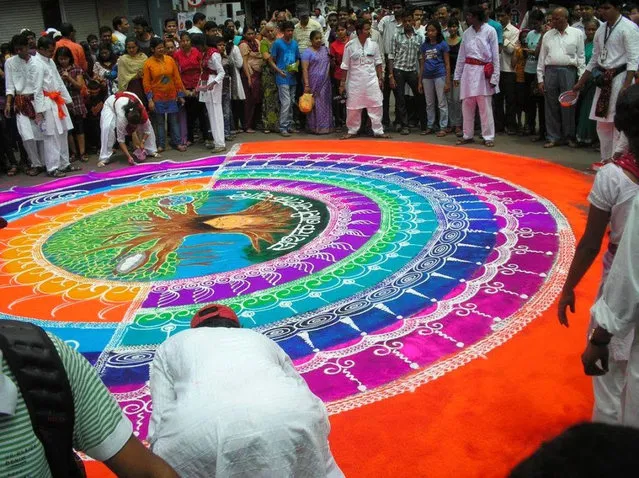
Rangoli Folk Art From India

Rangoli, also known as kolam or Muggu, is a folk art from India in which patterns are created on the floor in living rooms or courtyards using materials such as colored rice, dry flour, colored sand or flower petals. It is usually made during Diwali, Onam, Pongal and other Indian festivals. They are meant to be sacred welcoming areas for the Hindu deities. The ancient symbols have been passed down through the ages, from each generation to the next, keeping both the art form and the tradition alive. Similar practices are followed in different Indian states: in Tamil Nadu, there is Kolam in Tamil Nadu; Mandana in Rajasthan; Chaookpurna in Chhattisgarh; Alpana in West Bengal; Aripana in Bihar; Chowk pujan in Uttar Pradesh; Muggu in Andhra Pradesh and others.
Details
16 Jun 2014 10:37:00
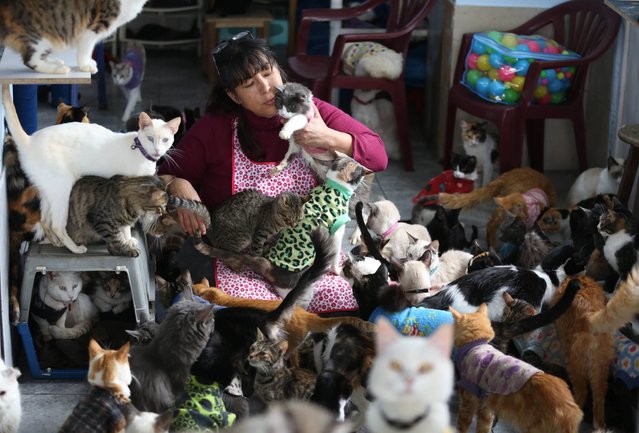
In this August 2, 2014 photo, Maria Torero, plays with a group of 175 cats with leukemia in her home in Lima, Peru. Torero says caring for cats with feline leukemia is her responsibility. Anybody else can care for healthy animals. (Photo by Martin Mejia/AP Photo)

“At her job, Maria Torero cares for sick human beings. At home, she lavishes love on slowly dying cats – 175 of them at last count. The 45-year-old nurse has turned her two-story, eight-room apartment into a hospice for cats with feline leukemia, scattering it with scores of feeding dishes and at least two dozen boxes litter boxes. Some have suggested she shelter healthy cats instead. “That's not my role”, she told The Associated Press. “I'm a nurse. My duty is to the cats that nobody cares about”. She said that “people don't adopt adult cats, especially if they are terminally ill”. – Franklin Briceno via Associated Press. (Photo by Martin Mejia/AP Photo)
Details
24 Aug 2014 09:28:00


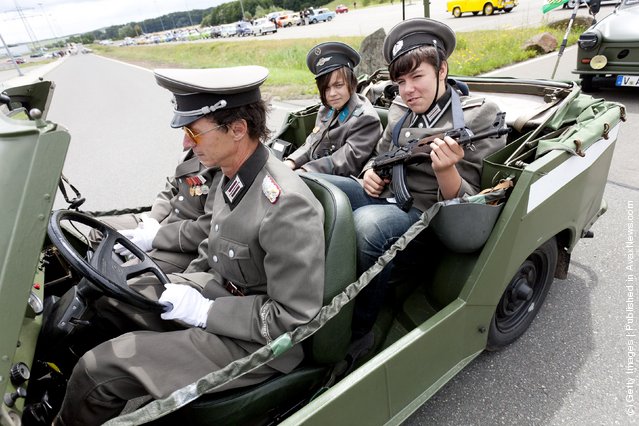
“The Trabant is a car that was produced by former East German auto maker VEB Sachsenring Automobilwerke Zwickau in Zwickau, Sachsen. It was the most common vehicle in East Germany, and was also exported to countries both inside and outside the communist bloc. The main selling points was that it had room for four adults and luggage in a compact, light and durable shell and that it was fast (when introduced) and durable. With its mediocre performance, smoky two-stroke engine, and production shortages, the Trabant is often cited as an example of the disadvantages of centralized planning; on the other hand, it is regarded with derisive affection as a symbol of the failed former East Germany and of the fall of communism (in former West Germany, as many East Germans streamed into West Berlin and West Germany in their Trabants after the opening of the Berlin Wall in 1989). It was in production without any significant changes for nearly 30 years with 3,096,099 Trabants produced in total”. – Wikipedia

Photo: Enthusiasts weared in uniforms of the former eastern german army trive in a military Trabant car as fans and owners of East German-era Trabant cars gather at the 2011 International Trabantfahrer Treffen (International Trabant Drivers Meeting) on June 26, 2011 in Zwickau, Germany. The Trabant, also known as the Trabi, was among the main cars produced in communist East Germany and built by VEB Sachsenring Automobilwerke in Zwickau for 30 years until 1989. Today the car has cult status for many followers and one company, IndiKar, is even seeking to revive the brand in a modern, electric version. (Photo by Carsten Koall/Getty Images)

Details
27 Jun 2011 12:21:00
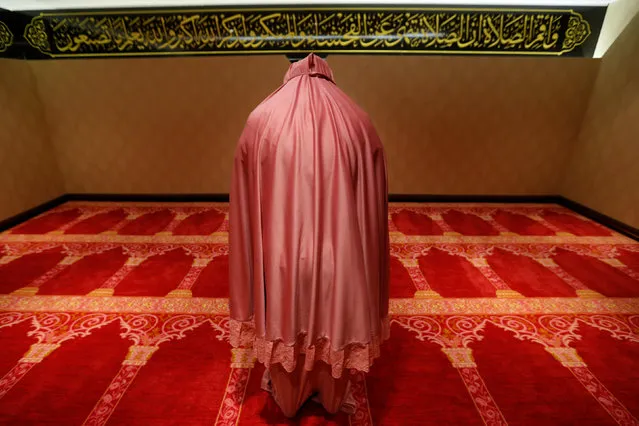
A Muslim woman prays at the Al Meroz hotel in Bangkok, Thailand, August 29, 2016. (Photo by Chaiwat Subprasom/Reuters)

A Muslim woman prays at the Al Meroz hotel in Bangkok, Thailand, August 29, 2016. Predominately Buddhist Thailand has opened its first halal hotel as hopes to attract more Muslim visitors and boost one of the few bright spots in its economy. (Photo by Chaiwat Subprasom/Reuters)
Details
01 Sep 2016 10:32:00
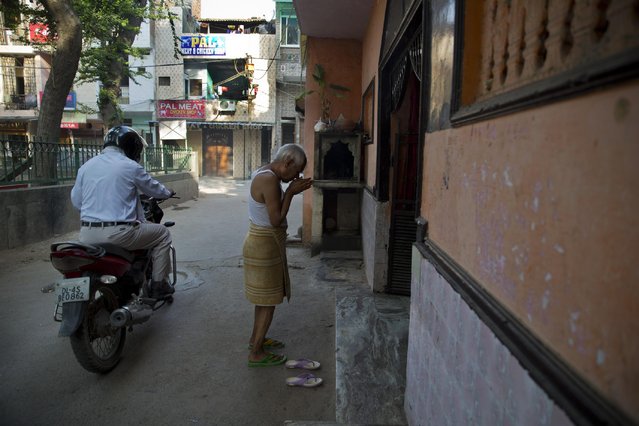
In this June 8, 2015 photo, Omkarnath, who goes by the name “Medicine Baba”, pays his reverence at a neighborhood temple as he begins his day in New Delhi, India. The chatty, 79-year-old retired blood-bank technician has been collecting unused prescription drugs from the affluent for the past eight years, and distributing whatever hasn't expired to patients who need medicines they cannot afford. (Photo by Saurabh Das/AP Photo)

In this June 8, 2015 photo, Omkarnath, who goes by the name “Medicine Baba”, pays his reverence at a neighborhood temple as he begins his day in New Delhi, India. The chatty, 79-year-old retired blood-bank technician has been collecting unused prescription drugs from the affluent for the past eight years, and distributing whatever hasn't expired to patients who need medicines they cannot afford. (Photo by Saurabh Das/AP Photo)
Details
25 Jul 2015 12:18:00
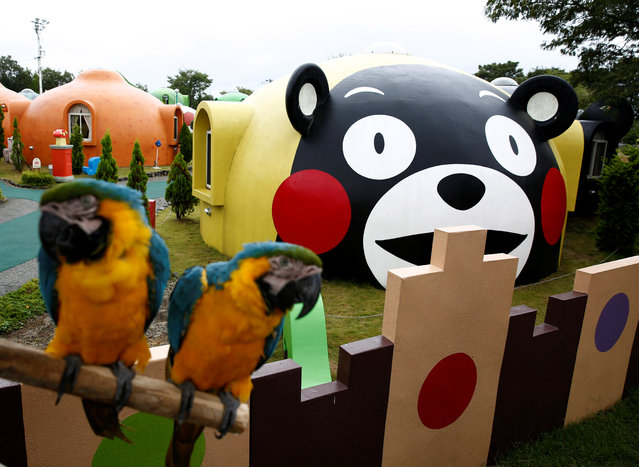
A quake-resistant dome house decorated with Japan's popular “Kumamon” bear character is pictured at the Aso Farm Land resort in Aso, Japan on November 6, 2017. (Photo by Kim Kyung-Hoon/Reuters)

A quake-resistant dome house decorated with Japan's popular “Kumamon” bear character is pictured at the Aso Farm Land resort in Aso, Japan on November 6, 2017. Cabins modelled after Japanese sweets and made from polystyrene foam withstood last year's deadly earthquakes in Kumamoto prefecture. (Photo by Kim Kyung-Hoon/Reuters)
Details
09 Nov 2017 05:18:00
Bonbibi, Treehouse Point, Fall City, WA. The Bonbibi is balanced on two steel yokes. The yokes spread out the load and allow for tree growth and movement in the wind. A small deck hangs from the beams below and uses the treehouse itself to shelter guests. (Photo by Pete Nelson)

Bonbibi, Treehouse Point, Fall City, WA. The Bonbibi is balanced on two steel yokes. The yokes spread out the load and allow for tree growth and movement in the wind. A small deck hangs from the beams below and uses the treehouse itself to shelter guests. (Photo by Pete Nelson)
Details
16 May 2014 16:00:00
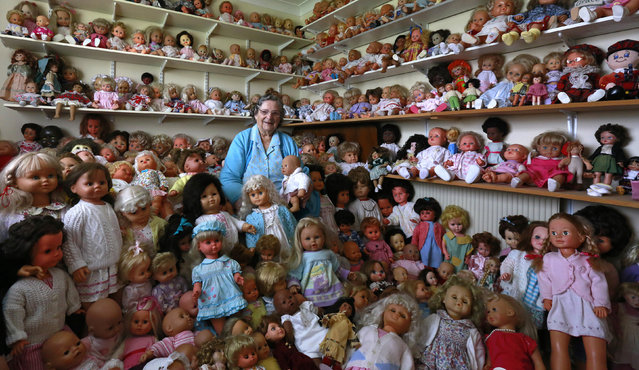
Mary Hickey poses with her collection of dolls at her home in Ashbourne, Ireland October 9, 2013. Hickey has been collecting the dolls for over thirty years and now owns over 420 dolls. (Photo by Cathal McNaughton/Reuters)

Mary Hickey poses with her collection of dolls at her home in Ashbourne, Ireland October 9, 2013. Hickey has been collecting the dolls for over thirty years and now owns over 420 dolls. (Photo by Cathal McNaughton/Reuters)
Details
16 Mar 2017 00:01:00