Loading...
Done
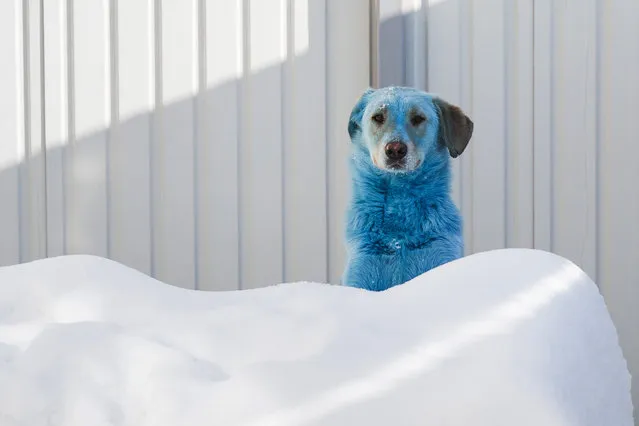
A dog at the Zoozashchita-NN veterinary clinic in Nizhny Novgorod, Russia on February 19, 2021. On February 13, 13 stray dogs with bright blue fur were found and caught at the Dzerzhinskoye Steklo (Dzerzhinsk Glass) factory producing acrylic glass and prussic acid in the city of Dzerzhinsk. The dogs' fur tested positive for the Prussian blue pigment; now the dogs are under supervision at the Zoozashchita-NN vet clinic in Nizhny Novgorod. (Photo by Mikhail Solunin/TASS)

A dog at the Zoozashchita-NN veterinary clinic in Nizhny Novgorod, Russia on February 19, 2021. On February 13, 13 stray dogs with bright blue fur were found and caught at the Dzerzhinskoye Steklo (Dzerzhinsk Glass) factory producing acrylic glass and prussic acid in the city of Dzerzhinsk. The dogs' fur tested positive for the Prussian blue pigment; now the dogs are under supervision at the Zoozashchita-NN vet clinic in Nizhny Novgorod. (Photo by Mikhail Solunin/TASS)
Details
11 Jan 2022 07:20:00
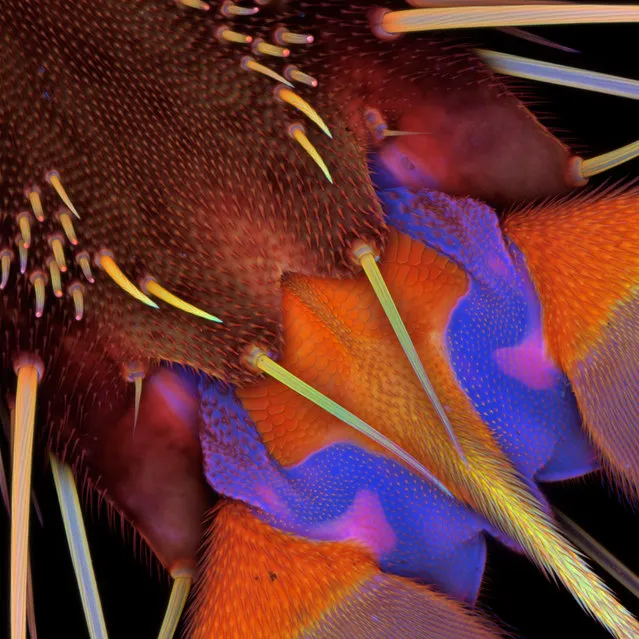
Pretarsus of the third leg of a female drone fly (Eristalis tenax), ventral view, by Dr. Jan Michels, Institute of Zoology, Christian-Albrechts-University of Kiel, Germany. (Photo by Olympus BioScapes)

“Microscope images forge an extraordinary bond between science and art, said Hidenao Tsuchiya, Olympus America's Vice President and General Manager for the Scientific Equipment Group. We founded this competition to focus on the fascinating stories coming out of today's life science research laboratories. The thousands of images that people have shared with the competition over the years reflect some of the most exciting work going on in research today – work that can help shed light on the living universe and ultimately save lives. We look at BioScapes and these beautiful images as sources of education and inspiration to us and the world”. – OlympusBioScapes

Photo: Pretarsus of the third leg of a female drone fly (Eristalis tenax), ventral view, by Dr. Jan Michels, Institute of Zoology, Christian-Albrechts-University of Kiel, Germany. (Photo by Olympus BioScapes)
Details
29 Jul 2012 09:20:00
This photo provided April 14, 2023, by the North Korean government, shows North Korean leader Kim Jong Un, center, inspects what it says is the test-launch of Hwasong-18 intercontinental ballistic missile Thursday, April 13, 2023 at an undisclosed location, North Korea. Independent journalists were not given access to cover the event depicted in this image distributed by the North Korean government. The content of this image is as provided and cannot be independently verified. Korean language watermark on image as provided by source reads: “KCNA” which is the abbreviation for Korean Central News Agency. (Photo by Korean Central News Agency/Korea News Service via AP Photo)

This photo provided April 14, 2023, by the North Korean government, shows North Korean leader Kim Jong Un, center, inspects what it says is the test-launch of Hwasong-18 intercontinental ballistic missile Thursday, April 13, 2023 at an undisclosed location, North Korea. Independent journalists were not given access to cover the event depicted in this image distributed by the North Korean government. The content of this image is as provided and cannot be independently verified. Korean language watermark on image as provided by source reads: “KCNA” which is the abbreviation for Korean Central News Agency. (Photo by Korean Central News Agency/Korea News Service via AP Photo)
Details
31 Jul 2024 06:24:00


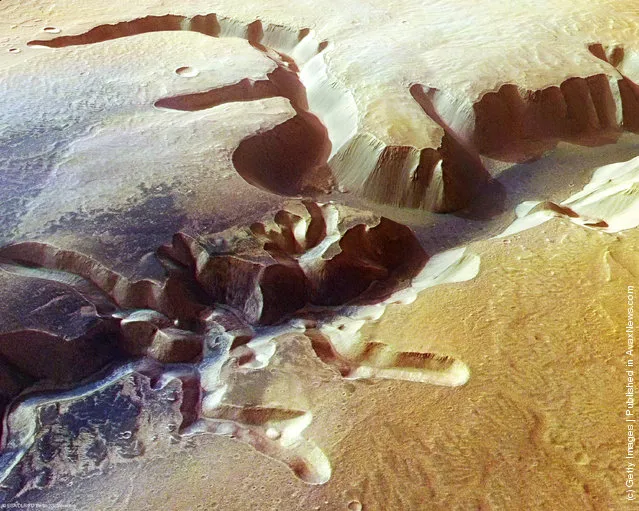
“Echus Chasma is a chasma in the Lunae Planum high plateau north of the Valles Marineris canyon system of Mars. Clay has been found in Echus Chasma that means that water once sat there for a time. Echus Chasma is approximately 100 km long and 10 km wide, with valleys ranging in depth from around 1 km to 4 km”. – Wikipedia

Photo: In this handout image supplied by the European Space Agency (ESA) on July 16, 2008, The Echus Chasma, one of the largest water source regions on Mars, is pictured from ESA's Mars Express. The data was acquired on September 25, 2005. The dark material shows a network of light-coloured, incised valleys that look similar to drainage networks known on Earth. It is still debated whether the valleys originate from precipitation, groundwater springs or liquid or magma flows on the surface. (Photo by ESA via Getty Images)
Details
18 Jul 2011 11:47:00


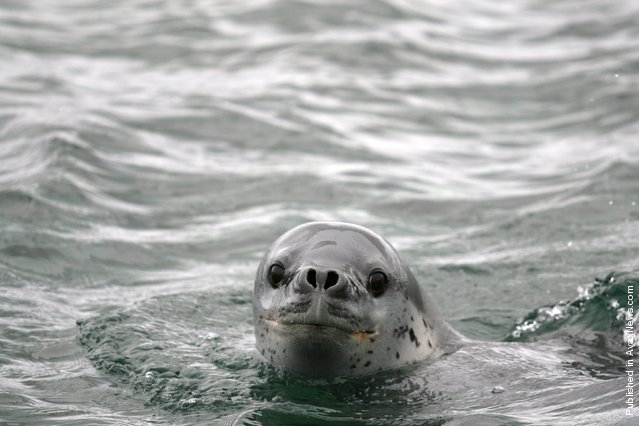
“The leopard seal (Hydrurga leptonyx), also referred to as the sea leopard, is the second largest species of seal in the Antarctic (after the southern elephant seal). It is most common in the southern hemisphere along the coast of Antarctica and on most sub-Antarctic islands, but can also be found on the coasts of southern Australia, Tasmania, South Africa, New Zealand, Lord Howe Island, Tierra del Fuego, the Cook Islands, and the Atlantic coast of South America. It can live twenty-six years, possibly more. Orcas and large sharks are the only natural predators of leopard seals”. – Wikipedia

Photo by: Gilad Rom; Source: Flickr
Details
13 Nov 2011 11:24:00
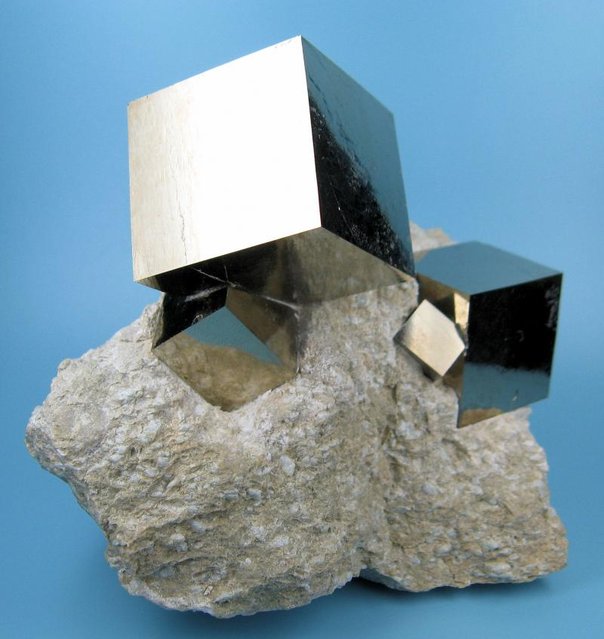
Pyrite Cubic Crystals

The mineral pyrite, or iron pyrite, also known as fool's gold, is an iron sulfide with the formula FeS2. This mineral's metallic luster and pale brass-yellow hue give it a superficial resemblance to gold, hence the well-known nickname of fool's gold. The color has also led to the nicknames brass, brazzle, and Brazil, primarily used to refer to pyrite found in coal.
In crystallography, the cubic (or isometric) crystal system is a crystal system where the unit cell is in the shape of a cube. This is one of the most common and simplest shapes found in crystals and minerals.
Details
23 Nov 2013 13:31:00
A Ballet Paraisópolis student wearing a face mask rehearses amidst the coronavirus (COVID-19) pandemic on August 13, 2020 in Sao Paulo, Brazil. The Ballet Paraisópolis is a project that teaches dance to children and young people in the Paraisópolis community in order to encourage them to seek better life opportunities. Founded in 2012 by ballerina, teacher and choreographer, Monica Tarragó, Ballet Paraisópolis has a total of 200 students and another 2,000 on the waiting list. (Photo by Alexandre Schneider/Getty Images)

A Ballet Paraisópolis student wearing a face mask rehearses amidst the coronavirus (COVID-19) pandemic on August 13, 2020 in Sao Paulo, Brazil. The Ballet Paraisópolis is a project that teaches dance to children and young people in the Paraisópolis community in order to encourage them to seek better life opportunities. Founded in 2012 by ballerina, teacher and choreographer, Monica Tarragó, Ballet Paraisópolis has a total of 200 students and another 2,000 on the waiting list. (Photo by Alexandre Schneider/Getty Images)
Details
02 Sep 2020 00:01:00
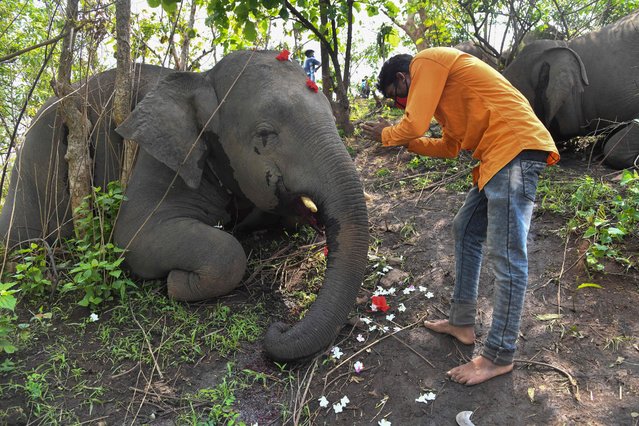
A villager offers prayer to a dead body of an elephant, which is killed by lightning at atop of Bamuni hill in Assam's Nagaon district, on May 14, 2021. 18 wild elephants were found dead atop Bamuni Hills in Assam's Nagaon district today after lightning struck them during the showers in the area on May 12, 2021. At least 18 elephants are suspected to have been killed by lightning in northeastern India, officials said on May 13 as they launched a probe into the incident. (Photo by Biju Boro/AFP Photo)

A villager offers prayer to a dead body of an elephant, which is killed by lightning at atop of Bamuni hill in Assam's Nagaon district, on May 14, 2021. 18 wild elephants were found dead atop Bamuni Hills in Assam's Nagaon district today after lightning struck them during the showers in the area on May 12, 2021. At least 18 elephants are suspected to have been killed by lightning in northeastern India, officials said on May 13 as they launched a probe into the incident. (Photo by Biju Boro/AFP Photo)
Details
19 May 2021 09:19:00