Loading...
Done
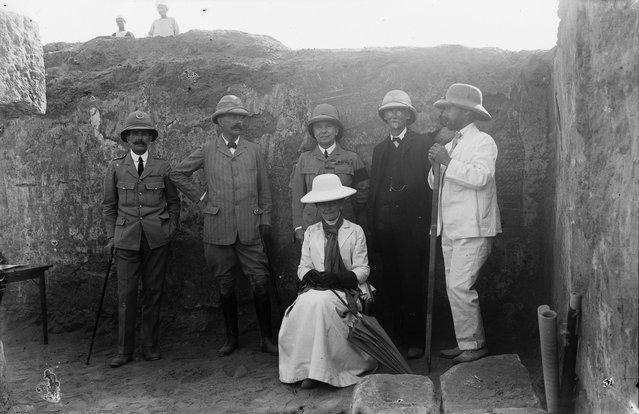
Remarkable discoveries were made, like the decapitated head of a bronze statue of Roman emperor Augustus, sacked from a raid on Roman garrisons further north in Egypt. Here: A group visiting the excavations at Meroë, including (from left) Midwinter Bey, director of Sudan Railways; Lord Kitchener; General Sir Francis Reginald Wingate, Sirdar of the Egyptian Army; Professor Archibald Sayce; John Garstang; and Lady Catherine Wingate, 1911. (Photo by Garstang Museum of Archaeology)

The city of Meroë laid undiscovered for two millennia before British archaeologist John Garstang excavated it in the early 20th century. Garstang took the radical decision to document his discoveries with photography – and immortalised an ancient world. “Meroë: Africa’s Forgotten Empire” is being shown until 14 September at Garstang Museum of Archaeology, Liverpool. Here: A group visiting the excavations at Meroë, including (from left) Midwinter Bey, director of Sudan Railways; Lord Kitchener; General Sir Francis Reginald Wingate, Sirdar of the Egyptian Army; Professor Archibald Sayce; John Garstang; and Lady Catherine Wingate, 1911. (Photo by Garstang Museum of Archaeology)
Details
15 Jun 2016 14:49:00
This computer image provided Monday March 17, 2014 by the Press Office of socialist candidate to Paris Mayor Anne Hidalgo, shows a tunnel of abandoned railway from the 19th century, now ramshackle and overgrown, turned into a cinema. Hidalgo’s plan envisions not just a green space but in the tunnels, places for farming fish and mushrooms. (Photo by AP Photo/Anne Hidalgo's Press Office)

This computer image provided Monday March 17, 2014 by the Press Office of socialist candidate to Paris Mayor Anne Hidalgo, shows a tunnel of abandoned railway from the 19th century, now ramshackle and overgrown, turned into a cinema. Hidalgo’s plan envisions not just a green space but in the tunnels, places for farming fish and mushrooms. (Photo by AP Photo/Anne Hidalgo's Press Office)
Details
26 Mar 2014 08:43:00
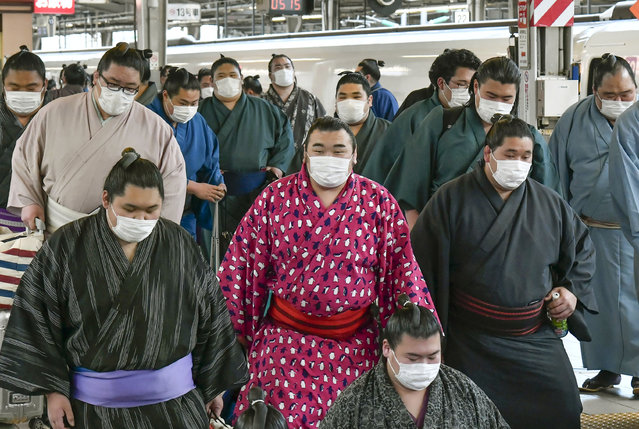
In this Sunday, February 23, 2020, photo, sumo wrestlers wearing masks arrive at Shin Osaka railway station in Osaka, western Japan. A viral outbreak that began in China has infected more than 79,000 people globally. The World Health Organization has named the illness COVID-19, referring to its origin late last year and the coronavirus that causes it. (Photo by Kyodo News via AP Photo)

In this Sunday, February 23, 2020, photo, sumo wrestlers wearing masks arrive at Shin Osaka railway station in Osaka, western Japan. A viral outbreak that began in China has infected more than 79,000 people globally. The World Health Organization has named the illness COVID-19, referring to its origin late last year and the coronavirus that causes it. (Photo by Kyodo News via AP Photo)
Details
10 Mar 2020 00:03:00
A child of a migrant worker drinks water as his mother holds him while waiting in a queue for transport to reach to a railway station to board a train to their home state of northern Uttar Pradesh, after a limited reopening of India's giant rail network following a nearly seven-week lockdown to slow the spreading of the coronavirus disease (COVID-19), in Ahmedabad, India, May 15, 2020. (Photo by Amit Dave/Reuters)

A child of a migrant worker drinks water as his mother holds him while waiting in a queue for transport to reach to a railway station to board a train to their home state of northern Uttar Pradesh, after a limited reopening of India's giant rail network following a nearly seven-week lockdown to slow the spreading of the coronavirus disease (COVID-19), in Ahmedabad, India, May 15, 2020. (Photo by Amit Dave/Reuters)
Details
23 May 2020 00:01:00
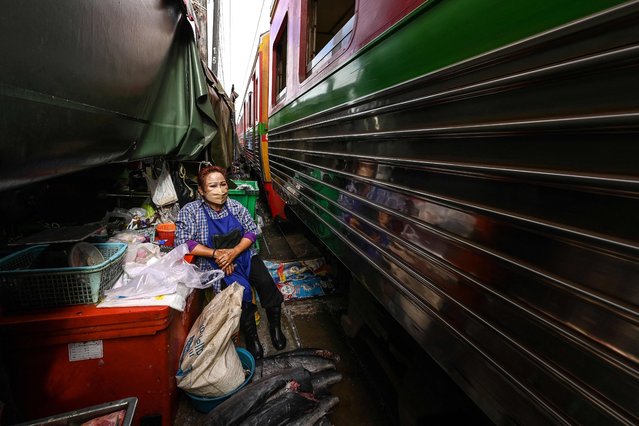
This photograph taken on June 4, 2022 shows fish vendor Somporn Thathom sitting at her stall as a passenger train passes through the Mae Klong railway market in Samut Songkhram province, around 80 kms (50 miles) southwest of Bangkok. Six times a day at the market, local customers and foreign tourists scramble into nooks and crannies while vendors calmly move their woven baskets of goods away from the tracks and close their umbrellas. (Photo by Manan Vatsyayana/AFP Photo)

This photograph taken on June 4, 2022 shows fish vendor Somporn Thathom sitting at her stall as a passenger train passes through the Mae Klong railway market in Samut Songkhram province, around 80 kms (50 miles) southwest of Bangkok. Six times a day at the market, local customers and foreign tourists scramble into nooks and crannies while vendors calmly move their woven baskets of goods away from the tracks and close their umbrellas. (Photo by Manan Vatsyayana/AFP Photo)
Details
29 Jun 2022 04:38:00
Jaguar attacks a Yacare Caiman. (Photo by Barcroft Media)

These stunning images show the 20-stone cat striking with lightning speed while the eight-foot reptile basks on a river island. The scene unfolded by the Cuiabá River in the Pantanal Wetlands of western Brazil. Photo: Jaguar attacks a Yacare Caiman. (Photo by Barcroft Media)
Details
28 Oct 2013 10:17:00
The world's first 3D printed car – the Stratti – was built in just 45 hours at the International Manufacturing Technology Show which took place between September 8 – 13, 2014. The Strati, which is Italian for layers, has a chassis body made of one solid piece and has a top speed of 40mph. (Photo by Barcroft Media/ABACAPress)

The world's first 3D printed car – the Stratti – was built in just 45 hours at the International Manufacturing Technology Show which took place between September 8 – 13, 2014. The Strati, which is Italian for layers, has a chassis body made of one solid piece and has a top speed of 40mph. The tyres, seats, wheels, battery, wiring, suspension, electric motor and window shield of the revolutionary vehicle were made using conventional methods. (Photo by Barcroft Media/ABACAPress)
Details
24 Oct 2014 12:44:00
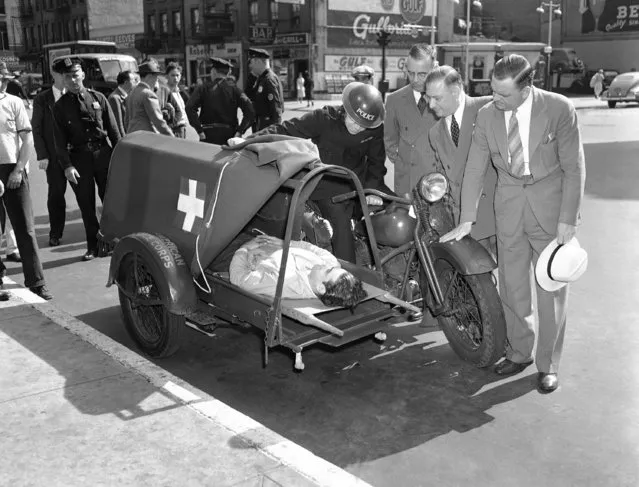
Developed for the British American Ambulance Corps, this new motorcycle ambulance is capable of speeding wounded soldiers 90 miles an hour from the front lines to field hospitals. Its springs are synchronized with the patient?s heartbeat to avoid increasing fever when traveling over various Terrain. Viewing it in New York  August 27, 1941, are left to right: constable Herbert Scott of England, driver; William E. Detlor, whose firm developed the vehicle; M. W. Stand, inspector-general of Civilian Defense, and Maj. Edward Riekert, also. (Photo by AP Photo)

Developed for the British American Ambulance Corps, this new motorcycle ambulance is capable of speeding wounded soldiers 90 miles an hour from the front lines to field hospitals. Its springs are synchronized with the patient's heartbeat to avoid increasing fever when traveling over various Terrain. Viewing it in New York August 27, 1941, are left to right: constable Herbert Scott of England, driver; William E. Detlor, whose firm developed the vehicle; M. W. Stand, inspector-general of Civilian Defense, and Maj. Edward Riekert, also. (Photo by AP Photo)
Details
28 Aug 2015 11:51:00