Loading...
Done
In this Friday, January 6, 2017, photo, a North Korean woman working at the Kim Jong Suk Silk Mill looks up from her workstation in Pyongyang, North Korea. The silk mill, named after North Korean leader Kim Jong Un's grandmother, is where 1,600 workers – mostly women – sort and process silkworms to produce silk thread that officials at the Pyongyang factory say is made into roughly 200 tons of silk a year. (Photo by Wong Maye-E/AP Photo)

In this Friday, January 6, 2017, photo, a North Korean woman working at the Kim Jong Suk Silk Mill looks up from her workstation in Pyongyang, North Korea. The silk mill, named after North Korean leader Kim Jong Un's grandmother, is where 1,600 workers – mostly women – sort and process silkworms to produce silk thread that officials at the Pyongyang factory say is made into roughly 200 tons of silk a year. (Photo by Wong Maye-E/AP Photo)
Details
17 Jan 2017 12:01:00
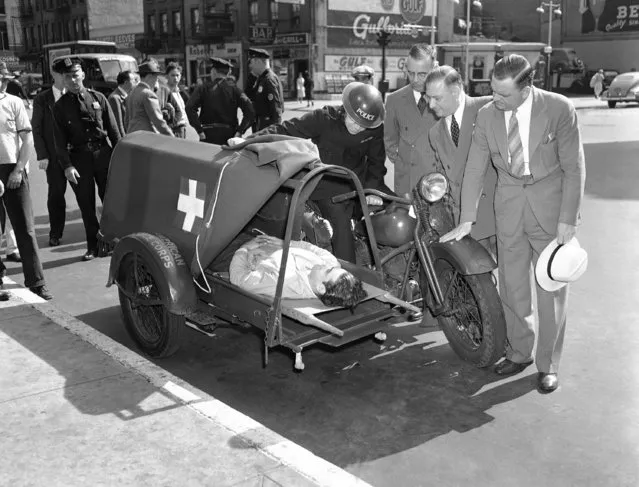
Developed for the British American Ambulance Corps, this new motorcycle ambulance is capable of speeding wounded soldiers 90 miles an hour from the front lines to field hospitals. Its springs are synchronized with the patient?s heartbeat to avoid increasing fever when traveling over various Terrain. Viewing it in New York  August 27, 1941, are left to right: constable Herbert Scott of England, driver; William E. Detlor, whose firm developed the vehicle; M. W. Stand, inspector-general of Civilian Defense, and Maj. Edward Riekert, also. (Photo by AP Photo)

Developed for the British American Ambulance Corps, this new motorcycle ambulance is capable of speeding wounded soldiers 90 miles an hour from the front lines to field hospitals. Its springs are synchronized with the patient's heartbeat to avoid increasing fever when traveling over various Terrain. Viewing it in New York August 27, 1941, are left to right: constable Herbert Scott of England, driver; William E. Detlor, whose firm developed the vehicle; M. W. Stand, inspector-general of Civilian Defense, and Maj. Edward Riekert, also. (Photo by AP Photo)
Details
28 Aug 2015 11:51:00


“La Tomatina is a festival that is held in the Valencian town of Buñol, in which participants throw tomatoes at each other”. – Wikipedia

Photo: A man sits in tomato pulp at the end of the world's biggest tomato fight at La Tomatina festival on August 26, 2009 in Bunol, Spain. More than 45000 people from all over the world descended on the small Valencian town to participate La Tomatina festival, with the local town hall estimating that over 100 tons of rotten and over-ripe tomatoes were thrown. (Photo by Jasper Juinen/Getty Images)
Details
24 May 2011 09:27:00
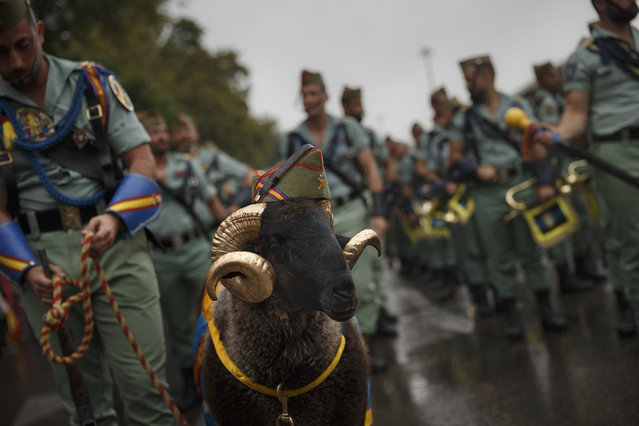
Members of La Legion, an elite unit of the Spanish Army, including a goat they use as a pet wait for the start of a military parade as they celebrate a holiday known as “Dia de la Hispanidad” or Hispanic Day in Madrid, Wednesday, October 12, 2016. (Photo by Daniel Ochoa de Olza/AP Photo)

Members of La Legion, an elite unit of the Spanish Army, including a goat they use as a pet wait for the start of a military parade as they celebrate a holiday known as “Dia de la Hispanidad” or Hispanic Day in Madrid, Wednesday, October 12, 2016. (Photo by Daniel Ochoa de Olza/AP Photo)
Details
13 Oct 2016 11:44:00
A woman from a group called “Las Patronas” (The bosses), a charitable organization that feeds Central American immigrants who travel atop a freight train known as “La Bestia”, passes food and water to immigrants on their way to the border with the United States, at Amatlan de los Reyes, in Veracruz state, Mexico October 22, 2016. (Photo by Daniel Becerril/Reuters)

A woman from a group called “Las Patronas” (The bosses), a charitable organization that feeds Central American immigrants who travel atop a freight train known as “La Bestia”, passes food and water to immigrants on their way to the border with the United States, at Amatlan de los Reyes, in Veracruz state, Mexico October 22, 2016. (Photo by Daniel Becerril/Reuters)
Details
18 Nov 2016 10:55:00
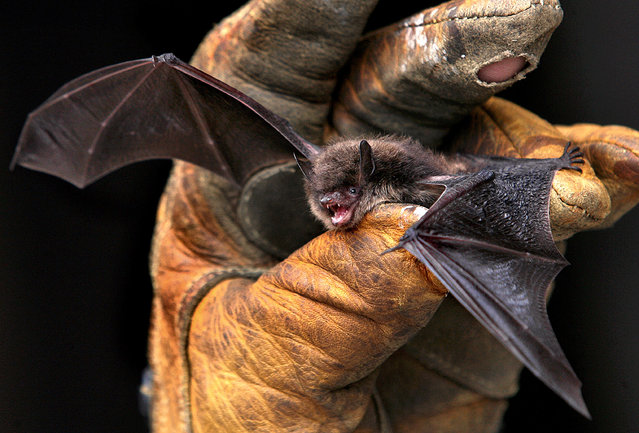
In this September 17, 2010 file photo a little brown bat is photographed in La Crosse Wis. Researchers for the first time found that little brown bats appear to be showing resistance to white-nose syndrome, which has killed millions of bats across North America. (Photo by Peter Thomson/La Crosse Tribune via AP Photo)

In this September 17, 2010 file photo a little brown bat is photographed in La Crosse Wis. Researchers for the first time found that little brown bats appear to be showing resistance to white-nose syndrome, which has killed millions of bats across North America. (Photo by Peter Thomson/La Crosse Tribune via AP Photo)
Details
13 Jan 2017 08:48:00
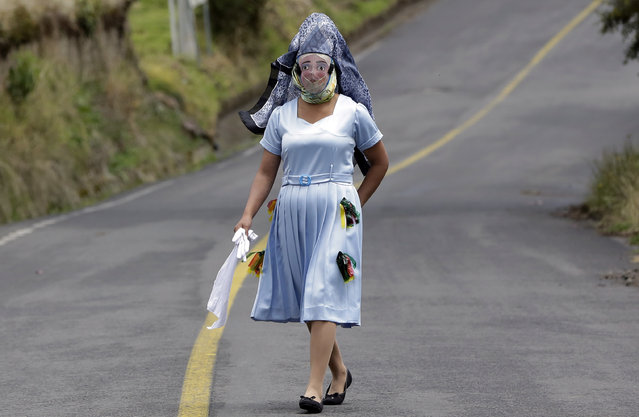
A woman dressed for la “La Diablada” festival walks down a road in Pillaro, Ecuador, Friday, January 6, 2017. Local legend holds that anyone who adopts a costume for the celebration and wears it at the event six years in a row will have good luck. (Photo by Dolores Ochoa/AP Photo)

A woman dressed for la “La Diablada” festival walks down a road in Pillaro, Ecuador, Friday, January 6, 2017. Local legend holds that anyone who adopts a costume for the celebration and wears it at the event six years in a row will have good luck. (Photo by Dolores Ochoa/AP Photo)
Details
21 Dec 2017 06:35:00
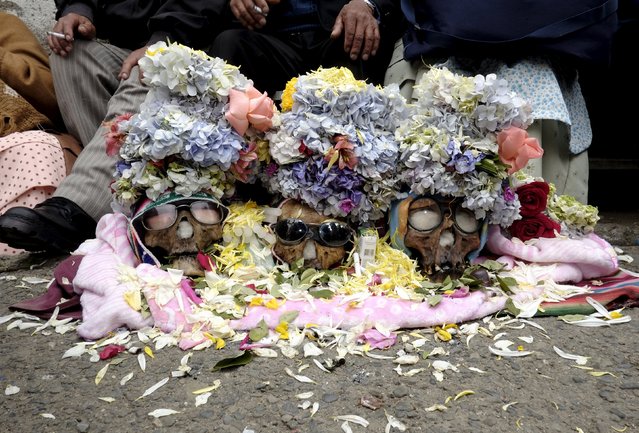
Skulls placed on the floor are seen during a ceremony held for the "Dia de las natitas" (Day of the Skull) celebrations at the General Cemetery of La Paz, November 8, 2015. (Photo by David Mercado/Reuters)

Skulls placed on the floor are seen during a ceremony held for the "Dia de las natitas" (Day of the Skull) celebrations at the General Cemetery of La Paz, November 8, 2015. Bolivians, who keep close relatives skulls at home as a macabre talisman, flock to the cemetery chapel once a year to have the craniums blessed and to bring themselves good luck in the future. (Photo by David Mercado/Reuters)
Details
12 Nov 2015 08:01:00