Loading...
Done
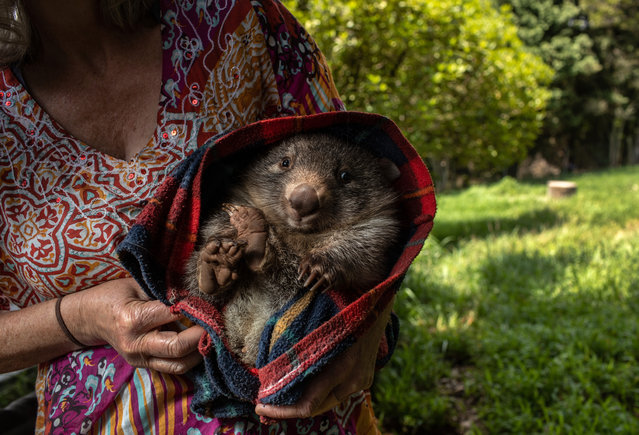
A wildlife caregiver holds an orphaned wombat at the Native Wildlife Rescue center on January 29, 2020 in Robertson, Australia. The center has taken in many burned kangaroos and wallabies injured in recent bushfires. Wombat orphans are often rescued from the pouch of their mothers struck by vehicles. (Photo by John Moore/Getty Images)

A wildlife caregiver holds an orphaned wombat at the Native Wildlife Rescue center on January 29, 2020 in Robertson, Australia. The center has taken in many burned kangaroos and wallabies injured in recent bushfires. Wombat orphans are often rescued from the pouch of their mothers struck by vehicles. (Photo by John Moore/Getty Images)
Details
16 Feb 2020 00:03:00
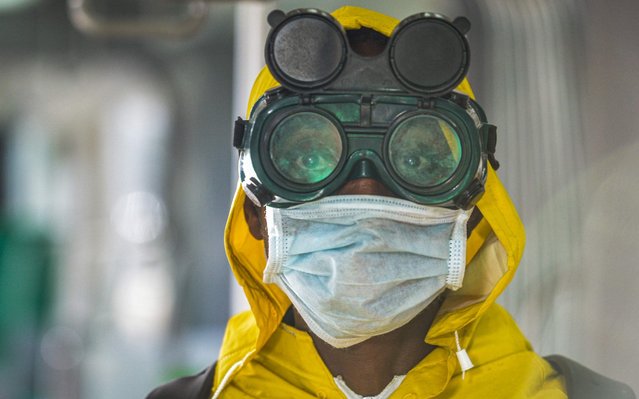
A cleaning staff waers protective gear to disinfect a metro carriage as a prevemtive measure against the spreading of the COVID-19 coronavirus in Addis Ababa, Ethiopia, on March 20, 2020. African countries have been among the last to be hit by the global COVID-19 coronavirus epidemic but as cases rise, many nations are now taking strict measures to block the deadly illness. (Photo by Michael Tewelde/AFP Photo)

A cleaning staff waers protective gear to disinfect a metro carriage as a prevemtive measure against the spreading of the COVID-19 coronavirus in Addis Ababa, Ethiopia, on March 20, 2020. African countries have been among the last to be hit by the global COVID-19 coronavirus epidemic but as cases rise, many nations are now taking strict measures to block the deadly illness. (Photo by Michael Tewelde/AFP Photo)
Details
23 Mar 2020 00:07:00
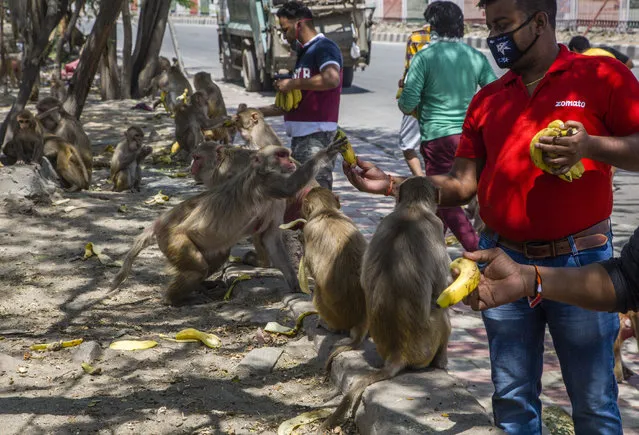
Men give bananas to monkeys gathered on the side of the road as India remains under an unprecedented lockdown over the highly contagious coronavirus (COVID-19) on April 08, 2020 in New Delhi, India. Wild animals, including monkeys, are roaming human settlements in India as people are staying indoors due to the 21-day lockdown. With India's 1.3 billion population and tens of millions of cars off the roads, wildlife is moving towards areas inhabited by humans. Wild animals in many countries have been seen roaming streets. A study says some 60 percent of the new diseases found around the globe every year are zoonotic, meaning they originate in animals and are passed on to humans. COVID-19 is a zoonotic disease that is suspected to have come from the wet markets of Wuhan, China. (Photo by Yawar Nazir/Getty Images)

Men give bananas to monkeys gathered on the side of the road as India remains under an unprecedented lockdown over the highly contagious coronavirus (COVID-19) on April 08, 2020 in New Delhi, India. Wild animals, including monkeys, are roaming human settlements in India as people are staying indoors due to the 21-day lockdown. (Photo by Yawar Nazir/Getty Images)
Details
12 Apr 2020 00:05:00
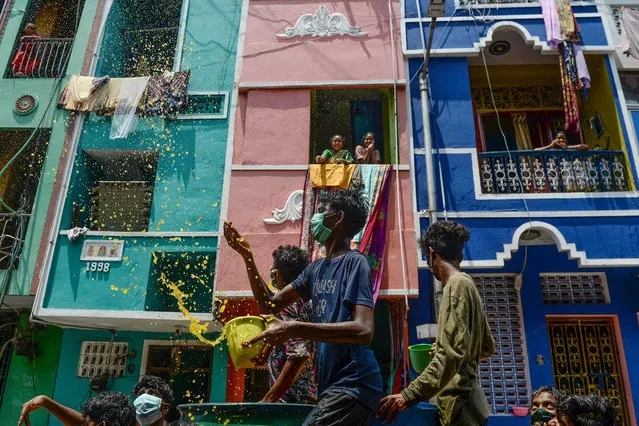
Volunteers throw a mixture of water, neem herb and turmeric as an alleged natural disinfectant on a street in a residential area during a government-imposed nationwide lockdown as a preventive measure against the COVID-19 coronavirus, in Chennai on April 7, 2020. (Photo by Arun Sankar/AFP Photo)

Volunteers throw a mixture of water, neem herb and turmeric as an alleged natural disinfectant on a street in a residential area during a government-imposed nationwide lockdown as a preventive measure against the COVID-19 coronavirus, in Chennai on April 7, 2020. (Photo by Arun Sankar/AFP Photo)
Details
20 Apr 2020 00:03:00
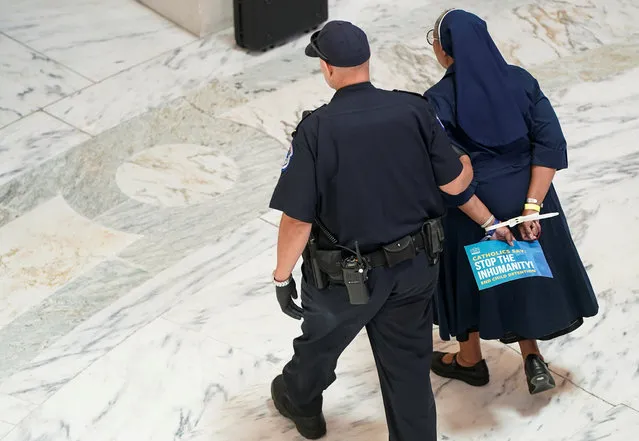
One of a members of the Franciscan Action Network and immigration rights activists is arrested during a demonstration calling for the end of immigrant detention on Capitol Hill in Washington, U.S., July 18, 2019. (Photo by Joshua Roberts/Reuters)

One of a members of the Franciscan Action Network and immigration rights activists is arrested during a demonstration calling for the end of immigrant detention on Capitol Hill in Washington, U.S., July 18, 2019. (Photo by Joshua Roberts/Reuters)
Details
23 Jul 2019 00:03:00
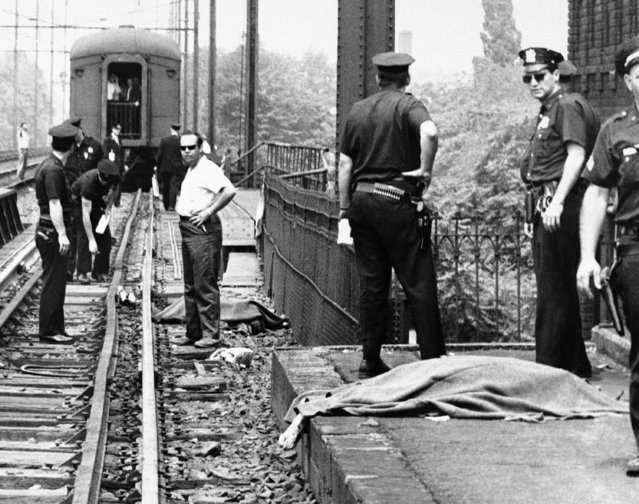
Blankets cover the bodies of a woman (right) and a man (left background) hit by a northbound Penn Central train (background) as they waited with a crowd at Pennsylvania Railroad station in Elizabeth, N.J. on June 8, 1968 to view the southbound train carrying the body of Sen. Robert F. Kennedy to Washington. The woman was identified as Mrs. Antoinette Severini, 54, and the man, John Curia (age unavailable), both of Elizabeth. (Photo by AP Photo)

Blankets cover the bodies of a woman (right) and a man (left background) hit by a northbound Penn Central train (background) as they waited with a crowd at Pennsylvania Railroad station in Elizabeth, N.J. on June 8, 1968 to view the southbound train carrying the body of Sen. Robert F. Kennedy to Washington. The woman was identified as Mrs. Antoinette Severini, 54, and the man, John Curia (age unavailable), both of Elizabeth. (Photo by AP Photo)
Details
09 Dec 2017 02:15:00
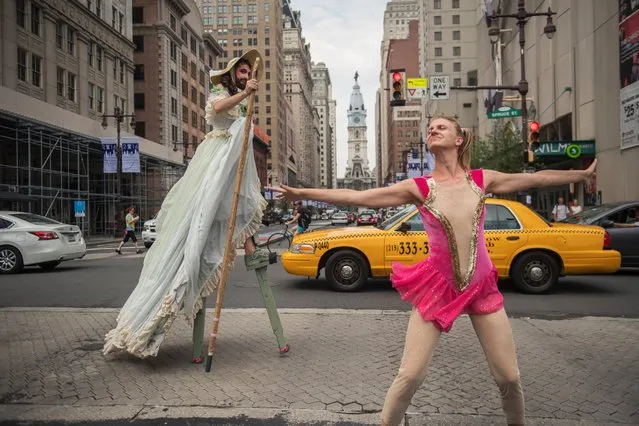
Members of the Bearded Ladies Cabaret cross Broad St., before a march by supporters of Sen. Bernie Sanders, I-Vt., in Philadelphia, on the first day of the Democratic National Convention, July 25, 2016. (Photo by Tom Williams/CQ Roll Call/AP Images)

Members of the Bearded Ladies Cabaret cross Broad St., before a march by supporters of Sen. Bernie Sanders, I-Vt., in Philadelphia, on the first day of the Democratic National Convention, July 25, 2016. (Photo by Tom Williams/CQ Roll Call/AP Images)
Details
23 Sep 2016 09:18:00
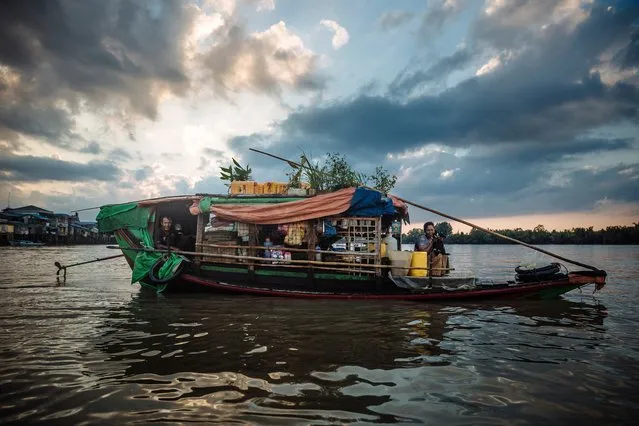
Tin and Naing win live on a small boat which they sail throughout the Delta region in Myanmar. The former gardeners once had a home on land but it was destroyed when a powerful cyclone ravaged the area in 2008. Since then, the couple have not been able to afford to rebuild their home, so they live on the boat from which they sell fish paste to make a living. (Photo by Muse Mohammed/IOM)

The ferocity of crises worldwide is forcing a record number of people to flee their homes, seeking some form of safety within their own country or across international borders. There are 65.3 million displaced people worldwide, including 21.3 million refugees. Most have lost their homes to armed conflict or natural disasters but other factors, such as extreme poverty and climate change, also drive displacement. The International Organisation for Migration commissioned photojournalist Muse Mohammed to document the plight of the displaced. (Photo by Muse Mohammed/IOM)
Details
02 Jan 2017 12:04:00