Loading...
Done
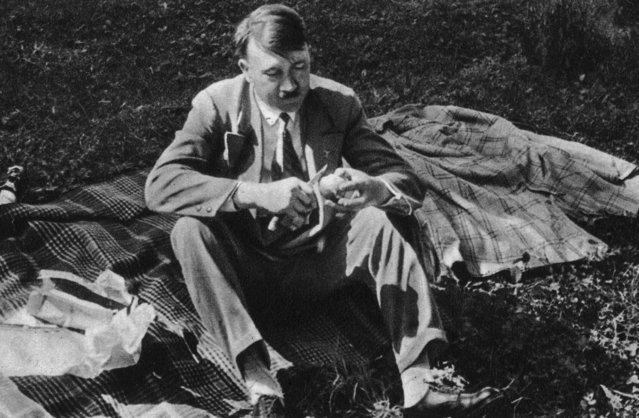
German Nazi leader Adolf Hitler (1889 - 1945) enjoys a quiet picnic between meetings, circa 1933. Picture 196 of a series of collectable images published in Germany during the Nazi period, entitled “Deutschland Erwacht” (Germany Awakes). (Photo by Heinrich Hoffmann/Hulton Archive/Getty Images)

German Nazi leader Adolf Hitler (1889 - 1945) enjoys a quiet picnic between meetings, circa 1933. Picture 196 of a series of collectable images published in Germany during the Nazi period, entitled “Deutschland Erwacht” (Germany Awakes). (Photo by Heinrich Hoffmann/Hulton Archive/Getty Images)
Details
16 Jul 2018 00:01:00
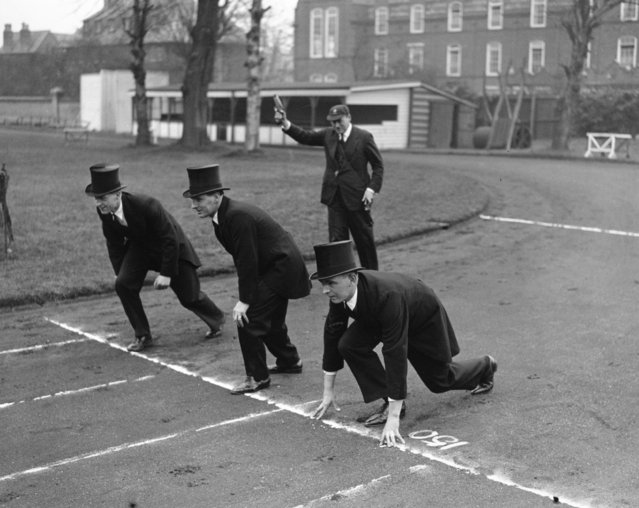
Cambridge policemen, known as “Bulldogs”, lined up for the University Bulldogs Chase, dressed in morning coats and top hats, 7th March 1936. (Photo by H. Allen/Topical Press Agency/Getty Images)

Cambridge policemen, known as “Bulldogs”, lined up for the University Bulldogs Chase, dressed in morning coats and top hats, 7th March 1936. (Photo by H. Allen/Topical Press Agency/Getty Images)
Details
21 Nov 2018 00:01:00
Ayah, 37, weeps as she is embraced by a police officer during a demonstration against the Danish face veil ban in Copenhagen, Denmark, August 1, 2018. (Photo by Andrew Kelly/Reuters)

Ayah, 37, weeps as she is embraced by a police officer during a demonstration against the Danish face veil ban in Copenhagen, Denmark, August 1, 2018. (Photo by Andrew Kelly/Reuters)
Details
30 Dec 2018 00:01:00
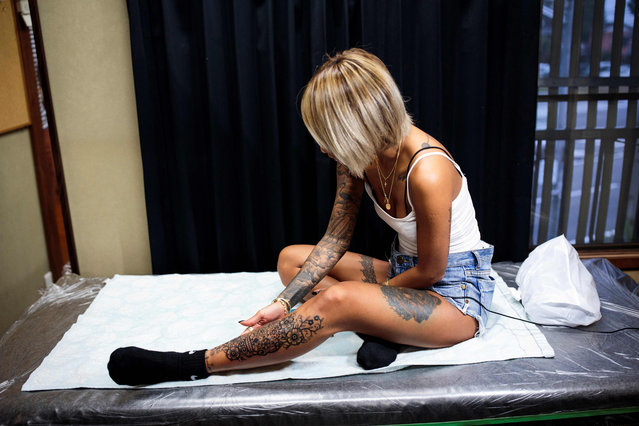
In this picture taken on October 28, 2017, former Japanese p*rn star Mana Izumi checks her new tattoo at a tattoo studio in Tsurugashima, Saitama prefecture. (Photo by Behrouz Mehri/AFP Photo)

In this picture taken on October 28, 2017, former Japanese p*rn star Mana Izumi checks her new tattoo at a tattoo studio in Tsurugashima, Saitama prefecture. Tattoos still provoke deep-rooted suspicion in Japan as the country prepares to host the 2020 Tokyo Olympics. People with body ink are refused entry to public swimming pools, bathing spots, beaches and often gyms, while visible body art can be harmful to job prospects. (Photo by Behrouz Mehri/AFP Photo)
Details
10 Jan 2019 00:05:00
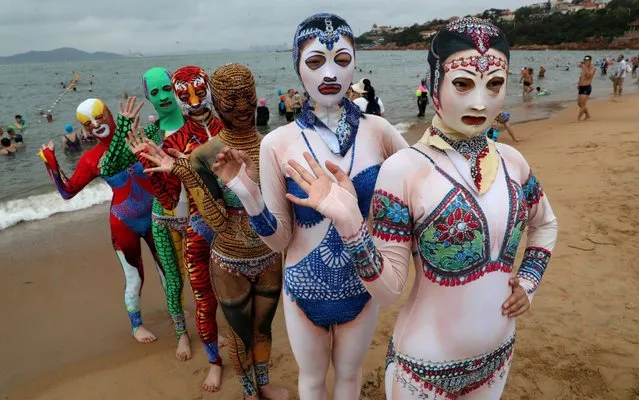
Models wearing facekinis, popular with female bathers who want to protect more than just their modesty, pose for a picture on a beach on August 5, 2019 in the Chinese seaside city of Qingdao, Shandong Province of China. (Photo by Xu Chongde/VCG via Getty Images)

Models wearing facekinis, popular with female bathers who want to protect more than just their modesty, pose for a picture on a beach on August 5, 2019 in the Chinese seaside city of Qingdao, Shandong Province of China. (Photo by Xu Chongde/VCG via Getty Images)
Details
09 Aug 2019 00:01:00
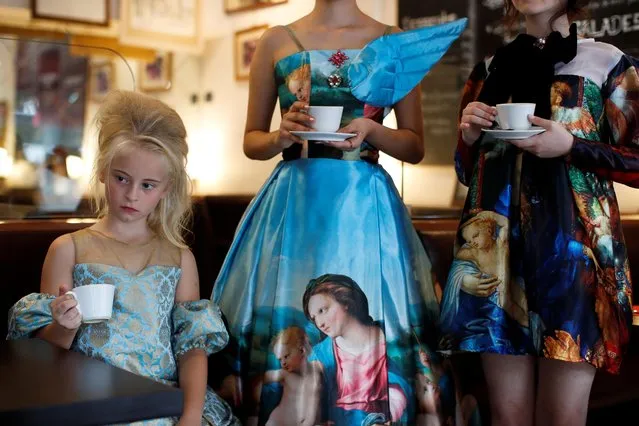
Model Daisy-May Demetre, 9 year-old double amputee who will walk the runway during Paris Fashion Week, is seen during a photo shoot a day before the show of luxury children's wear label Lulu et Gigi in Paris, France, September, 26, 2019. (Photo by Gonzalo Fuentes/Reuters)

Model Daisy-May Demetre, 9 year-old double amputee who will walk the runway during Paris Fashion Week, is seen during a photo shoot a day before the show of luxury children's wear label Lulu et Gigi in Paris, France, September, 26, 2019. (Photo by Gonzalo Fuentes/Reuters)
Details
29 Oct 2019 00:05:00
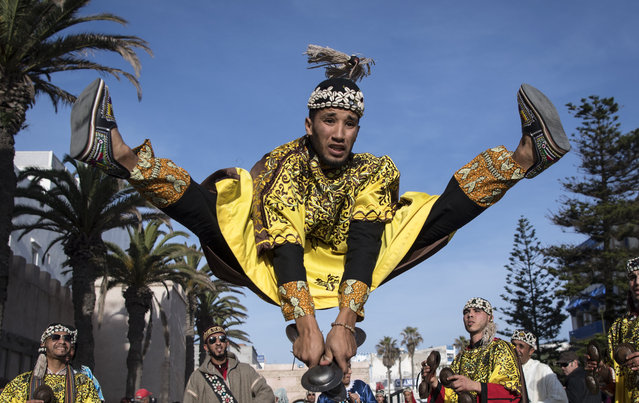
A Gnawa traditional group performs in the city of Essaouira on December 14, 2019, to celebrate the decision of adding the Gnawa culture to UNESCO's list of Intangible Cultural Heritage of Humanity. Gnawa culture, a centuries-old Moroccan practice rooted in music, African rituals and Sufi traditions, was added to UNESCO's list of Intangible Cultural Heritage of Humanity earlier in the week. Gnawa refers to a “set of musical productions, fraternal practices and therapeutic rituals where the secular mixes with the sacred”, according to the nomination submitted by Morocco. Often dressed in colourful outfits, Gnawa musicians play the guenbri, a type of lute with three strings, accompanied by steel castanets called krakebs. (Photo by Fadel Senna/AFP Photo)

A Gnawa traditional group performs in the city of Essaouira on December 14, 2019, to celebrate the decision of adding the Gnawa culture to UNESCO's list of Intangible Cultural Heritage of Humanity. Gnawa culture, a centuries-old Moroccan practice rooted in music, African rituals and Sufi traditions, was added to UNESCO's list of Intangible Cultural Heritage of Humanity earlier in the week. Gnawa refers to a “set of musical productions, fraternal practices and therapeutic rituals where the secular mixes with the sacred”, according to the nomination submitted by Morocco. Often dressed in colourful outfits, Gnawa musicians play the guenbri, a type of lute with three strings, accompanied by steel castanets called krakebs. (Photo by Fadel Senna/AFP Photo)
Details
18 Dec 2019 00:05:00
Julia Marino of USA in action during the final run of the snowboard slopestyle competition at the Laax Open, in Laax, Switzerland, 17 January 2020. (Photo by Gian Ehrenzeller/EPA/EFE/Rex Features/Shutterstock)

Julia Marino of USA in action during the final run of the snowboard slopestyle competition at the Laax Open, in Laax, Switzerland, 17 January 2020. (Photo by Gian Ehrenzeller/EPA/EFE/Rex Features/Shutterstock)
Details
20 Jan 2020 00:01:00