Loading...
Done
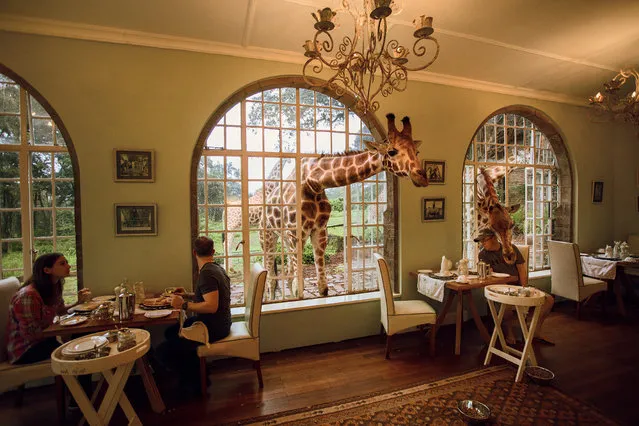
The giraffes visit twice a day searching for food, before returning to the forest. Although still wild animals, they have become accustomed to receiving treats from residents and guests. (Photo by Klaus Thymann)

Situated 10km outside Nairobi city centre, this private giraffe sanctuary is centred around a colonial manor house named Giraffe Manor. Living within the grounds is a herd of rare Rothschild giraffe. The giraffes visit twice a day searching for food, before returning to the forest. Although still wild animals, they have become accustomed to receiving treats from residents and guests. (Photo by Klaus Thymann)
Details
28 Jan 2016 12:36:00
Japanese Manhole Covers Photos By S. Morita Part 1

Japan is a country full of art. Much of this is housed in museums and galleries, but others are right under our feet. We speak, of Japan’s peculiar obsession with manhole covers. Almost anywhere in the country you can find manhole covers with spectacular grounds, each more beautiful and complex than the previous. In recent years, S. Morita photographer has traveled around Japan and leave us this great gathering on the beautiful and artistic Japanese manhole covers.
Details
03 Apr 2014 14:31:00
This piano was located in one of many rooms of a huge chateau in Poland. (Photo by Vincent Jansen)

Photographer Vincent Jansen travels throughout Europe, visiting beautiful abandoned places. He explores churches, factories, sanatoriums, mortuaries, villas and theaters, all quietly waiting for renovation or demolition. His photos show a unique perspective on what is happening behind the “no trespassing” signs: where nature is slowly gaining ground and the desolation, loneliness and decay leave their stunning traces. Photo: This piano was located in one of many rooms of a huge chateau in Poland. (Photo by Vincent Jansen)
Details
11 May 2014 12:10:00
Afghanistan: Dogs of War Part 1

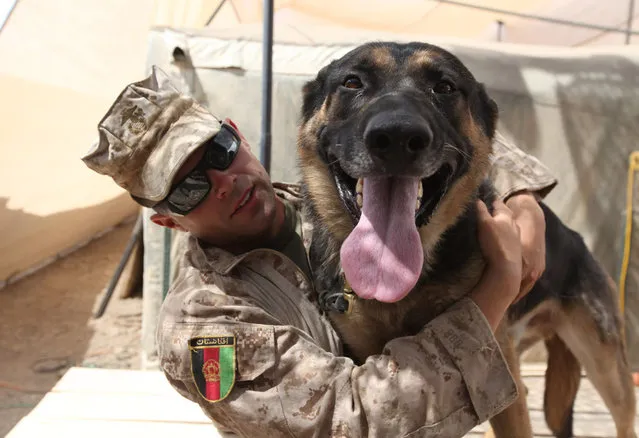
Throughout the course of the long war in Afghanistan, Coalition troops have relied on thousands of military working dogs to help keep them safe, and make their jobs easier. The dogs are trained to detect explosives, to find illegal drugs, to search for missing comrades, or target enemy combatants. Not only are they active on the front lines, but behind the lines they serve as therapy dogs, service dogs, and loyal companions. They also share the same risks as the ground troops, suffering injuries and sometimes death on the battlefields. Gathered here are images of these dogs and their handlers in Afghanistan and back home, from over the past several years, part of the ongoing series here on Afghanistan.
Details
03 Jun 2014 21:02:00
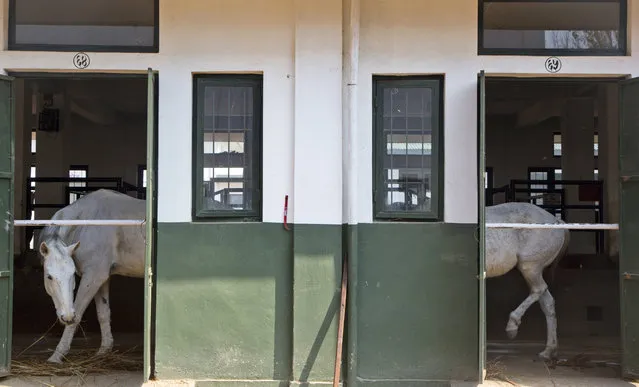
In this April 3, 2019, photo, horses from Nepal cavalry rest in a stable after morning practice for Ghode Jatra festival in Kathmandu, Nepal. (Photo by Niranjan Shrestha/AP Photo)

In this April 3, 2019, photo, horses from Nepal cavalry rest in a stable after morning practice for Ghode Jatra festival in Kathmandu, Nepal. The “Ghode Jatra” is an annual horse festival celebrated on the Nepal Cavalry grounds in Kathmandu, which marks the defeat of a Hindu demon. (Photo by Niranjan Shrestha/AP Photo)
Details
09 Apr 2019 00:03:00
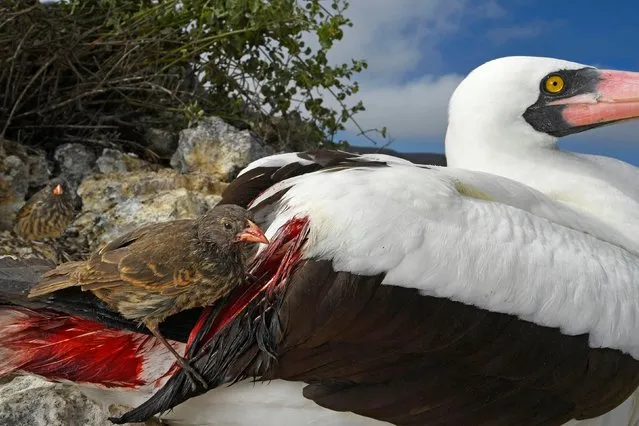
Bloodthirsty by Thomas P Peschak, Germany/South Africa — winner, Behaviour: birds. When rations run short on Wolf Island, in the remote northern Galápagos, the sharp-beaked ground finches become vampires. Their sitting targets are Nazca boobies and other large birds. The finches rely on a scant diet of seeds and insects, which regularly dries up, so they drink blood to survive. ‘I’ve seen more than half a dozen finches drinking from a single Nazca booby,’ says Tom. Rather than leave their nests the boobies tolerate the vampires, and the blood loss doesn’t seem to cause permanent harm. (Photo by Thomas P Peschak/2018 Wildlife Photographer of the Year)

Bloodthirsty by Thomas P. Peschak, Germany/South Africa — winner, Behaviour: birds. When rations run short on Wolf Island, in the remote northern Galápagos, the sharp-beaked ground finches become vampires. Their sitting targets are Nazca boobies and other large birds. The finches rely on a scant diet of seeds and insects, which regularly dries up, so they drink blood to survive. ‘I’ve seen more than half a dozen finches drinking from a single Nazca booby,’ says Tom. Rather than leave their nests the boobies tolerate the vampires, and the blood loss doesn’t seem to cause permanent harm. (Photo by Thomas P. Peschak/2018 Wildlife Photographer of the Year)
Details
19 Oct 2018 00:05:00
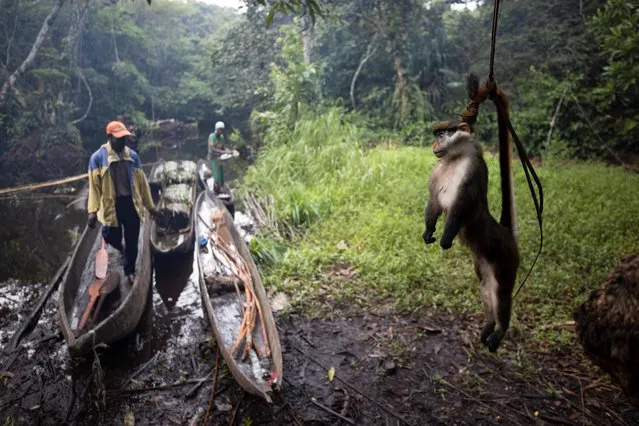
A dead red-tailed monkey hangs by its tail above the ground, in order to keep it away from ants, in the forest near the city of Mbandaka, Democratic Republic of the Congo, April 5, 2019. Bushmeat hunters are emptying Central Africa's forests at a high rate, researchers say. A growing appetite for wild meat in cities has ramped up the scale of hunting. Research shows around 6 million tonnes of bushmeat are sourced annually from the Congo Basin, whose forest spans across six countries and is second in size only to the Amazon. (Photo by Thomas Nicolon/Reuters)

A dead red-tailed monkey hangs by its tail above the ground, in order to keep it away from ants, in the forest near the city of Mbandaka, Democratic Republic of the Congo, April 5, 2019. Bushmeat hunters are emptying Central Africa's forests at a high rate, researchers say. A growing appetite for wild meat in cities has ramped up the scale of hunting. Research shows around 6 million tonnes of bushmeat are sourced annually from the Congo Basin, whose forest spans across six countries and is second in size only to the Amazon. (Photo by Thomas Nicolon/Reuters)
Details
14 Oct 2019 00:03:00
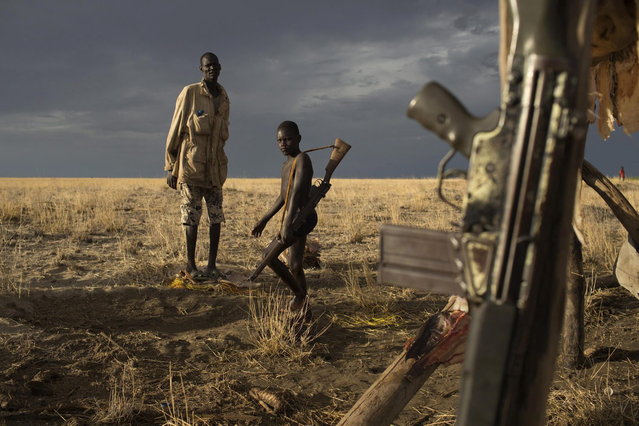
A Turkana man and a boy carrying a gun look on as a G3 battle rifle hangs from a structure used to dry fish at a fishing camp on the shores of Lake Turkana, some kilometres from Todonyang near the Kenya-Ethiopia border in northwestern Kenya October 12, 2013. (Photo by Siegfried Modola/Reuters)

A Turkana man and a boy carrying a gun look on as a G3 battle rifle hangs from a structure used to dry fish at a fishing camp on the shores of Lake Turkana, some kilometres from Todonyang near the Kenya-Ethiopia border in northwestern Kenya October 12, 2013The Turkana are traditionally nomadic pastoralists, but they have seen the pasture that they need to feed their herds suffer from recurring droughts and many have turned to fishing. However, Lake Turkana is overfished, and scarcity of food and pastureland is fuelling long-standing conflict with Ethiopian indigenous Dhaasanac, who have seen grazing grounds squeezed by large-scale government agricultural schemes in southern Ethiopia. The Dhaasanac now venture ever deeper into Kenyan territory in search of fish and grass, clashing with neighbours. Fighting between the communities has a long history, but the conflict has become ever more fatal as automatic weapons from other regional conflicts seep into the area. While the Turkana region is short of basics like grass and ground-water, it contains other resources including oil reserves and massive, newly discovered underground aquifers. (Photo by Siegfried Modola/Reuters)

Details
05 Dec 2013 12:08:00