Loading...
Done
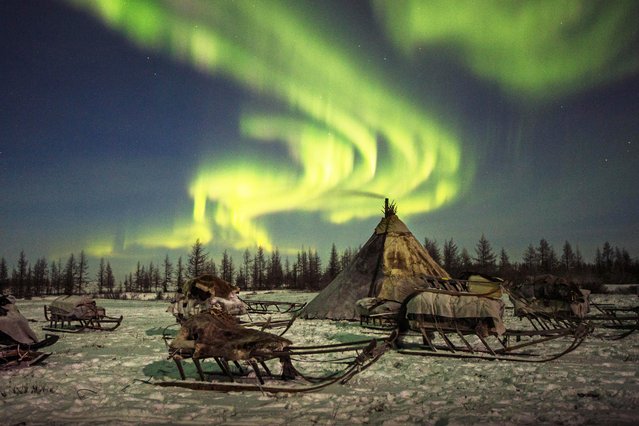
An empty camp is shown beneath a colourful sky in Siberia, December 2016. (Photo by Timothy Allen/Barcroft Productions)

A British photographer has captured life at the “edge of the world”. Timothy Allen, best known for his work on BBC's Human Planet, trekked through the freezing Siberian wilderness for 16 days as he joined part of an 800km migration of reindeer in the Yamal-Nenets region – a name that roughly translates to “edge of the world”. The stunning pictures feature the nomadic Nenets tribe, who drink blood to survive in -45°C temperatures. Timothy's epic journey, which will be revealed in an eight-minute documentary on Animal Planet USA, saw him travel across the bleak terrain of the frozen Ob River with the Nenets people in December last year. Here: An empty camp is shown beneath a colourful sky in Siberia, December 2016. (Photo by Timothy Allen/Barcroft Productions)
Details
19 Sep 2017 07:48:00
Highly commended birds : Crested guan by Tim Hunt (UK). ‘This photo shows a crested guan in the cloud forests of Costa Rica as it pauses while foraging on a lone branch. Due to the clouds that are so typical for this habitat, I could often only photograph the bird’s silhouette against a grey sky. (Photo by Tim Hunt/GDT European Wildlife Photographer of the Year 2015)

Highly commended birds : Crested guan by Tim Hunt (UK). ‘This photo shows a crested guan in the cloud forests of Costa Rica as it pauses while foraging on a lone branch. Due to the clouds that are so typical for this habitat, I could often only photograph the bird’s silhouette against a grey sky. But then, for a short moment only, the sun broke through the clouds, and I overexposed the image by over two stops in order to blow out the background and allow this beautifully marked bird to stand out’. (Photo by Tim Hunt/GDT European Wildlife Photographer of the Year 2015)
Details
24 Nov 2015 08:01:00
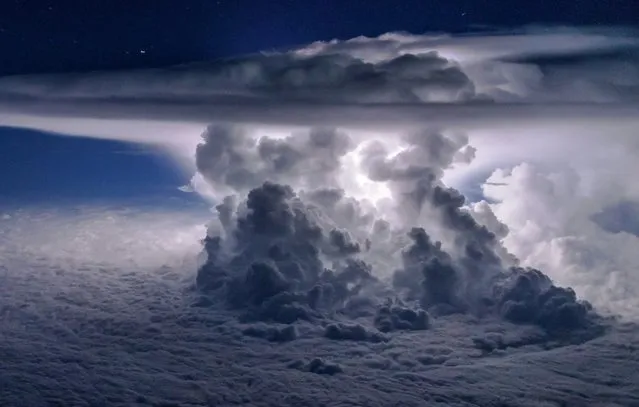
Storm erupts over Pacific Ocean as plane zooms past at 37,000 ft. The amazing picture shows a massive cloud erupting against a starry night sky as the off-duty airman Santiago Borja flew over the Pacific near Panama City. He had just moments to take the breathtaking snap as the Boeing 767 zoomed by at 37,000 ft on its way from North America to Ecuador. He also had take the picture perfectly in time with the flash of lightning to capture the storm in all its glory. (Photo by Santiago Borja/Solent News)

Storm erupts over Pacific Ocean as plane zooms past at 37,000 ft. The amazing picture shows a massive cloud erupting against a starry night sky as the off-duty airman Santiago Borja flew over the Pacific near Panama City. He had just moments to take the breathtaking snap as the Boeing 767 zoomed by at 37,000 ft on its way from North America to Ecuador. He also had take the picture perfectly in time with the flash of lightning to capture the storm in all its glory. (Photo by Santiago Borja/Solent News)
Details
08 Nov 2016 11:16:00
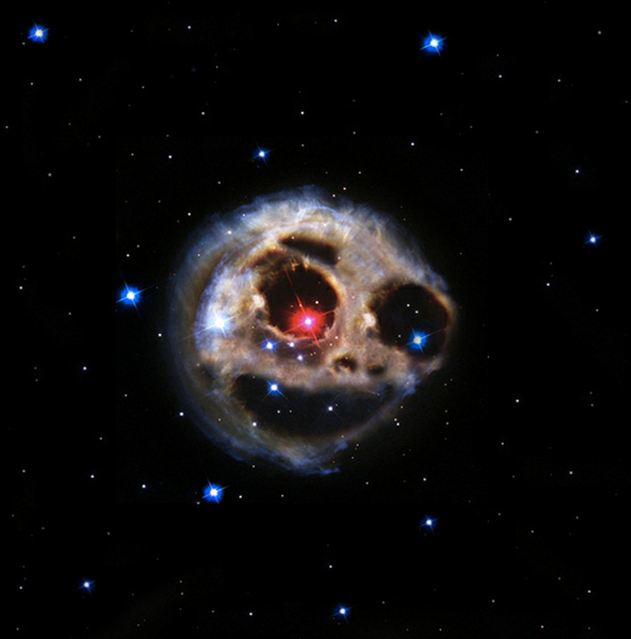
Chris Keegan By Cosmic Creatures

Looking up at the sky and forming images from the stars has been going on for just about as long as human life has existed, but that was only what could be seen from the Earth. Digital illustrator Chris Keegan has taken constellations to a whole new level with the use of images from NASA’s Chandra X-ray Observatory.
Details
10 Jun 2015 09:50:00
International Fireworks Festival 2007 In Seoul

Fireworks illuminate the sky over downtown Seoul during the International fireworks festival 2007 at Han River on October 13, 2007 in Seoul, South Korea. The United States, Japan and South Korea have team was attending the festival. (Photo by Chung Sung-Jun/Getty Images)
Details
14 Dec 2011 12:44:00
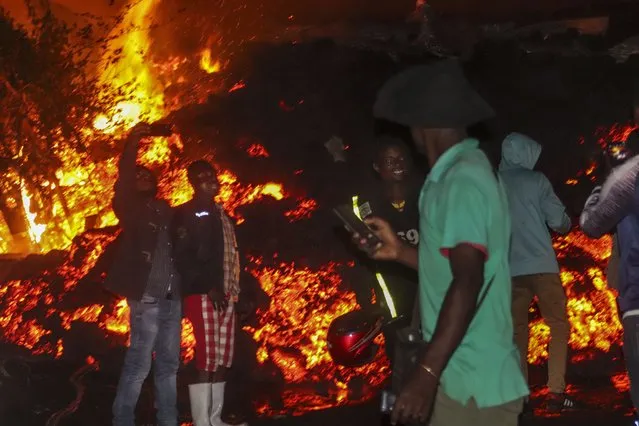
People stand and take selfies in front of lava from the eruption of Mount Nyiragongo, in Buhene, on the outskirts of Goma, Congo in the early hours of Sunday, May 23, 2021. Congo's Mount Nyiragongo erupted for the first time in nearly two decades Saturday, turning the night sky a fiery red and sending lava onto a major highway as panicked residents tried to flee Goma, a city of nearly 2 million. (Photo by Justin Kabumba/AP Photo)

People stand and take selfies in front of lava from the eruption of Mount Nyiragongo, in Buhene, on the outskirts of Goma, Congo in the early hours of Sunday, May 23, 2021. Congo's Mount Nyiragongo erupted for the first time in nearly two decades Saturday, turning the night sky a fiery red and sending lava onto a major highway as panicked residents tried to flee Goma, a city of nearly 2 million. (Photo by Justin Kabumba/AP Photo)
Details
24 May 2021 08:29:00
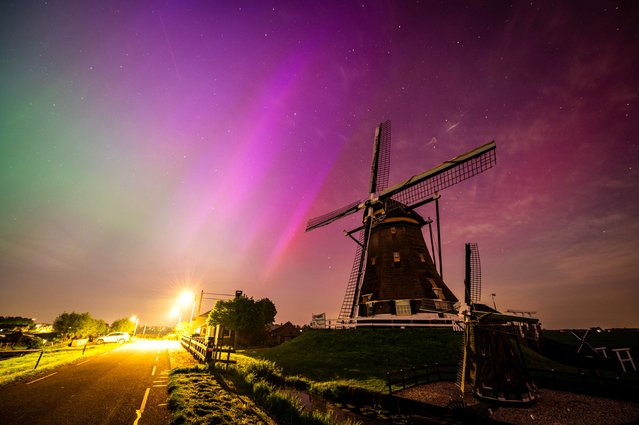
The Northern lights (aurora borealis) lights up the night sky above the Molenviergang in Aarlanderveen, the Netherlands, early on 11 May 2024. The National Oceanic and Atmospheric Administration (NOAA) of America has warned that the strongest geomagnetic storm for 20 years is set to hit Earth, making the Aurora Borealis, or Northern Lights, visible at much lower geomagnetic latitudes than usual. (Photo by Josh Walet/EPA/EFE/Rex Features/Shutterstock)

The Northern lights (aurora borealis) lights up the night sky above the Molenviergang in Aarlanderveen, the Netherlands, early on 11 May 2024. The National Oceanic and Atmospheric Administration (NOAA) of America has warned that the strongest geomagnetic storm for 20 years is set to hit Earth, making the Aurora Borealis, or Northern Lights, visible at much lower geomagnetic latitudes than usual. (Photo by Josh Walet/EPA/EFE/Rex Features/Shutterstock)
Details
17 Aug 2024 04:31:00
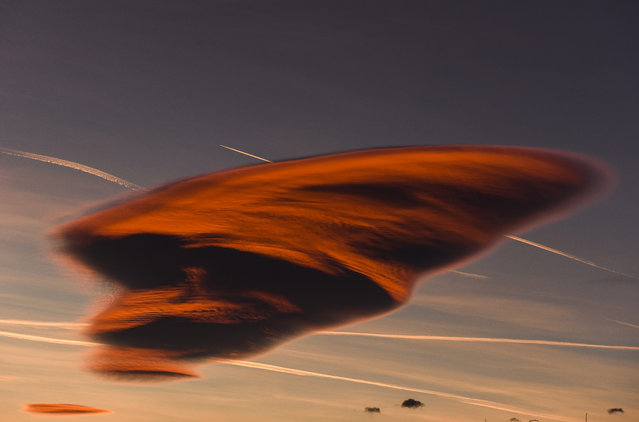
This photo taken on December 2, 2015 shows a lenticular cloud forming as white streaks from airplanes mark the blue sky, in a rare atmospheric phenomena above the town of Gevgelija on December 2, 2015. Lenticular clouds have been regularly confused for UFOs throughout history due to the their smooth, round or oval lens-shaped structure. (Photo by Armend Nimani/AFP Photo)

This photo taken on December 2, 2015 shows a lenticular cloud forming as white streaks from airplanes mark the blue sky, in a rare atmospheric phenomena above the town of Gevgelija on December 2, 2015. Lenticular clouds have been regularly confused for UFOs throughout history due to the their smooth, round or oval lens-shaped structure. (Photo by Armend Nimani/AFP Photo)
Details
31 Dec 2019 00:03:00