Loading...
Done
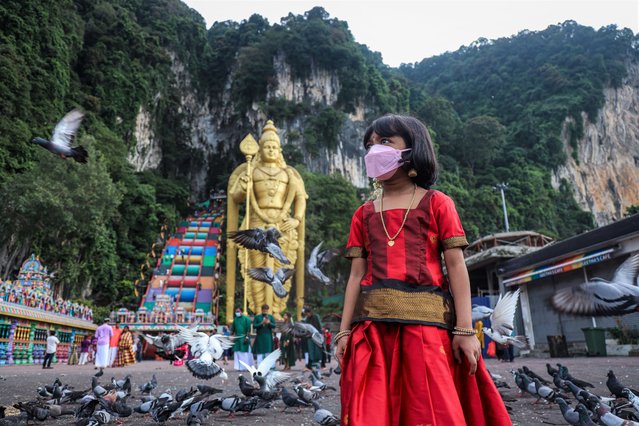
A girl arrives at Batu Caves temple for Diwali celebrations on November 04, 2021 in Gombak, Selangor, Malaysia. Deepavali, or Diwali, known as the festival of light, is celebrated by Hindu communities every autumn all over the world. As Malaysia gradually eases its COVID-19 restrictions, religious activities and prayers in temples are allowed only for fully-vaccinated individuals, with mask-wearing and social distancing measures in place. (Photo by Annice Lyn/Getty Images)

A girl arrives at Batu Caves temple for Diwali celebrations on November 04, 2021 in Gombak, Selangor, Malaysia. Deepavali, or Diwali, known as the festival of light, is celebrated by Hindu communities every autumn all over the world. As Malaysia gradually eases its COVID-19 restrictions, religious activities and prayers in temples are allowed only for fully-vaccinated individuals, with mask-wearing and social distancing measures in place. (Photo by Annice Lyn/Getty Images)
Details
22 Dec 2021 07:37:00
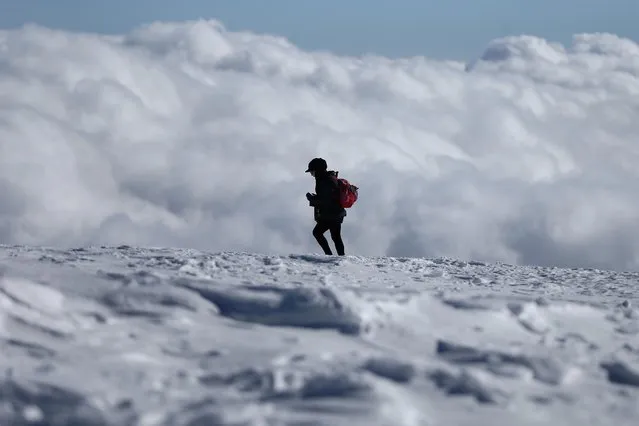
An Iranian girl walks at the Tochal ski resort, in north of Tehran, Iran on December 12, 2019. (Photo by Nazanin Tabatabaee/WANA via Reuters)

An Iranian girl walks at the Tochal ski resort, in north of Tehran, Iran on December 12, 2019. (Photo by Nazanin Tabatabaee/WANA via Reuters)
Details
08 Jan 2020 00:01:00
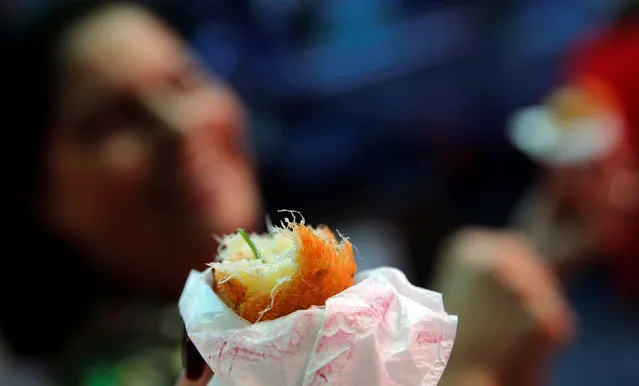
A view of traditional bolinhos de bacalhau (fried codfish balls) in Rio de Janeiro, Brazil, May 7, 2016. (Photo by Sergio Moraes/Reuters)

If the most popular foods of Rio de Janeiro have one thing in common, it is their informality. You can find fine restaurants in the city, but they do not set Rio apart from other places. What does set it apart, and what invariably brings its residents, known as "Cariocas," together is the unpretentious food they eat in bright, loud, crowded bars and restaurants, on busy street corners, or after a day at the beach. Here: A view of traditional bolinhos de bacalhau (fried codfish balls) in Rio de Janeiro, Brazil, May 7, 2016. (Photo by Sergio Moraes/Reuters)
Details
05 Aug 2016 13:20:00
Chris Hondros RetrospectivePart2

Chris Hondros, a Getty Images photographer, was fatally wounded on April 20, 2011, in a mortar attack by government forces while covering the civil war in Libya. Hondros' work is woven in our history as he covered everything from politics to marathons. A new film will focus on his life as told through his images. Here's a look at some of his finest and final work. Some of these images are graphic in nature
Details
23 Aug 2013 17:38:00


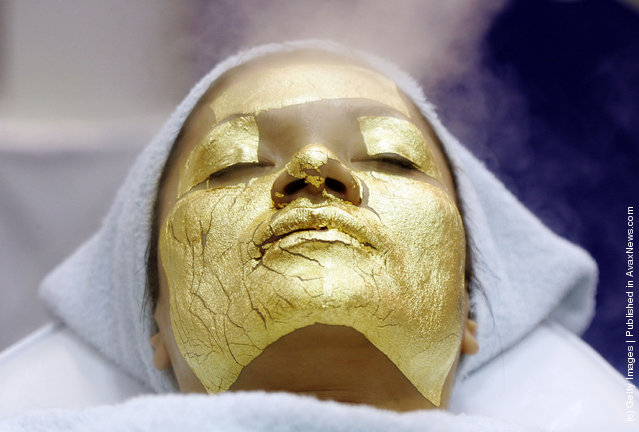
“The UMO 24 Karat Gold Facial uses 24-karat gold and Gamma PGA, a potent hydrating compound, to lighten, brighten, hydrate and tone aging skin”. – Medica.bz.

Photo: A woman receives UMO Inc.'s “Gold Facial Treatment” as she is covered with sheets of 24-carat gold, said to be effective for anti-aging care, during the Beautyworld Japan Exhibition on May 8, 2007 in Tokyo, Japan. (Photo by Junko Kimura/Getty Images)
Details
20 Jun 2011 14:19:00
A robot, developed by start-up firm Asimov Robotics, holds a tray with face masks and sanitizer after the two robots were launched to spread awareness about the coronavirus, in Kochi, India, March 17, 2020. (Photo by Sivaram V/Reuters)

A robot, developed by start-up firm Asimov Robotics, holds a tray with face masks and sanitizer after the two robots were launched to spread awareness about the coronavirus, in Kochi, India, March 17, 2020. (Photo by Sivaram V/Reuters)
Details
16 Apr 2020 00:01:00
Andrea Petkovic of Germany in action against Sara Errani of Italy during day one of the Mutua Madrid Open tennis tournament at the Caja Magica on May 3, 2014 in Madrid, Spain. (Photo by Julian Finney/Getty Images)

Andrea Petkovic of Germany in action against Sara Errani of Italy during day one of the Mutua Madrid Open tennis tournament at the Caja Magica on May 3, 2014 in Madrid, Spain. (Photo by Julian Finney/Getty Images)
Details
10 May 2014 14:22:00
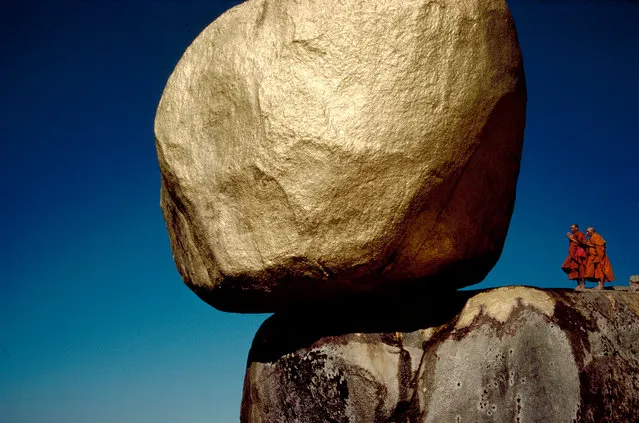
Kyaiktiyo, Burma, 1978. The Golden Rock at Shwe Pyi Daw (the Golden Country), the Buddhist holy place. Hiroji Kubota writes: “I was desperate to keep a distance from America for a while; luckily, I found Burma and its gentle and compassionate people. In the spring of 1978, on the top of the hill where I took this photo, I had two Leica bodies: the one with Tri-X and the other with Kodachrome 64. Soon after, I realised that the colour one looked very colourful and was more powerful. That was my decisive moment, to become a colour photographer”. (Photo by Hiroji Kubota/Magnum Photos)

Kyaiktiyo, Burma, 1978. The Golden Rock at Shwe Pyi Daw (the Golden Country), the Buddhist holy place. Hiroji Kubota writes: “I was desperate to keep a distance from America for a while; luckily, I found Burma and its gentle and compassionate people. In the spring of 1978, on the top of the hill where I took this photo, I had two Leica bodies: the one with Tri-X and the other with Kodachrome 64. Soon after, I realised that the colour one looked very colourful and was more powerful. That was my decisive moment, to become a colour photographer”. (Photo by Hiroji Kubota/Magnum Photos)
Details
10 Jun 2016 13:30:00