Loading...
Done


Back dropped by planet Earth the International Space Station (ISS) is seen from NASA space shuttle Endeavour after the station and shuttle began their post-undocking relative separation May 29, 2011 in space. After 20 years, 25 missions and more than 115 million miles in space, NASA space shuttle Endeavour is on the last leg of its final flight to the International Space Station before being retired and donated to the California Science Center in Los Angeles. Capt. Mark E. Kelly, U.S. Rep. Gabrielle Giffords' (D-AZ) husband, has lead mission STS-134 as it delivered the Express Logistics Carrier-3 (ELC-3) and the Alpha Magnetic Spectrometer (AMS-2) to the International Space Station. (Photo by NASA via Getty Images)
Details
01 Jun 2011 06:47:00
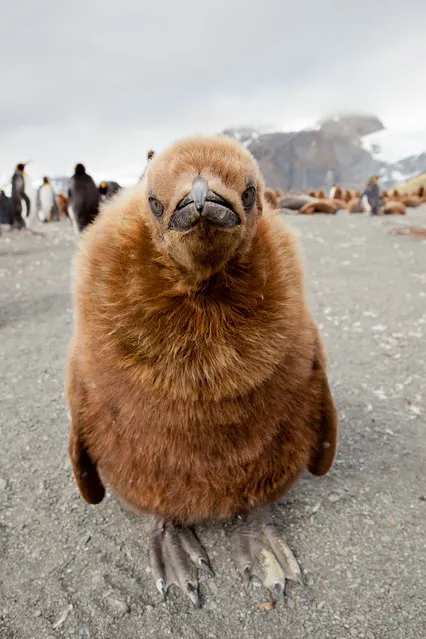
“Cub”. In the colony of penguins in South Georgia. (Photo and caption by Ondrej Zaruba/National Geographic Traveler Photo Contest)

“Cub”. In the colony of penguins in South Georgia. (Photo and caption by Ondrej Zaruba/National Geographic Traveler Photo Contest)

ATTENTION! All pictures are presented in high resolution. To see Hi-Res images – just TWICE click on any picture. In other words, click small picture – opens the BIG picture. Click BIG picture – opens VERY BIG picture.
Details
28 Jun 2013 12:32:00
"The Amazing GIFS Of Romain Laurent

French photographer and director Romain Laurent started making portrait-based GIFs as a way to produce work outside his commercial jobs, a spontaneous project that would encourage him to produce consistently for himself rather than clients.
Details
26 Oct 2016 20:09:00
Performers walk past a light installation “Butterfly Effect” designed by Japan artist Masamichi Shimada, at the Battersea Power Station in London, Thursday, January 25, 2024. The Light Festival involved seven light installations from British and international artists at Battersea Power Station, which illuminated the winter evenings between Jan. 25 and Feb, 25. (Photo by Kin Cheung/AP Photo)

Performers walk past a light installation “Butterfly Effect” designed by Japan artist Masamichi Shimada, at the Battersea Power Station in London, Thursday, January 25, 2024. The Light Festival involved seven light installations from British and international artists at Battersea Power Station, which illuminated the winter evenings between Jan. 25 and Feb, 25. (Photo by Kin Cheung/AP Photo)
Details
20 Feb 2024 03:27:00
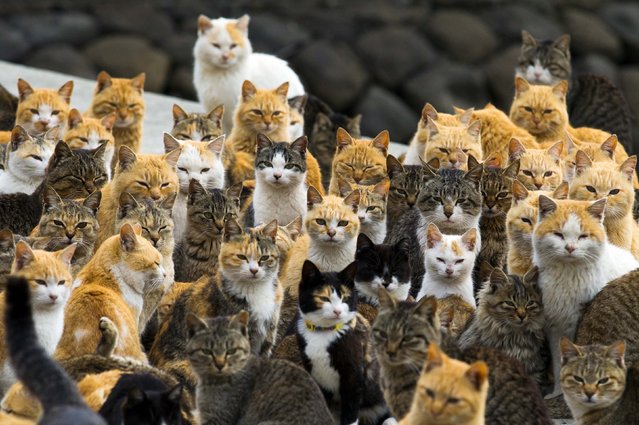
Cats crowd the harbour on Aoshima Island in the Ehime prefecture in southern Japan February 25, 2015. An army of cats rules the remote island in southern Japan, curling up in abandoned houses or strutting about in a fishing village that is overrun with felines outnumbering humans six to one. Picture taken February 25, 2015.  REUTERS/Thomas Peter

Cats crowd the harbour on Aoshima Island in the Ehime prefecture in southern Japan February 25, 2015. An army of cats rules the remote island in southern Japan, curling up in abandoned houses or strutting about in a fishing village that is overrun with felines outnumbering humans six to one. Picture taken February 25, 2015. REUTERS/Thomas Peter
Details
04 Mar 2015 14:16:00
Indian Christians take part in Christmas prayers at the Infant Jesus church in Bangalore, India, 25 December 2020. Most Christians celebrate Christmas on 25 December to commemorate the birth of Jesus, the central figure of Christianity. (Photo by Jagadeesh N.V./EPA/EFE)

Indian Christians take part in Christmas prayers at the Infant Jesus church in Bangalore, India, 25 December 2020. Most Christians celebrate Christmas on 25 December to commemorate the birth of Jesus, the central figure of Christianity. (Photo by Jagadeesh N.V./EPA/EFE)
Details
10 Jan 2021 00:05:00
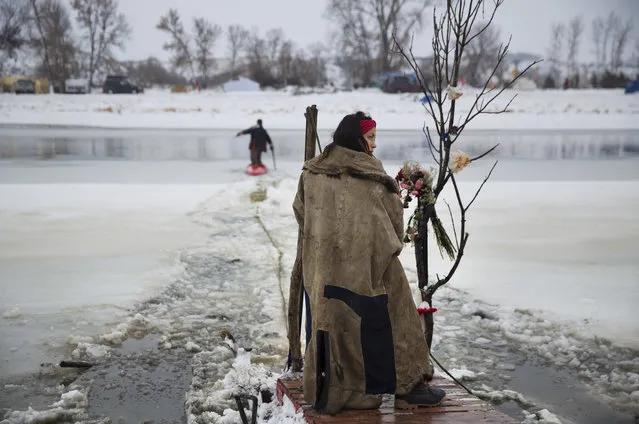
In this Thursday, December 1, 2016 photo, Cat Bigney, part of the Oglala Native American tribe, waits on the shore of the Cannonball river for travelers to arrive by canoe at the Oceti Sakowin camp where people have gathered to protest the Dakota Access oil pipeline in Cannon Ball, N.D. So far, those at the camp have shrugged off the heavy snow, icy winds and frigid temperatures. But if they defy next week's government deadline to abandon the camp, demonstrators know the real deep freeze lies ahead. Life-threatening wind chills and towering snow drifts could mean the greatest challenge is simple survival. (Photo by David Goldman/AP Photo)

In this Thursday, December 1, 2016 photo, Cat Bigney, part of the Oglala Native American tribe, waits on the shore of the Cannonball river for travelers to arrive by canoe at the Oceti Sakowin camp where people have gathered to protest the Dakota Access oil pipeline in Cannon Ball, N.D. So far, those at the camp have shrugged off the heavy snow, icy winds and frigid temperatures. But if they defy next week's government deadline to abandon the camp, demonstrators know the real deep freeze lies ahead. Life-threatening wind chills and towering snow drifts could mean the greatest challenge is simple survival. (Photo by David Goldman/AP Photo)
Details
06 Dec 2016 10:22:00
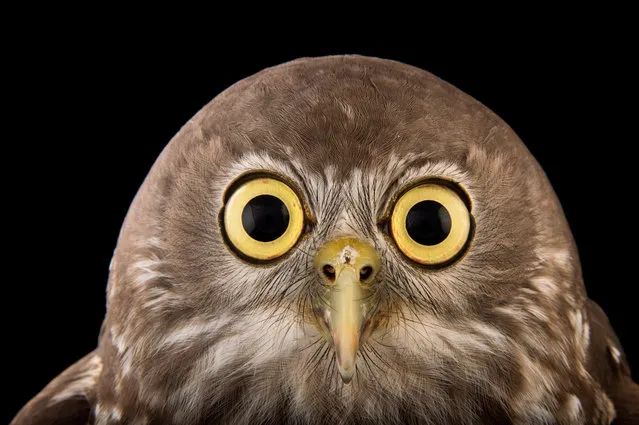
The National Geographic Photo Ark is a travelling exhibition of photographer Joel Sartore’s quest to create a photo archive of biodiversity around the world. So far, Sartore has captured studio portraits of more than 6,000 species – a number that he hopes to double. On 1 July, the ark will open at Melbourne zoo – the first time it has been exhibited in the southern hemisphere. More than 50 portraits will be on display, including many of Australian endangered animals being protected by programs at the zoo itself. These captions have been edited from text supplied by Melbourne zoo. Here: Barking owl. So-named because its call sounds like a barking dog, these birds are native to Australia, Indonesia and Papua New Guinea. In Victoria they are listed as an endangered species, and in 2003 there were estimated to be fewer than 50 breeding pairs. The main threat to the species in Victoria is loss of habitat, especially large trees with hollows in which they can nest and on which many of their prey depend. Apart from a bark, they may utter a chilling scream when they feel threatened. (Photo by Joel Sartore/National Geographic Photo Ark/The Guardian)

The National Geographic Photo Ark is a travelling exhibition of photographer Joel Sartore’s quest to create a photo archive of biodiversity around the world. So far, Sartore has captured studio portraits of more than 6,000 species – a number that he hopes to double. On 1 July, the ark will open at Melbourne zoo – the first time it has been exhibited in the southern hemisphere. More than 50 portraits will be on display, including many of Australian endangered animals being protected by programs at the zoo itself. These captions have been edited from text supplied by Melbourne zoo. Here: Barking owl. (Photo by Joel Sartore/National Geographic Photo Ark/The Guardian)
Details
01 Jul 2017 07:45:00