Loading...
Done
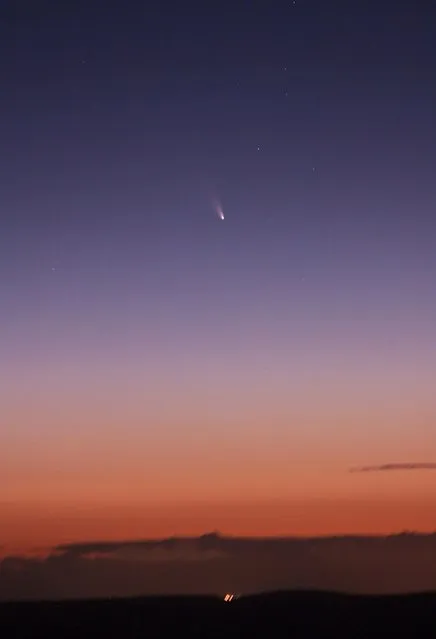
This image provided by NASA shoaws the comet PANSTARRS as seen from Mount Dale, Western Australia on March 5, 2013. According to NASA on March 10, it will make its closest approach to the sun about 28 million miles (45 million kilometers) away. As it continues its nightly trek across the sky, the comet may get lost in the sun's glare but should return and be visible to the naked eye by March 12. (Photo by AP Photo/NASA)

It’s time to start watching for Comet PANSTARRS, one of two comets to get excited about in 2013. Photo: This image provided by NASA shoaws the comet PANSTARRS as seen from Mount Dale, Western Australia on March 5, 2013. According to NASA on March 10, it will make its closest approach to the sun about 28 million miles (45 million kilometers) away. As it continues its nightly trek across the sky, the comet may get lost in the sun's glare but should return and be visible to the naked eye by March 12. (Photo by AP Photo/NASA)
Details
13 Mar 2013 08:03:00
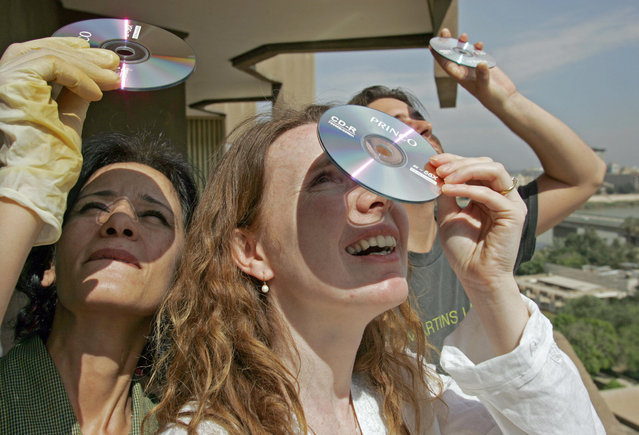
An Iraqi woman and foreigners use  pair of compact discs as a filter to watch the partial solar eclipse in war-torn Baghdad, 29 March 2006. Without access to proper equipment to protect their eyes from the sun's rays, eclipse watchers in Iraq used makeshift filters.  The moon blotted out the sun over northwest Africa early Wednesday, turning day into night in a total solar eclipse as it swept a shadowy path from the outer tip of Brazil to the steppes of Mongolia. (Photo by Hassan Ammar/AFP Photo)

An Iraqi woman and foreigners use pair of compact discs as a filter to watch the partial solar eclipse in war-torn Baghdad, 29 March 2006. Without access to proper equipment to protect their eyes from the sun's rays, eclipse watchers in Iraq used makeshift filters. The moon blotted out the sun over northwest Africa early Wednesday, turning day into night in a total solar eclipse as it swept a shadowy path from the outer tip of Brazil to the steppes of Mongolia. (Photo by Hassan Ammar/AFP Photo)
Details
25 Jul 2017 09:31:00
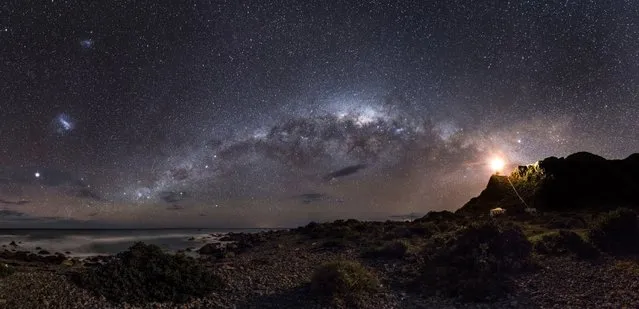
Astronomy Photographer Of The Year 2013 Part2

The Royal Observatory just announced its Astronomy Photographer Of The Year 2013 winners. Australian photographer Mark Gee was chosen among a thousand amateur and professional photographers around the globe to win the top title. His work is part of an exhibition of the winning photographers, which opened on Sept. 19 at the Royal Observatory Greenwich. The Royal Observatory shared with us the winners and notable mentions of the competition. Their descriptions of the prizewinners can be found below the images.
Details
05 Oct 2013 12:23:00
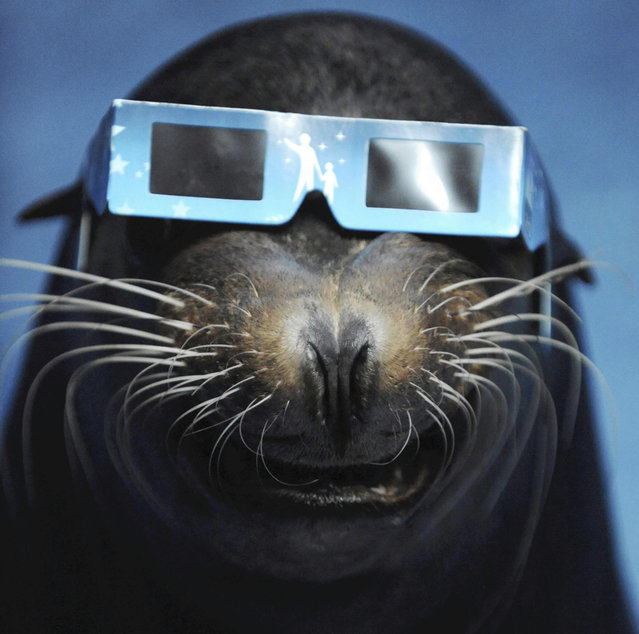
A sea lion

A sea lion wears a solar viewer during an annular solar eclipse at an aquarium in Tokyo, May 21, 2012. (Yomiuri Shimbun/Reuters)
Details
06 Jun 2012 02:28:00
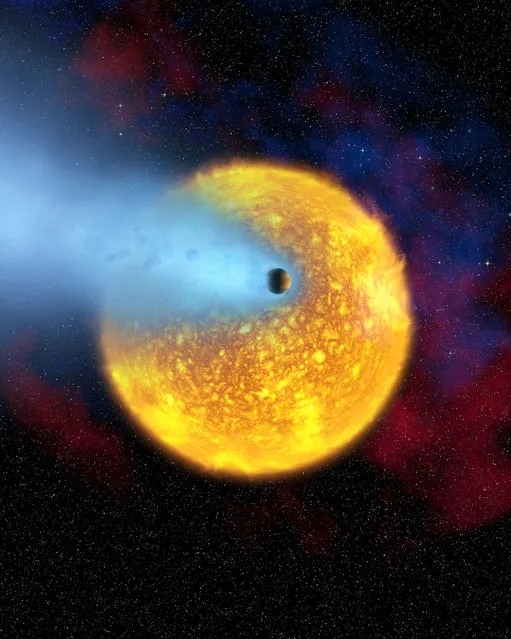
Dramatic changes spotted in HD 189733b exoplanet atmosphere

This artist's rendering illustrates the evaporation of HD 189733b's atmosphere in response to a powerful eruption from its host star. NASA's Hubble Space Telescope detected the escaping gases and NASA's Swift satellite caught the stellar flare. (Credit: NASA's Goddard Space Flight Center)
Details
29 Jun 2012 09:45:00
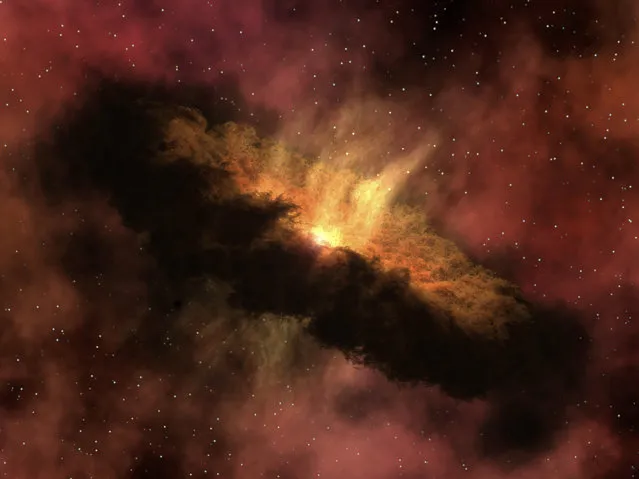
A fledgling solar system containing deep within it enough water vapor to fill all the oceans on Earth five times, located in our Milky Way galaxy about 1,000 light years from Earth in the constellation Perseus. (Photo by Reuters/NASA/JPL-Caltech)

A fledgling solar system containing deep within it enough water vapor to fill all the oceans on Earth five times, located in our Milky Way galaxy about 1,000 light years from Earth in the constellation Perseus. (Photo by Reuters/NASA/JPL-Caltech)
Details
28 Sep 2016 11:01:00
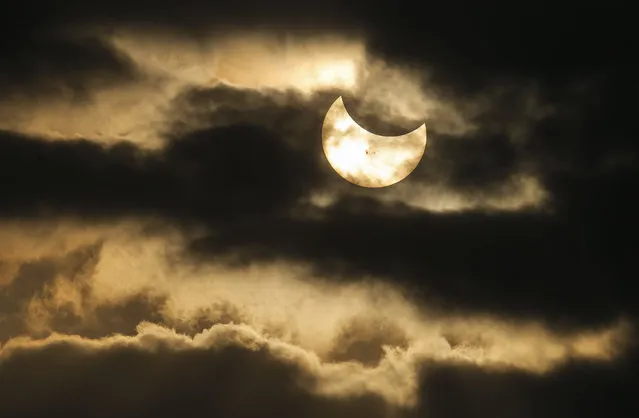
A partial solar eclipse is seen in a break in the clouds during rush hour in downtown Wichita Kan., Thursday, Oct. 23, 2014. (AP Photo/The Wichita Eagle, Travis Heying)

A partial solar eclipse is seen in a break in the clouds during rush hour in downtown Wichita Kan., Thursday, October 23, 2014. A partial eclipse occurs when the moon covers a portion of the sun as seen from the Earth. (AP Photo/The Wichita Eagle, Travis Heying)
Details
24 Oct 2014 12:38:00
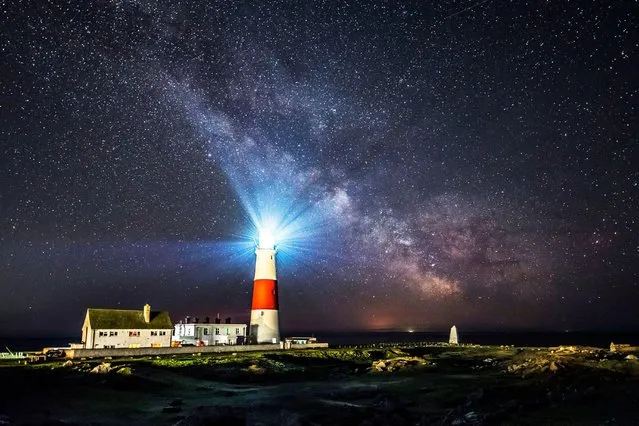
The galactic centre of the Milky Way glows brightly in the clear night sky above the lighthouse at Portland Bill on the Dorset Jurassic Coast, United Kingdom on April 13, 2021. (Photo by Graham Hunt/Alamy Live News)

The galactic centre of the Milky Way glows brightly in the clear night sky above the lighthouse at Portland Bill on the Dorset Jurassic Coast, United Kingdom on April 13, 2021. (Photo by Graham Hunt/Alamy Live News)
Details
29 Apr 2021 08:51:00