Loading...
Done
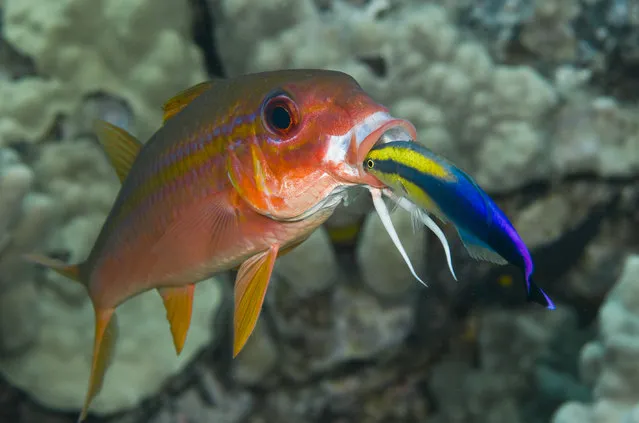
A Hawaiian cleaner wrasse provides its cleaning services to a yellowfin goatfish in a reef community off the Big Island in Hawaii. Cleaner species help rid their hosts of ectoparasites, dead tissue, bacteria and fungi. Studies have shown cleaning to play a vital role in keeping many reef ecosystems healthy. (Photo by Marty Snyderman/Caters News Agency)

A Hawaiian cleaner wrasse provides its cleaning services to a yellowfin goatfish in a reef community off the Big Island in Hawaii. Cleaner species help rid their hosts of ectoparasites, dead tissue, bacteria and fungi. Studies have shown cleaning to play a vital role in keeping many reef ecosystems healthy. (Photo by Marty Snyderman/Caters News Agency)
Details
21 Mar 2018 00:05:00
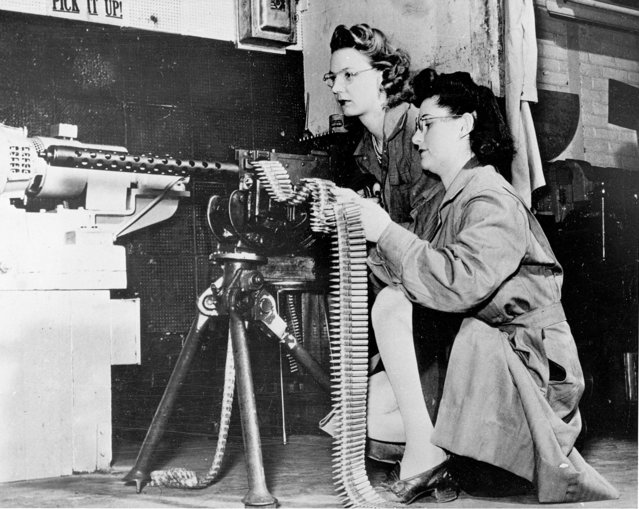
Mae Zelinsky, left, and Betty O'Beda test ammunition on a .30 caliber rifle at a Remington Arms plant on April 30, 1943. Many women took over jobs that were left vacant when men went overseas to fight in World War II. (Photo by AP Photo)

Mae Zelinsky, left, and Betty O'Beda test ammunition on a .30 caliber rifle at a Remington Arms plant on April 30, 1943. Many women took over jobs that were left vacant when men went overseas to fight in World War II. (Photo by AP Photo)
Details
09 May 2018 00:05:00
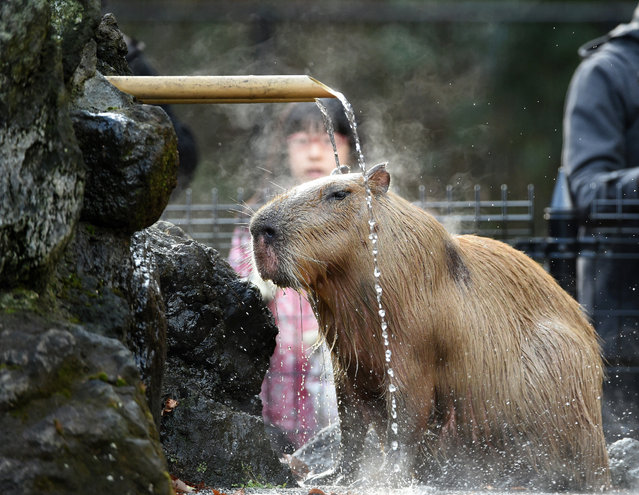
A Capybara bathes in the hot spring water at the Saitama Children's zoo in Higashi Matsuyama city, Saitama prefecture on December 21, 2014. Seven capybaras in the zoo, originally from South America, enjoyed the hot spring water on the chilly winter day in Japan. (Photo by Toshifumi Kitamura/AFP Photo)

A Capybara bathes in the hot spring water at the Saitama Children's zoo in Higashi Matsuyama city, Saitama prefecture on December 21, 2014. Seven capybaras in the zoo, originally from South America, enjoyed the hot spring water on the chilly winter day in Japan. (Photo by Toshifumi Kitamura/AFP Photo)
Details
27 Dec 2014 12:59:00
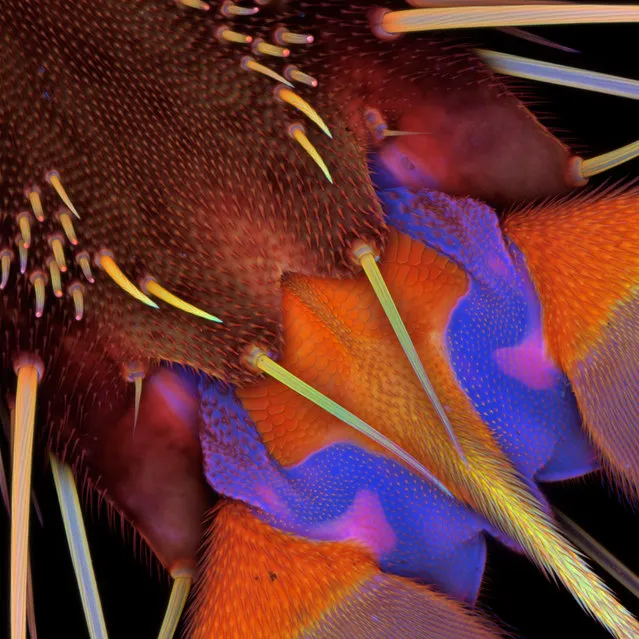
Pretarsus of the third leg of a female drone fly (Eristalis tenax), ventral view, by Dr. Jan Michels, Institute of Zoology, Christian-Albrechts-University of Kiel, Germany. (Photo by Olympus BioScapes)

“Microscope images forge an extraordinary bond between science and art, said Hidenao Tsuchiya, Olympus America's Vice President and General Manager for the Scientific Equipment Group. We founded this competition to focus on the fascinating stories coming out of today's life science research laboratories. The thousands of images that people have shared with the competition over the years reflect some of the most exciting work going on in research today – work that can help shed light on the living universe and ultimately save lives. We look at BioScapes and these beautiful images as sources of education and inspiration to us and the world”. – OlympusBioScapes

Photo: Pretarsus of the third leg of a female drone fly (Eristalis tenax), ventral view, by Dr. Jan Michels, Institute of Zoology, Christian-Albrechts-University of Kiel, Germany. (Photo by Olympus BioScapes)
Details
29 Jul 2012 09:20:00
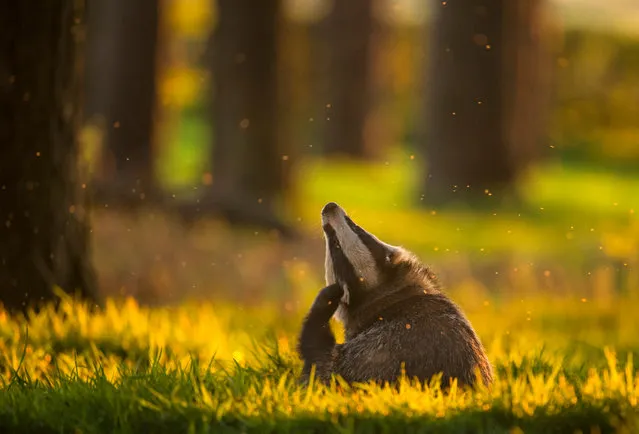
Andrew Parkinson, animal behaviour category winner: Crepuscular Contentment, Derbyshire. “In 15 years of working with badgers I’ve never seen a badger sit out in the open to have a scratch. I was sat concealed behind a tree and downwind so it was especially nice that the badger had his back to me, demonstrating just how inconspicuous and inconsequential my presence was”. (Photo by Andrew Parkinson/British Wildlife Photography Awards 2017)

Andrew Parkinson, animal behaviour category winner: Crepuscular Contentment, Derbyshire. “In 15 years of working with badgers I’ve never seen a badger sit out in the open to have a scratch. I was sat concealed behind a tree and downwind so it was especially nice that the badger had his back to me, demonstrating just how inconspicuous and inconsequential my presence was”. (Photo by Andrew Parkinson/British Wildlife Photography Awards 2017)
Details
10 Nov 2017 09:01:00
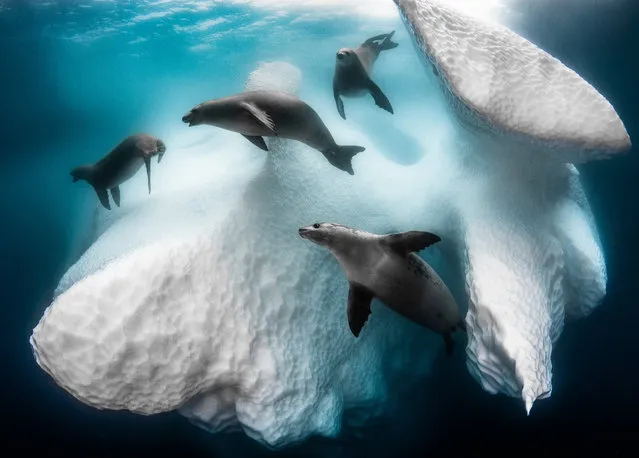
Underwater photographer of the year 2020 and wide angle category winner: Frozen Mobile Home by Greg Lecoeur (France) in the Antarctic peninsula, Antarctica. Crabeater seals swim around an iceberg. These massive and mysterious habitats are dynamic kingdoms that support marine life. As they swing and rotate slowly through polar currents, icebergs fertilise the oceans by carrying nutrients from land that spark blooms of phytoplankton, fundamental to the carbon cycle. (Photo by Greg Lecoeur/Underwater Photographer of the Year 2020)

Underwater photographer of the year 2020 and wide angle category winner: Frozen Mobile Home by Greg Lecoeur (France) in the Antarctic peninsula, Antarctica. Crabeater seals swim around an iceberg. These massive and mysterious habitats are dynamic kingdoms that support marine life. As they swing and rotate slowly through polar currents, icebergs fertilise the oceans by carrying nutrients from land that spark blooms of phytoplankton, fundamental to the carbon cycle. (Photo by Greg Lecoeur/Underwater Photographer of the Year 2020)
Details
28 Feb 2020 00:05:00
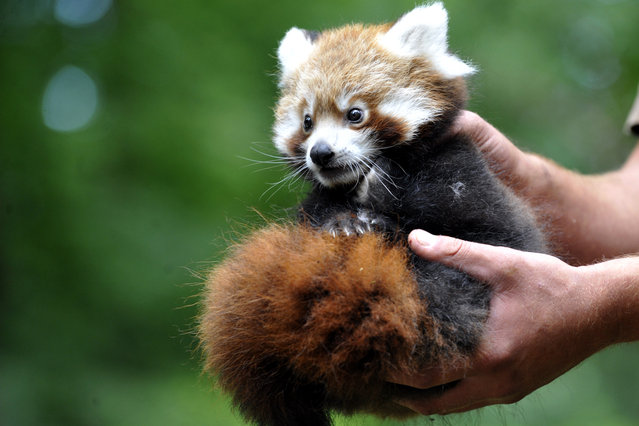
The first red panda cub was born on May 30 in zoo Zlin. Zoologist Roman Vrzal holds a male of red panda. The Red panda is pictured in Zlin, Czech Republic, August 20, 2014. (Photo by Dalibor Gluck/CTK)

The first red panda cub was born on May 30 in zoo Zlin. Zoologist Roman Vrzal holds a male of red panda. The Red panda is pictured in Zlin, Czech Republic, August 20, 2014. (Photo by Dalibor Gluck/CTK)
Details
25 Aug 2014 11:08:00
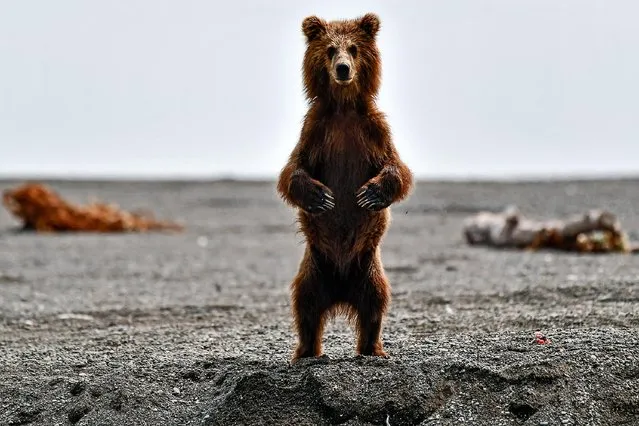
A brown bear cub by the Khailyulya River in north-east Kamchatka, Russia on July 24, 2021. (Photo by Yuri Smityuk/TASS)

A brown bear cub by the Khailyulya River in north-east Kamchatka, Russia on July 24, 2021. (Photo by Yuri Smityuk/TASS)
Details
08 Aug 2021 05:17:00