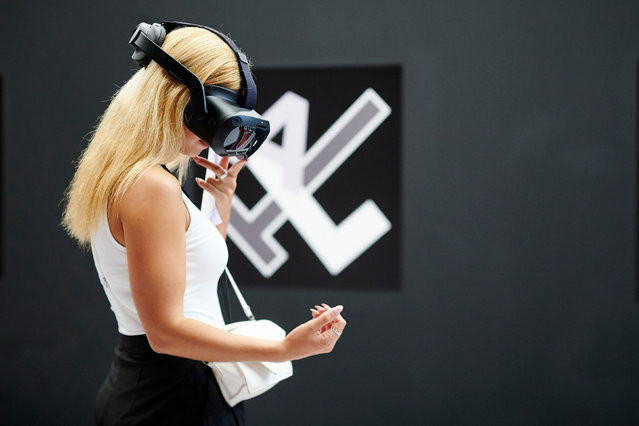
Spectators using virtual reality glasses at the “Los Ultimos Dias De Pompeia” Exhibition at Matadero on September 06, 2023 in Madrid, Spain. (Photo by Borja B. Hojas/Getty Images)
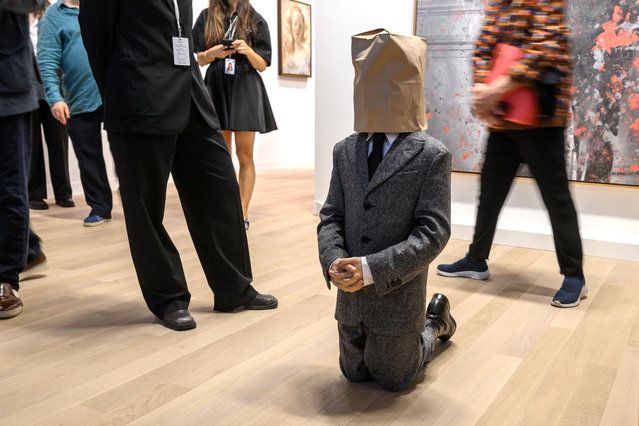
Visitors stand next to the artwork “No, 2021” by Italian visual artist Maurizio Cattelan displayed at the gallery Gagosian during the Art Basel fair for Modern and contemporary art, in Basel, on June 17, 2025. The fair will open to the public from June 19 to June 22, 2025, featuring over 290 leading galleries and more than 4,000 artists from five continents. (Photo by Fabrice Coffrini/AFP Photo)
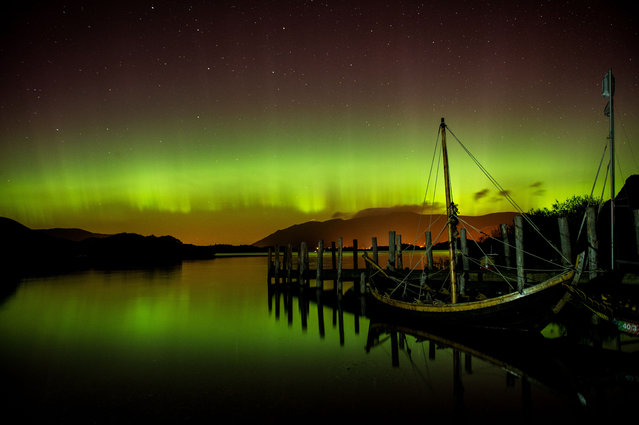
The aurora borealis, or the northern lights occur over Derwentwater, near Keswick, England, Thursday October 8, 2015. The northern lights are the result of collisions between gaseous particles in the Earth's atmosphere with charged particles released from the sun. (Photo by Owen Humphreys/PA Wire via AP Photo)
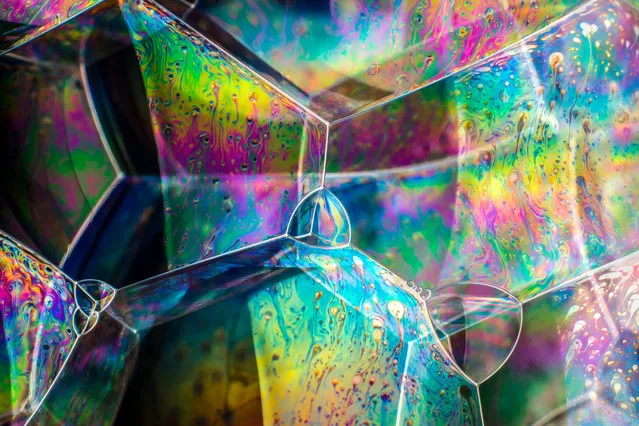
Soap Bubble Structures by Kym Cox. Bubbles optimise space and minimise their surface area for a given volume of air. This phenomenon makes them a useful tool in many areas of research, in particular, materials science and “packing” – how things fit together. Bubble walls drain under gravity, thin at the top, thick at the bottom, which interferes with travelling lightwaves to create bands of colour. Black spots show the wall is too thin for interference colours, indicating the bubble is about to burst. (Photo by Kym Cox/2019 Science Photographer of the Year/RPS)
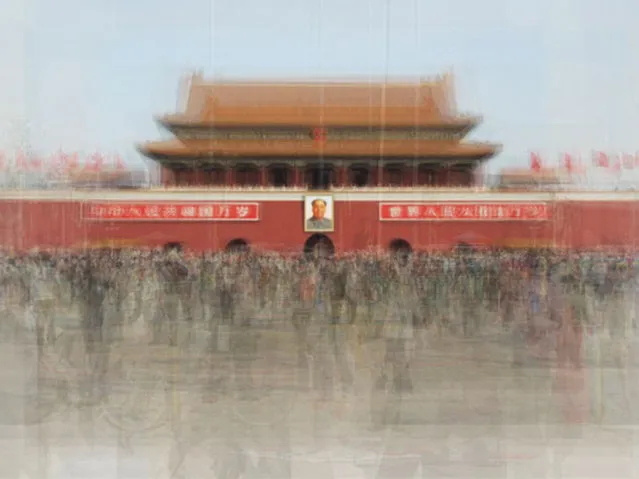
That's exactly what Vionnet's "Photo Opportunities" series does: takes hundreds of tourist photos of iconic landmarks, superimposes them into semi-transparency, and lets a dreamlike meta-image emerge.
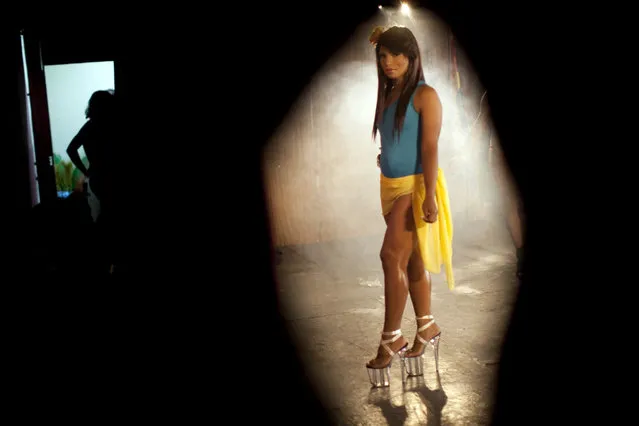
Transgender Kendra Ferrari, 21, performs during Miss Night Queen beauty contest in Guatemala City, Friday, June 15, 2012. Ferrari won the pageant and will represent the transgender community for one year. (Photo by Rodrigo Abd/AP Photo)
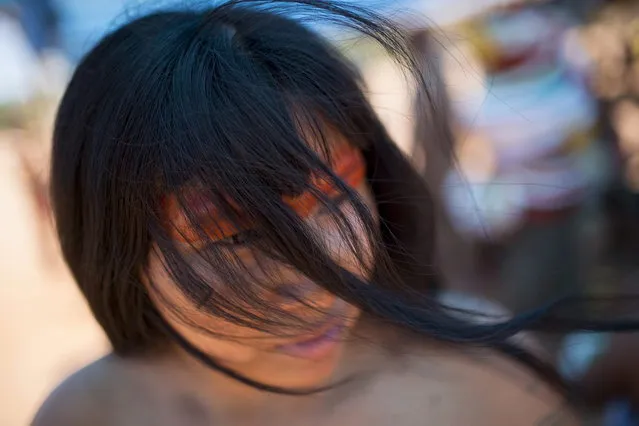
A Waura Indian woman watches the activities of this year's “quarup”, a ritual held over several days to honour in death a person of great importance to them, in Xingu National Park, Mato Grosso State, August 24, 2013. This year the Waura tribe is honouring their late cacique (chief) Atamai, who died in 2012 and helped created the Xingu Park, and his important contribution in facilitating communication between white Brazilians and Indians. (Photo by Ueslei Marcelino/Reuters)