02 Jul 2013 09:29:00,post received
0 comments

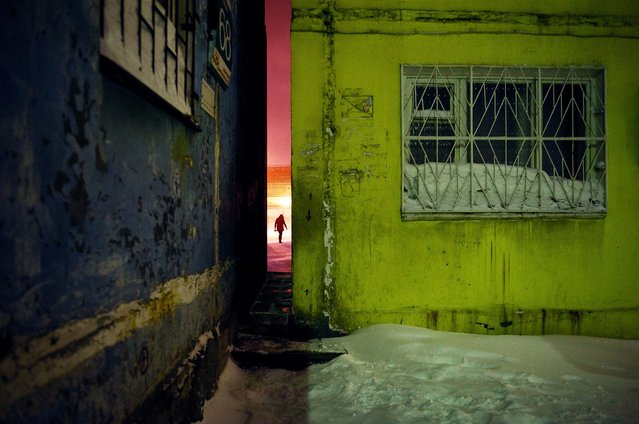
Elena Chernyshova's vision of Norilsk, Russia, the northernmost city in the world, is a series of surprises by which she extracts otherworldly beauty from ugly realities. Here: 2013. A woman is visible through a narrow passageway between two buildings. Norilsk's urban spaces were designed to shorten distances around large developments and give residents maximum protection from arctic winds. (Photo by Elena Chernyshova)
10 Jan 2016 08:03:00,post received
0 comments
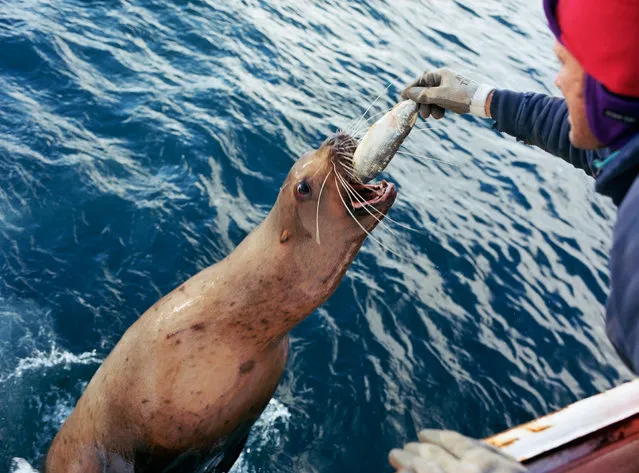
In 2002 photographer Corey Arnold left behind a poor economy in San Francisco and headed up to Alaska to try his luck at his longtime passion of fishing. Arnold, who had worked summers during college on a salmon boat in Alaska, signed onto the f/v Rollo, a crabbing boat that fishes in the dangerous Bering Sea. While working long, strenuous hours on the Rollo, Arnold often stole away with the captain’s permission to grab his camera and photograph the crew and the ship. Arnold eventually put together “Fish Work: Bering Sea”, a documentation of his seven adventurous and dicey crab seasons aboard the Rollo. (Photo by Corey Arnold)
20 Aug 2014 10:05:00,post received
0 comments

People carry drinks at 80s Bar in Damascus, Syria, March 11, 2016. In Damascus's Old City, just a mile from the battered frontline between government and rebel-held territory, young Syrians smoke, drink beer or soft drinks, and talk about anything but the war. The revival of activity in this once-vibrant quarter is part of efforts to project an air of normality in the Syrian capital, even as the five-year-old war that has killed more than 250,000 people and created 5 million refugees continues to rage nearby. (Photo by Omar Sanadiki/Reuters)
28 Apr 2016 12:07:00,post received
0 comments
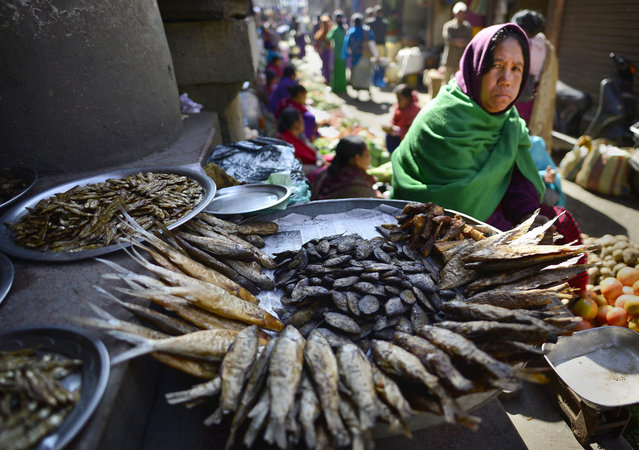
A Manipuri woman sells smoked and dry fish in Ima market - the world's largest all women market – in Imphal city, Manipur state, 06 January 2016. The 150-year-old Ima Keithel or “Mothers's market” complex, which is run exclusively by women and was damaged in the 04 January 2016 earthquake, is returning back to normal. Nine deaths have been reported from in and around Imphal due to falling debris. Imphal has a population of some 270,000 and people were jolted from their sleep and ran out of their homes in panic when the earth shook 04 January, reports say. (Photo by EPA/Stringer)
08 Jan 2016 08:04:00,post received
0 comments
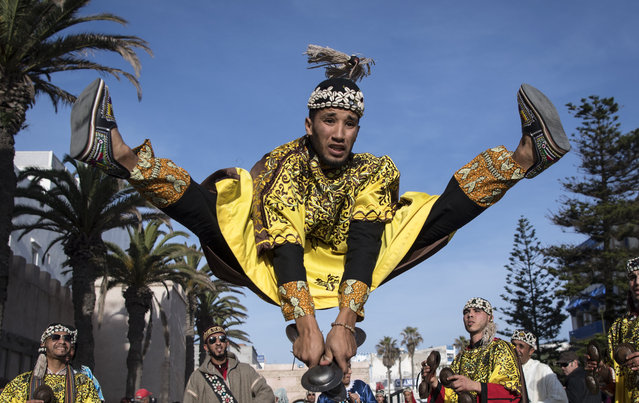
A Gnawa traditional group performs in the city of Essaouira on December 14, 2019, to celebrate the decision of adding the Gnawa culture to UNESCO's list of Intangible Cultural Heritage of Humanity. Gnawa culture, a centuries-old Moroccan practice rooted in music, African rituals and Sufi traditions, was added to UNESCO's list of Intangible Cultural Heritage of Humanity earlier in the week. Gnawa refers to a “set of musical productions, fraternal practices and therapeutic rituals where the secular mixes with the sacred”, according to the nomination submitted by Morocco. Often dressed in colourful outfits, Gnawa musicians play the guenbri, a type of lute with three strings, accompanied by steel castanets called krakebs. (Photo by Fadel Senna/AFP Photo)
18 Dec 2019 00:05:00,post received
0 comments
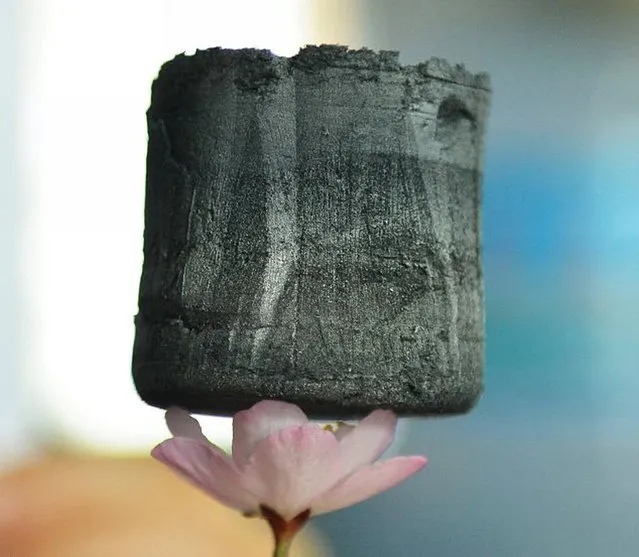
The lightest material ever made has been produced by a team of scientists in China, a Chinese university announced.
07 Jan 2014 11:03:00,post received
0 comments
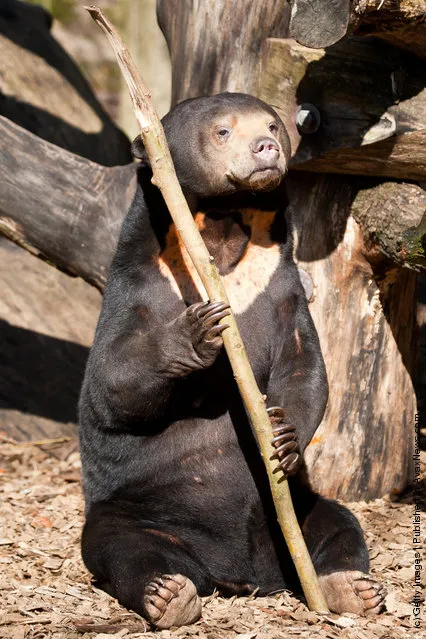
The sun bear (Ursus malayanus), also known as the honey bear, is a bear found primarily in the tropical rainforest (the dense lowland forests) in Southeast Asia; North-East India, Bangladesh, Myanmar, Thailand, Laos, Cambodia, Vietnam, Southern China, Peninsular Malaysia, and the islands of Sumatra and Borneo.
03 May 2012 23:37:00,post received
0 comments