Loading...
Done
Mr Olympia Phil Heath poses during a media call ahead of the 2012 IFBB Australian Pro Grand Prix XIII

Mr. Olympia Phil Heath poses during a media call ahead of the 2012 IFBB Australian Pro Grand Prix XIII on March 16, 2012 in Melbourne, Australia. (Photo by Robert Cianflone/Getty Images)
Details
16 Mar 2012 10:42:00
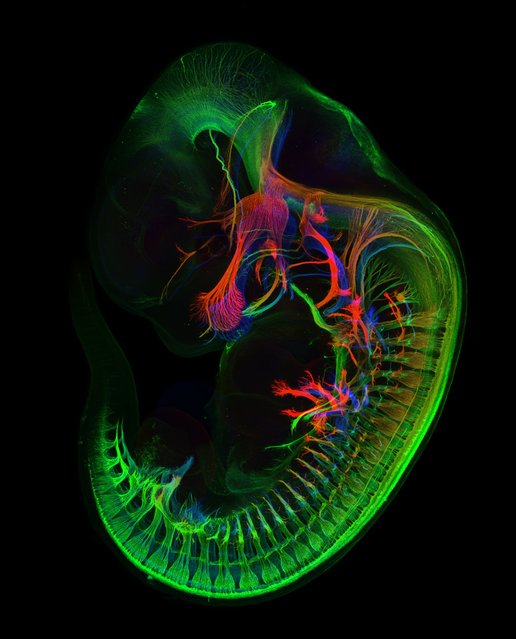
Mr. Zhong Hua, of Johns Hopkins University School of Medicine, took this image of the peripheral nerves (those outside of the brain) in an 11.5-day-old mouse embryo, magnified five times. (Photo by Zhong Hua)

Mr. Zhong Hua, of Johns Hopkins University School of Medicine, took this image of the peripheral nerves (those outside of the brain) in an 11.5-day-old mouse embryo, magnified five times. (Photo by Zhong Hua)
Details
31 Oct 2013 09:39:00
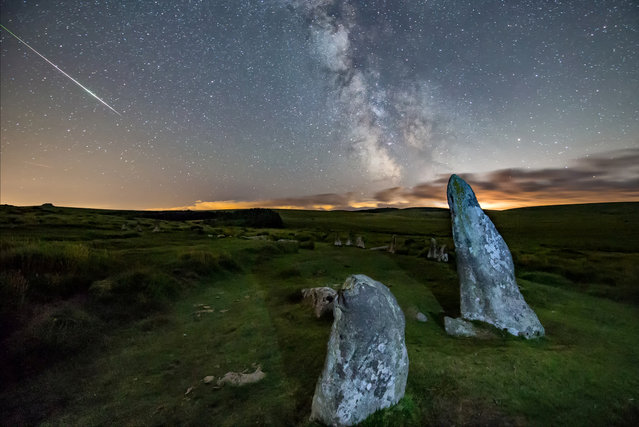
The Perseid Meteor Shower seen over The Scorhill Stone Circle in Dartmoor, Devon on August 2, 2016. (Photo by John Baker/SWNS.com)

The Perseid Meteor Shower seen over The Scorhill Stone Circle in Dartmoor, Devon on August 2, 2016. (Photo by John Baker/SWNS.com)
Details
08 Dec 2016 13:00:00
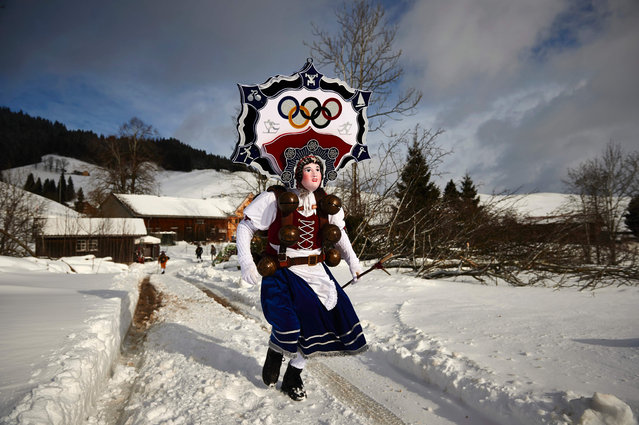
A leader “Rolli” of a yodel group “Schuppel” runs in the snow in front of a farmstead during the “Silvesterchlausen” in the early morning in Urnaesch in the Swiss canton Appenzell Ausserroden on January 13, 2017. The “Silvesterchlausen” is a tradition of the Swiss canton Appenzell, where colorfull characters organized in groups called “Schuppel”, chase out the old year and welcome the new one. They run all day long from farmstead to farmstead, gather together to sing a jodel and great the farmers. A “Schuppel” consists of some “Schelli” and two “Rolli”, sometimes with female dresses and nice scenes over the head, despite the dress all participants are males. The Silversterchlausen run twice a year, first for the new Silvester on December 31, and then again on January 13, for the old Silvester following the Julian calendar. (Photo by Michael Buholzer/AFP Photo)

A leader “Rolli” of a yodel group “Schuppel” runs in the snow in front of a farmstead during the “Silvesterchlausen” in the early morning in Urnaesch in the Swiss canton Appenzell Ausserroden on January 13, 2017. (Photo by Michael Buholzer/AFP Photo)
Details
14 Jan 2017 12:41:00
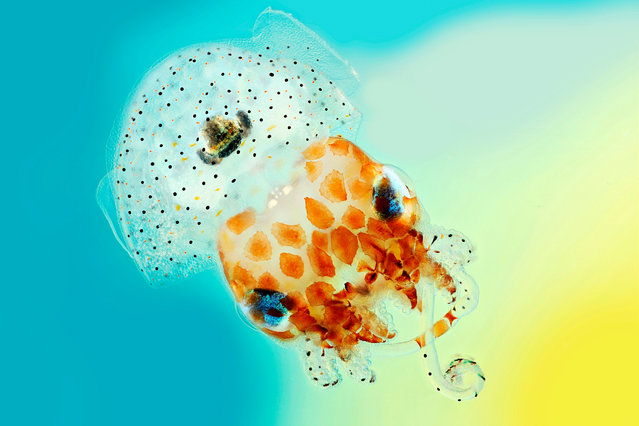
With its huge eyes, comical name and diminutive size, Mark R. Smith’s image of a baby Hawaiian bobtail squid can’t help but raise a smile. A curiously endearing creature, the cephalopod is just 1.5cm across, its mantle cavity bearing more than a passing resemblance to a rather natty shower cap. But it is also a beautiful example of symbiosis – nature’s version of “I’ll scratch your back if you scratch mine” – for on the underside of the squid is a light organ which houses bioluminescent bacteria. The squid offers the bacteria protection and food, while the bacteria emit a glow – a handy trait that the squid uses to offset its silhouette, helping it to evade predators in the depths below. Mark R. Smith’s entry combines several images of a Hawaiian bobtail squid with different focus lengths to create a final picture with greater depth of field than normal. (Photo by Mark R. Smith/Wellcome Images/Macroscopic Solutions)

With its huge eyes, comical name and diminutive size, Mark R. Smith’s image of a baby Hawaiian bobtail squid can’t help but raise a smile. A curiously endearing creature, the cephalopod is just 1.5cm across, its mantle cavity bearing more than a passing resemblance to a rather natty shower cap. But it is also a beautiful example of symbiosis – nature’s version of “I’ll scratch your back if you scratch mine” – for on the underside of the squid is a light organ which houses bioluminescent bacteria. The squid offers the bacteria protection and food, while the bacteria emit a glow – a handy trait that the squid uses to offset its silhouette, helping it to evade predators in the depths below. Mark R. Smith’s entry combines several images of a Hawaiian bobtail squid with different focus lengths to create a final picture with greater depth of field than normal. (Photo by Mark R. Smith/Wellcome Images/Macroscopic Solutions)
Details
08 Mar 2017 00:05:00
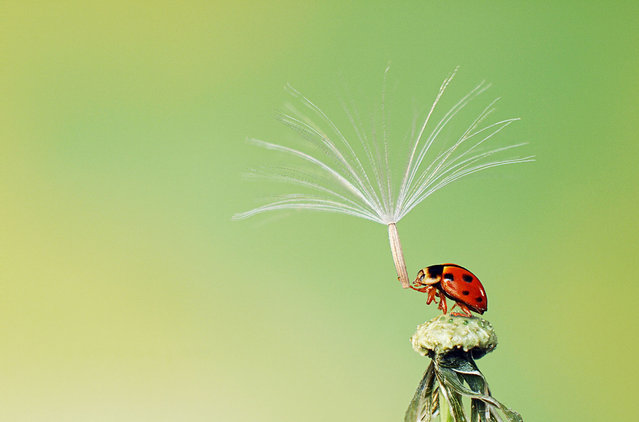
“The Last Pollen Spore Preparing to Leave a Ladybug Trying to Hold On, Because It Didn't Want to Be Alone”. Photo by Hiep Nguyen Hoang (Hanoi, Vietnam). Photographed in Hanoi, Vietnam, April 2012.

“The Last Pollen Spore Preparing to Leave a Ladybug Trying to Hold On, Because It Didn't Want to Be Alone”. Photo by Hiep Nguyen Hoang (Hanoi, Vietnam). Photographed in Hanoi, Vietnam, April 2012.
Details
08 Mar 2013 12:09:00
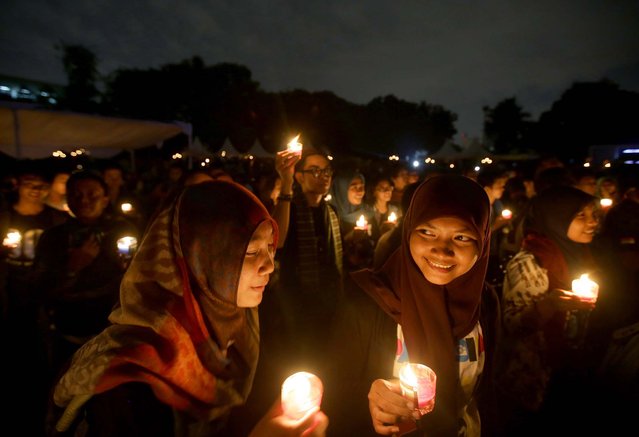
Muslim women light candles during the “EarthHour” in Jakarta, Indonesia, on March 23, 2013. Hundreds of people observed the global event that encourages people to turn off their lights for 60 minutes. (Photo by Dita Alangkara/Associated Press)

Muslim women light candles during the “EarthHour” in Jakarta, Indonesia, on March 23, 2013. Hundreds of people observed the global event that encourages people to turn off their lights for 60 minutes. (Photo by Dita Alangkara/Associated Press)
Details
24 Mar 2013 09:20:00
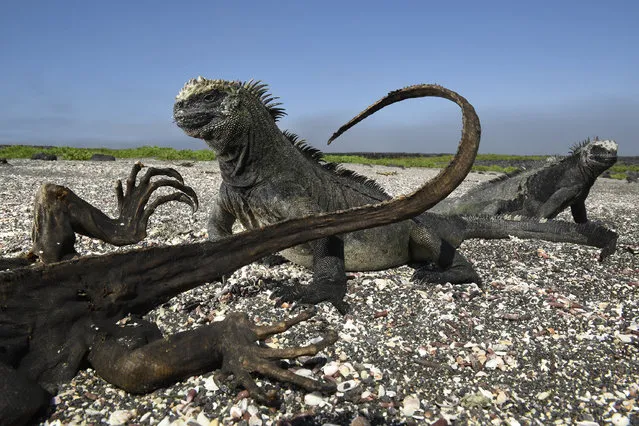
Galapagos – Rocking the Cradle: Four major ocean currents converge along the Galapagos archipelago, creating the conditions for an extraordinary diversity of animal life, April 25, 2016. The islands are home to at least 7,000 flora and fauna species, of which 97 percent of the reptiles, 80 percent of the land birds, 50 percent of the insects and 30 percent of the plants are endemic. The local ecosystem is highly sensitive to the changes in temperature, rainfall and ocean currents that characterize the climatic events known as El Niño and La Niña. These changes cause marked fluctuations in weather and food availability. Many scientists expect the frequency of El Niño and La Niña to increase as a result of climate change, making the Galapagos a possible early-warning location for its effects. (Photo by Thomas P. Peschak for National Geographic/World Press Photo)

Galapagos – Rocking the Cradle: Four major ocean currents converge along the Galapagos archipelago, creating the conditions for an extraordinary diversity of animal life, April 25, 2016. The islands are home to at least 7,000 flora and fauna species, of which 97 percent of the reptiles, 80 percent of the land birds, 50 percent of the insects and 30 percent of the plants are endemic. (Photo by Thomas P. Peschak for National Geographic/World Press Photo)

Details
16 Apr 2018 00:01:00