Loading...
Done
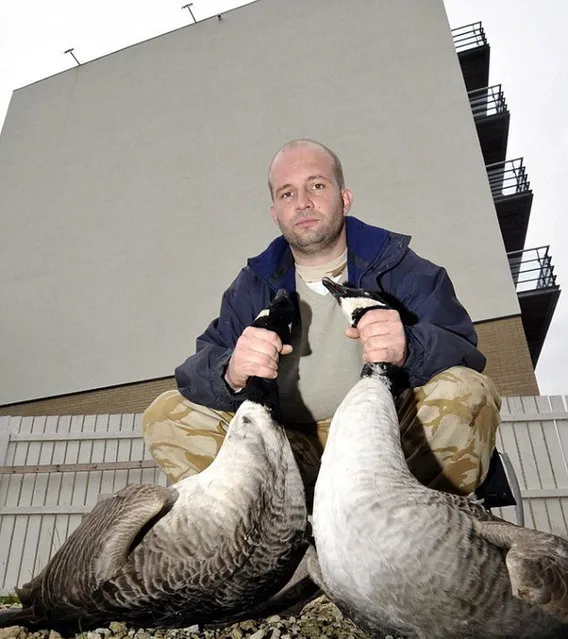
Geese VS Wall

This building in North Yorkshire, England is situated on the migration routes of wild geese. In cloudy weather, the gray color of the wall blends into the color of the sky with the result that many birds fly beak first into the side of the building. The owner contacted the authorities of the city for assistance and they have appealed to the public for artists who have a good concept for the wall’s design.
Details
04 Mar 2013 11:42:00
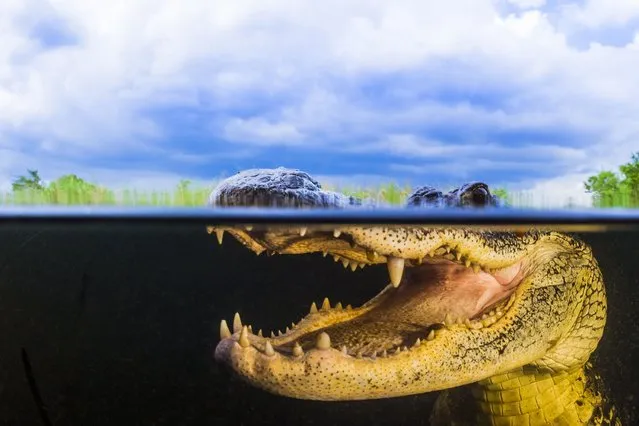
American Alligator By Masa Ushioda

Brave photographer Masa Ushioda captured the shots of this wild gator in vast marsh land in the Everglades National Park, in Florida, USA. He said: “Bright sunlight and blue sky were critical elements in this picture – in addition to getting a wild 10-foot alligator in the middle of the viewfinder with a perfect angle”.

Details
29 Mar 2014 12:02:00
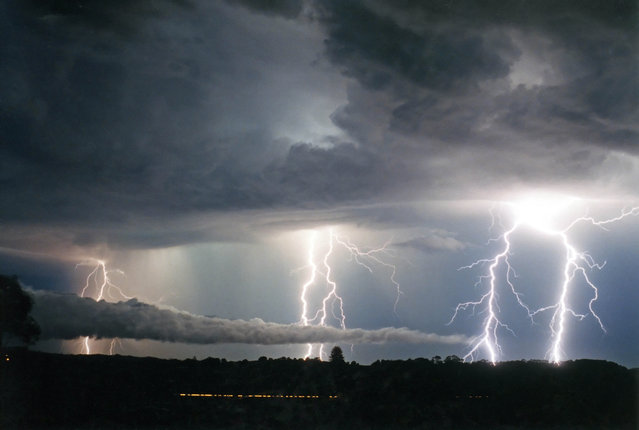
“Lightning Flash Photography”. Alstonville, New South Wales, Australia – January 8, 2003. (Photo by Michael Bath/Caters News)

Michael Bath, from McLeans Ridges in New South Wales, Australia, estimates that in his lifetime he has taken more than 3,500 images of lightning bolts illuminating the sky. Photo: Alstonville, New South Wales, Australia – January 8, 2003. (Photo by Michael Bath/Caters News)
Details
04 Apr 2014 11:44:00
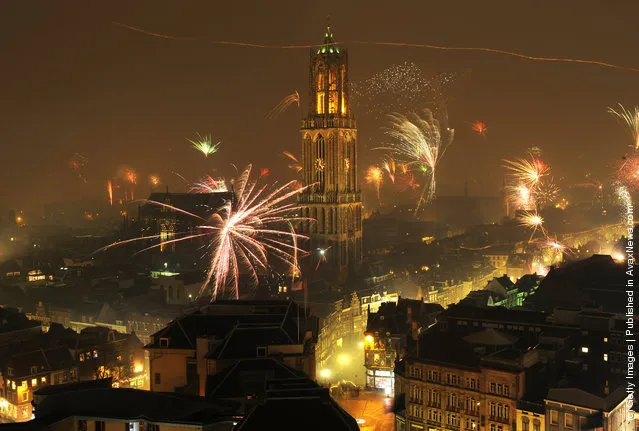
Fireworks Welcome In The New Year In Utrecht

New Year's Eve fireworks display illuminates the sky over the Dom Tower on January 01, 2012 in Utrecht, Netherlands. The Dom tower is with 112.5 metres high the tallest church tower of the Netherlands. Built in Gothic-style, the tower, part of the Cathedral of Saint Martin, is the symbol of the city of Utrecht. (Photo by Jasper Juinen/Getty Images)
Details
01 Jan 2012 11:27:00
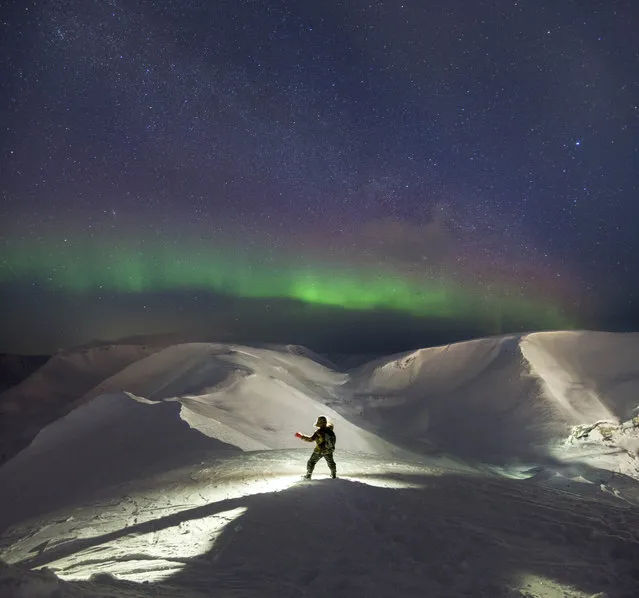
“I spend time trying to get the exposure right”, Vitaly Istomin explained. (Photo by Vitaly Istomin/Caters News Agency)

These Northern Lights “rainbows” have turned the sky greener than the Earth below. Vitaly Istomin, 26, spent several nights in freezing conditions under the stars in northern Russia’s Khibiny Mountains to capture the aurora’s “rainbows”. (Photo by Vitaly Istomin/Caters News Agency)
Details
22 Feb 2018 00:02:00
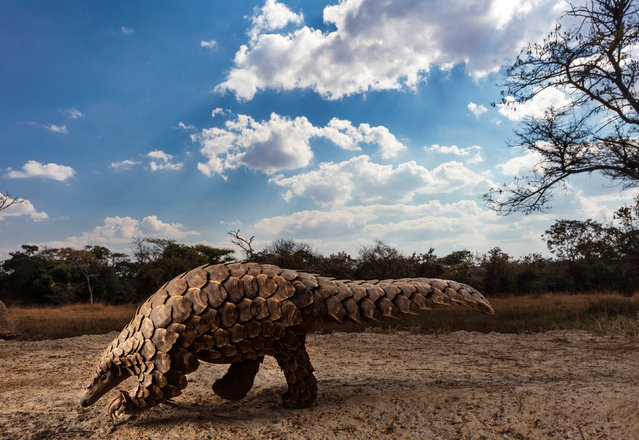
Pangolins in Crisis: Brent Stirton, South Africa; 1st place, Natural world and wildlife. “Pangolins are the world’s most illegally trafficked mammals, with an estimated one million trafficked to Asia in the last 10 years. Their scales are used in traditional Chinese and Vietnamese medicine, and their meat is sold as a high-priced delicacy. As a result, pangolins are listed as critically endangered and anyone who trades or consumes them is breaking the law. This body of work exposes the trade, while exploring aspects of illegality and celebrating the people who are trying to save these animals”. (Photo by Brent Stirton/Sony World Photography Awards 2020)

Pangolins in Crisis: Brent Stirton, South Africa; 1st place, Natural world and wildlife. “Pangolins are the world’s most illegally trafficked mammals, with an estimated one million trafficked to Asia in the last 10 years. Their scales are used in traditional Chinese and Vietnamese medicine, and their meat is sold as a high-priced delicacy. As a result, pangolins are listed as critically endangered and anyone who trades or consumes them is breaking the law. This body of work exposes the trade, while exploring aspects of illegality and celebrating the people who are trying to save these animals”. (Photo by Brent Stirton/Sony World Photography Awards 2020)
Details
11 Jun 2020 00:05:00
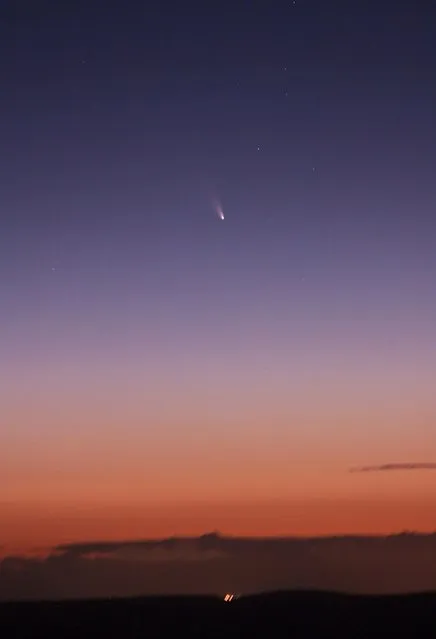
This image provided by NASA shoaws the comet PANSTARRS as seen from Mount Dale, Western Australia on March 5, 2013. According to NASA on March 10, it will make its closest approach to the sun about 28 million miles (45 million kilometers) away. As it continues its nightly trek across the sky, the comet may get lost in the sun's glare but should return and be visible to the naked eye by March 12. (Photo by AP Photo/NASA)

It’s time to start watching for Comet PANSTARRS, one of two comets to get excited about in 2013. Photo: This image provided by NASA shoaws the comet PANSTARRS as seen from Mount Dale, Western Australia on March 5, 2013. According to NASA on March 10, it will make its closest approach to the sun about 28 million miles (45 million kilometers) away. As it continues its nightly trek across the sky, the comet may get lost in the sun's glare but should return and be visible to the naked eye by March 12. (Photo by AP Photo/NASA)
Details
13 Mar 2013 08:03:00
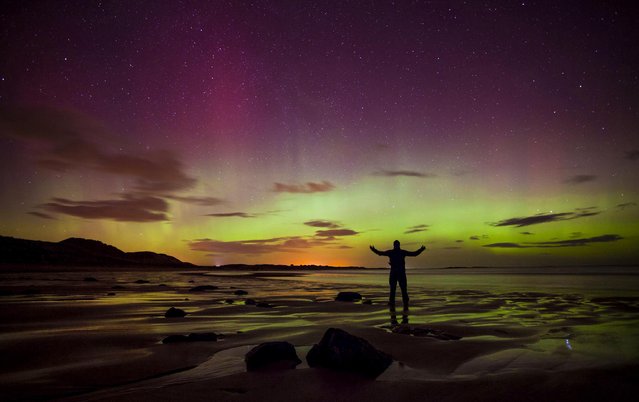
A man poses standing on a rock looking at the aurora borealis, or northern lights, illuminating the night sky at Embleton Bay in Northumberland, England, on February 27, 2014. The northern lights is a fantastical natural light display with fast moving light effects caused by particles charged by the sun colliding with particles in Earth's upper atmosphere. (Photo by Tom White/PA Wire)

A man poses standing on a rock looking at the aurora borealis, or northern lights, illuminating the night sky at Embleton Bay in Northumberland, England, on February 27, 2014. The northern lights is a fantastical natural light display with fast moving light effects caused by particles charged by the sun colliding with particles in Earth's upper atmosphere. (Photo by Tom White/PA Wire)
Details
02 Mar 2014 10:12:00