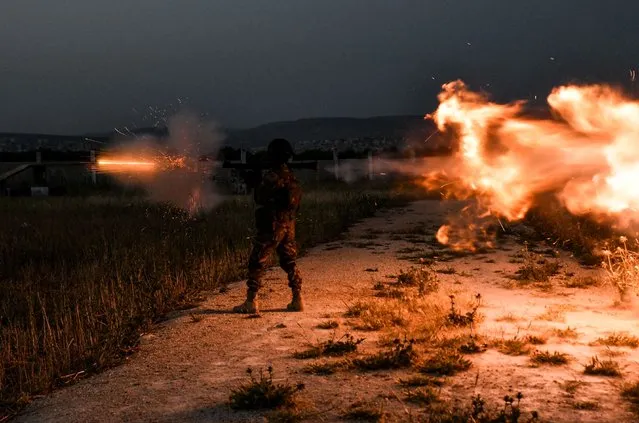
A Turkey-backed Syrian fighter fires a rocket-propelled grenade as he takes part in a military exercise in the countryside of the northwestern city of Afrin, in rebel-held part of Aleppo province, on May 31, 2022. (Photo by Rami al Sayed/AFP Photo)
Andreas Alfaro and influencer Chelsea Yamase (Chelseakauai) perform acro-yoga poses at Summit One Vanderbilt on July 09, 2022 in New York City. (Photo by Alexi Rosenfeld/Getty Images)
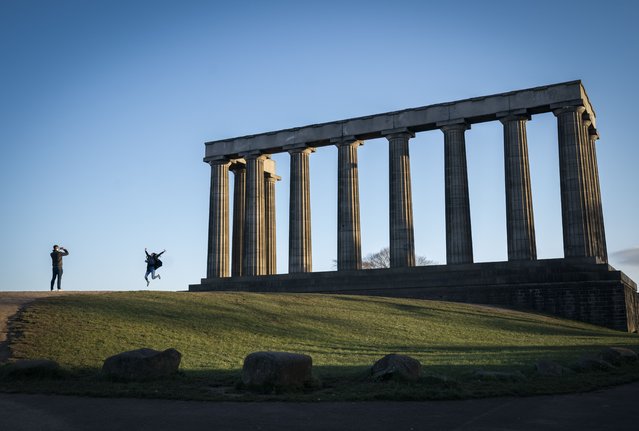
A couple take photographs alongside the National Monument on Calton Hill, Edinburgh on Wednesday January 5, 2022, ahead of First Minister Nicola Sturgeon's update to the Scottish Parliament on the Covid-19 situation as the Omicron variant sweeps across the country. (Photo by Jane Barlow/PA Images via Getty Images)
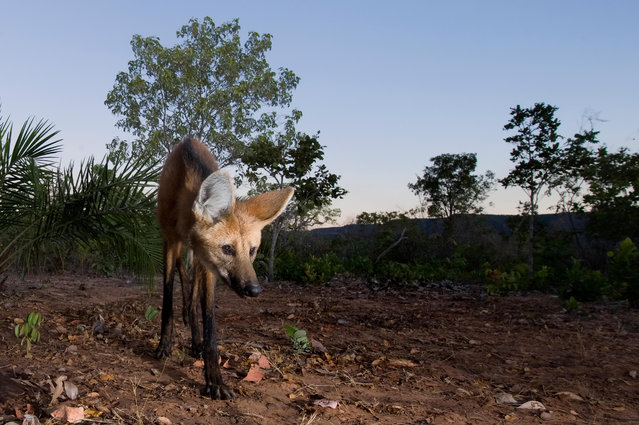
Global wildlife populations will decline by 67% by 2020 unless urgent action is taken to reduce human impact on species and ecosystems, warns the biennial Living Planet Index report from WWF (World Wide Fund for Nature) and ZSL (Zoological Society of London). From elephants to eels, here are some of the wildlife populations most affected by human activity. Here: The maned wolf is among the large mammals in the Brazilian Cerrado that are threatened by the increasing conversion of grasslands into farmland for grazing and growing crops. (Photo by Ben Cranke/Nature Picture Library/Alamy Stock Photo)
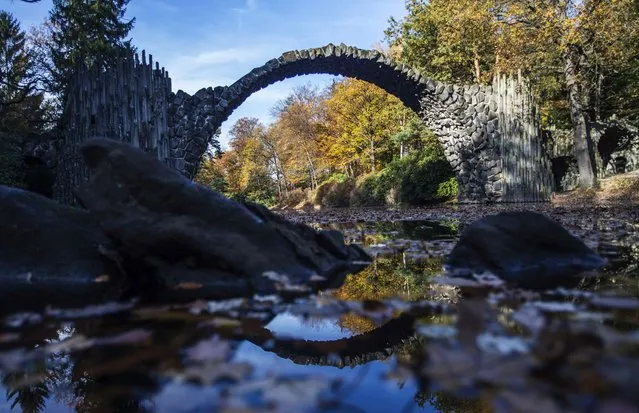
The Bridge “Rakotzbrücke” is pictured against trees in autumn colours in the the eastern German town of Kromlau November 4, 2014. (Photo by Hannibal Hanschke/Reuters)
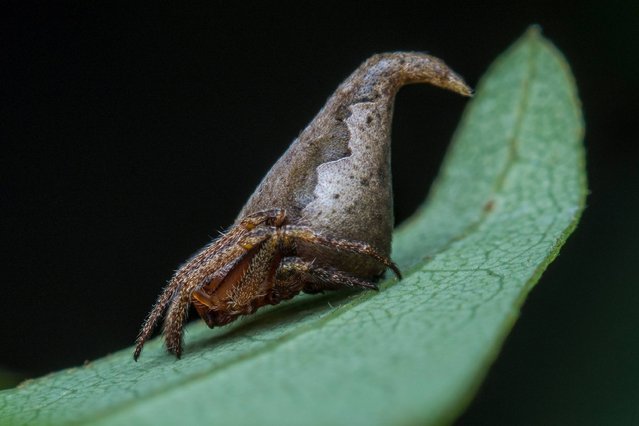
In this handout photograph received from Sumukha J.N on December 15, 2016, the newly-discovered spider Eriovixia Gryffindori sits on a leaf in the Kans in India's Western Ghats. (Photo by Sumukha J.N./AFP Photo)