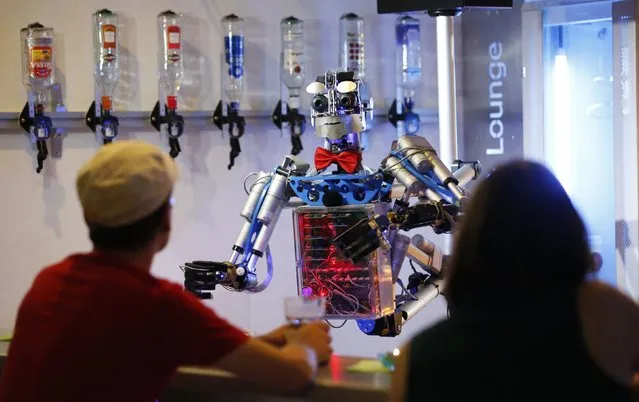
Humanoid robot bartender “Carl” interacts with guests at the Robots Bar and Lounge in the eastern German town of Ilmenau, July 26, 2013. “Carl”, developed and built by mechatronics engineer Ben Schaefer who runs a company for humanoid robots, prepares spirits for the mixing of cocktails and is able to interact with customers in small conversations. (Photo by Fabrizio Bensch/Reuters)
“The Lun-class ekranoplan (NATO reporting name Duck) was a ground effect vehicle (GEV) designed by Rostislav Evgenievich Alexeev and used by the Soviet and Russian navies from 1987 until sometime in the late 1990s. It “flew” using the lift generated by the ground effect of its large wings when close to the surface of the water – about four metres or less. Although they might look similar and/or have related technical characteristics, ekranoplans like the Lun are not aircraft, seaplanes, hovercraft, or hydrofoils – ground effect is a separate technology altogether. The International Maritime Organization classifies these vehicles as maritime ships. The name Lun comes from the Russian for harrier”. – Wikipedia (Photo by Igor113)
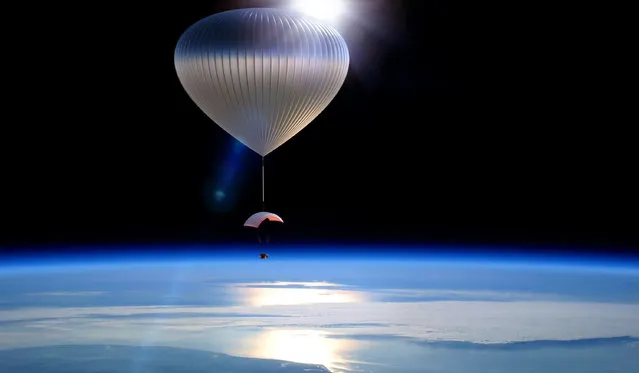
This undated image provided by World View shows World View capsule and balloon spacecraft that will rise to 100,000 feet above Earth for passengers to see the curvature of the planet and the blackness of space. Space tourism companies are employing designs including winged vehicles, vertical rockets with capsules and high-altitude balloons. While developers envision ultimately taking people to orbiting habitats, the moon or beyond, the immediate future involves short flights into or near the lowest reaches of space without going into orbit. (Photo by World View via AP Photo)
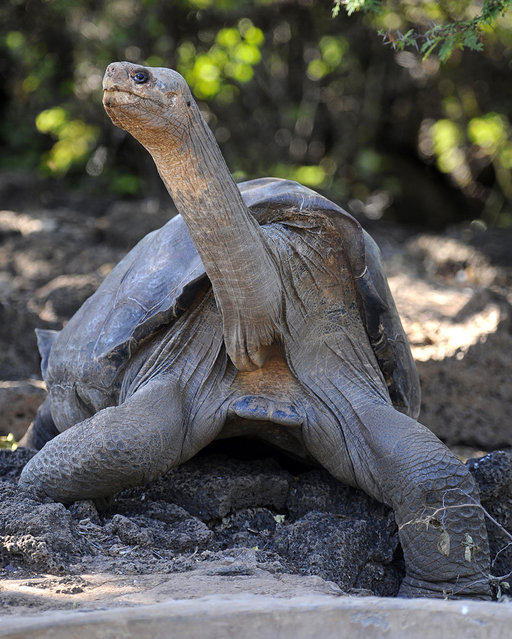
“The last known individual of the subspecies was a male named Lonesome George (Spanish: El Solitario Jorge/George), who died on 24 June 2012. In his last years, he was known as the rarest creature in the world. George served as a potent symbol for conservation efforts in the Galápagos and internationally”. – Wikipedia. (Photo by Rodrigo Buendia/AFP)
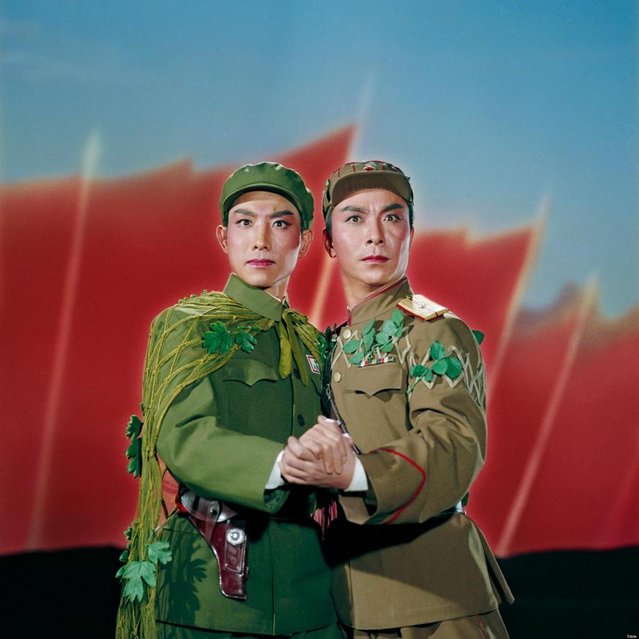
“In 1967, Zhang Yaxin was 34 and working as a photojournalist at China’s state-controlled Xinhua News Agency when he was assigned to a top-secret government project. He was to be the official photographer of a new arts program led by Chairman Mao and his wife – the Model Operas. Though he was not to know it then, Zhang would spend the next seven years documenting the evolution of one of the most dramatic and elaborate attempts to redefine artistic sensibilities in modern art history”. – Chengcheng Jiang via TIME. Photo: Raid on the White Tiger Regiment, 1971. (Photo by Zhang Yaxin/Courtesy See+ Gallery, Beijing)
William Gibson is not one of the authors that spits out novels like a machine – in his long and fruitful career he has only published 11 novels andof short stories and articles in the tens each. Still his impact on modern literature was huge – the “noir prophet” of the cyberpunk subgenre (that he was one of the pioneers of) has predicted the rise of reality television, virtual reality, video games and the internet. He is a Hugo and Nebula award winning science fiction writer, with a special eye for what the future might bring.