Loading...
Done
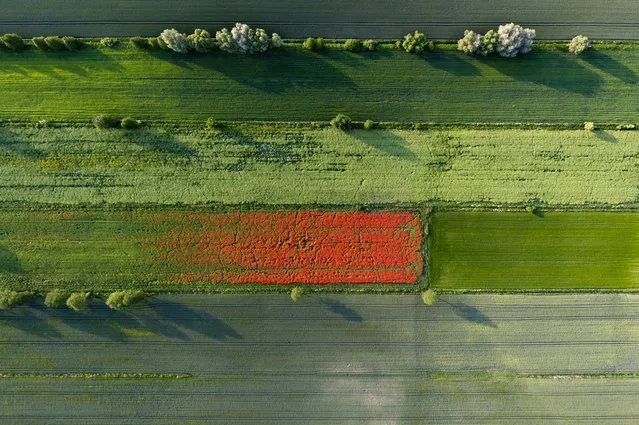
A view over fields of grain in Spring white chamomile, blue cornflower and other weeds growing amongst the grain sprouts. (Photo by Kacper Kowalski/Panos Pictures)

In his book “Side Effects”, aerial photographer Kacper Kowalski took to the skies to paint a portrait of the complex relationship between humans and nature. From the sky, he captured where nature and civilization collide into aesthetic, abstract colors and shapes. Photo: A view over fields of grain in Spring chamomile, cornflower and other weeds growing amongst the grain sprouts. (Photo by Kacper Kowalski/Panos Pictures)
Details
04 Sep 2014 08:19:00
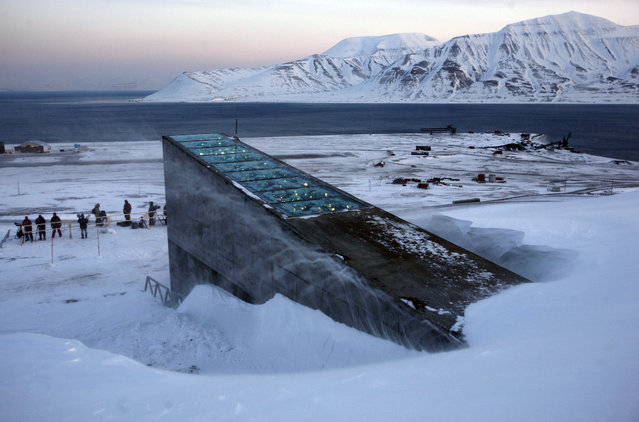
Snow blows off the Svalbard Global Seed Vault before being inaugurated at sunrise, Tuesday, February 26, 2008. (Photo by John McConnico/AP Photo)

Snow blows off the Svalbard Global Seed Vault before being inaugurated at sunrise, Tuesday, February 26, 2008. (Photo by John McConnico/AP Photo)
Details
24 Sep 2015 08:00:00
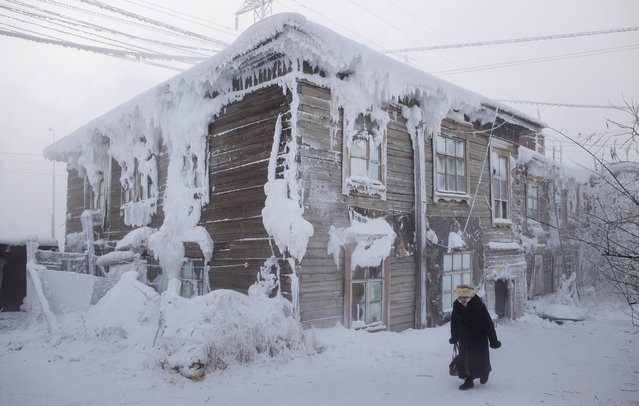
Yakutsk, with a population of around 270,000, holds its own title: that of the coldest city on Earth. Here: Frost-encrusted house in the city centre. (Photo by Amos Chapple/Courtesy Images/RFE/RL)

Yakutsk, with a population of around 270,000, holds its own title: that of the coldest city on Earth. Here: Frost-encrusted house in the city centre. (Photo by Amos Chapple/Courtesy Images/RFE/RL)
Details
23 Jan 2018 06:52:00
Humanoid robot bartender “Carl” interacts with guests at the Robots Bar and Lounge in the eastern German town of Ilmenau, July 26, 2013. “Carl”, developed and built by mechatronics engineer Ben Schaefer who runs a company for humanoid robots, prepares spirits for the mixing of cocktails and is able to interact with customers in small conversations. (Photo by Fabrizio Bensch/Reuters)

Humanoid robot bartender “Carl” interacts with guests at the Robots Bar and Lounge in the eastern German town of Ilmenau, July 26, 2013. “Carl”, developed and built by mechatronics engineer Ben Schaefer who runs a company for humanoid robots, prepares spirits for the mixing of cocktails and is able to interact with customers in small conversations. (Photo by Fabrizio Bensch/Reuters)
Details
22 Oct 2013 09:04:00
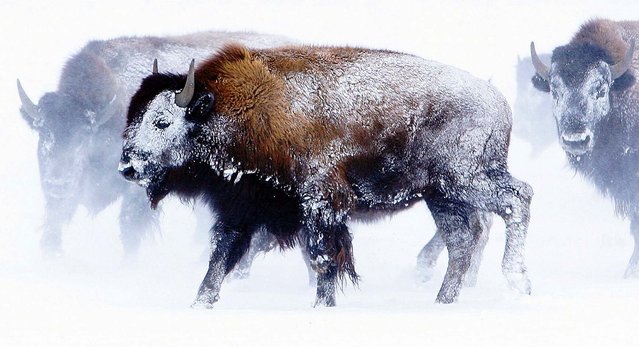
Bison along the Bitterroot Valley's Eastside Highway north of Stevensville, Montana, are covered in snow following a blizzard on November 23, 2010. (Photo by Perry Backus/The Missoulian)

Bison along the Bitterroot Valley's Eastside Highway north of Stevensville, Montana, are covered in snow following a blizzard on November 23, 2010. (Photo by Perry Backus/The Missoulian)
Details
09 Jan 2013 15:22:00
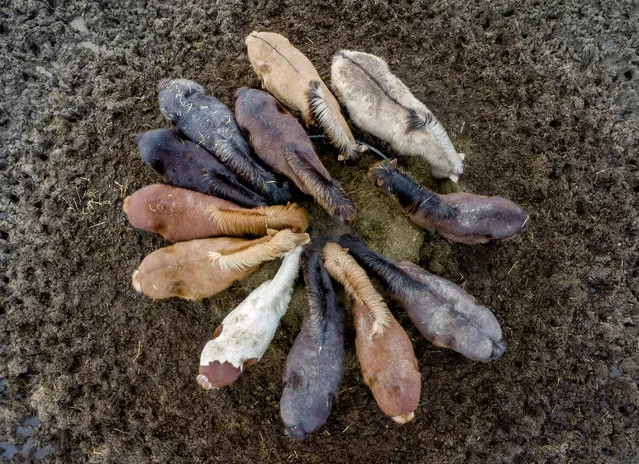
Icelandic stallions eat hay from a box at a stud farm in Wehrheim near Frankfurt, Germany, Wednesday, March 2, 2022. (Photo by Michael Probst/AP Photo)

Icelandic stallions eat hay from a box at a stud farm in Wehrheim near Frankfurt, Germany, Wednesday, March 2, 2022. (Photo by Michael Probst/AP Photo)
Details
20 Apr 2022 05:32:00
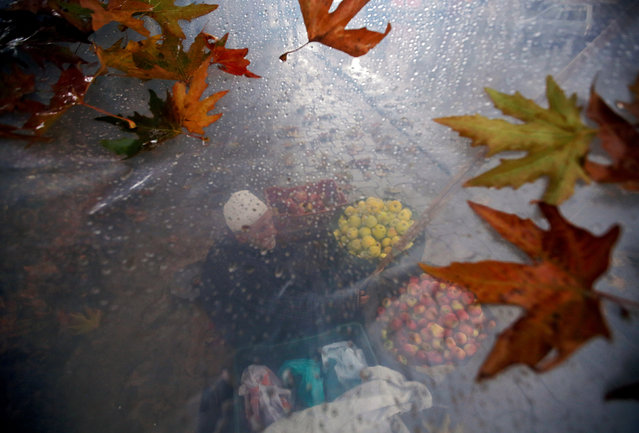
A roadside vendor selling apples is seen through a plastic sheet that he uses to cover himself from rain, in Srinagar November 14, 2018. (Photo by Danish Ismail/Reuters)

A roadside vendor selling apples is seen through a plastic sheet that he uses to cover himself from rain, in Srinagar, Indian state of Jammu and Kashmir on November 14, 2018. (Photo by Danish Ismail/Reuters)
Details
29 Nov 2018 00:05:00
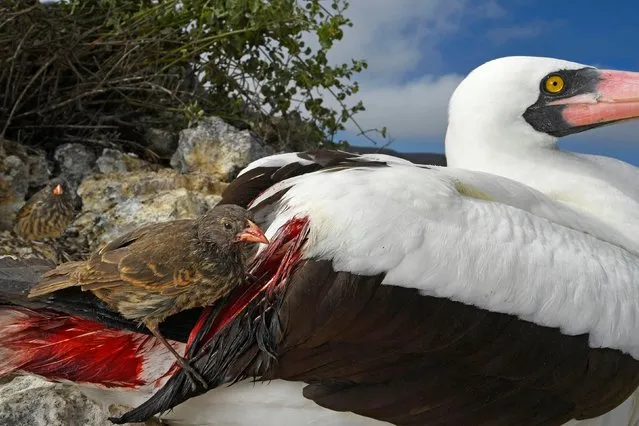
Bloodthirsty by Thomas P Peschak, Germany/South Africa — winner, Behaviour: birds. When rations run short on Wolf Island, in the remote northern Galápagos, the sharp-beaked ground finches become vampires. Their sitting targets are Nazca boobies and other large birds. The finches rely on a scant diet of seeds and insects, which regularly dries up, so they drink blood to survive. ‘I’ve seen more than half a dozen finches drinking from a single Nazca booby,’ says Tom. Rather than leave their nests the boobies tolerate the vampires, and the blood loss doesn’t seem to cause permanent harm. (Photo by Thomas P Peschak/2018 Wildlife Photographer of the Year)

Bloodthirsty by Thomas P. Peschak, Germany/South Africa — winner, Behaviour: birds. When rations run short on Wolf Island, in the remote northern Galápagos, the sharp-beaked ground finches become vampires. Their sitting targets are Nazca boobies and other large birds. The finches rely on a scant diet of seeds and insects, which regularly dries up, so they drink blood to survive. ‘I’ve seen more than half a dozen finches drinking from a single Nazca booby,’ says Tom. Rather than leave their nests the boobies tolerate the vampires, and the blood loss doesn’t seem to cause permanent harm. (Photo by Thomas P. Peschak/2018 Wildlife Photographer of the Year)
Details
19 Oct 2018 00:05:00