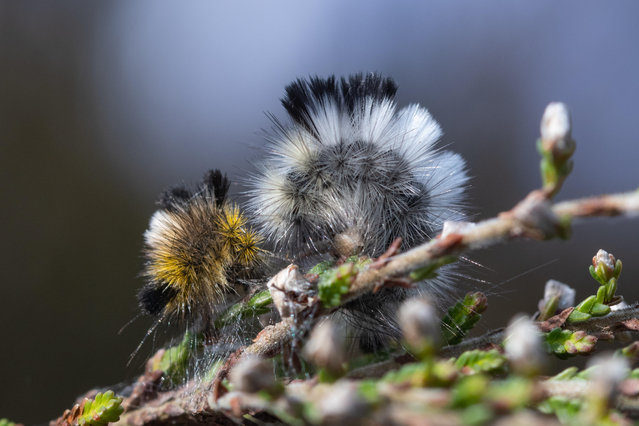
A pale tussock moth (Calliteara pudibunda) larva or caterpillar just after moulting on heather on Hankley Common, Surrey, England on April 30, 2019. (Photo by Gillian Pullinger/Alamy Stock Photo)
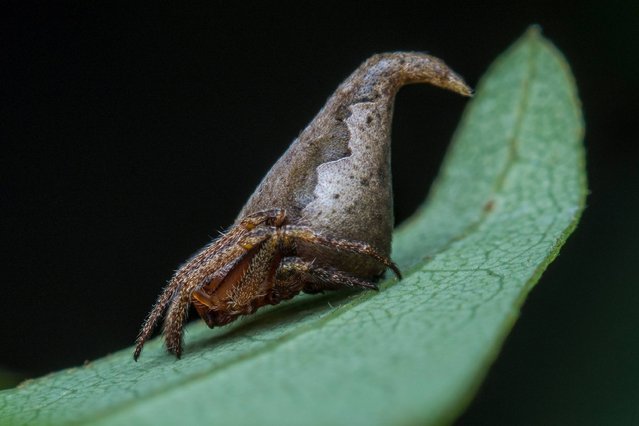
In this handout photograph received from Sumukha J.N on December 15, 2016, the newly-discovered spider Eriovixia Gryffindori sits on a leaf in the Kans in India's Western Ghats. (Photo by Sumukha J.N./AFP Photo)
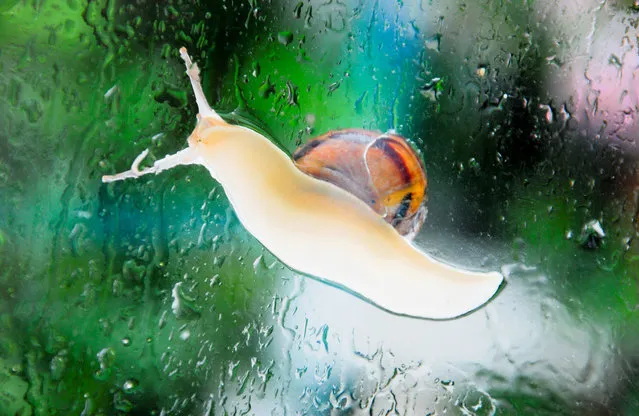
A snail slithers up a rain spattered window during stormy weather on the Isle of Portland, Fortuneswell, England on July 29, 2018. (Photo by Stuart Fretwell/Rex Features/Shutterstock)
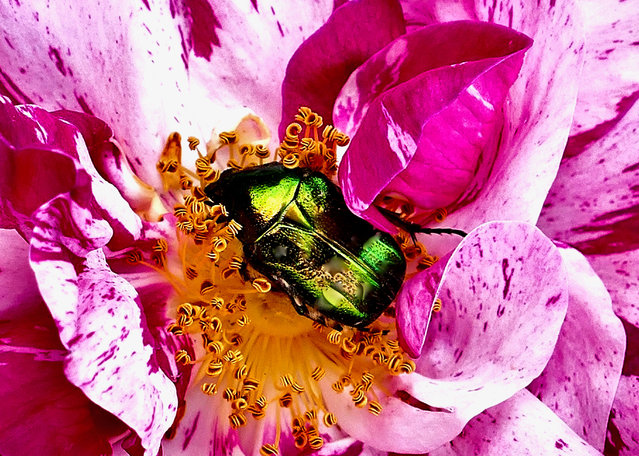
A rose chafer in Oxfordshire, UK on July 8, 2024. The beetles are often seen on flowers in the garden and are sometimes maligned for munching their way through these plants. However, they are an important detritivore as they feed on dead and decaying matter and recycle its nutrients, which makes a helpful addition to any compost. (Photo by Geoffrey Swaine/Rex Features/Shutterstock)
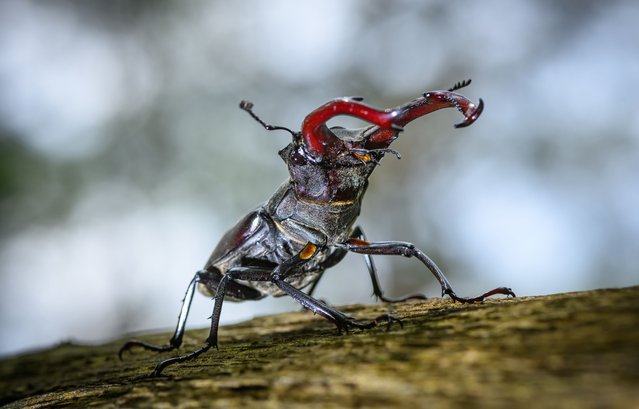
A male stag beetle walks on a branch in an oak forest near the Spree River in Kersdorf, Brandenburg, Germany, on June 8, 2025. (Photo by Patrick Pleul/picture alliance via Getty Images)
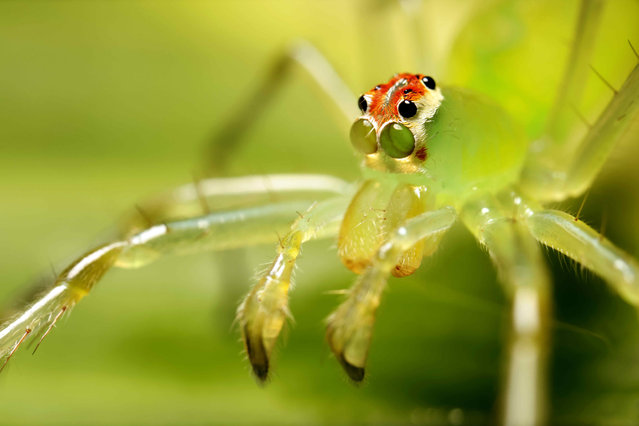
A green jumping spider (Lyssomanes viridis), in a forested area of Cerro de la Muerte, in San Jose, Costa Rica, 20 May 2025. International Day for Biological Diversity is celebrated every 22 May around the world. (Photo by Jeffrey Arguedas/EPA/EFE)
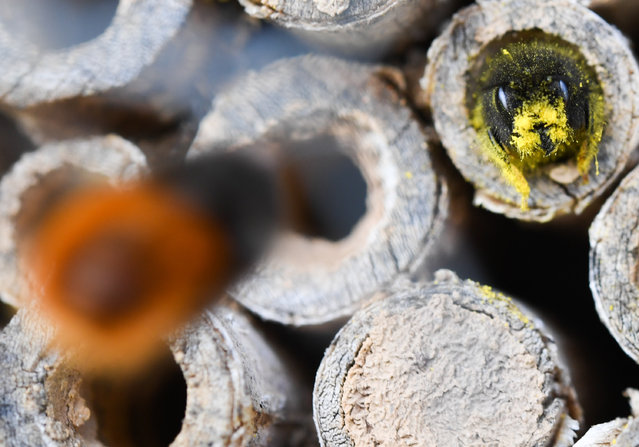
A mason bee deposits its collected pollen in an elderberry stick near Hessen, Germany on March 27, 2020. The food supply is sufficient for the eleven-month development of the brood from the egg to the finished bee. Wild bees are active in March and April and die before their offspring hatch. (Photo by Arne Dedert/dpa)