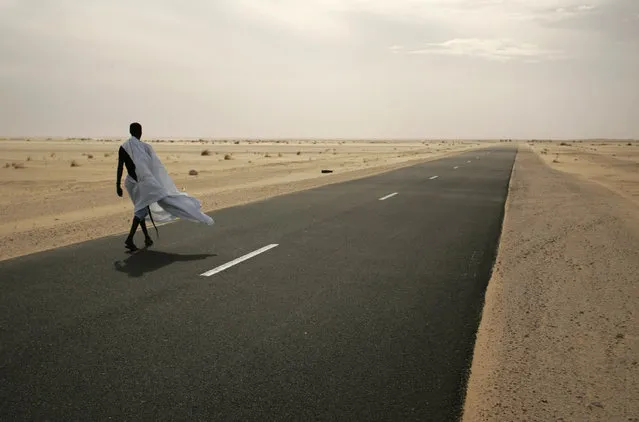
A man walks on the road between Nouahibou and Nouakchott, where three Spanish aid workers were abducted in Mauritania, December 3, 2009. (Photo by Rafael Marchante/Reuters)
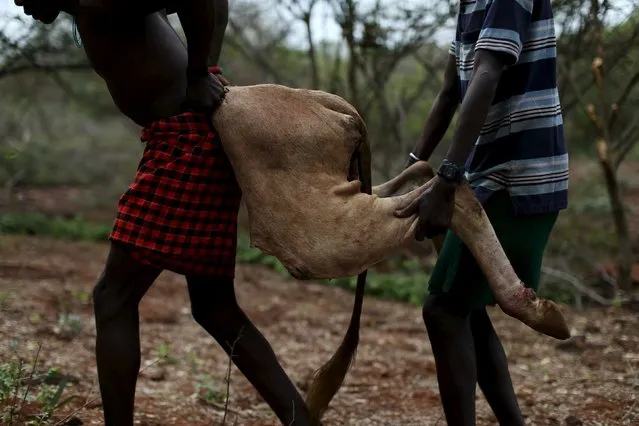
Pokot men carry a part of a carcass of a bull killed by a young man during an initiation ceremony in Baringo County, Kenya, January 20, 2016. Far from the bustling city of Nairobi, in an isolated corner of Kenya's Rift Valley, young men from the Pokot community spear a bull in a ceremony called Sapana that takes them into adulthood. (Photo by Siegfried Modola/Reuters)
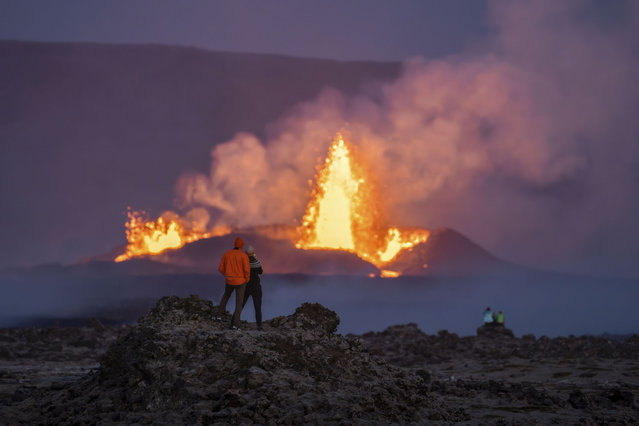
People watch the erupting craters and the lava fountains from the old lava fields around the eruption site on the Reykjanes Peninsula, in Iceland, Wednesday, August 28, 2024. (Photo by Marco di Marco/AP Photo)
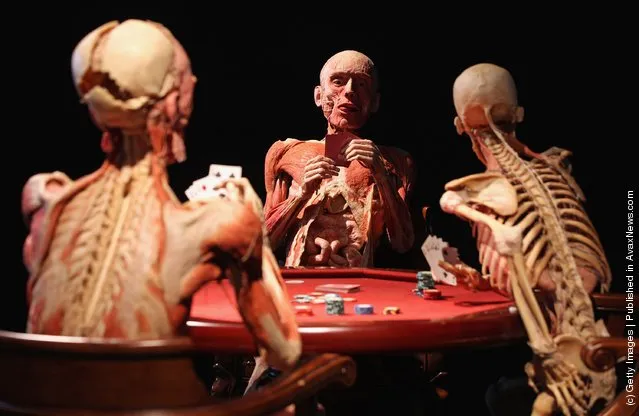
Plastinated human corpses posed to look like poker players stand on display at the Body Worlds exhibition on April 27, 2011 in Berlin, Germany. The exhibition, which features human and animal corpses plastinated by Gunther von Hagens, focuses on the role of the heart. It will be open to the public at the Postbahnhof from April 27 to August 14. (Photo by Sean Gallup/Getty Images)
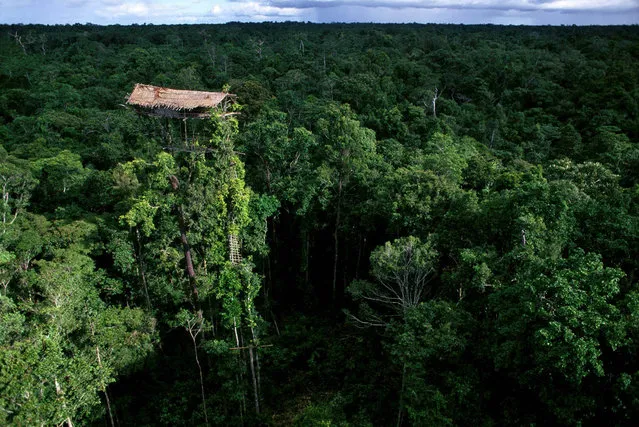
The Korowai, also called the Kolufo, are a people of southeastern Papua (i.e., the southeastern part of the western part of New Guinea). They number about 3,000. Until 1970, they were unaware of the existence of any people besides themselves.
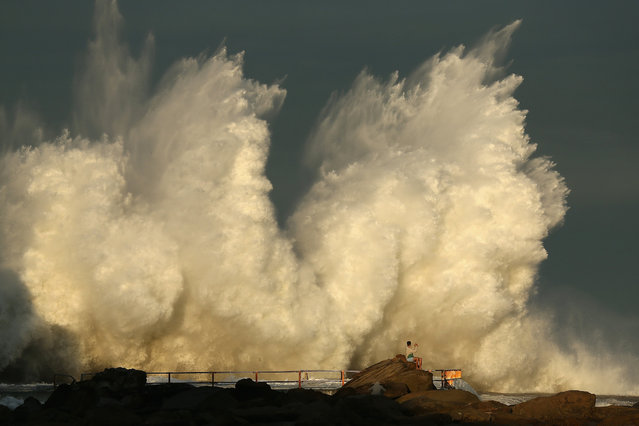
A man watches a wave hit a rock pool at Curl Curl beach as large swell hits the East Coast of Australia on June 6, 2016 in Sydney, Australia. Torrential rain over the weekend saw streets and homes flooded while wind gusts up to 120km per hour brought down trees and powerlines. A king tide has also seen beachside homes evacuated on Sydney's northern beaches as large waves erode the coast. (Photo by Cameron Spencer/Getty Images)