Loading...
Done
1944: Queen Elizabeth II (as Princess Elizabeth) writing at her desk in Windsor Castle, Berkshire

Queen Elizabeth II (as Princess Elizabeth) writing at her desk in Windsor Castle, Berkshire. (Photo by Lisa Sheridan/Studio Lisa/Getty Images). 30th May 1944
Details
24 Oct 2011 13:52:00
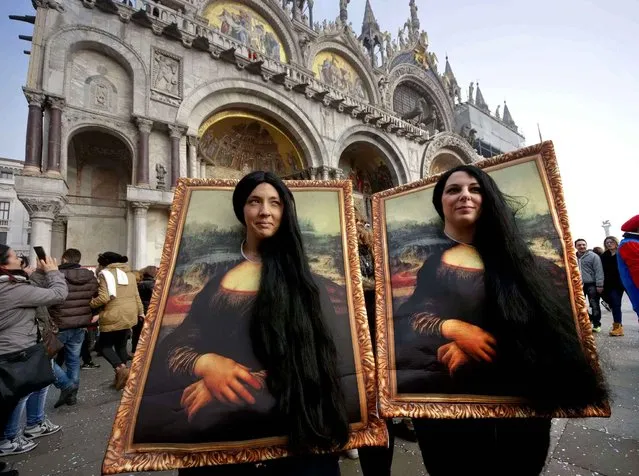
Two carnival revellers masquerade as Leonardo da Vinci's painting “Mona Lisa” pose in St. Mark's Square in Venice, Italy, Sunday, January 31, 2016. Carnival-goers in Venice are being asked by police to momentarily lift their masks as part of new anti-terrorism measures for the annual festivities. (Photo by Domenico Stinellis/AP Photo)

Two carnival revellers masquerade as Leonardo da Vinci's painting “Mona Lisa” pose in St. Mark's Square in Venice, Italy, Sunday, January 31, 2016. Carnival-goers in Venice are being asked by police to momentarily lift their masks as part of new anti-terrorism measures for the annual festivities. (Photo by Domenico Stinellis/AP Photo)
Details
02 Feb 2016 14:02:00


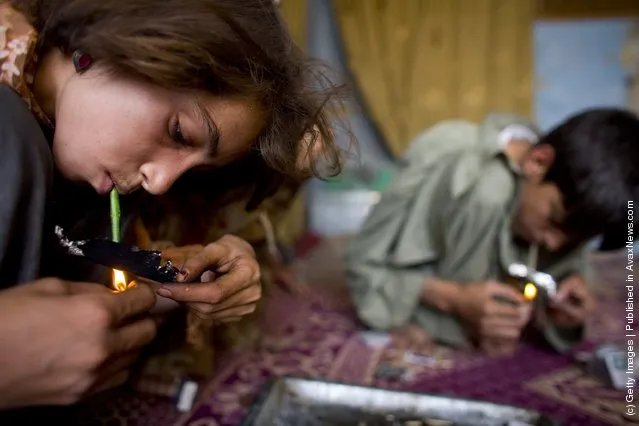
Gulparai, 12, (L) smokes heroin along side her mother Sabera and brother Zaher, 14, (R) August 27, 2007 in Kabul, Afghanistan. (Photo by Paula Bronstein/Getty Images)
Details
11 May 2011 11:03:00
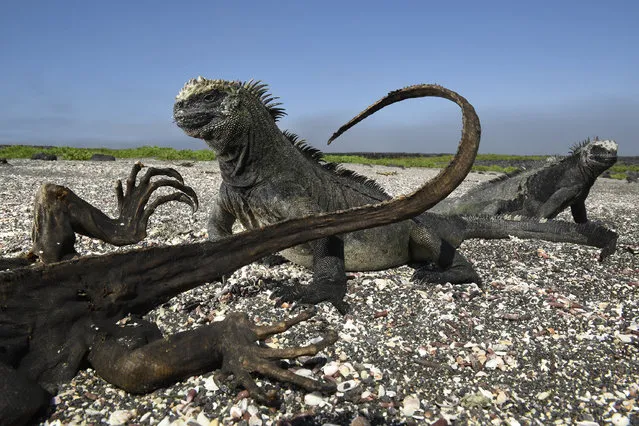
Galapagos – Rocking the Cradle: Four major ocean currents converge along the Galapagos archipelago, creating the conditions for an extraordinary diversity of animal life, April 25, 2016. The islands are home to at least 7,000 flora and fauna species, of which 97 percent of the reptiles, 80 percent of the land birds, 50 percent of the insects and 30 percent of the plants are endemic. The local ecosystem is highly sensitive to the changes in temperature, rainfall and ocean currents that characterize the climatic events known as El Niño and La Niña. These changes cause marked fluctuations in weather and food availability. Many scientists expect the frequency of El Niño and La Niña to increase as a result of climate change, making the Galapagos a possible early-warning location for its effects. (Photo by Thomas P. Peschak for National Geographic/World Press Photo)

Galapagos – Rocking the Cradle: Four major ocean currents converge along the Galapagos archipelago, creating the conditions for an extraordinary diversity of animal life, April 25, 2016. The islands are home to at least 7,000 flora and fauna species, of which 97 percent of the reptiles, 80 percent of the land birds, 50 percent of the insects and 30 percent of the plants are endemic. (Photo by Thomas P. Peschak for National Geographic/World Press Photo)
Details
16 Apr 2018 00:01:00
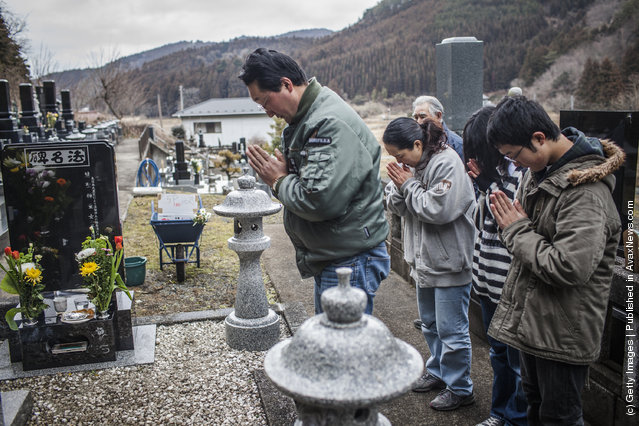
Takahiro Shito, 47, and his wife Sayomi Shito, 46, pray with their children Tomoka, 14, and Kenya 16, and their great uncle Akinori Takahashi, 76, as they pay respects to their daughter Chisato,12, buried in a nearby cemetery, victim of the Okowa Elementary School tragedy, who was killed during last year's tsunami on March 11, 2012 near Ishinomaki, Japan

Takahiro Shito, 47, and his wife Sayomi Shito, 46, pray with their children Tomoka, 14, and Kenya 16, and their great uncle Akinori Takahashi, 76, as they pay respects to their daughter Chisato,12, buried in a nearby cemetery, victim of the Okowa Elementary School tragedy, who was killed during last year's tsunami on March 11, 2012 near Ishinomaki, Japan. Teachers at the school weren't trained for tsunami evacuation and didn't to lead the children up the snow covered mountain behind the school after the tsunami warning was sounded. Out of 108 students at the school, 74 died and four remain missing; 10 of the school's 13 teachers were also killed. (Photo by Daniel Berehulak /Getty Images)

Details
11 Mar 2012 09:47:00
The deadly fish were just one form on entertainment employed by the establishment in the Thai capital Bangkok. (Photo by SWNS.com)

Horrified animal welfare groups fear baby sharks kept as a bizarre attraction in a brothel have been eaten – by the landlord. Shocking videos show the the fish crammed into an aquarium illuminated with red lights hanging above s*x works at a seedy “gentlemen's club” in, Bangkok Thailand. Five exotic black tip sharks – which can grow up to 8.5ft – float in the filthy water while holidaymakers take their pick of women in skimpy dresses. The deadly fish were just one form on entertainment employed by the establishment in the Thai capital Bangkok. (Photo by SWNS.com)
Details
21 Sep 2016 10:14:00
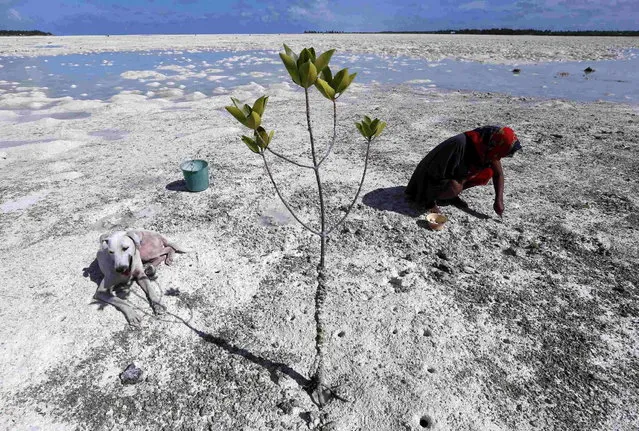
A dog sits in the shade of a mangrove tree as a woman uses a fork to dig for shellfish on the reef-mud flats of a lagoon located at South Tarawa in the central Pacific island nation of Kiribati May 23, 2013. (Photo by David Gray/Reuters)

A dog sits in the shade of a mangrove tree as a woman uses a fork to dig for shellfish on the reef-mud flats of a lagoon located at South Tarawa in the central Pacific island nation of Kiribati May 23, 2013. Kiribati consists of a chain of 33 atolls and islands that stand just metres above sea level, spread over a huge expanse of otherwise empty ocean. With surrounding sea levels rising, Kiribati President Anote Tong has predicted his country will likely become uninhabitable in 30-60 years because of inundation and contamination of its freshwater supplies. (Photo by David Gray/Reuters)
Details
13 Jun 2013 09:23:00
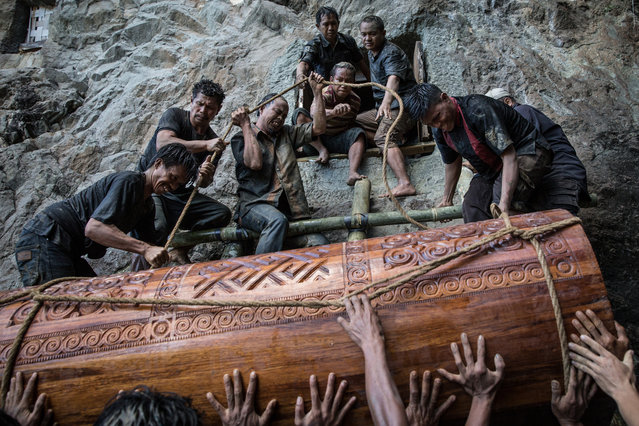
It is said that Torajans are people who “live to die”. For this Indonesian ethnic group, funerals are such extravagant events that they sometimes attract tourists. Families can postpone burials years (and the deceased are considered sick and hosted at home until the funeral) until the family can raise enough money and gather as many relatives as possible. And then it’s a jubilant multiday social event with a parade, dances and animal sacrifices. Agung Parameswara photographed these funerary practices when he traveled to South Sulawesi province, where the Torajans live. But often, their funeral isn’t the last time the dead are seen. In August, crypts are opened, coffins are slid back out and bodies delicately unsheathed. This tender ritual is known as Ma’Nene, which is customarily performed every few years. (Photo by Agung Parameswara/The Washington Post)

It is said that Torajans are people who “live to die”. For this Indonesian ethnic group, funerals are such extravagant events that they sometimes attract tourists. Families can postpone burials years (and the deceased are considered sick and hosted at home until the funeral) until the family can raise enough money and gather as many relatives as possible. And then it’s a jubilant multiday social event with a parade, dances and animal sacrifices. Agung Parameswara photographed these funerary practices when he traveled to South Sulawesi province, where the Torajans live. (Photo by Agung Parameswara/The Washington Post)
Details
06 Oct 2016 09:15:00