Loading...
Done
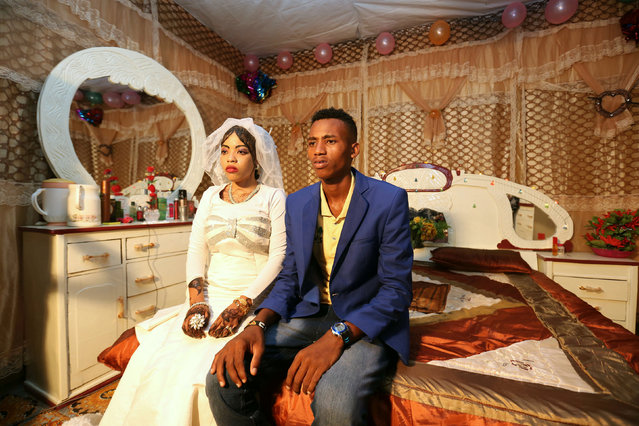
Somali couple Mohamed Noor (L) and Huda Omar pose for a photograph at their makeshift home during their wedding ceremony in Mogadishu's Rajo camp, Somalia August 17, 2016. Having met two years ago, the pair have just married at Rajo camp, where some 400 families live. Most, like Noor's parents, came here in the early 1990s to flee famine. They stayed on as years of conflict ravaged the Horn of Africa nation. As at any wedding, there is plenty of dancing and sweet treats for the young couple as they start married life in Noor's simple home, made of iron and plastic sheets. Noor works as a mason with his father. Others here are builders or sell sweets, nuts and stick toothbrushes to make money. Some beg around the seaside city, which like the rest of Somalia has been gripped by violence since the toppling of dictator Mohamed Siad Barre in 1991. (Photo by Feisal Omar/Reuters)

Somali couple Mohamed Noor (L) and Huda Omar pose for a photograph at their makeshift home during their wedding ceremony in Mogadishu's Rajo camp, Somalia August 17, 2016. Having met two years ago, the pair have just married at Rajo camp, where some 400 families live. Most, like Noor's parents, came here in the early 1990s to flee famine. (Photo by Feisal Omar/Reuters)
Details
14 Sep 2016 10:35:00
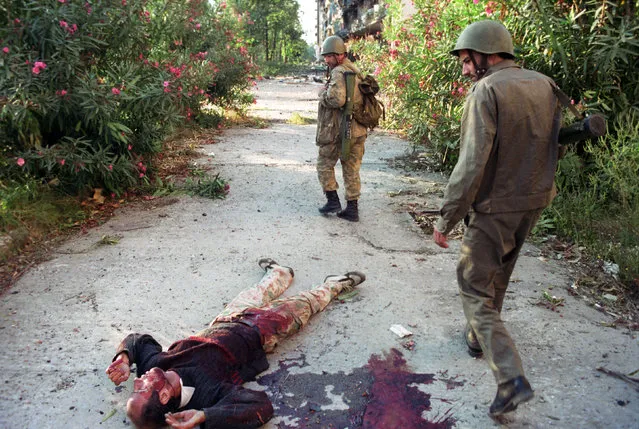
Abkhazia. Sukhumi, 1993. A house-to-house combat. (Photo by Andrei Solovyov/ITAR-TASS)

The War in Abkhazia from 1992 to 1993 was fought between Georgian government forces for the most part, and Abkhaz separatist forces, Russian armed forces and North Caucasian militants. Ethnic Georgians who lived in Abkhazia fought largely on the side of Georgian government forces. Ethnic Armenians and Russians within Abkhazia's population largely supported the Abkhazians, and many fought on their side. The separatists received support from thousands of North Caucasus and Cossack militants and from the Russian Federation forces stationed in and near Abkhazia. Here: Abkhazia. Sukhumi, 1993. A house-to-house combat. (Photo by Andrei Solovyov/ITAR-TASS)
Details
29 Sep 2017 07:31:00
Members of the police forces of the Republic of Srpska march during a parade marking the 32nd anniversary of the Republic of Srpska, in the Bosnian town of Banja Luka, 240 kms northwest of Sarajevo, Tuesday, January 9, 2024. The United States on Tuesday warned that ongoing celebrations of a Bosnian Serb self-proclaimed national holiday were in violation of Bosnia's constitution and a 1995 peace agreement, and as such amounted to a criminal offense. The Jan. 9 holiday commemorates the date in 1992 when Bosnian Serbs declared the creation of their own state in Bosnia, igniting the country's devastating four-year war that killed more than 100,000 people. (Photo by Radivoje Pavicic/AP Photo)

Members of the police forces of the Republic of Srpska march during a parade marking the 32nd anniversary of the Republic of Srpska, in the Bosnian town of Banja Luka, 240 kms northwest of Sarajevo, Tuesday, January 9, 2024. The United States on Tuesday warned that ongoing celebrations of a Bosnian Serb self-proclaimed national holiday were in violation of Bosnia's constitution and a 1995 peace agreement, and as such amounted to a criminal offense. The Jan. 9 holiday commemorates the date in 1992 when Bosnian Serbs declared the creation of their own state in Bosnia, igniting the country's devastating four-year war that killed more than 100,000 people. (Photo by Radivoje Pavicic/AP Photo)
Details
27 Mar 2025 04:03:00


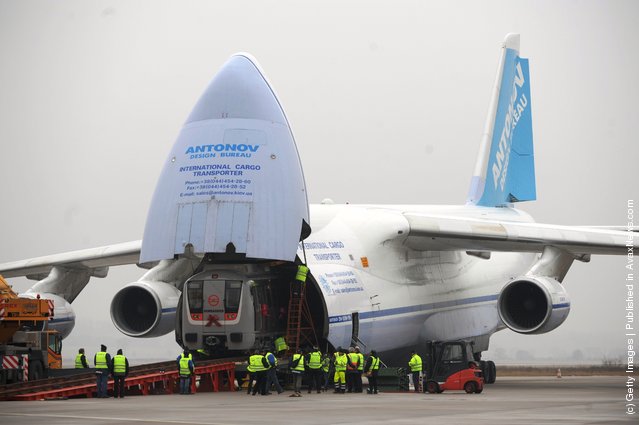
“The Antonov An-124 Ruslan (NATO reporting name: Condor) is a strategic airlift jet aircraft. It was designed by the Soviet Union's Antonov design bureau. It is the world's largest ever serially-manufactured cargo airplane and world's second largest operating cargo aircraft. During development it was known as Izdeliye 400 in house, and An-40 in the West. First flown in 1982, civil certification was issued on 30 December 1992”. – Wikipedia

Photo: The new metro called “Bombardier MOVIA” with 22,50 meters long and 3,2 meters wide is load on a Antonow An-124 plane for transport to India on February 25, 2009 in Parchim, Germany. (Photo Handout Bombardier Transportation via Getty Images)
Details
21 Jul 2011 13:19:00
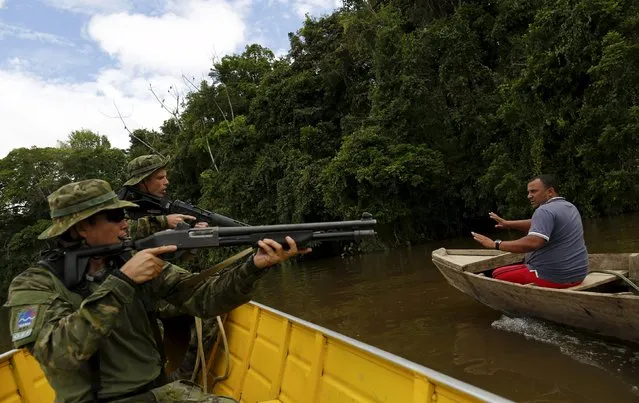
A gold prospector is detained by agents of Brazil’s environmental agency on the Uraricoera River during an operation against illegal gold mining on indigenous land, in the heart of the Amazon rainforest, in Roraima state, Brazil April 15, 2016. (Photo by Bruno Kelly/Reuters)

A gold prospector is detained by agents of Brazil’s environmental agency on the Uraricoera River during an operation against illegal gold mining on indigenous land, in the heart of the Amazon rainforest, in Roraima state, Brazil April 15, 2016. At over 9.5 million hectares, the Yanomami territory is twice the size of Switzerland and home to around 27,000 indians. The land has legally belonged to the Yanomami since 1992, but illegal miners continue to plague the area, sawing down trees and poisoning rivers with mercury in their lust for gold. (Photo by Bruno Kelly/Reuters)
Details
27 Apr 2016 10:01:00
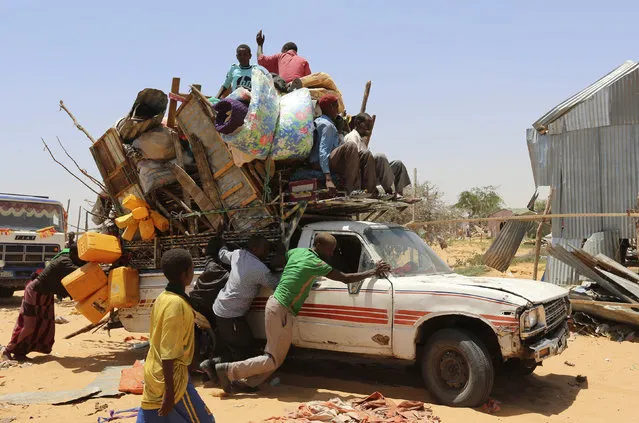
More than 6 billion people live in countries where serious levels of public sector corruption are fueling inequality and exploitation, according to Transparency International's 2015 index of perceived public sector corruption. The group's annual report measures perceptions of corruption due to the secrecy surrounding most corrupt dealings. Two thirds of the 168 countries assessed were identified as having a serious corruption problem. Somalia, which has been mired in conflict since civil war broke out in 1991, ranks bottom of the list. (Photo by Feisal Omar/Reuters)

More than 6 billion people live in countries where serious levels of public sector corruption are fueling inequality and exploitation, according to Transparency International's 2015 index of perceived public sector corruption. The group's annual report measures perceptions of corruption due to the secrecy surrounding most corrupt dealings. Two thirds of the 168 countries assessed were identified as having a serious corruption problem. Somalia, which has been mired in conflict since civil war broke out in 1991, ranks bottom of the list. (Photo by Feisal Omar/Reuters)
Details
13 May 2016 12:10:00
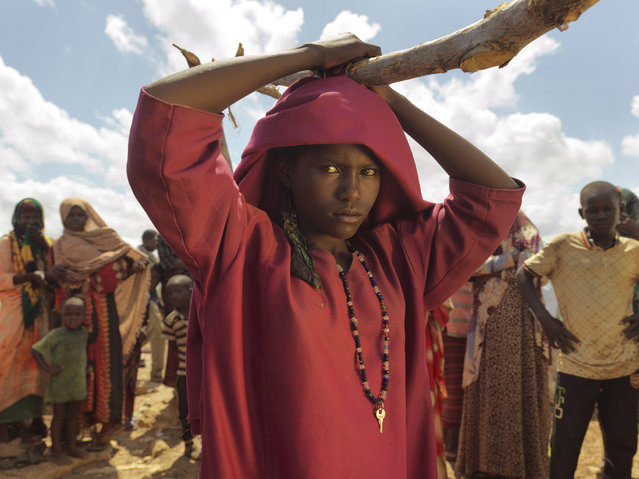
Fadumo Nunow Abdillow, 15, lives at Muuri camp. The UN has appealed for $1.5bn to address the crisis. Just 40% of the money ($611.m) has been received so far. (Photo by Peter Caton/Mercy Corps)

The worst drought in 40 years has a cruel grip on Somalia. A struggling young government and militant violence have compounded to bring crisis to 6.7 million lives. The town of Baidoa is facing some of the harshest conditions. Surrounded by territory controlled by al-Shabaab militants and amid ongoing attacks, 160,000 people have had to leave their farms and are surviving in camps where hunger, thirst and cholera await them. (Photo by Peter Caton/Mercy Corps)
Details
12 Aug 2017 05:47:00
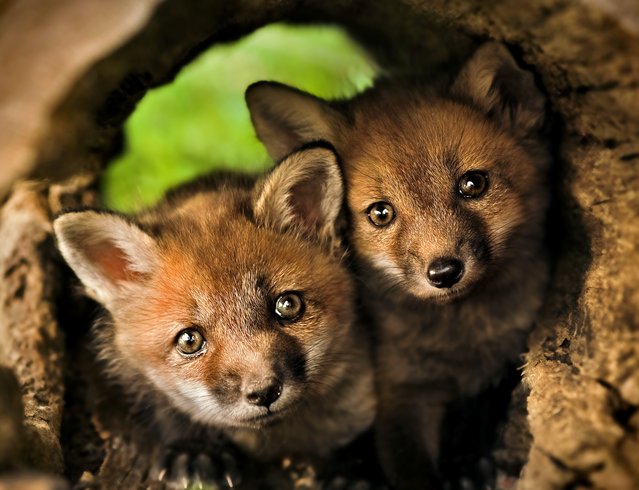
Red fox kits look out from a hollow log. (Photo by Kevin Fleming)

Wildlife photographer Kevin Fleming has covered the world as a photographer for National Geographic and has been recognized America’s Best Observer by Readers Digest. His assignments have taken him into war and famine in Somalia, to the Mediterranean for a re-creation of the voyage of Ulysses and put him on a dogsled crossing the Canadian arctic. Now Kevin is working on his 27th book. Here: Red fox kits look out from a hollow log. (Photo by Kevin Fleming)
Details
02 Oct 2014 10:28:00