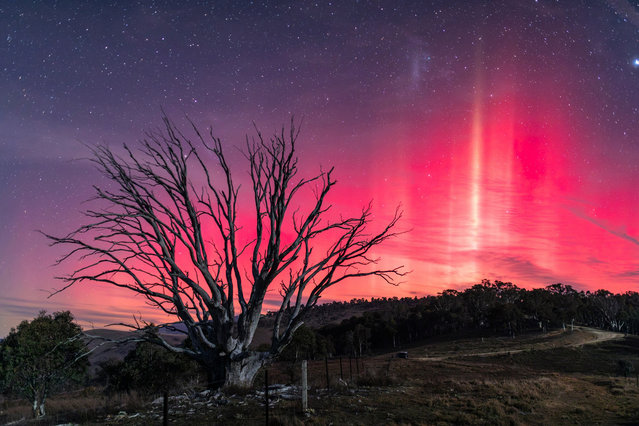
Paul Kerr was able to capture this stunning vista of the aurora australis from Canberra, New Zealand on June 1, 2025. (Photo by Paul Kerr/Hold Still Photography)
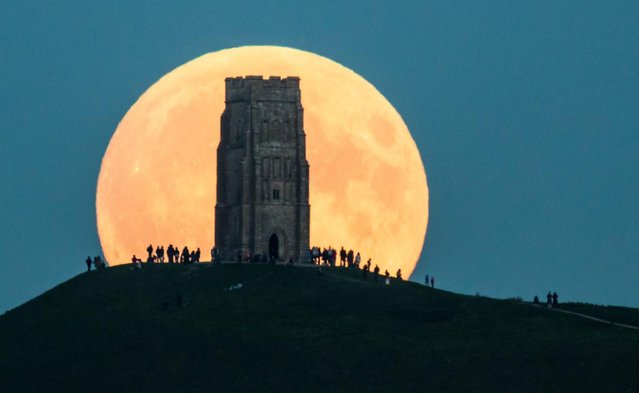
The supermoon rises behind Glastonbury Tor on September 27, 2015 in Glastonbury, England. Tonight's supermoon, so called because it is the closet full moon to the Earth this year, is particularly rare as it coincides with a lunar eclipse, a combination that has not happened since 1982 and won't happen again until 2033. (Photo by Matt Cardy/Getty Images)
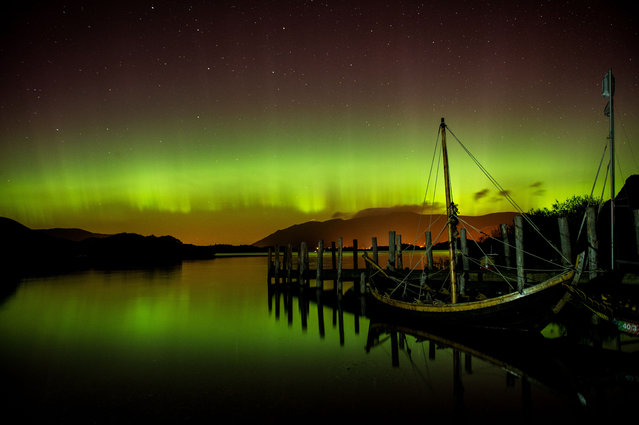
The aurora borealis, or the northern lights occur over Derwentwater, near Keswick, England, Thursday October 8, 2015. The northern lights are the result of collisions between gaseous particles in the Earth's atmosphere with charged particles released from the sun. (Photo by Owen Humphreys/PA Wire via AP Photo)
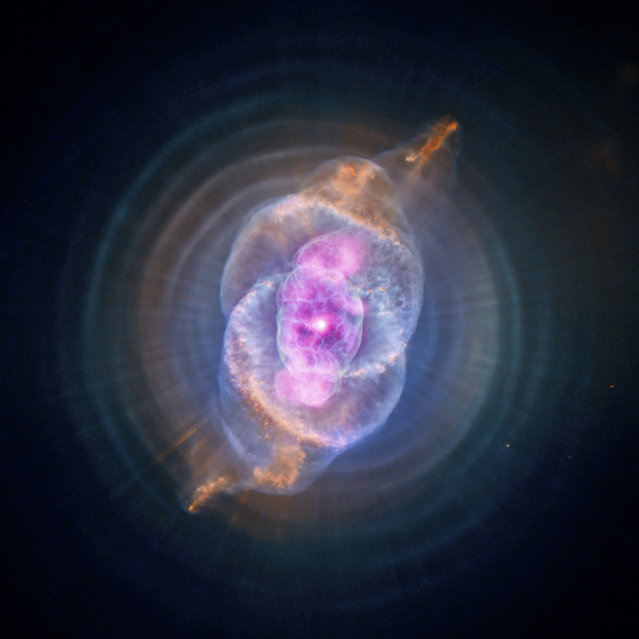
This image is NGC 6543 known as the Cat's Eye Nebula as it appears to the Chandra X-Ray Observatory and Hubble Telescope. A planetary nebula is a phase of stellar evolution that the sun should experience several billion years from now, when it expands to become a red giant and then sheds most of its outer layers, leaving behind a hot core that contracts to form a dense white dwarf star. This image was released October 10, 2012. (Photo by J. Kastner/NASA/CXC/RIT)
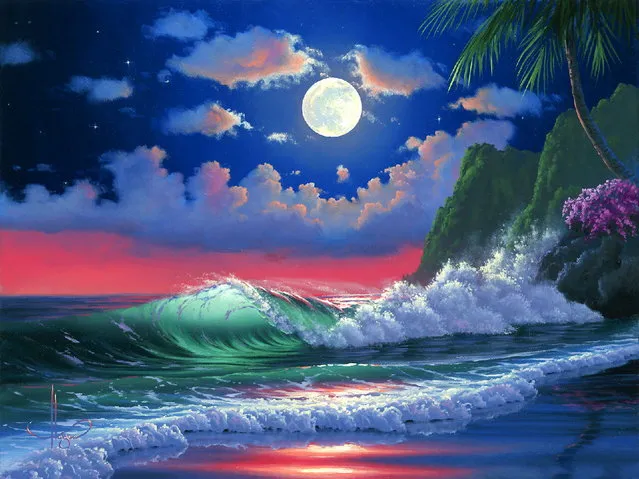
Light is the sole reason why life exists. It provides us with warmth; it allows us to see; it nourishes all the living things on this planet. Many painters, especially the masters of Old Renaissance Period, have recognized the importance of light and its intimate connection with nature and life itself. In their paintings they gave tribute to light, giving the impression that their paintings had a light source hidden within them. Al Hogue, the artist who created the paintings that you see before you, has studied their techniques for many years. As time went by, light permeated not only his paintings by also his life, becoming his sole philosophy.
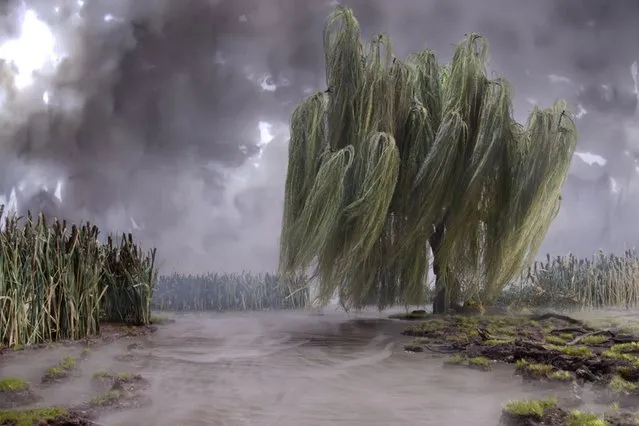
Artist Matthew Albanese creates amazing miniature landscapes made from sugar, chocolate and even bits of ostrich in his living room. All the models were painstakingly recreated in his living room, which he uses as his studio. Each gruelling piece can take up to as many as 700 hours to complete. Photo: A stormy version of “New Life 2” created by Matthew Albanese. (Photo by Matthew Albanese/Barcroft Media)
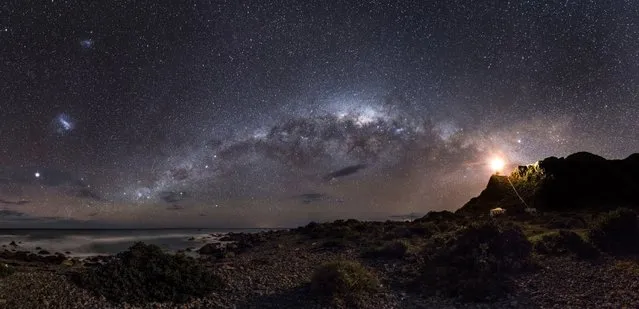
The Royal Observatory just announced its Astronomy Photographer Of The Year 2013 winners. Australian photographer Mark Gee was chosen among a thousand amateur and professional photographers around the globe to win the top title. His work is part of an exhibition of the winning photographers, which opened on Sept. 19 at the Royal Observatory Greenwich. The Royal Observatory shared with us the winners and notable mentions of the competition. Their descriptions of the prizewinners can be found below the images.
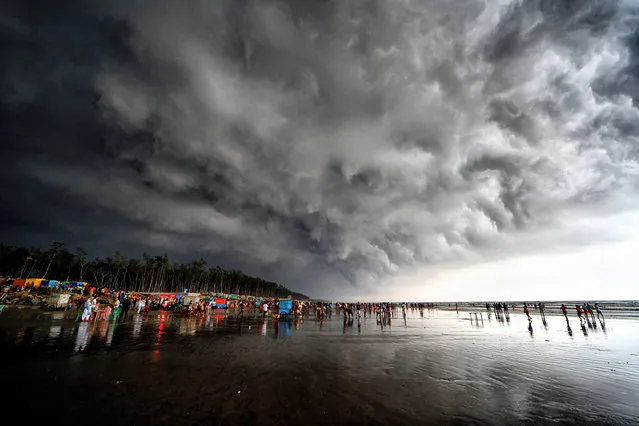
A crowd of people gathered at the seaside of Udaipur, Digha, India before a cloud burst of rain on May 21, 2022. India Meteorological Department (IMD) has predicted that the Monsoon rain will likely arrive a week early this year due to twin cyclones, Asani and Karim. (Photo by Avishek Das/SOPA Images/LightRocket via Getty Images)