Andreas Alfaro and influencer Chelsea Yamase (Chelseakauai) perform acro-yoga poses at Summit One Vanderbilt on July 09, 2022 in New York City. (Photo by Alexi Rosenfeld/Getty Images)
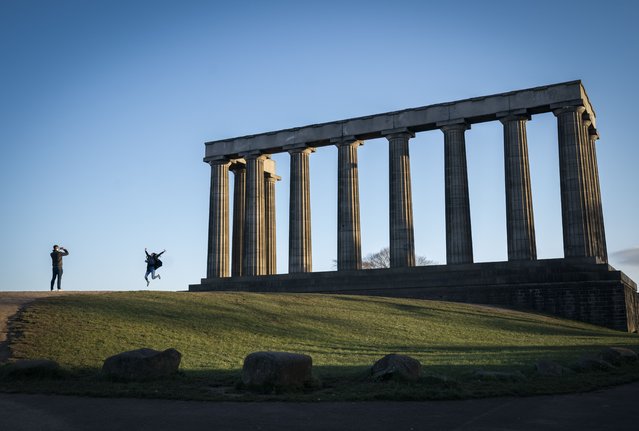
A couple take photographs alongside the National Monument on Calton Hill, Edinburgh on Wednesday January 5, 2022, ahead of First Minister Nicola Sturgeon's update to the Scottish Parliament on the Covid-19 situation as the Omicron variant sweeps across the country. (Photo by Jane Barlow/PA Images via Getty Images)
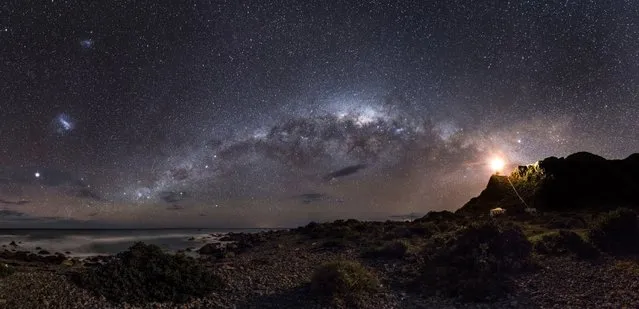
The Royal Observatory just announced its Astronomy Photographer Of The Year 2013 winners. Australian photographer Mark Gee was chosen among a thousand amateur and professional photographers around the globe to win the top title. His work is part of an exhibition of the winning photographers, which opened on Sept. 19 at the Royal Observatory Greenwich. The Royal Observatory shared with us the winners and notable mentions of the competition. Their descriptions of the prizewinners can be found below the images.
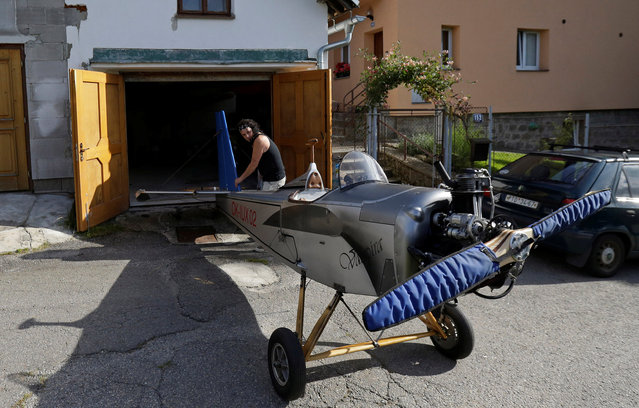
Aviator Frantisek Hadrava moves Vampira, an ultralight plane based on the U.S.-design of light planes called Mini-Max, out of a garage in the village of Zdikov, Czech Republic, August 23, 2016. Frantisek thought driving to work for 14 minutes was too much, so he built an plane to cut the commute by half. (Photo by David W. Cerny/Reuters)
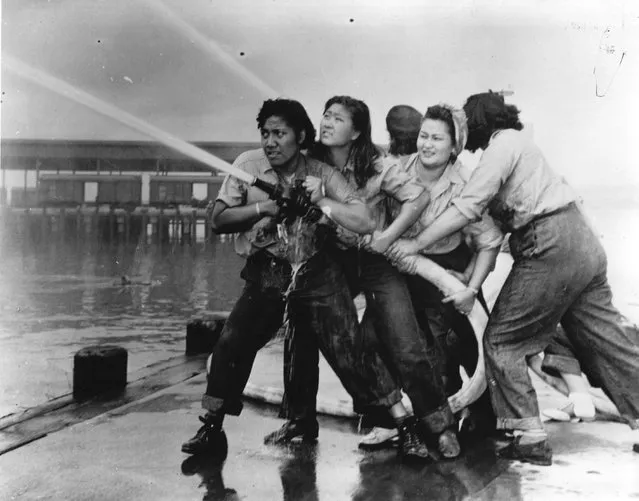
“Pearl Harbor, known to Hawaiians as Puʻuloa, is a lagoon harbor on the island of Oʻahu, Hawaiʻi, west of Honolulu. Much of the harbor and surrounding lands is a United States Navy deep-water naval base. It is also the headquarters of the U.S. Pacific Fleet. The attack on Pearl Harbor by the Empire of Japan on December 7, 1941, brought the United States into World War II”. – Wikipedia
Photo: Women fire fighters directing a hose after the Japanese attack on the US naval base at Pearl Harbour (Pearl Harbor). (Photo by Three Lions)
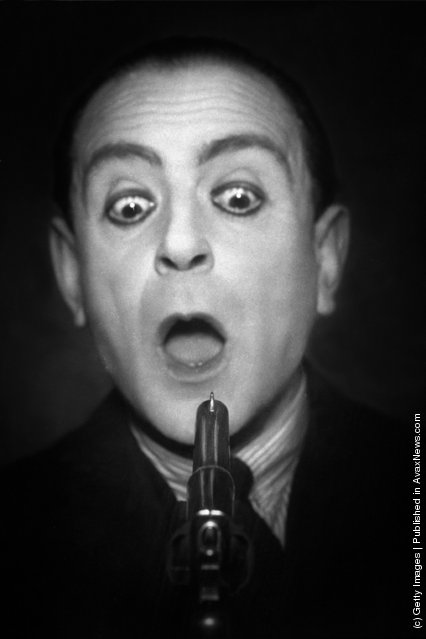
Ernie Lotinga, looking terrified as a gun is pointed in his face, in a scene from the play “My Wife's Family”, at the Garrick Theatre, London. (Photo by Sasha/Getty Images). 24th February 1941
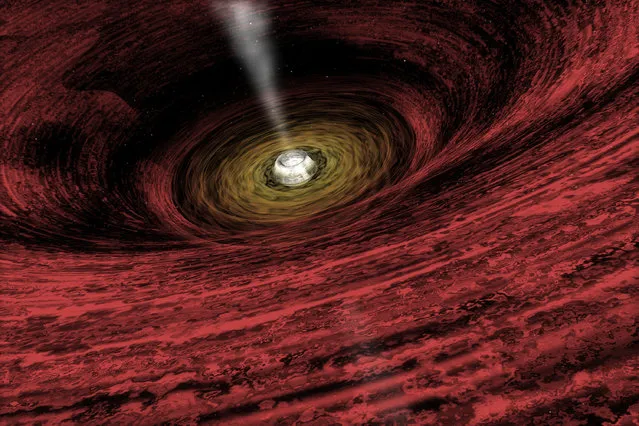
An artist's impression of a growing supermassive black hole located in the early Universe is seen in this NASA handout illustration released on June 15, 2011. Using the deepest X-ray image ever taken, astronomers found the first direct evidence that massive black holes were common in the early universe. This discovery from NASA's Chandra X-Ray Observatory shows that very young black holes grew more aggressively than previously thought, in tandem with the growth of their host galaxies. (Photo by Reuters/NASA/Chandra X-Ray Observatory/A.Hobart)