Loading...
Done
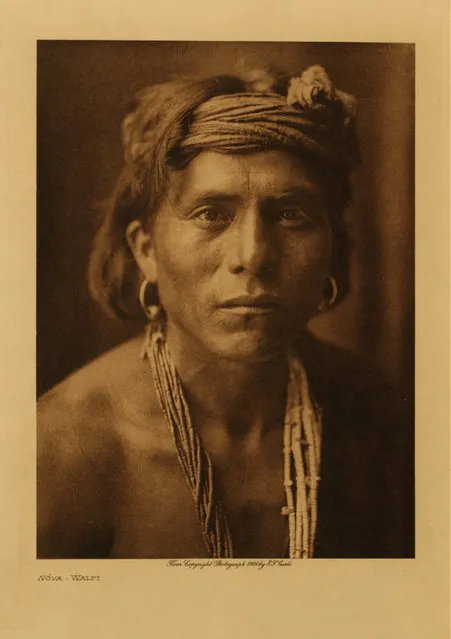
Nova, a Walpi, in 1906. (Photo by Edward S. Curtis)

At the beginning of the 20th century, Edward S. Curtis set out to document what he saw as a disappearing race: the Native American. From 1907 to 1930, Curtis took more than 2,000 photos of 80 tribes stretching from the Great Plains to the Pacific Northwest and Alaska. He then published and sold these photos, along with narrative text, in 20 volumes of work known as “The North American Indian”. It is one of the most significant collections of its kind, “probably the most important photographic document of its age and its topic,” said Jeffrey Garrett, associate university librarian for Special Libraries at Northwestern University. (Photo by Edward S. Curtis)
Details
07 Sep 2014 12:57:00
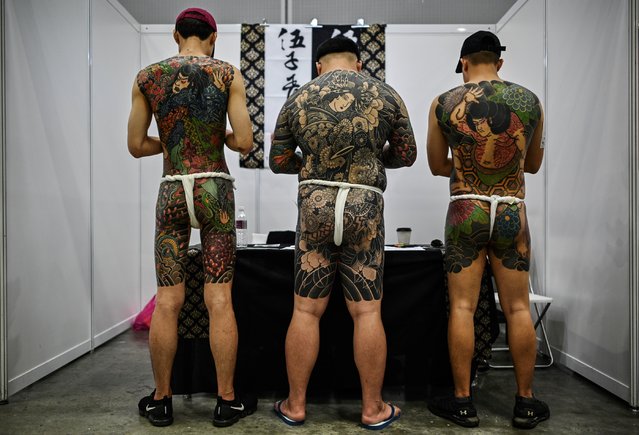
Three men display their tattoos during the International Malaysia Tattoo Expo in Kuala Lumpur on November 29, 2019. The international tattoo expo is held for the first ime in Kuala Lumpur celebrating that art of tattoo and gathering over a hundred tattoo artists from 40 countries. (Photo by Mohd Rasfan/AFP Photo)

Three men display their tattoos during the International Malaysia Tattoo Expo in Kuala Lumpur on November 29, 2019. The international tattoo expo is held for the first ime in Kuala Lumpur celebrating that art of tattoo and gathering over a hundred tattoo artists from 40 countries. (Photo by Mohd Rasfan/AFP Photo)
Details
19 Feb 2020 00:05:00
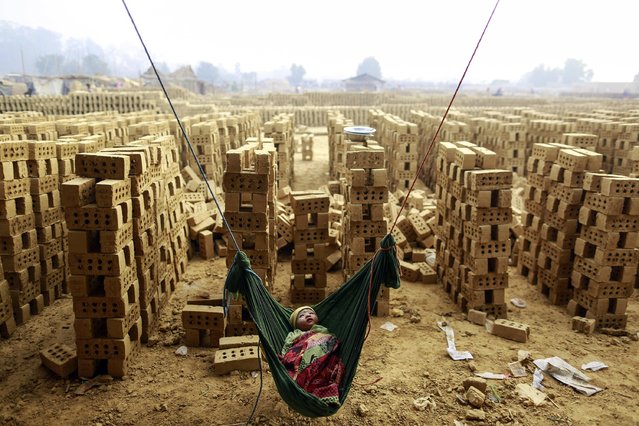
A boy sleeps in a hammock while his mother works at a brick kiln on the outskirts of Yangon February 1, 2015. (Photo by Soe Zeya Tun/Reuters)

A boy sleeps in a hammock while his mother works at a brick kiln on the outskirts of Yangon February 1, 2015. (Photo by Soe Zeya Tun/Reuters)
Details
02 Feb 2015 09:58:00
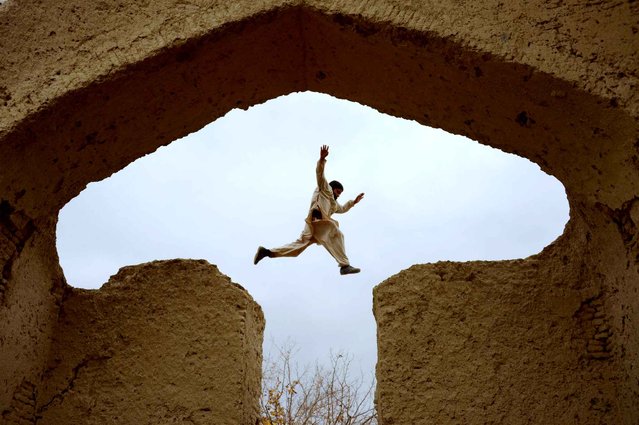
An Afghan boy plays in the ruins of a house that at one point belonged to the 13th-century Persian poet, Islamic scholar and Sufi mystic Jalal ad-Din Muhammad Rumi on the outskirts of Mazar-i-Sharif on November 25, 2015. (Photo by Farshad Usyan/AFP Photo)

An Afghan boy plays in the ruins of a house that at one point belonged to the 13th-century Persian poet, Islamic scholar and Sufi mystic Jalal ad-Din Muhammad Rumi on the outskirts of Mazar-i-Sharif on November 25, 2015. (Photo by Farshad Usyan/AFP Photo)
Details
26 Jan 2016 11:52:00
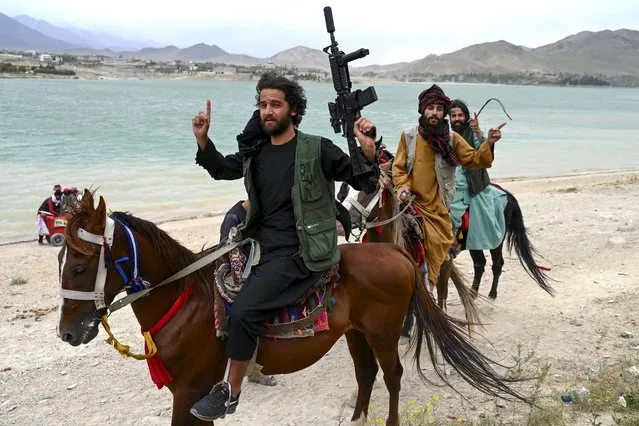
Taliban security forces ride horses along the Qargha Lake on the outskirts of Kabul on May 11, 2023. (Photo by Wakil Kohsar/AFP Photo)

Taliban security forces ride horses along the Qargha Lake on the outskirts of Kabul on May 11, 2023. (Photo by Wakil Kohsar/AFP Photo)
Details
06 Jun 2023 04:56:00
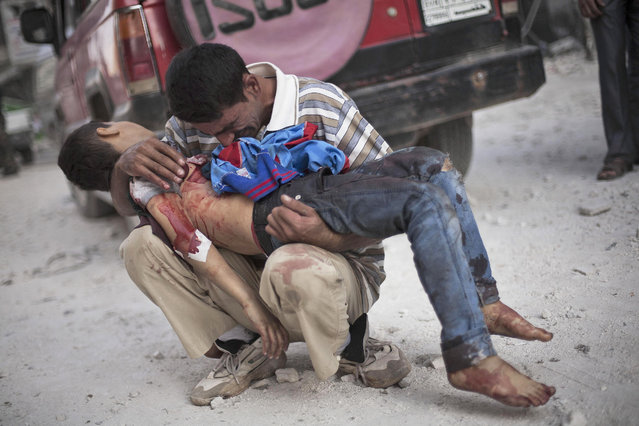
A Syrian man cries while holding the body of his son, killed by the Syrian Army, near Dar El Shifa hospital in Aleppo, Syria, Wednesday, October 3, 2012. (Photo by Manu Brabo/AP Photo)

Manu Brabo was born in Spain in 1981. After studying Photography in The School of Arts and Crafts in Oviedo, he moved to Madrid where he started Journalism in Carlos III University while he was working as a photographer for several humble newspapers and agencies. In 2011, Manu was held captive and then released by by Libyan forces. Brabo, along with fellow AP photographers were awarded the 2013 Pulitzer Prize for Breaking News Photography. Here: a Syrian man cries while holding the body of his son, killed by the Syrian Army, near Dar El Shifa hospital in Aleppo, Syria, Wednesday, October 3, 2012. (Photo by Manu Brabo/AP Photo)
Details
27 Oct 2015 08:04:00
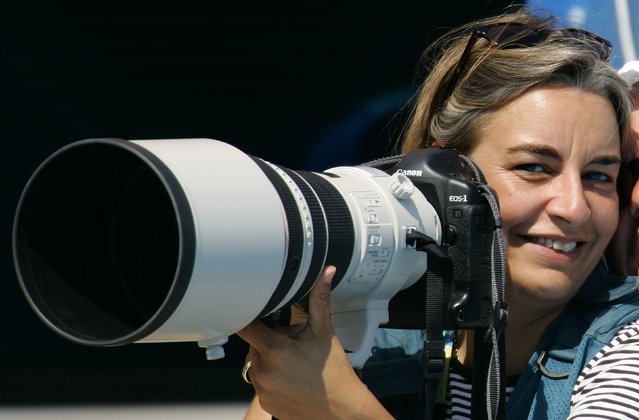
AP photographer Anja Niedringhaus laughs as she attends a swimming event at the 2004 Olympic Games in Athens, August 21, 2004. Niedringhaus, a veteran Associated Press photographer who had covered wars around the world was shot dead and another reporter was wounded on April 4, 2014 when an Afghan policeman opened fire on them in eastern Afghanistan, the news agency said. Picture taken August 21, 2004. (Photo by Reuters/Staff)

AP photographer Anja Niedringhaus laughs as she attends a swimming event at the 2004 Olympic Games in Athens, August 21, 2004. Niedringhaus, a veteran Associated Press photographer who had covered wars around the world was shot dead and another reporter was wounded on April 4, 2014 when an Afghan policeman opened fire on them in eastern Afghanistan, the news agency said. (Photo by Reuters/Staff)
Details
05 Apr 2014 01:23:00
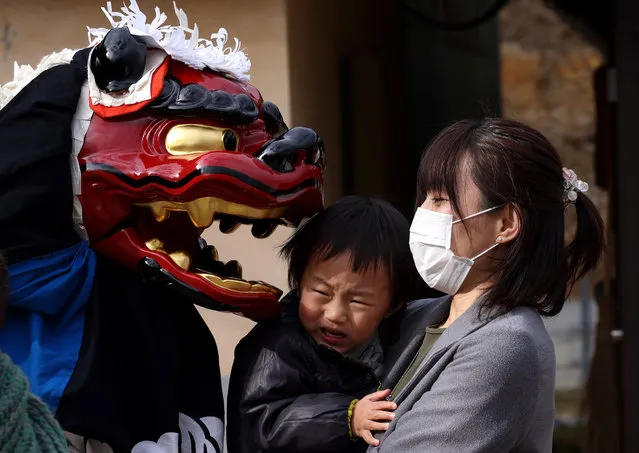
A performer wearing a lion mask performs the Ise Daikagura lion dance at the remote village of Yamanawa on February 08, 2021 in Ryuo, Japan. Ise Daikagura is a group of traditional Lion Dance performers who pray in front of farmers houses and businesses for good grain harvests and disease-free lives. Performers play sacred music using drums and flutes with two lion mask dancers. A lion mask is considered a symbol of God, who enters the house and performs in front of the Shinto God, a statue placed inside the house, mostly in the kitchen. These prayers are called “Kamodo Barai”. After the prayers, they are gifted with money, rice, sake and Japanese sweets from the householders. A group can travel for more than one hundred days to thousands of households and businesses throughout rural-villages in western Japan, and pray to those who are unable to visit the country’s most sacred shrine, the Grand Ise Shrine in Mie Prefecture. The group started its performance in the Edo era between 1603 to 1868 according to Japanese history. The Japanese government designated it as an important folk cultural national property in 1981. (Photo by Buddhika Weerasinghe/Getty Images)

A performer wearing a lion mask performs the Ise Daikagura lion dance at the remote village of Yamanawa on February 08, 2021 in Ryuo, Japan. Ise Daikagura is a group of traditional Lion Dance performers who pray in front of farmers houses and businesses for good grain harvests and disease-free lives. (Photo by Buddhika Weerasinghe/Getty Images)
Details
18 Feb 2021 09:27:00