Loading...
Done
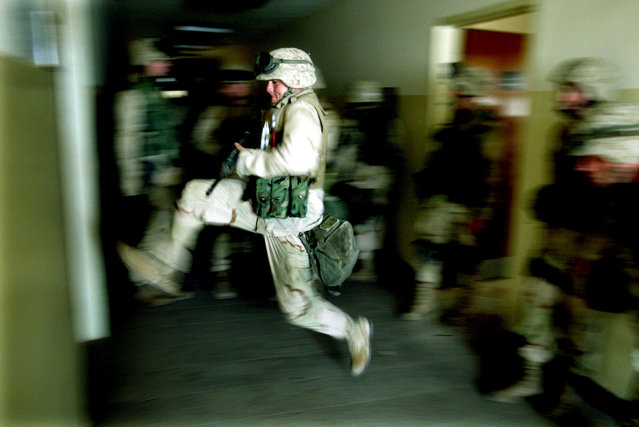
U.S. Marines kick in a door while securing a building next to the main hospital in central Baghdad April 15, 2003, which will be used as a temporary Iraqi police headquarters. (Photo by Jerry Lampen/Reuters)

U.S. Marines kick in a door while securing a building next to the main hospital in central Baghdad April 15, 2003, which will be used as a temporary Iraqi police headquarters. (Photo by Jerry Lampen/Reuters)
Details
08 Jul 2016 12:14:00
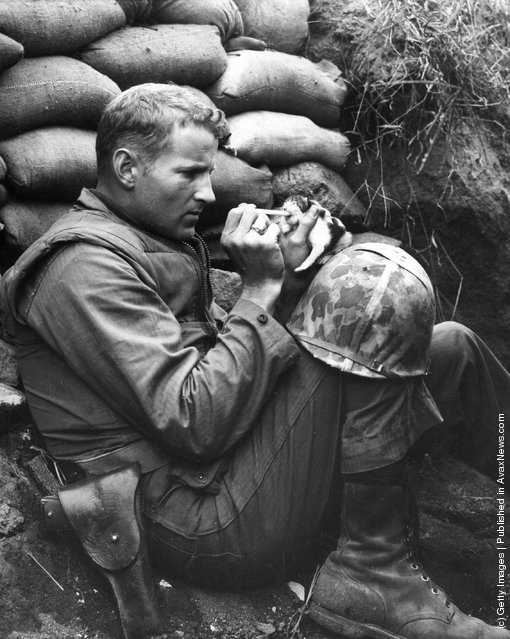
A US Marine feeds an orphan kitten found after a heavy mortar barrage near Bunker Hill during the Korean War

A US Marine feeds an orphan kitten found after a heavy mortar barrage near “Bunker Hill” during the Korean War. (Photo by Sgt Martin Riley/Getty Images). 1953
Details
15 Aug 2011 11:56:00
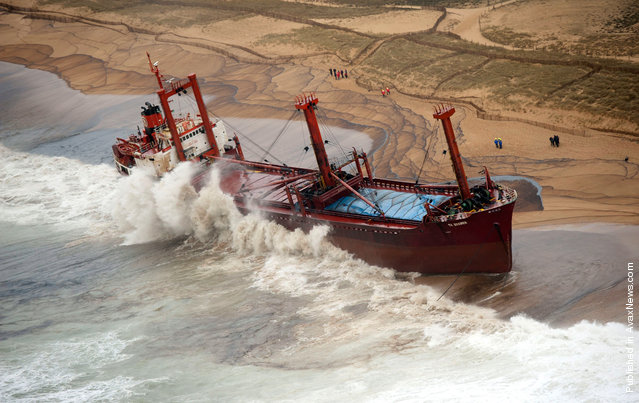
In this image made available by France's Marine Nationale, the cargo ship TK Bremen sits stranded on a beach near Erdeven, France, on December 16, 2011, spilled fuel oil fouling the water

In this image made available by France's Marine Nationale, the cargo ship TK Bremen sits stranded on a beach near Erdeven, France, on December 16, 2011, spilled fuel oil fouling the water. (AP Photo/Mael Prigent, Marine Nationale)
Details
07 Apr 2012 12:24:00
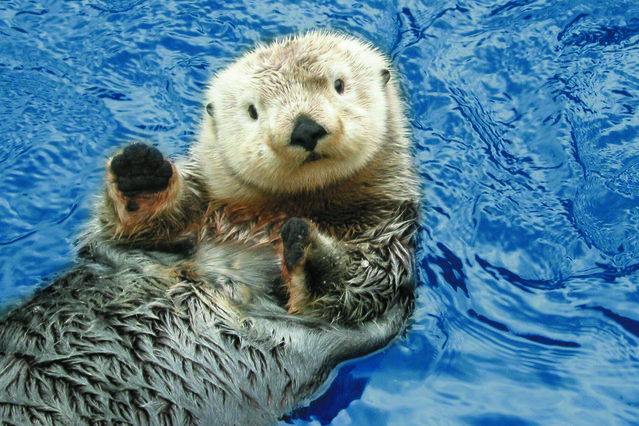
The Sea Otter

The sea otter (Enhydra lutris) is a marine mammal native to the coasts of the northern and eastern North Pacific Ocean. Adult sea otters typically weigh between 14 and 45 kg (31 and 99 lb), making them the heaviest members of the weasel family, but among the smallest marine mammals. Unlike most marine mammals, the sea otter's primary form of insulation is an exceptionally thick coat of fur, the densest in the animal kingdom. Although it can walk on land, the sea otter lives mostly in the ocean.
Details
26 Jan 2014 12:20:00
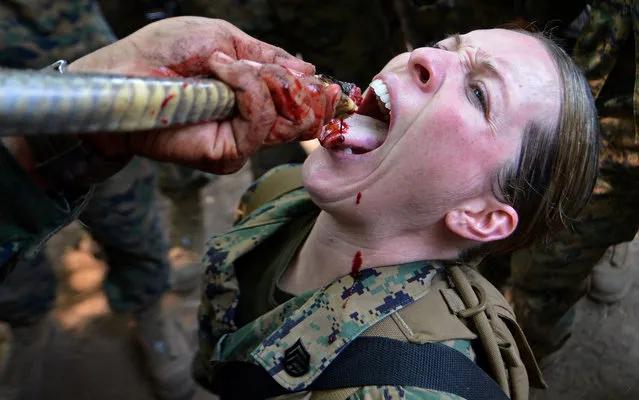
In a military base in the Thai province of Chon Buri February 20 U.S. Marines Navy with Thailand began their studies in jungle survival. The event is held in joint military exercises “Cobra Gold 2013”. During a jungle survival program February 20, 2013 taught by Royal Thai Special Forces in Sannapit, Thailand, U.S. Marines learned to catch cobras and drink their fresh blood, not to mention eat forest insects and pull the heads off of chicken. The training was part of Operation Cobra Gold 13, the 32nd edition of international military exercises hosted by the Thai. According to a U.S. Marines press release, Cobra Gold is the largest exercise of its kind in Asia and incorporates troops from five other nations in addition to the U.S. and Thailand. The Daily Mail reports that the Marines were invited to experience the local custom of drinking cobra blood after being taught to catch and kill cobras in the wild. As CNN notes, Cobra blood is believed to be a panacea and aphrodiasic in parts of Southeast Asia. In Jakarta, vendors can earn over $100 a night selling shots of cobra blood mixed with liquor. (Photo by Pornchai Kittiwongsakul/AFP Photo)

During a jungle survival program February 20, 2013 taught by Royal Thai Special Forces in Sannapit, Thailand, U.S. Marines learned to catch cobras and drink their fresh blood, not to mention eat forest insects and pull the heads off of chicken. The training was part of Operation Cobra Gold 13, the 32nd edition of international military exercises hosted by the Thai. According to a U.S. Marines press release, Cobra Gold is the largest exercise of its kind in Asia and incorporates troops from five other nations in addition to the U.S. and Thailand. The Daily Mail reports that the Marines were invited to experience the local custom of drinking cobra blood after being taught to catch and kill cobras in the wild. As CNN notes, Cobra blood is believed to be a panacea and aphrodiasic in parts of Southeast Asia. In Jakarta, vendors can earn over $100 a night selling shots of cobra blood mixed with liquor. (Photo by Pornchai Kittiwongsakul/AFP Photo)
Details
23 Feb 2013 11:52:00
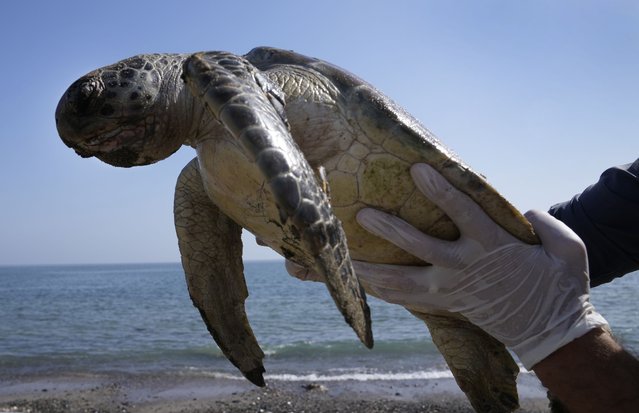
A dead green sea turtle is collected from the beach at the Khor Kalba Conservation Reserve, in the city of Kalba, on the east coast of the United Arab Emirates, Tuesday, February 1, 2022.  A staggering 75% of all dead green turtles and 57% of all loggerhead turtles in Sharjah had eaten marine debris, including plastic bags, bottle caps, rope and fishing nets, a new study published in the Marine Pollution Bulletin. The study seeks to document the damage and danger of the throwaway plastic that has surged in use around the world and in the UAE, along with other marine debris. (Photo by Kamran Jebreili/AP Photo)

A dead green sea turtle is collected from the beach at the Khor Kalba Conservation Reserve, in the city of Kalba, on the east coast of the United Arab Emirates, Tuesday, February 1, 2022. A staggering 75% of all dead green turtles and 57% of all loggerhead turtles in Sharjah had eaten marine debris, including plastic bags, bottle caps, rope and fishing nets, a new study published in the Marine Pollution Bulletin. The study seeks to document the damage and danger of the throwaway plastic that has surged in use around the world and in the UAE, along with other marine debris. (Photo by Kamran Jebreili/AP Photo)
Details
26 Feb 2022 04:58:00
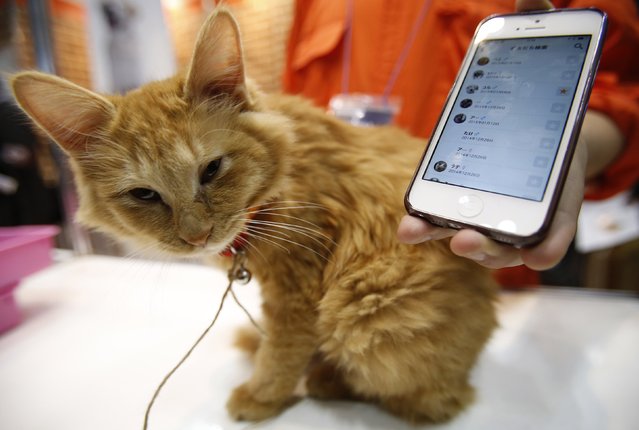
A cat wears a “Tsunagaru Col” gadget next to a smart phone displaying the connected app, at the Anicall Corp booth during the Wearable Device Technology Expo in Tokyo January 14, 2015. The gadget (“Tsunagaru” means connection) for animals tracks information about pets, such as the location and other animals the pet might be interacting with, with the purpose of providing “social networking” for animals. (Photo by Yuya Shino/Reuters)

A cat wears a “Tsunagaru Col” gadget next to a smart phone displaying the connected app, at the Anicall Corp booth during the Wearable Device Technology Expo in Tokyo January 14, 2015. The gadget (“Tsunagaru” means connection) for animals tracks information about pets, such as the location and other animals the pet might be interacting with, with the purpose of providing “social networking” for animals. The expo runs until January 16 as a part of Japan's largest electronic exhibition expected to attract around 77,000 visitors, according to organisers. (Photo by Yuya Shino/Reuters)
Details
16 Jan 2015 12:57:00
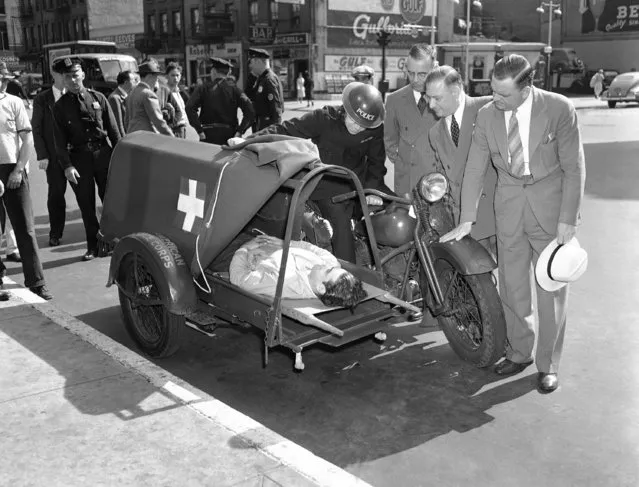
Developed for the British American Ambulance Corps, this new motorcycle ambulance is capable of speeding wounded soldiers 90 miles an hour from the front lines to field hospitals. Its springs are synchronized with the patient?s heartbeat to avoid increasing fever when traveling over various Terrain. Viewing it in New York  August 27, 1941, are left to right: constable Herbert Scott of England, driver; William E. Detlor, whose firm developed the vehicle; M. W. Stand, inspector-general of Civilian Defense, and Maj. Edward Riekert, also. (Photo by AP Photo)

Developed for the British American Ambulance Corps, this new motorcycle ambulance is capable of speeding wounded soldiers 90 miles an hour from the front lines to field hospitals. Its springs are synchronized with the patient's heartbeat to avoid increasing fever when traveling over various Terrain. Viewing it in New York August 27, 1941, are left to right: constable Herbert Scott of England, driver; William E. Detlor, whose firm developed the vehicle; M. W. Stand, inspector-general of Civilian Defense, and Maj. Edward Riekert, also. (Photo by AP Photo)
Details
28 Aug 2015 11:51:00