Loading...
Done
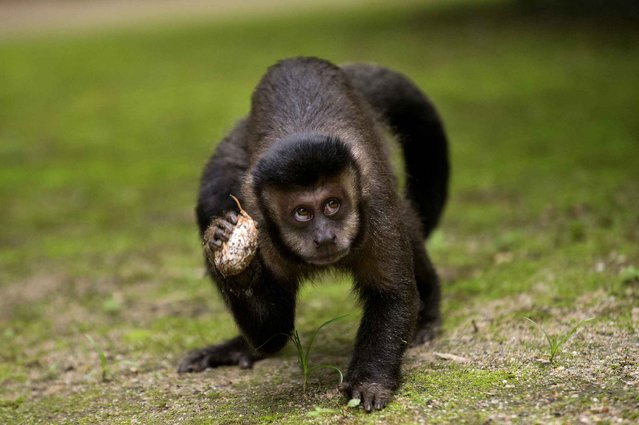
A brown capuchin monkey holds a fruit in the Botanic Garden of Rio de Janeiro, Brazil, on July 5, 2013. (Photo by Pablo Porciuncula/AFP Photo)

A brown capuchin monkey holds a fruit in the Botanic Garden of Rio de Janeiro, Brazil, on July 5, 2013. (Photo by Pablo Porciuncula/AFP Photo)
Details
06 Jul 2013 11:58:00
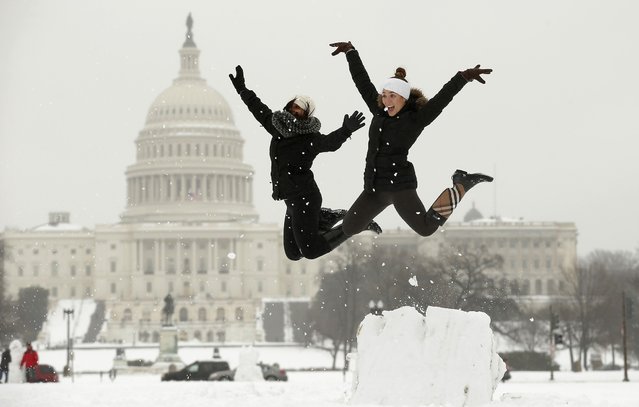
Adrienne Sipe (L) and Brooke Gilliam of Washington D.C. leap off a snow podium they made near the U.S. Capitol in Washington February 13, 2014. A deadly and intensifying winter storm packing heavy snow, sleet and rain pelted a huge swath of the U.S. East Coast on Thursday, grounding flights and shuttering schools and government offices. (Photo by Kevin Lamarque/Reuters)

Adrienne Sipe (L) and Brooke Gilliam of Washington D.C. leap off a snow podium they made near the U.S. Capitol in Washington February 13, 2014. A deadly and intensifying winter storm packing heavy snow, sleet and rain pelted a huge swath of the U.S. East Coast on Thursday, grounding flights and shuttering schools and government offices. (Photo by Kevin Lamarque/Reuters)
Details
14 Feb 2014 09:20:00
Lightning illuminates a thundercloud as a storm front hits the North Sea region near Westerhever, northern Germany, on August 11, 2014. (Photo by Daniel Reinhardt/AFP Photo/DPA)

Lightning illuminates a thundercloud as a storm front hits the North Sea region near Westerhever, northern Germany, on August 11, 2014. (Photo by Daniel Reinhardt/AFP Photo/DPA)
Details
15 Sep 2014 10:58:00
“One in Eight Hundred” by Mario Wezel, from Germany, is the winner of the “People” category. The title refers to the odds given to Martin and Karina at their prenatal screening before their daughter, Emmy, was born. The five-year-old from Denmark has Down's Syndrome. (Photo by Mario Wezel/Sony World Photography Awards)

“One in Eight Hundred” by Mario Wezel, from Germany, is the winner of the “People” category. The title refers to the odds given to Martin and Karina at their prenatal screening before their daughter, Emmy, was born. The five-year-old from Denmark has Down's Syndrome. (Photo by Mario Wezel/Sony World Photography Awards)
Details
02 May 2014 10:53:00
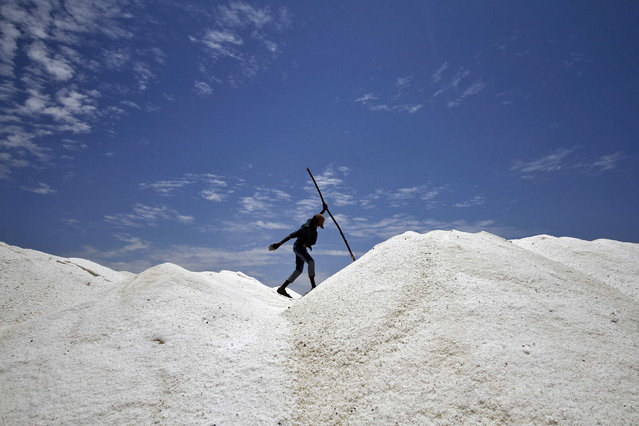
A worker walks through a salt pan on the eve of May Day or Labour Day on the outskirts of the southern Indian city of Chennai April 30, 2014. India is the third largest salt producing country in the world after China and U.S. with global annual production about 230 million tonnes, according to government data. (Photo by Reuters/Babu)

A worker walks through a salt pan on the eve of May Day or Labour Day on the outskirts of the southern Indian city of Chennai April 30, 2014. India is the third largest salt producing country in the world after China and U.S. with global annual production about 230 million tonnes, according to government data. (Photo by Reuters/Babu)
Details
04 May 2014 09:22:00
A passenger on a SNIM train carrying iron ore and mine workers waits for transport after arriving in Nouadhibou June 25, 2014. (Photo by Joe Penney/Reuters)

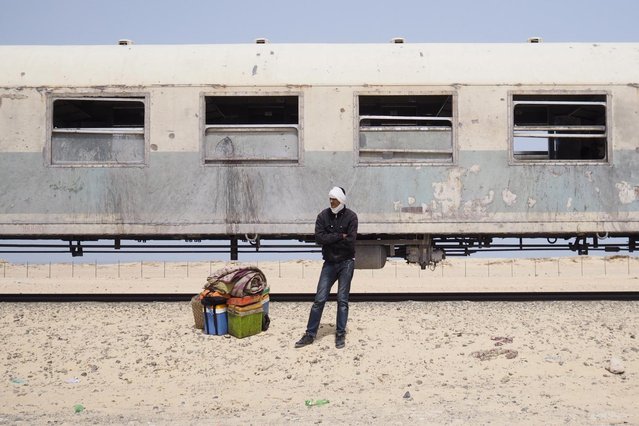
A passenger waits after his train arrived in Nouadhibou, Mauritania’s second largest city and the main export port for the country’s iron ore industry, on June 25, 2014. The mining company’s employees proudly call their firm the lung of their nation's economy and the train that ferries the ore to the coast stretches some two kilometres, making it one of the world's longest. SNIM mines black iron ore in the northern town of Zouerate, a remote desert location which nevertheless attracts people from all over the country looking for work. (Photo by Joe Penney/Reuters)
Details
27 Oct 2014 11:51:00
Serbian police officers of the Special Anti-Terrorist Unit pose for a picture in their base outside Belgrade October 8, 2014. (Photo by Marko Djurica/Reuters)

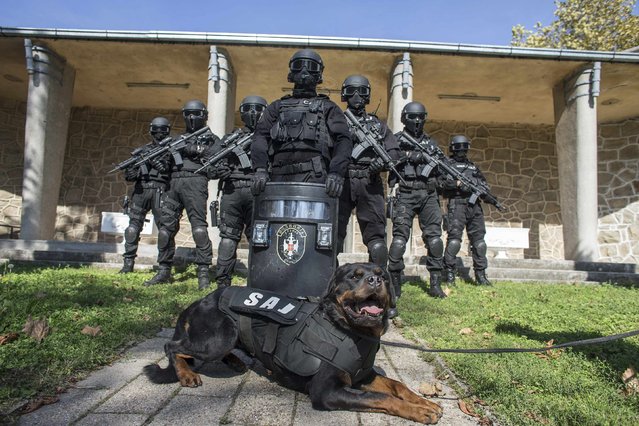
Serbian police officers of the Special Anti-Terrorist Unit pose for a picture in their base outside Belgrade October 8, 2014. When the killing of an unarmed black teenager by a white policeman in Ferguson, Missouri, in August sparked sometimes violent protests, the response of police in camouflage gear and armoured vehicles wielding stun grenades and assault rifles seemed more like a combat operation than a public order measure. Some U.S. police departments have recently acquired U.S. military-surplus hardware from wars abroad, but there are many law enforcers around the world whose rules of engagement also allow the use of lethal force with relatively few restrictions. But for every regulation that gives police wide scope to use firearms, there is another code that sharply limits their use. In Serbia, police may use measures ranging from batons to special vehicles, water cannon and tear gas on groups of people who have gathered illegally and are behaving in a way that is violent or could cause violence, but they may use firearms only when life is endangered. (Photo by Marko Djurica/Reuters)
Details
27 Nov 2014 14:53:00
A model slips on the runway while parading an outfit by Australian designer Toni Maticevski at Fashion Week Australia in Sydney on May 15, 2016. (Photo by William West/AFP Photo)

A model slips on the runway while parading an outfit by Australian designer Toni Maticevski at Fashion Week Australia in Sydney on May 15, 2016. (Photo by William West/AFP Photo)
Details
18 May 2016 14:26:00