Loading...
Done


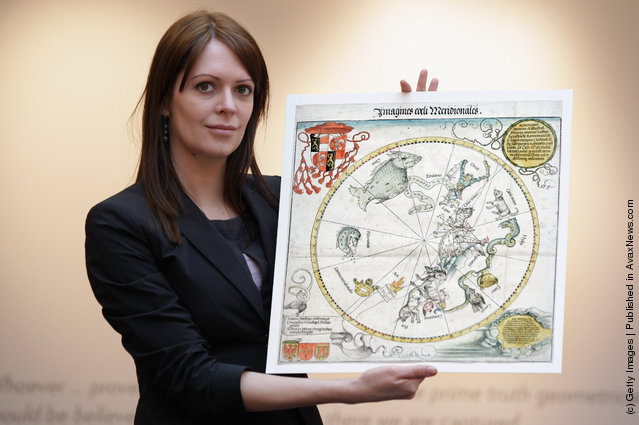
Head of European Prints, Severine Nackers holds a celestial Map of the Southern Sky by Albrecht Durer, at Sotheby's Auction House on March 25, 2011 in London, England. The two woodcut maps depicting the Northern and Southern skies circa 1515, are the earliest printed star charts of their kind ever published in Europe, and are expected to fetch between Ј120,000-180,000 GBP when they go on sale at the “London sale of Old Master, Modern and Contemporary prints” at Sotheby's Auction house on March 30, 2011. (Photo by Dan Kitwood/Getty Images)
Details
25 Mar 2011 14:57:00
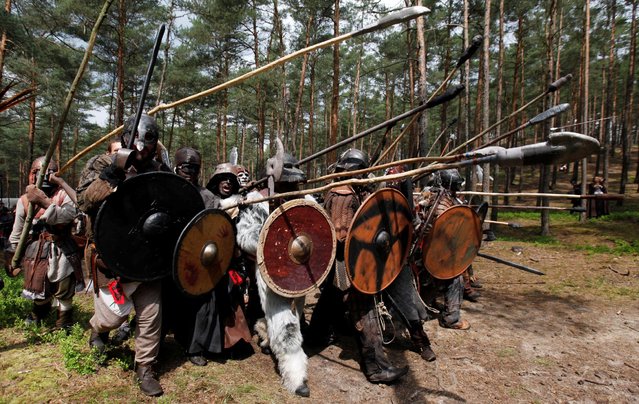
Participants dressed as characters such as elves, dwarves, goblins and orcs from the J.R.R. Tolkien's novel “The Hobbit” re-enact the “Battle of Five Armies” in a forest near the town of Doksy, Czech Republic, June 4, 2016. (Photo by David W. Cerny/Reuters)

Participants dressed as characters such as elves, dwarves, goblins and orcs from the J.R.R. Tolkien's novel “The Hobbit” re-enact the “Battle of Five Armies” in a forest near the town of Doksy, Czech Republic, June 4, 2016. Several hundred people arrived in the forest to re-enact the famous battle from Tolkien's novel that was published for the first time in 1937. (Photo by David W. Cerny/Reuters)
Details
05 Jun 2016 12:53:00
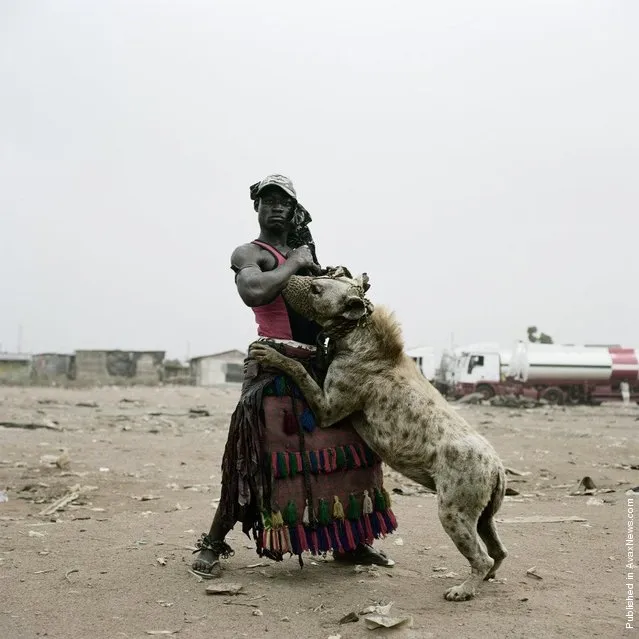
Abdullahi Mohammed with Mainasara, Ogere-Remo, Nigeria 2007

“Pieter Hugo was born 1976 and grew up in Cape Town, South Africa. He is a South African photographer who primarily works in portraiture and whose work engages with both documentary and art traditions with a focus on African communities. His most recognized work is the series called “The Hyena & Other Men” and which was published as a monograph. It has received a great deal of attention. Hugo won first prize in the Portraits section of the World Press Photo 2005 for a portrait of a man with a hyena”. – Wikipedia

Photo: Abdullahi Mohammed with Mainasara, Ogere-Remo, Nigeria 2007. (Photo by Pieter Hugo)
Details
24 Apr 2012 13:03:00
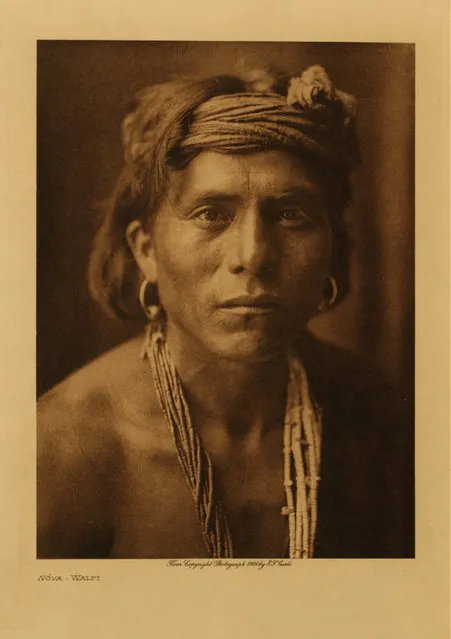
Nova, a Walpi, in 1906. (Photo by Edward S. Curtis)

At the beginning of the 20th century, Edward S. Curtis set out to document what he saw as a disappearing race: the Native American. From 1907 to 1930, Curtis took more than 2,000 photos of 80 tribes stretching from the Great Plains to the Pacific Northwest and Alaska. He then published and sold these photos, along with narrative text, in 20 volumes of work known as “The North American Indian”. It is one of the most significant collections of its kind, “probably the most important photographic document of its age and its topic,” said Jeffrey Garrett, associate university librarian for Special Libraries at Northwestern University. (Photo by Edward S. Curtis)
Details
07 Sep 2014 12:57:00


William Gibson is not one of the authors that spits out novels like a machine – in his long and fruitful career he has only published 11 novels andof short stories and articles in the tens each. Still his impact on modern literature was huge – the “noir prophet” of the cyberpunk subgenre (that he was one of the pioneers of) has predicted the rise of reality television, virtual reality, video games and the internet. He is a Hugo and Nebula award winning science fiction writer, with a special eye for what the future might bring.
Details
05 May 2015 09:00:00
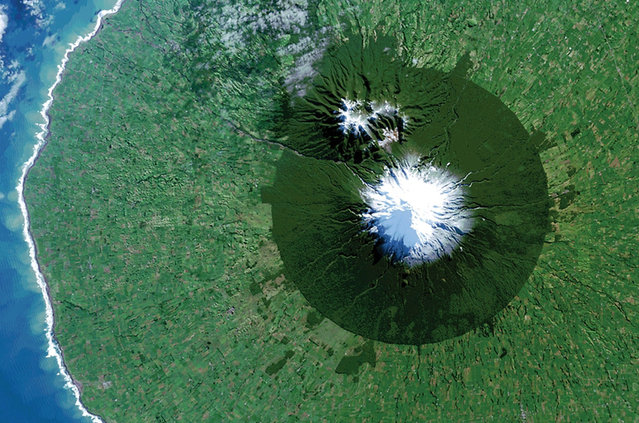
Egmont National Park in New Zealand with Mt. Taranaki at its center is seen in a Landsat 8 satellite image. (Photo by Reuters/NASA/USGS)

Egmont National Park in New Zealand with Mt. Taranaki at its center is seen in a Landsat 8 satellite image taken July 3, 2014 and released by NASA November 14, 2014. The image is from the book “Sanctuary: Exploring the World's Protected Areas from Space”, published by the Institute for Global Environmental Strategies with support from NASA, which was released this week. (Photo by Reuters/NASA/USGS)
Details
16 Nov 2014 12:15:00
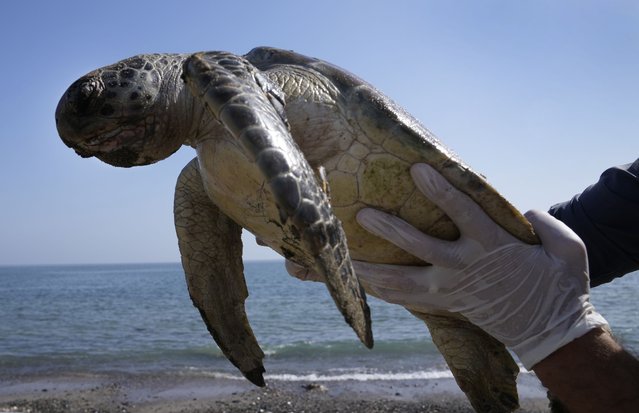
A dead green sea turtle is collected from the beach at the Khor Kalba Conservation Reserve, in the city of Kalba, on the east coast of the United Arab Emirates, Tuesday, February 1, 2022.  A staggering 75% of all dead green turtles and 57% of all loggerhead turtles in Sharjah had eaten marine debris, including plastic bags, bottle caps, rope and fishing nets, a new study published in the Marine Pollution Bulletin. The study seeks to document the damage and danger of the throwaway plastic that has surged in use around the world and in the UAE, along with other marine debris. (Photo by Kamran Jebreili/AP Photo)

A dead green sea turtle is collected from the beach at the Khor Kalba Conservation Reserve, in the city of Kalba, on the east coast of the United Arab Emirates, Tuesday, February 1, 2022. A staggering 75% of all dead green turtles and 57% of all loggerhead turtles in Sharjah had eaten marine debris, including plastic bags, bottle caps, rope and fishing nets, a new study published in the Marine Pollution Bulletin. The study seeks to document the damage and danger of the throwaway plastic that has surged in use around the world and in the UAE, along with other marine debris. (Photo by Kamran Jebreili/AP Photo)
Details
26 Feb 2022 04:58:00
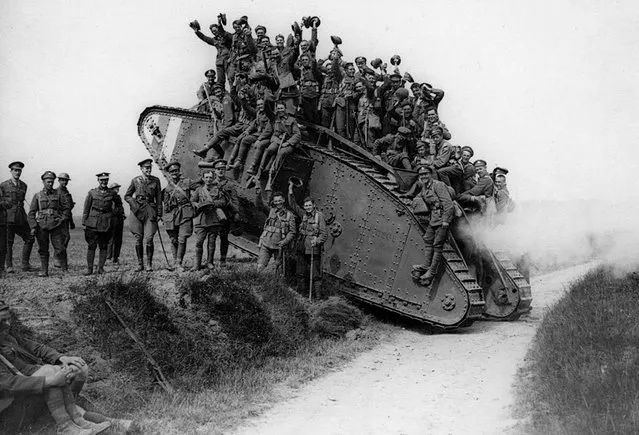
These black-and-white photos are taken from the new book “Armoured Warfare in the First World War 1916 – 1918” by Anthony Tucker-Jones and published by Pen & Sword Military. “Interestingly the British, French and Germans took completely different approaches with varying results”. The British military produced “Little Willie” in Autumn 1915 weighing 18 tonnes, which had a crew of two plus four gunners. “Inspired by a tracked artillery tractor “Little Willie” was referred to as a water tank – hence the name tank – to ensure secrecy”, said Anthony. “This led to the strange looking Mark I with its peculiar rhomboid shape, designed to cross trenches with guns in sponsons on either side. The Germans saw the tank as unchivalrous and were slow to grasp its utility. They favoured the Stormtrooper (specialist soldiers used to infiltrate enemy trenches) and artillery, not the tank”, said Anthony. “However, they didn’t hesitate to make use of captured British tanks. Although the tank helped secure victory and German soldiers dubbed it “Germany’s Downfall” the country was ultimately brought to its knees by the Allies blockade”. Here: British troops hitch a ride on a Mark IV after the massed tank fleet spearheading attack at Cambrai on November 20, 1917. (Photo by Anthony Tucker-Jones/Mediadrumworld.com)

These black-and-white photos are taken from the new book “Armoured Warfare in the First World War 1916 – 1918” by Anthony Tucker-Jones and published by Pen & Sword Military. Here: British troops hitch a ride on a Mark IV after the massed tank fleet spearheading attack at Cambrai on November 20, 1917. (Photo by Anthony Tucker-Jones/Mediadrumworld.com)
Details
23 Feb 2017 00:02:00