Loading...
Done
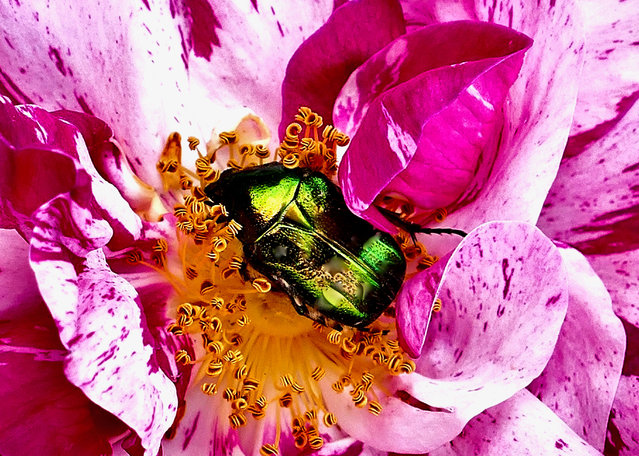
A rose chafer in Oxfordshire, UK on July 8, 2024. The beetles are often seen on flowers in the garden and are sometimes maligned for munching their way through these plants. However, they are an important detritivore as they feed on dead and decaying matter and recycle its nutrients, which makes a helpful addition to any compost. (Photo by Geoffrey Swaine/Rex Features/Shutterstock)

A rose chafer in Oxfordshire, UK on July 8, 2024. The beetles are often seen on flowers in the garden and are sometimes maligned for munching their way through these plants. However, they are an important detritivore as they feed on dead and decaying matter and recycle its nutrients, which makes a helpful addition to any compost. (Photo by Geoffrey Swaine/Rex Features/Shutterstock)
Details
21 Jul 2024 05:04:00
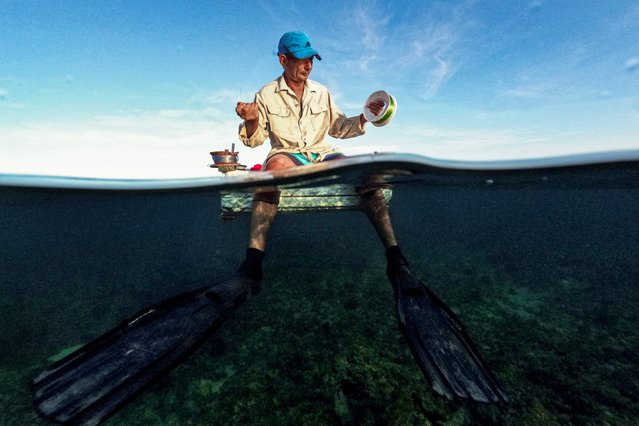
A Cuban fisherman prepares to fish in a makeshift raft in Havana Bay on July 16, 2024. When the weather permits, artisanal fishermen take to the water in improvised polystyrene rafts to make up for the lack of means and fuel. (Photo by Yamil Lage/AFP Photo)

A Cuban fisherman prepares to fish in a makeshift raft in Havana Bay on July 16, 2024. When the weather permits, artisanal fishermen take to the water in improvised polystyrene rafts to make up for the lack of means and fuel. (Photo by Yamil Lage/AFP Photo)
Details
10 Sep 2024 03:48:00
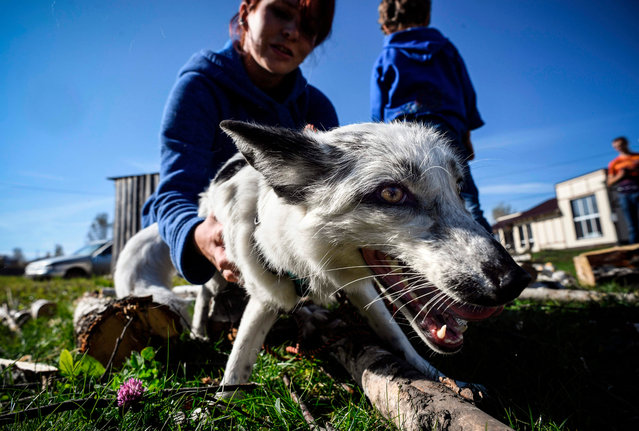
Tatyana Abramova, 33, plays with her home fox Plombir at her countryside house outside Siberian city of Novosibirsk on September 12, 2020. The official start of the Soviet experiment to better understand the domestication of animals by humans began in 1959, and was initiated by geneticists Dmitri Beliaiev and Lioudmila Trout on a farm in Akademgorodok, the scientific center of excellence in Siberia. Their primary objective was to domesticate foxes, to understand how the ancestor of wolves, another canine, evolved into a loyal and loving dog. And understand what this domestication tells us about the genetic evolution of species. (Photo by Alexander Nemenov/AFP Photo)

Tatyana Abramova, 33, plays with her home fox Plombir at her countryside house outside Siberian city of Novosibirsk on September 12, 2020. The official start of the Soviet experiment to better understand the domestication of animals by humans began in 1959, and was initiated by geneticists Dmitri Beliaiev and Lioudmila Trout on a farm in Akademgorodok, the scientific center of excellence in Siberia. Their primary objective was to domesticate foxes, to understand how the ancestor of wolves, another canine, evolved into a loyal and loving dog. And understand what this domestication tells us about the genetic evolution of species. (Photo by Alexander Nemenov/AFP Photo)
Details
25 Oct 2020 00:05:00
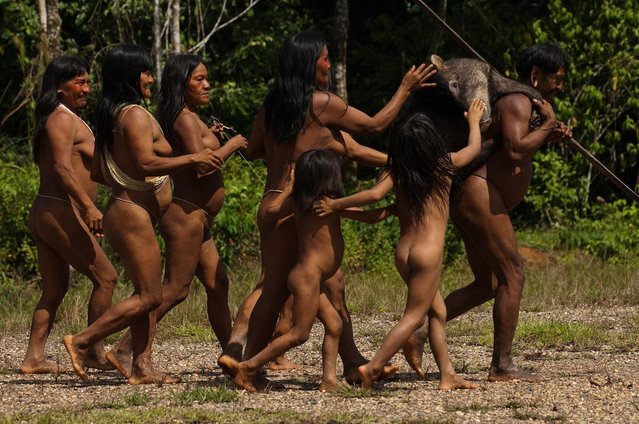
Spectacular images offering insight into the lives of the Huaorani people in the Ecuadorian Amazon have been revealed showing how they use traditional methods to hunt monkeys for food. The stunning pictures were taken by conservation photographer Pete Oxford from Torquay, Devon in the Ecuadorian Amazon. “The Huaorani Indians are a forest people highly in tune with their environment. Many are now totally acculturated since the 1950s by missionaries”, said Pete. “Today they face radical change to their culture to the proximity of oil exploration within their territory and the Yasuni National Park and Biosphere Reserve, they are vastly changed. Some still live very traditionally and for this shoot, through my Huaorani friend, a direct relative of those photographed he wanted to depict them as close to their original culture as possible. They still largely hunt with blow pipes and spears eating a lot of monkeys and peccaries”. The Huaorani are also known as the Waorani, Waodani or the Waos and are native Amerindians. Their lands are located between the Curaray and Napo rivers and speak the Huaorani language. Pete says that during his visit he was welcomed into the group and hopes that ancient cultures can be saved. Here: The tribe were seen celebrating after a hunter returned to camp with a wild pig. (Photo by Pete Oxford/Mediadrumworld.com)

Spectacular images offering insight into the lives of the Huaorani people in the Ecuadorian Amazon have been revealed showing how they use traditional methods to hunt monkeys for food. The stunning pictures were taken by conservation photographer Pete Oxford from Torquay, Devon in the Ecuadorian Amazon. Here: The tribe were seen celebrating after a hunter returned to camp with a wild pig. (Photo by Pete Oxford/Mediadrumworld.com)
Details
20 Jan 2017 07:58:00
Kagome Co's employee Shigenori Suzuki tries to eat a tomato which is fed to him by the newly-developed “Wearable Tomato” device for runners, during its unveiling event ahead of the weekend's Tokyo Marathon in Tokyo February 19, 2015. (Photo by Toru Hanai/Reuters)

Kagome Co's employee Shigenori Suzuki tries to eat a tomato which is fed to him by the newly-developed “Wearable Tomato” device for runners, during its unveiling event ahead of the weekend's Tokyo Marathon in Tokyo February 19, 2015. The eight-kilo (17.6-pound) contraption fits on a runner like a rucksack. It can distribute a total of seven medium-sized tomatoes, one by one, at the click of a button and supplies the runner with much needed nutrients during a long jog or race. (Photo by Toru Hanai/Reuters)
Details
20 Feb 2015 13:23:00
A model stands next to a BMW X6 AC Schnitzer car at Auto China 2012 in Beijing in this April 24, 2012 file photo. Amid the razzmatazz, music and crowds at the Shanghai autoshow on Monday, hundreds of attractive young women, and men, mingled among the stands and company booths, introducing the newest sedans and handing out pamphlets. (Photo by Jason Lee/Reuters)

A model stands next to a BMW X6 AC Schnitzer car at Auto China 2012 in Beijing in this April 24, 2012 file photo. Amid the razzmatazz, music and crowds at the Shanghai autoshow on Monday, hundreds of attractive young women, and men, mingled among the stands and company booths, introducing the newest sedans and handing out pamphlets. For years, models have been a staple at China's big autoshows – as much of a draw as the latest car models themselves. 2015 is different – the organisers have banned models from the Shanghai show. (Photo by Jason Lee/Reuters)
Details
21 Apr 2015 11:01:00
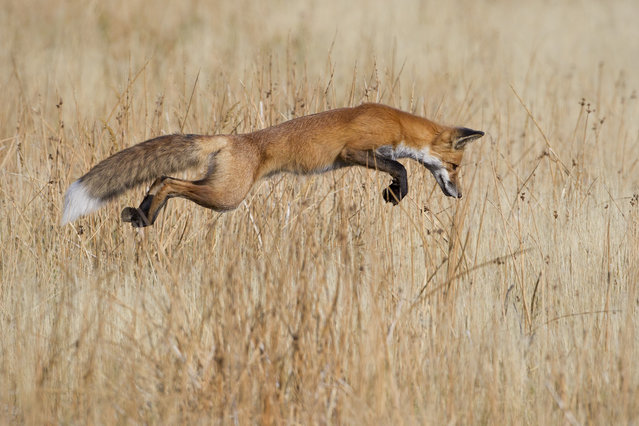
Canada: “Lucky pounce”. (Photo by Connor Stefanison/Wildlife Photographer of the Year 2013)

The winners of The London’s Natural History Museum's prestigious Wildlife Photographer of the Year for 2013 have finally been unveiled. Selected from almost 43,000 entries from 96 countries, the winners offer a glimpse of the stunning array of natural beauty on our planet. Photo: Canada: “Lucky pounce”. “Anticipating the pounce – that was the hardest part”, says Connor, who had come to Yellowstone National Park, Wyoming, USA, in search of wildlife as much as the spectacular landscape. He had found this fox, his first ever, on his last day in the park. It was so absorbed in hunting that Connor had plenty of time to get out of the car and settle behind a rock. It quartered the grassland, back and forth, and then started staring intently at a patch of ground, giving Connor just enough warning of the action to come. When it sprung up, Connor got his shot. And when it landed, the fox got his mouse. (Photo by Connor Stefanison/Wildlife Photographer of the Year 2013)

Details
17 Oct 2013 08:12:00
The Veteran Art Project By Devin Mitchell

Each day as we look in the mirror, we think that we know ourselves. We are used to the image that we see before us, but the mirror can show us much more than we ever hoped to see. Sometimes it only shows basic emotions, while at other times it can highlight the deepest crevices of our soul. If you wish, in the reflection of the mirror you can see your deepest thoughts, masks that you wear every day, your desires, and of course the people that you think about. But are you brave enough to look deep within your soul? Will you dive headlong or shy away from your true image? Those that will muster up the courage necessary will realize it was well worth the effort. (Photo by Devin Mitchell)
Details
30 Nov 2014 12:42:00