Loading...
Done
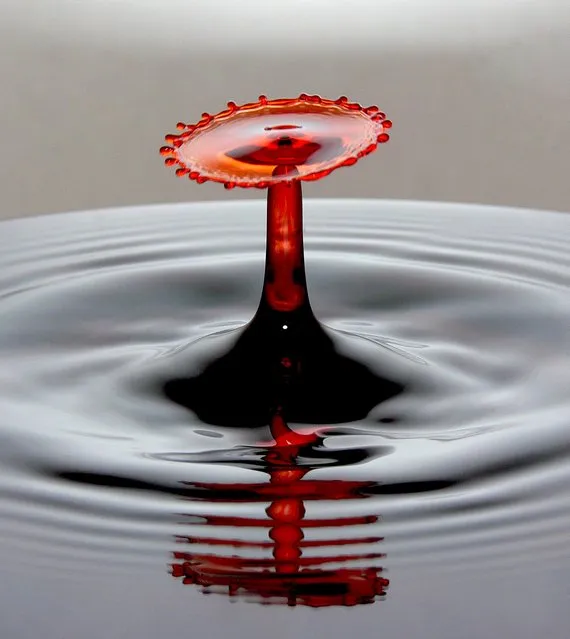
Waterdrop Sculptures by Josh Fancher

“I'm Josh Fancher, a 21 year old with an avid interest in photography, including macro, nature and wildlife, night photography, landscapes, cityscapes and architectural photography. Inspired by the beautiful and amazing water drop photography of Martin Waugh, I started doing water drop collisions in December of 2007. I use a 105mm Micro Nikkor lens for water drops, along with a pair of Nikon SB 600 flashes. I recently got a StopShot system (Nov 2009), which makes timing a lot easier. Before then, timing was manual, with an eye dropper, eye-hand coordination, and a lot of patience” – Josh Fancher. (Photo by Josh Fancher)
Details
19 Aug 2012 10:30:00
Tridacna Gigas, or Giant Clams

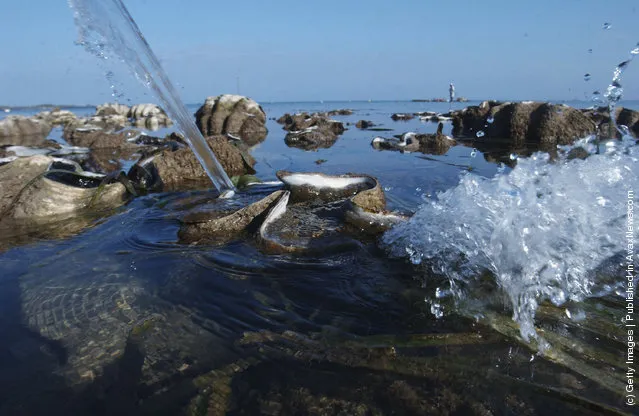
“The giant clam, Tridacna gigas (known as pā’ua in Cook Islands Māori), is the largest living bivalve mollusc. T. gigas is one of the most endangered clam species. It was mentioned as early as 1825 in scientific reports. One of a number of large clam species native to the shallow coral reefs of the South Pacific and Indian oceans, they can weigh more than 200 kilograms (440 lb) measure as much as 120 cm (47 in) across, and have an average lifespan in the wild of 100 years or more”. – Wikipedia

Photo: Tridacna Gigas, or Giant Clams spew water as a traditional fisherman passes by a small sanctuary on January 23, 2004 near Bolinao in the Northern Philippines. The clams, prime builders for coral reefs and providing shelter for spawning fish and other marine life, are exposed by low tides in the sanctuary. Overfishing and pollution throughout the country are not only threatening food security, but are also starting to choke one of the few working clam sanctuaries in the world. (Photo by David Greedy/Getty Images)
Details
01 Oct 2011 13:10:00
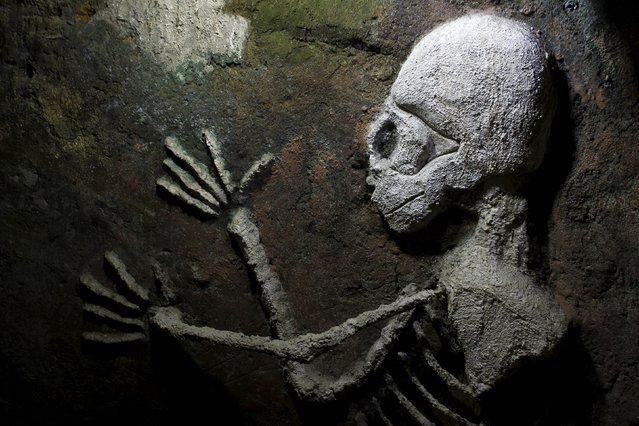
A figure of a skeleton is seen painted in a hallway of the house built underground by Manuel Barrantes in San Isidro de Perez Zeledon, Costa Rica, March 14, 2016. (Photo by Juan Carlos Ulate/Reuters)

A figure of a skeleton is seen painted in a hallway of the house built underground by Manuel Barrantes in San Isidro de Perez Zeledon, Costa Rica, March 14, 2016. Barrantes started digging through red soil and volcanic rock on his farm 12 years ago to build his subterranean house, between 15 and 63 feet (4.57 and 19.2m) underground. The dwelling, which Barrantes says provides a peaceful and comfortable home for him and his family away from noise pollution and the effects of climate change, now covers about 2,000 square feet (185.8 square metres). (Photo by Juan Carlos Ulate/Reuters)
Details
17 Mar 2016 15:34:00
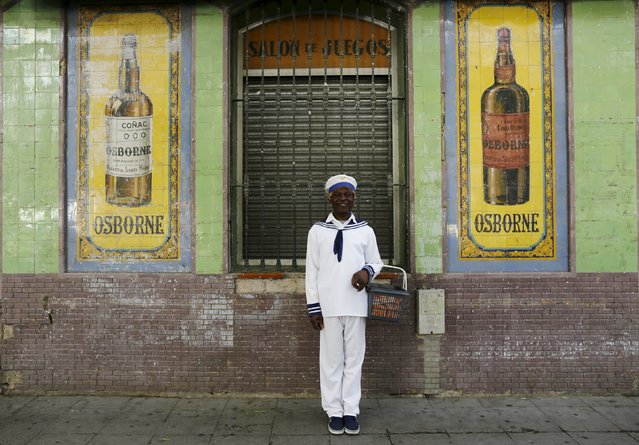
Howard Jackson, a Liberian migrant, poses for a portrait in the Andalusian capital of Seville, southern Spain March 7, 2016. (Photo by Marcelo del Pozo/Reuters)

Howard Jackson, a Liberian migrant, poses for a portrait in the Andalusian capital of Seville, southern Spain March 7, 2016. Jackson escaped civil war and spent three years crossing Africa before reaching Spain. Dressed up in one of his more than 200 costumes, from Peter Pan to Little Red Riding Hood, he is a well-known figure at an intersection entering the Spanish city of Seville where he has sold tissues to motorists for over a decade. Jackson is studying law and wants to become a judge. (Photo by Marcelo del Pozo/Reuters)
Details
24 Mar 2016 12:14:00
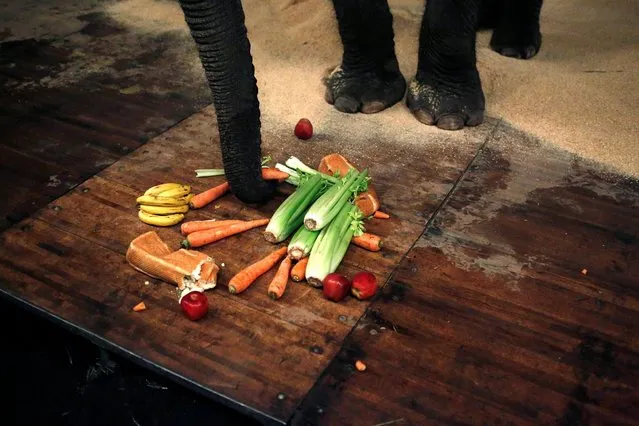
An elephant eats a snack after performing at Ringling Bros and Barnum & Bailey Circus' “Circus Extreme” show at the Mohegan Sun Arena at Casey Plaza in Wilkes-Barre, Pennsylvania, U.S., April 29, 2016. (Photo by Andrew Kelly/Reuters)

An elephant eats a snack after performing at Ringling Bros and Barnum & Bailey Circus' “Circus Extreme” show at the Mohegan Sun Arena at Casey Plaza in Wilkes-Barre, Pennsylvania, U.S., April 29, 2016. Elephants take a final bow at Ringling Bros and Barnum & Bailey Circus on Sunday, ending a 145-year spectacle that delighted fans but enraged animal activists, who say the highly publicized retirement is not enough. (Photo by Andrew Kelly/Reuters)
Details
01 May 2016 11:24:00
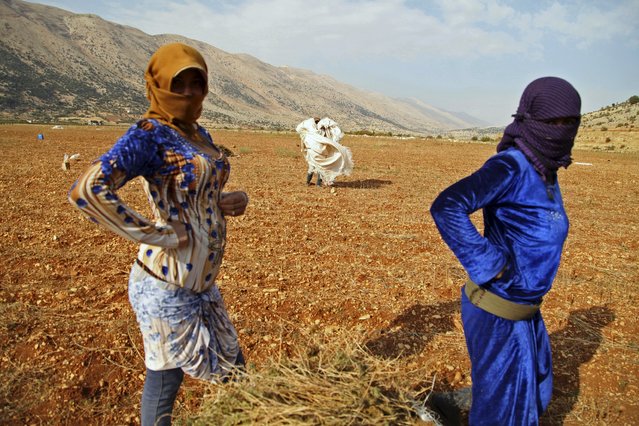
Aisha, 15, (L) (who asked to withhold her last name), a Syrian refugee from Raqqa, waits with a fellow refugee while harvesting cannabis in the Bekaa valley, Lebanon October 19, 2015. Syrian refugees work to harvest and process spiky-leafed cannabis plants in neighbouring Lebanon’s Bekaa Valley. (Photo by Alia Haju/Reuters)

Aisha, 15, (L) (who asked to withhold her last name), a Syrian refugee from Raqqa, waits with a fellow refugee while harvesting cannabis in the Bekaa valley, Lebanon October 19, 2015. Syrian refugees work to harvest and process spiky-leafed cannabis plants in neighbouring Lebanon’s Bekaa Valley. Often farmers of cotton and wheat back home in Raqqa province – now the de facto capital of Islamic State – the conflict in Syria drove them to seek safety in a region where Syrian migrant workers used to spend a few months a year before returning home. (Photo by Alia Haju/Reuters)
Details
24 Dec 2015 08:03:00
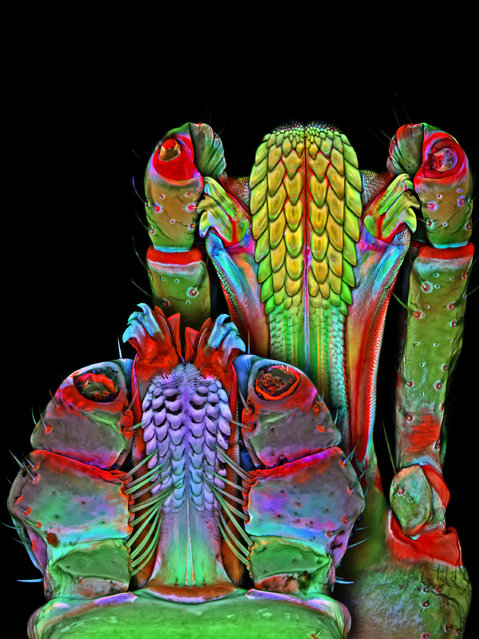
Underside of the Brown dog tick and Lonestar tick mouthparts; Confocal, 100X. Janelia Farm Research Campus, Howard Hughes Medical Institute (HHMI), Ashburn, Virginia, USA. (Photo by Dr. Igor Robert Siwanowicz/Nikon Small World 2014)

Now celebrating its 40th year, Nikon Small World is widely regarded as the leading forum to recognize proficiency and photographic excellence of photography taken under the microscope. To select the winners, competition judges analyzed entries from all over the world covering subjects ranging from chemical compounds to up-close-and-personal looks at biological specimens. The 2014 winners will be revealed on October 30th. In 2014, the competition received over 1,200 entries from more than 79 countries around the world. (Photo by Dr. Igor Robert Siwanowicz/Nikon Small World 2014)
Details
17 Oct 2014 13:10:00
Crater Lake In Oregon

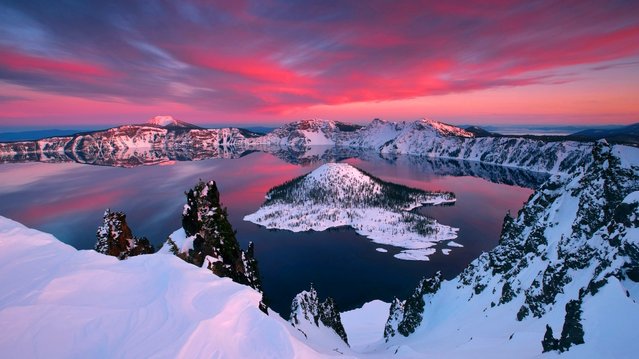
As you look at the majestic Crater Lake, located in south-central Oregon, United States, it is hard to imagine that thousands of years ago this place was one giant crater with scorching hot lava spilling over the sides. Those were the times of turmoil. Now, however, this place is the essence of tranquility. The lake that was formed, after the volcano died down, is amazingly clear due to the fact that the water isn’t moving at all. No rivers go in or out of the Crater Lake, and the water lost through evaporation is compensated by the rain and snowfall. This lake is also frighteningly deep – 1,943 feet (592 m) at its deepest point – making it the deepest lake in the United States. If you love nature and if you ever come to Oregon, this is truly a sight to behold.
Details
19 Nov 2014 14:14:00