Loading...
Done
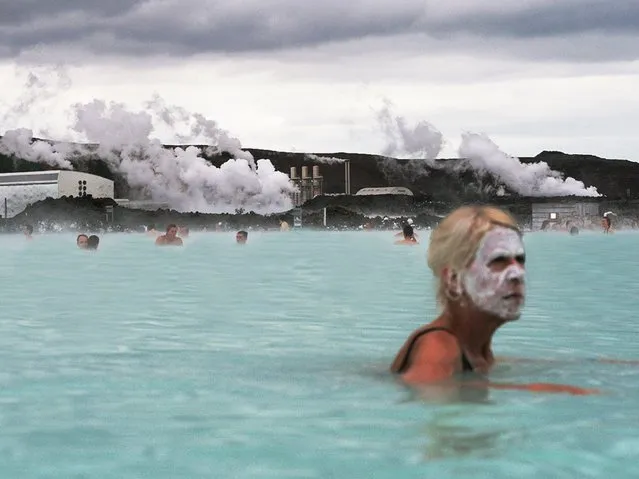
Iceland – Blue Lagoon Geothermal Spa

The Blue Lagoon geothermal spa is one of the most visited attractions in Iceland. The spa is located in a lava field in Grindavík on the Reykjanes Peninsula, southwestern Iceland. Bláa lónið is situated approximately 13 km (8 miles) from the Keflavík International Airport and 39 km (24 miles) from the capital city of Reykjavík. That is roughly a 20 minute drive from the airport and a 40 minute drive from Reykjavík.
Details
05 May 2014 09:41:00
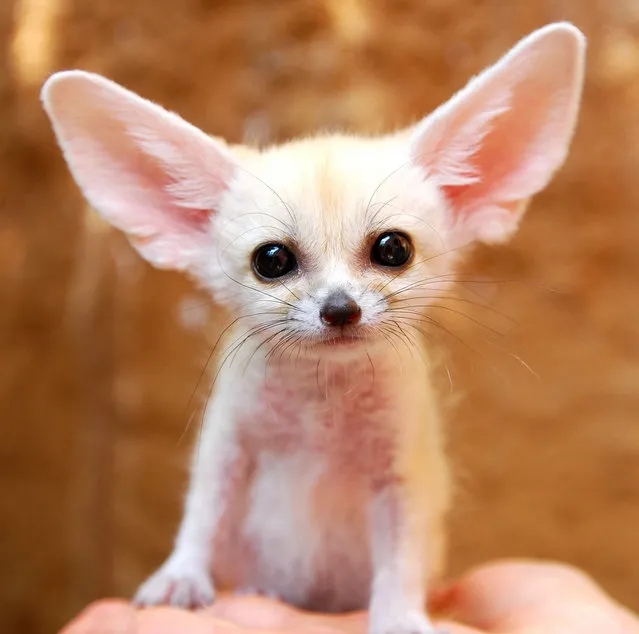
Baby Fennec Fox

“The fennec fox or fennec (Vulpes zerda) is a small nocturnal fox found in the Sahara of North Africa. Its most distinctive feature is its unusually large ears, which serve to dissipate heat”. – Wikipedia. (Photo by In Cherl Kim)
Details
14 Sep 2012 12:15:00
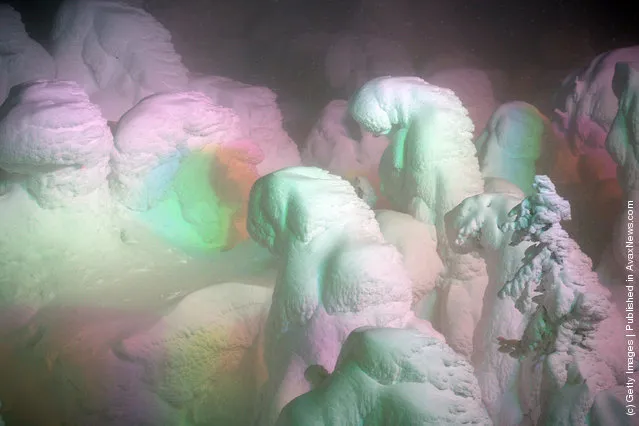
Picturesque Zao Ski Resort In Japan

The picturesque Zao Ski Resort, one of Japan's oldest and most popular ski destinations, is illuminated on February 10, 2007 in Yamagata Prefecture, Tohoku region of Honshu island, Japan. Coniferous trees such as the Aomori white fir lie covered with chrystallised ice and snow (described as “silver frost” or “snow monsters”) and attract visitors. (Photo by Koichi Kamoshida/Getty Images)
Details
24 Dec 2011 13:31:00
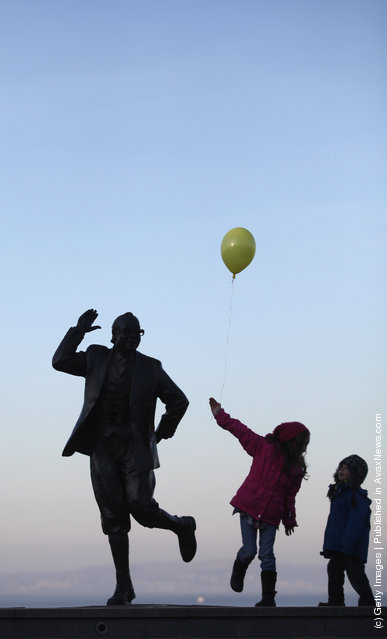
Children with balloons play beside the statue of British comedy legend Eric Morecambe

Children with balloons play beside the statue of British comedy legend Eric Morecambe on January 16, 2012 in Morecambe, England. According to scientists January 16, 2012 was “Blue Monday”, the most depressing day of the year. (Photo by Christopher Furlong/Getty Images)
Details
22 Jan 2012 12:10:00
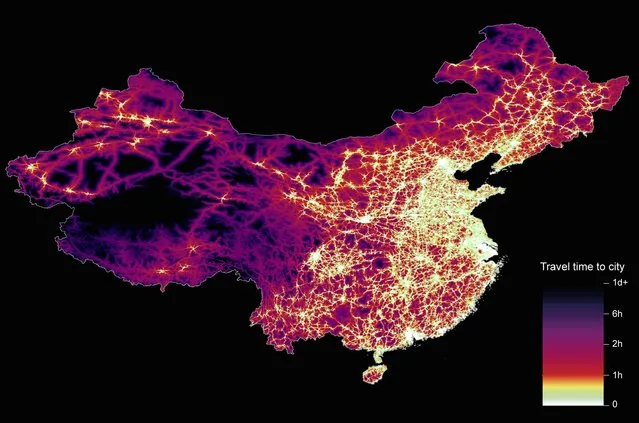
From Britain to China to Mali, new maps showing travel times to the nearest urban centre reveal huge differences between countries. Using Open Street Map and Google, a University of Oxford team have created a visual breakdown that suggests major inequalities when it comes to commuting. Here: China. The dataset used for China was unique as it relied solely on Open Street Map, due to restrictions on accessing Google data. The population is densely concentrated in the east and accessibility is increased, whereas rural provinces in the west remain remote. (Photo by Daniel Weiss/Jennifer Rozier/Malaria Atlas Project/University of Oxford )

From Britain to China to Mali, new maps showing travel times to the nearest urban centre reveal huge differences between countries. Using Open Street Map and Google, a University of Oxford team have created a visual breakdown that suggests major inequalities when it comes to commuting. Here: China. The dataset used for China was unique as it relied solely on Open Street Map, due to restrictions on accessing Google data. The population is densely concentrated in the east and accessibility is increased, whereas rural provinces in the west remain remote. (Photo by Daniel Weiss/Jennifer Rozier/Malaria Atlas Project/University of Oxford)
Details
12 Jan 2018 06:43:00
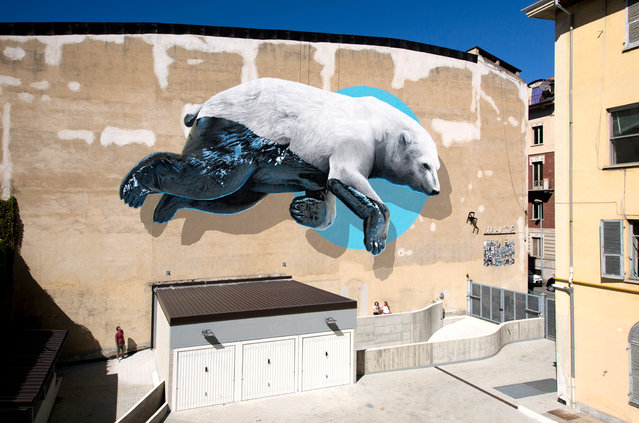
A polar bear whose bottom half is caked in oily black gunk. A whale wrapped in striped fabric: a pseudo straightjacket. These are the messes climate change leaves behind, the things we know are happening but often don’t have the opportunity to see with our own eyes. Swiss street art duo Christian Rebecchi and Pablo Togni, otherwise known as NeverCrew, met in art school when they were 15 and started making work together soon after. As a team, the artists adorn the world with eye-popping and gut-wrenching images depicting the consequences of humanity’s actions on earth. Here: “Black machine” mural painting and installation on the Colosseo theater in Turin, Italy, in September 2015. (Photo by NeverCrew/The Huffington Post)

A polar bear whose bottom half is caked in oily black gunk. A whale wrapped in striped fabric: a pseudo straightjacket. These are the messes climate change leaves behind, the things we know are happening but often don’t have the opportunity to see with our own eyes. Swiss street art duo Christian Rebecchi and Pablo Togni, otherwise known as NeverCrew, met in art school when they were 15 and started making work together soon after. As a team, the artists adorn the world with eye-popping and gut-wrenching images depicting the consequences of humanity’s actions on earth. (Photo by NeverCrew/The Huffington Post)
Details
13 Aug 2016 11:09:00
A woman argues with police officer during a protest in support of jailed opposition leader Alexei Navalny in Ulan-Ude, the regional capital of Buryatia, a region near the Russia-Mongolia border, Russia, Wednesday, April 21, 2021. Navalny's team has called for nationwide protests on Wednesday following reports that the politician's health was deteriorating in prison, where he has been on hunger strike since March 31. Russian authorities have stressed that the demonstrations were not authorized and warned against participating in them. (Photo by Anna Ogorodnik/AP Photo)

A woman argues with police officer during a protest in support of jailed opposition leader Alexei Navalny in Ulan-Ude, the regional capital of Buryatia, a region near the Russia-Mongolia border, Russia, Wednesday, April 21, 2021. Navalny's team has called for nationwide protests on Wednesday following reports that the politician's health was deteriorating in prison, where he has been on hunger strike since March 31. Russian authorities have stressed that the demonstrations were not authorized and warned against participating in them. (Photo by Anna Ogorodnik/AP Photo)

Details
22 Apr 2021 10:04:00
Newborn White-Cheeked Gibbon Nomascus

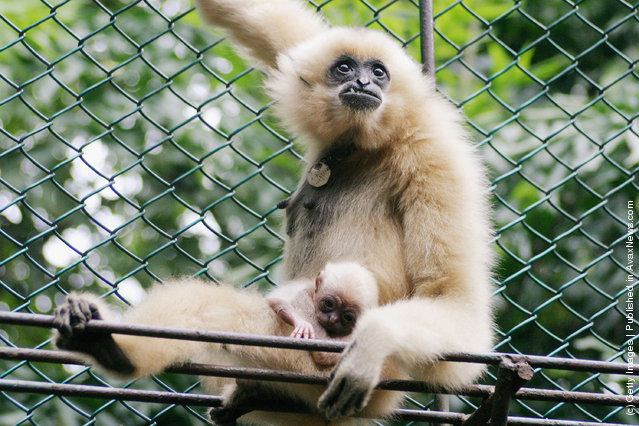
“Nomascus is the second most speciose genus of gibbons (family Hylobatidae). Originally this genus was a subgenus of Hylobates, and all individuals were considered one species, Hylobates concolor. Species within Nomascus are characterized by 52 chromosomes. Some species are all black, some light with a distinct black tuft of crown fur, and some by distinct, light-colored cheek patches. Nomascus is found from southern China (Yunnan) to southern Vietnam, and also on Hainan Island. One of the genus' species, Nomascus nasutus, has been deemed “the most critically endangered ape species in the world”. All of the species in this genus are endangered or critically endangered”. – Wikipedia

Photo: A newborn White-Cheeked Gibbon clings to its mother in the Nanning Zoo on April 12, 2004 in Nanning, Guangxi province, China. The White-Cheeked Gibbon's natural habitat is Southern China as well as Vietnam and Laos. They are classified as highly endangered and are on the brink of extinction due to poaching and reduction of natural rainforests. (Photo by Getty Images)

Details
12 Aug 2011 11:51:00