Loading...
Done
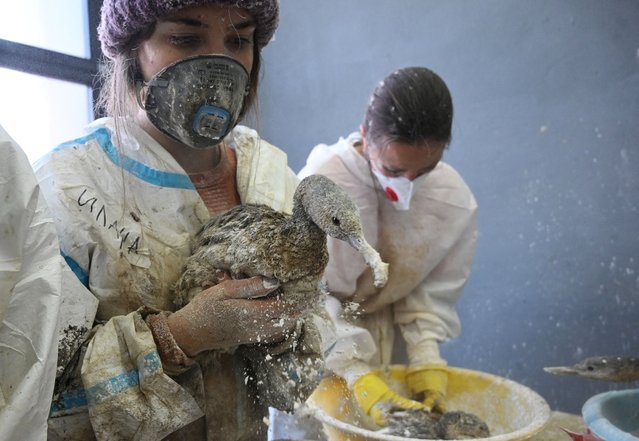
Volunteers use flour to clean birds following an oil spill caused by an incident involving two tankers damaged in a storm in the Kerch Strait, in the village of Vityazevo near the Black Sea resort of Anapa, Russia on December 20, 2024. (Photo by Sergey Pivovarov/Reuters)

Volunteers use flour to clean birds following an oil spill caused by an incident involving two tankers damaged in a storm in the Kerch Strait, in the village of Vityazevo near the Black Sea resort of Anapa, Russia on December 20, 2024. (Photo by Sergey Pivovarov/Reuters)
Details
24 Dec 2024 04:11:00
«Female Boxers», 2024. Julia Fullerton-Batten is a fine art photographer renowned for her cinematic visual storytelling. Her large-scale projects are based around specific themes, each image embellishing her subject matter in a series of thought-provoking “stories” using staged tableaux and sophisticated lighting techniques. (Photo by Julia Fullerton-Batten)

«Female Boxers», 2024. Julia Fullerton-Batten is a fine art photographer renowned for her cinematic visual storytelling. Her large-scale projects are based around specific themes, each image embellishing her subject matter in a series of thought-provoking “stories” using staged tableaux and sophisticated lighting techniques. (Photo by Julia Fullerton-Batten)
Details
25 May 2025 03:42:00
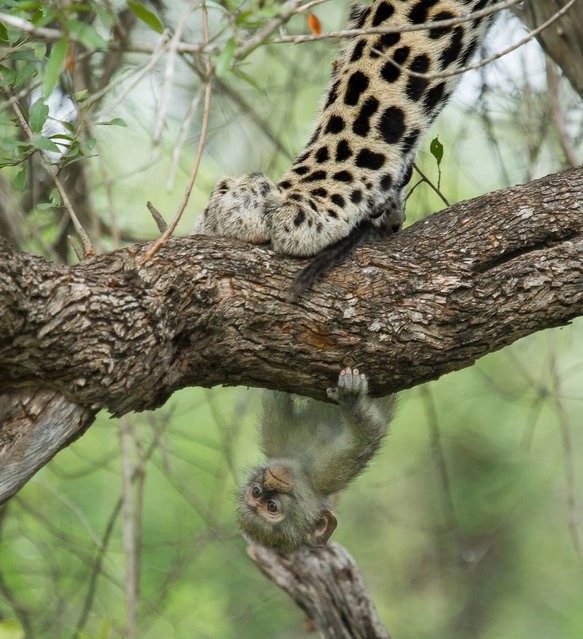
Chris Renshaw has recently been awarded the 2015 Africa Geographic “Photographer of the Year” award. Chris tells that his love “for anything wild and adventurous came from a deep rooted attachment to the African continent. This image shows that timing, a bit of anticipation, and luck allowed this incredible moment in time to be captured”. (Photo by Chris Renshaw)

Chris Renshaw has recently been awarded the 2015 Africa Geographic “Photographer of the Year” award. Chris tells that his love “for anything wild and adventurous came from a deep rooted attachment to the African continent. This image shows that timing, a bit of anticipation, and luck allowed this incredible moment in time to be captured”. (Photo by Chris Renshaw)
Details
19 Nov 2015 08:00:00
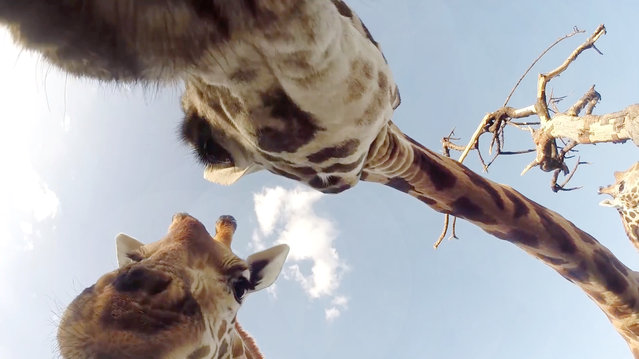
An innovative photographer attached a camera to a remote-controlled car, allowing him to capture angles of wild lions, rhinos and other animals. Over the last 11 years, Chris Bray has been taking pictures of animals using his toy car contraption while he takes guests on photography tours in Kenya. Bray purchased an ordinary remote-controlled car, stripped it of anything that could chewed or ripped off, leaving the chassis, then strapped a GoPro to the top of it. When a herd of animals has been sighted, Bray uses the toy car to approach the subjects’ general area without intruding. (Photo by Chris Bray/Caters News Agency)

An innovative photographer attached a camera to a remote-controlled car, allowing him to capture angles of wild lions, rhinos and other animals. Over the last 11 years, Chris Bray has been taking pictures of animals using his toy car contraption while he takes guests on photography tours in Kenya. (Photo by Chris Bray/Caters News Agency)
Details
25 Oct 2019 00:01:00
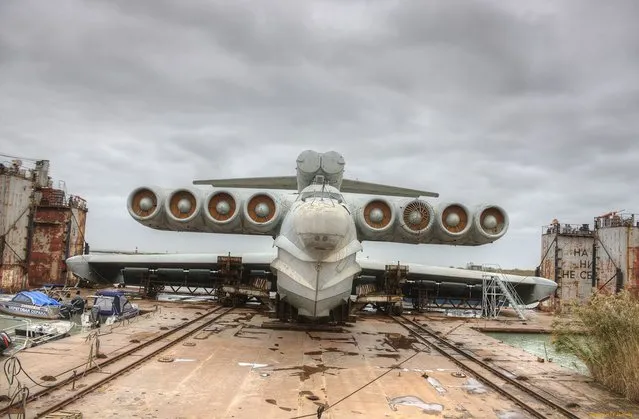
The Lun-class Ekranoplane was used by the Soviet Navy starting in 1987, and wasn't retired until the late 1990s, after the Soviet Union's fall. (Igor113)

“The Lun-class ekranoplan (NATO reporting name Duck) was a ground effect vehicle (GEV) designed by Rostislav Evgenievich Alexeev and used by the Soviet and Russian navies from 1987 until sometime in the late 1990s. It “flew” using the lift generated by the ground effect of its large wings when close to the surface of the water – about four metres or less. Although they might look similar and/or have related technical characteristics, ekranoplans like the Lun are not aircraft, seaplanes, hovercraft, or hydrofoils – ground effect is a separate technology altogether. The International Maritime Organization classifies these vehicles as maritime ships. The name Lun comes from the Russian for harrier”. – Wikipedia (Photo by Igor113)
Details
08 Aug 2014 10:51:00
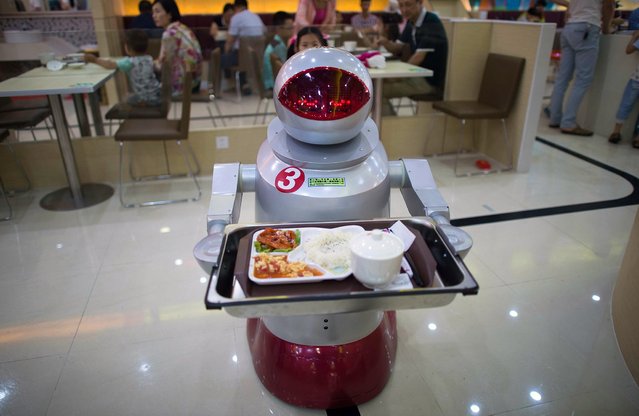
This photo taken on August 13, 2014, shows a robot carrying food to customers in a restaurant in Kunshan. It's more teatime than Terminator – a restaurant in China is electrifying customers by using more than a dozen robots to cook and deliver food. (Photo by Johannes Eisele/AFP Photo)

Located in Kunshan, eastern China, the restaurant relies on over a dozen machines for tasks such as greeting customers, waiting on tables and cooking basic meals. The eatery becomes the third café in the world to rely on the use of robot employees, potentially giving a glimpse into how future businesses could operate. Photo: This photo taken on August 13, 2014, shows a robot carrying food to customers in a restaurant in Kunshan. It's more teatime than Terminator – a restaurant in China is electrifying customers by using more than a dozen robots to cook and deliver food. (Photo by Johannes Eisele/AFP Photo)
Details
24 Aug 2014 09:40:00
Ko Min, 26, manually extracts oil from one of three 300 feet deep wells he works on in the Minhla township of the Magwe district October 27, 2013. Everyday, Ko Min makes around $30 extracting crude oil from three small wells after he bought rights to use them for close to $1000 from a farmer who owns the land. (Photo by Damir Sagolj/Reuters)

Ko Min, 26, manually extracts oil from one of three 300 feet deep wells he works on in the Minhla township of the Magwe district October 27, 2013. Everyday, Ko Min makes around $30 extracting crude oil from three small wells after he bought rights to use them for close to $1000 from a farmer who owns the land. In Myanmar, an impoverished country rich with natural resources, people from poor communities find ways to supplement their income by exploiting such resources, such as the Minhla township, traditionally rich with oil, often using primitive and dangerous methods. (Photo by Damir Sagolj/Reuters)
Details
21 Apr 2014 10:06:00
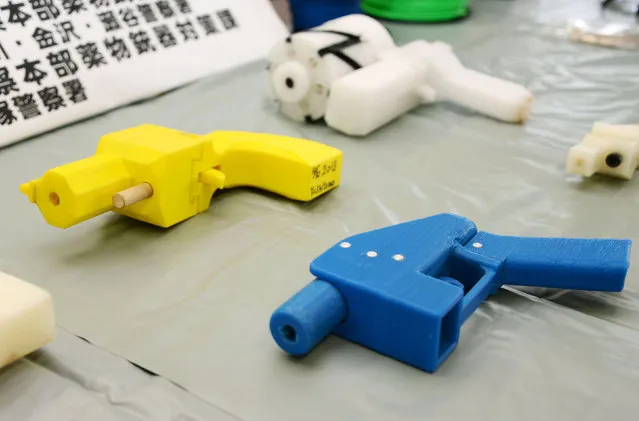
Seized plastic handguns which were created using 3D printing technology are displayed at Kanagawa police station in Yokohama, south of Tokyo, in this photo taken by Kyodo May 8, 2014. (Photo by Reuters/Kyodo)

Seized plastic handguns which were created using 3D printing technology are displayed at Kanagawa police station in Yokohama, south of Tokyo, in this photo taken by Kyodo May 8, 2014. Yoshimoto Imura became the first man to be arrested in Japan for illegal possession of two guns he created himself using 3D printing technology, Japanese media said on Thursday. The 27-year-old, a college employee in the city of Kawasaki, was arrested after police found video online posted by Imura claiming to have produced his own guns. Gun possession is strictly regulated in Japan. Police raided Imura's home and found five guns, two of which could fire real bullets, Japanese media said. (Photo by Reuters/Kyodo)
Details
12 May 2014 10:46:00