Loading...
Done
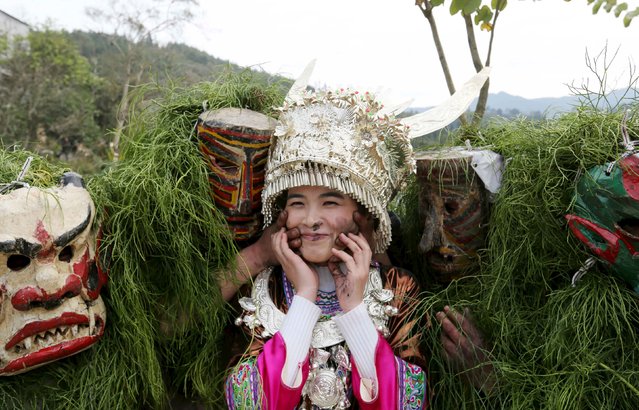
Ethnic Miao men wearing traditional masks smear dust on a woman's face to wish her good luck during local celebration event for Lunar New Year in Liuzhou, Guangxi Zhuang Autonomous Region, China, February 16, 2016. (Photo by Reuters/Stringer)

Ethnic Miao men wearing traditional masks smear dust on a woman's face to wish her good luck during local celebration event for Lunar New Year in Liuzhou, Guangxi Zhuang Autonomous Region, China, February 16, 2016. (Photo by Reuters/Stringer)
Details
19 Feb 2016 13:25:00
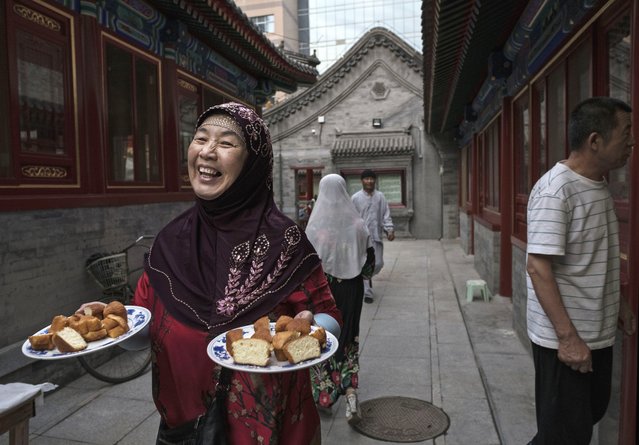
A woman from the Hui Muslim community carries food that will be eaten by her and others to break their fast during the holy fasting month of Ramadan at the Nanxiapo Mosque on June 8, 2018 in Beijing, China. (Photo by Kevin Frayer/Getty Images)

A woman from the Hui Muslim community carries food that will be eaten by her and others to break their fast during the holy fasting month of Ramadan at the Nanxiapo Mosque on June 8, 2018 in Beijing, China. (Photo by Kevin Frayer/Getty Images)
Details
04 Jul 2018 00:05:00
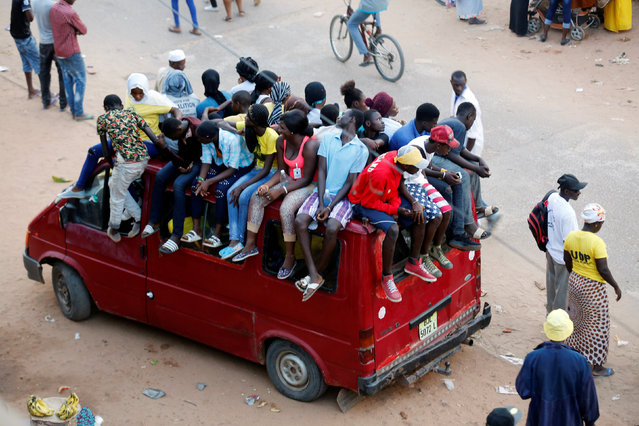
Supporters of the United Democratic Party (UDP) opposition alliance presidential candidate, Adama Barrow attend a campaign rally in Buffer zone, Gambia November 29, 2016. (Photo by Thierry Gouegnon/Reuters)

Supporters of the United Democratic Party (UDP) opposition alliance presidential candidate, Adama Barrow attend a campaign rally in Buffer zone, Gambia November 29, 2016. (Photo by Thierry Gouegnon/Reuters)
Details
01 Dec 2016 13:04:00
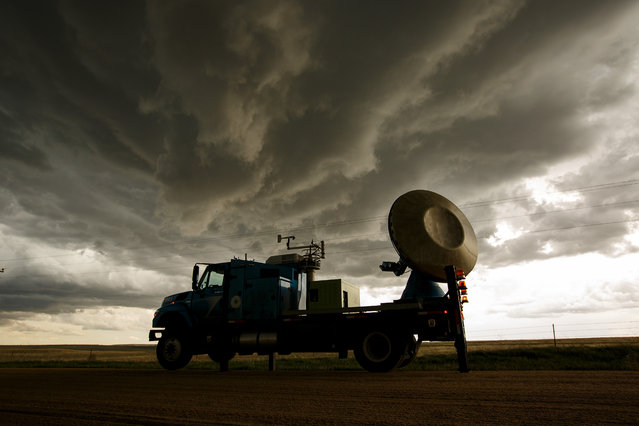
The Doppler on Wheels (DOW) vehicle scans a supercell thunderstorm during a tornado research mission, May 8, 2017 in Elbert County near Agate, Colorado. Doppler on Wheels (DOW) is a mobile doppler radar mounted on a truck that brings instruments directly into storms, allowing scientists to scan storms and tornadoes and make 3-D maps of wind and debris. (Photo by Drew Angerer/Getty Images)

The Doppler on Wheels (DOW) vehicle scans a supercell thunderstorm during a tornado research mission, May 8, 2017 in Elbert County near Agate, Colorado. Doppler on Wheels (DOW) is a mobile doppler radar mounted on a truck that brings instruments directly into storms, allowing scientists to scan storms and tornadoes and make 3-D maps of wind and debris. (Photo by Drew Angerer/Getty Images)
Details
18 May 2017 08:54:00
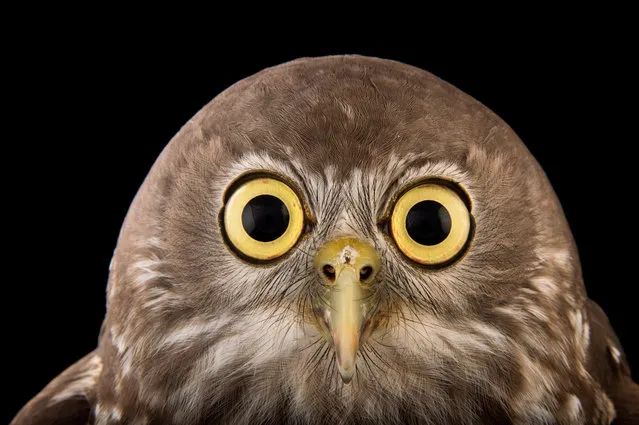
The National Geographic Photo Ark is a travelling exhibition of photographer Joel Sartore’s quest to create a photo archive of biodiversity around the world. So far, Sartore has captured studio portraits of more than 6,000 species – a number that he hopes to double. On 1 July, the ark will open at Melbourne zoo – the first time it has been exhibited in the southern hemisphere. More than 50 portraits will be on display, including many of Australian endangered animals being protected by programs at the zoo itself. These captions have been edited from text supplied by Melbourne zoo. Here: Barking owl. So-named because its call sounds like a barking dog, these birds are native to Australia, Indonesia and Papua New Guinea. In Victoria they are listed as an endangered species, and in 2003 there were estimated to be fewer than 50 breeding pairs. The main threat to the species in Victoria is loss of habitat, especially large trees with hollows in which they can nest and on which many of their prey depend. Apart from a bark, they may utter a chilling scream when they feel threatened. (Photo by Joel Sartore/National Geographic Photo Ark/The Guardian)

The National Geographic Photo Ark is a travelling exhibition of photographer Joel Sartore’s quest to create a photo archive of biodiversity around the world. So far, Sartore has captured studio portraits of more than 6,000 species – a number that he hopes to double. On 1 July, the ark will open at Melbourne zoo – the first time it has been exhibited in the southern hemisphere. More than 50 portraits will be on display, including many of Australian endangered animals being protected by programs at the zoo itself. These captions have been edited from text supplied by Melbourne zoo. Here: Barking owl. (Photo by Joel Sartore/National Geographic Photo Ark/The Guardian)
Details
01 Jul 2017 07:45:00
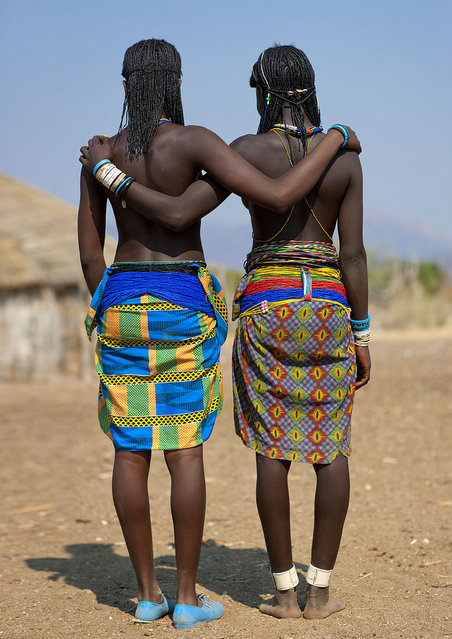
“Show us our butts! Mucawana tribe – Angola. In Soba village, the Muhacaona (Mucawana) tribe, perhaps the best place i have visited. They use cow dung and fat to make this so nice haircut, and love the beads. They asked me to make pictures of their backs... and butts to see on the camera screen if everything was perfect!”. (Eric Lafforgue)

“Show us our butts! Mucawana tribe – Angola. In Soba village, the Muhacaona (Mucawana) tribe, perhaps the best place i have visited. They use cow dung and fat to make this so nice haircut, and love the beads. They asked me to make pictures of their backs... and butts to see on the camera screen if everything was perfect!”. (Photo and comments by Eric Lafforgue)
Details
09 Nov 2012 15:04:00
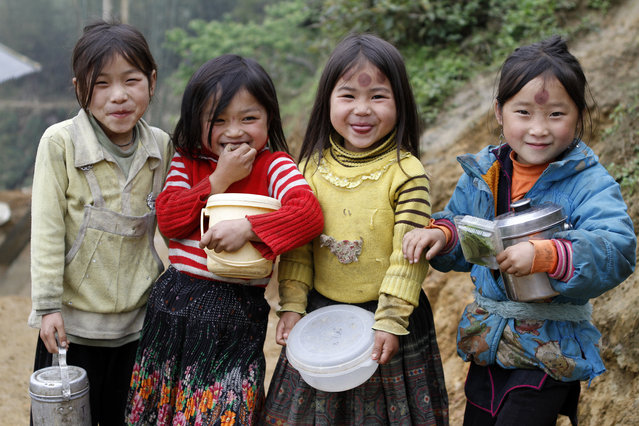
“Kids of Sapa”. Four little beautiful Hmong girls from Lao Chai Village, near Sapa, Vietnam. (Photo and caption by Felipe Hanower/National Geographic Traveler Photo Contest)

“Kids of Sapa”. Four little beautiful Hmong girls from Lao Chai Village, near Sapa, Vietnam. (Photo and caption by Felipe Hanower/National Geographic Traveler Photo Contest)
Details
15 Jul 2013 09:14:00
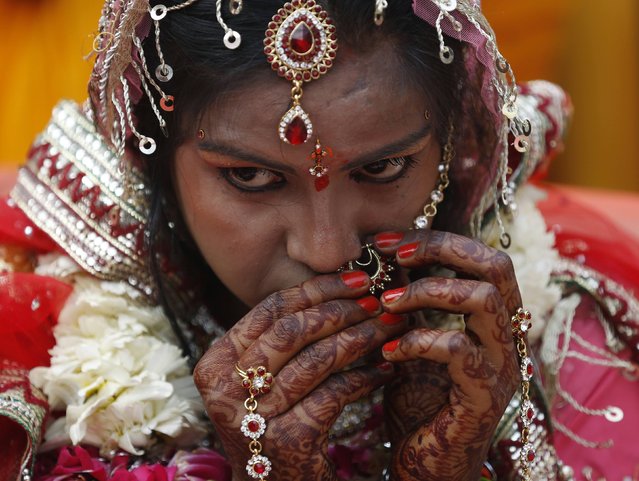
A bride gets ready during a mass wedding ceremony in the old quarters of Delhi February 20, 2015. (Photo by Ahmad Masood/Reuters)

A bride gets ready during a mass wedding ceremony in the old quarters of Delhi February 20, 2015. A total of 12 couples took their wedding vows on Friday during the mass wedding ceremony organised by a Hindu religious organisation, an organiser said. (Photo by Ahmad Masood/Reuters)
Details
22 Feb 2015 11:01:00