Loading...
Done
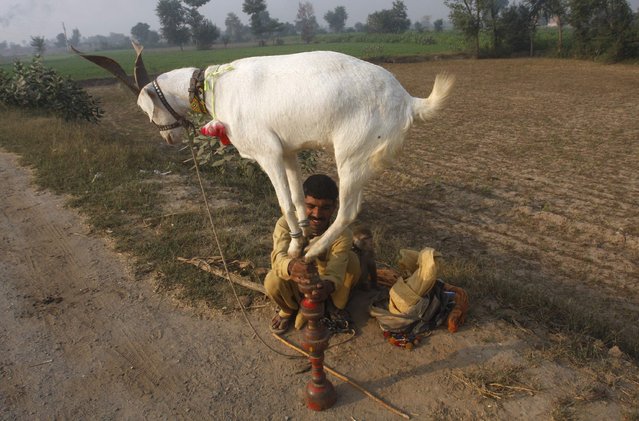
The goats are known to be good climbers, but this one is taking the climbing thing to a whole new level. It clambered on the tip of its owner’s stick, as a part of the roadside performance for a quick coin, on the outskirts of Faisalabad, Pakistan, November 5, 2012. (Photo by Fayyaz Hussain/Reuters)

The goats are known to be good climbers, but this one is taking the climbing thing to a whole new level. It clambered on the tip of its owner’s stick, as a part of the roadside performance for a quick coin, on the outskirts of Faisalabad, Pakistan, November 5, 2012. (Photo by Fayyaz Hussain/Reuters)
Details
10 Nov 2012 11:31:00
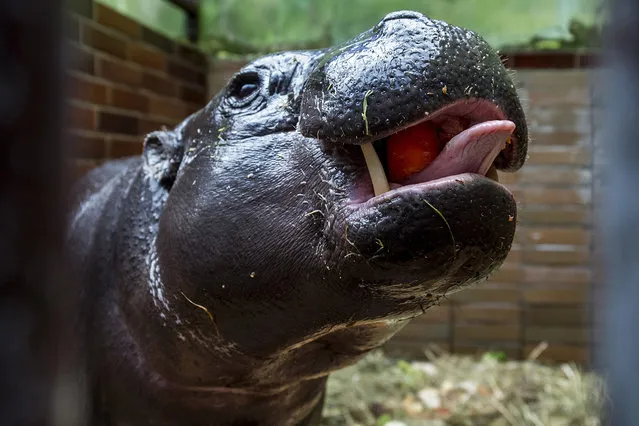
Female of pygmy hippopotamus called Malaya from Netherlands in zoo in Dvur Kralove nad Labem, Czech Republic, February 22, 2016. (Photo by David Tanecek/CTK via ZUMA Press)

Female of pygmy hippopotamus called Malaya from Netherlands in zoo in Dvur Kralove nad Labem, Czech Republic, February 22, 2016. (Photo by David Tanecek/CTK via ZUMA Press)
Details
28 Feb 2016 10:44:00
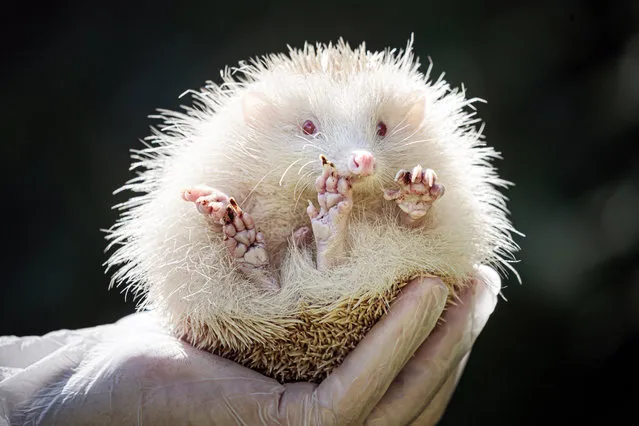
Jack Frost, an ultra rare albino Hedgehog, that has been rescued by Prickly Pigs Hedgehog Rescue in Otley, West Yorkshire on August 23, 2020. (Photo by Danny Lawson/PA Images via Getty Images)

Jack Frost, an ultra rare albino Hedgehog, that has been rescued by Prickly Pigs Hedgehog Rescue in Otley, West Yorkshire on August 23, 2020. (Photo by Danny Lawson/PA Images via Getty Images)
Details
30 Aug 2020 00:03:00
A restaurant in Chelsea is giving customers the ultimate post-pub treat – by selling a burger for £1,100. The world's most expensive burger, dubbed the “Glamburger”, is stuffed with a burger patty made from 220 grams of Kobe Wagyu beef minced with 60 grams of New Zealand venison and seasoned with smoked Himalayan salt. (Photo by Groupon)

A restaurant in Chelsea is giving customers the ultimate post-pub treat – by selling a burger for £1,100. The world's most expensive burger, dubbed the “Glamburger”, is stuffed with a burger patty made from 220 grams of Kobe Wagyu beef minced with 60 grams of New Zealand venison and seasoned with smoked Himalayan salt. (Photo by Groupon)
Details
15 Oct 2014 13:27:00
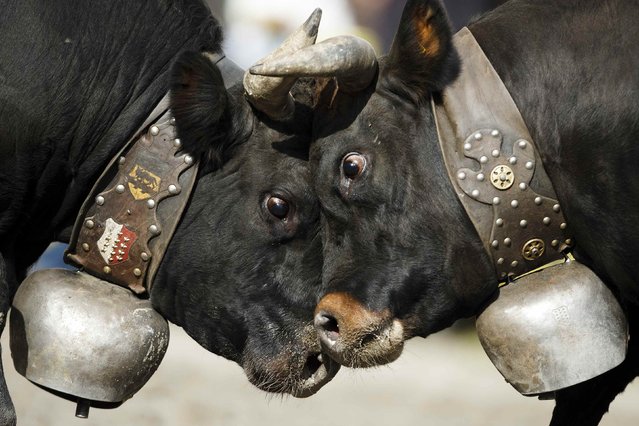
Two Herens cows lock horns during the qualification round of the annual “Battle of the Queens” cow fight finals in Aproz, in the western Alpine canton of Valais May 5, 2013. Each year when taken to the alpine pastures, the cows test their strength and fight for the herd's leadership. The competition continues until a new queen has forced all the other cows to retreat. (Photo by Valentin Flauraud/Reuters)

Two Herens cows lock horns during the qualification round of the annual “Battle of the Queens” cow fight finals in Aproz, in the western Alpine canton of Valais May 5, 2013. Each year when taken to the alpine pastures, the cows test their strength and fight for the herd's leadership. The competition continues until a new queen has forced all the other cows to retreat. (Photo by Valentin Flauraud/Reuters)
Details
06 May 2013 12:33:00
Fisherwomen laying barrels with salt in preparation for herring curing, 1937. (Photo by Topical Press Agency)

Fisherwomen laying barrels with salt in preparation for herring curing, 1937. (Photo by Topical Press Agency)
Details
04 Sep 2012 11:12:00
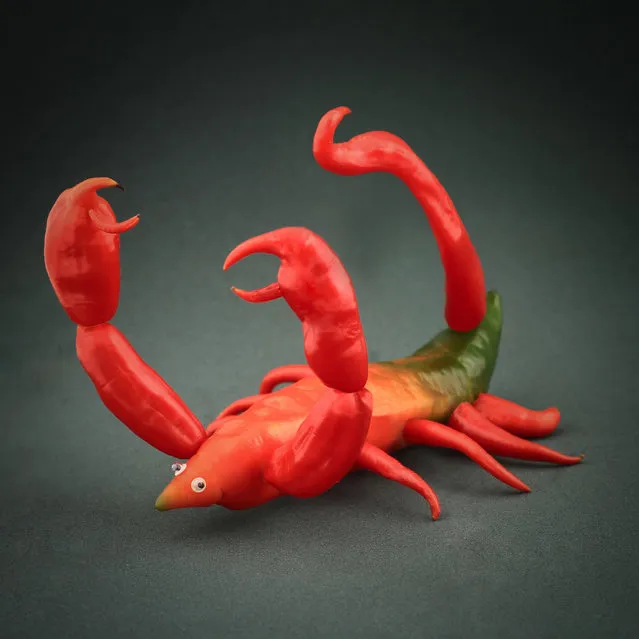
“Red Pepperpion. (Photo by Vanessa Dualib)

“Red Pepperpion. Red Pepperpions are secretive, nocturnal arachilli which can be spotted in kitchens of arid climates all around the world.

Red Pepperpions are equipped with a delicious (and depending on the quantity...deadly!) stinger at the end of its tail. If you happen to get bitten (or if you bite him!) it will produce a burning sensation on your taste nerves.

However, there is no need to worry, since the fact is that his potent stinger is usually only used when hunting or whenever the Pepperpion feels like he might become part of someones meal...

At daylight or when encountering a larger foe, such as a Saucier Chef, they retreat into burrows inside the fridge or hide beneath the oven”. (Photo and comment by Vanessa Dualib)


Details
08 Feb 2013 09:24:00


Defined according to wikipedia it is “a recent and informal geologic chronological term that serves to mark the evidence and extent of human activities that have had a significant global impact on the Earth’s ecosystems. The term was coined by ecologist Eugene Stoermer but has been widely popularized by the Nobel Prize-winning atmospheric chemist Paul Crutzen.”

The images here where created by Felix Pharand-Deschenes depicting how various human influences, from road and rail, to internet cables and airlines create significant patterns covering the Earth. What can we learn from these patterns in how they are influencing the environment
Details
19 Aug 2012 10:40:00