Loading...
Done
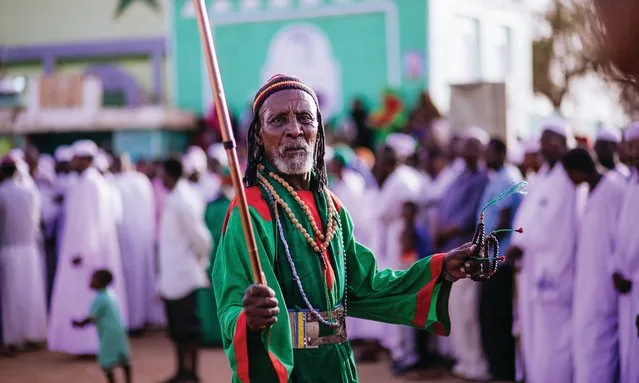
In Omdurman, the largest city in Sudan, the Qadiriyya Sufi order meets every Friday outside Sheikh Hamed Al Nil mosque, which houses the tomb of their 19th century Sufi leader. (Photo by Ala Kheir, John Burns and Ibrahim Algrefwi/Brownbook)

In Omdurman, the largest city in Sudan, the Qadiriyya Sufi order meets every Friday outside Sheikh Hamed Al Nil mosque, which houses the tomb of their 19th century Sufi leader. (Photo by Ala Kheir, John Burns and Ibrahim Algrefwi/Brownbook)
Details
21 Feb 2016 11:47:00
s*xy women kissing in bed. (Photo by Sakkmesterke/Getty Images)

Sеxy women kissing in bed. (Photo by Sakkmesterke/Getty Images)
Details
27 Dec 2017 07:13:00
A man tries to catch a duck during a competition held as a part of the Dragon Boat Festival, known locally as “Peh Cun Festival”, on the Cisadane river in Tanggerang, Indonesia, Thursday, June 9, 2016. The event is celebrated every fifth day of the fifth month on the Chinese lunar calendar. (Photo by Tatan Syuflana/AP Photo)

A man tries to catch a duck during a competition held as a part of the Dragon Boat Festival, known locally as “Peh Cun Festival”, on the Cisadane river in Tanggerang, Indonesia, Thursday, June 9, 2016. The event is celebrated every fifth day of the fifth month on the Chinese lunar calendar. (Photo by Tatan Syuflana/AP Photo)
Details
10 Jun 2016 13:19:00
Prince Charles, Prince of Wales (R) and Camilla, Duchess of Cornwall (L) visit Seppeltsfield Winery in Barossa Valley, Australia, 10 November 2015. The royal couple are on a 12-day tour visiting seven regions in New Zealand and three states and one territory in Australia. (Photo by Daniel Kalisz/EPA)

Prince Charles, Prince of Wales (R) and Camilla, Duchess of Cornwall (L) visit Seppeltsfield Winery in Barossa Valley, Australia, 10 November 2015. The royal couple are on a 12-day tour visiting seven regions in New Zealand and three states and one territory in Australia. (Photo by Daniel Kalisz/EPA)
Details
12 Nov 2015 08:07:00
In this October 6, 2018, photo, a craftsman makes daggers or “Jambiyya” in Yemeni Arabic, made out of remains of missiles, at his workshop, in Hajjah, Yemen. (Photo by Hammadi Issa/AP Photo)

In this October 6, 2018, photo, a craftsman makes daggers or “Jambiyya” in Yemeni Arabic, made out of remains of missiles, at his workshop, in Hajjah, Yemen. Missiles raining on Yemen from the jets of the Saudi-led coalition fighting Houthi rebels are killing thousands of civilians and militiamen alike, but amid crashing economy, some Yemenis see the bright side of it: they make daggers out of the fragments of the missiles for ordinary men traditionally wear for prestige and a show of courage. (Photo by Hammadi Issa/AP Photo)
Details
10 Oct 2018 00:01:00
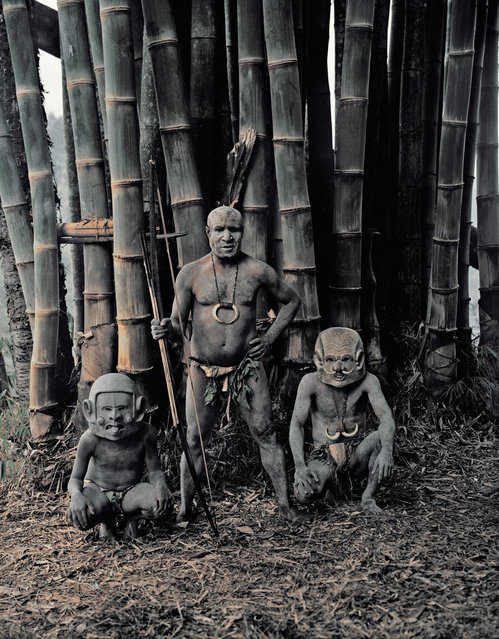
“Asaro from the Eastern Highlands”. The mudmen could not cover their faces with mud because the people of Papua New Guinea thought that the mud from the Asaro river was poisonous. So instead of covering their faces with this alleged poison, they made masks from pebbles that they heated and water from the waterfall, with unusual designs such as long or very short ears either going down to the chin or sticking up at the top, long joined eyebrows attached to the top of the ears, horns and sideways mouths. (Jimmy Nelson)

“Asaro from the Eastern Highlands”. The mudmen could not cover their faces with mud because the people of Papua New Guinea thought that the mud from the Asaro river was poisonous. So instead of covering their faces with this alleged poison, they made masks from pebbles that they heated and water from the waterfall, with unusual designs such as long or very short ears either going down to the chin or sticking up at the top, long joined eyebrows attached to the top of the ears, horns and sideways mouths. (Photo and caption by Jimmy Nelson)
Details
20 Oct 2013 08:54:00
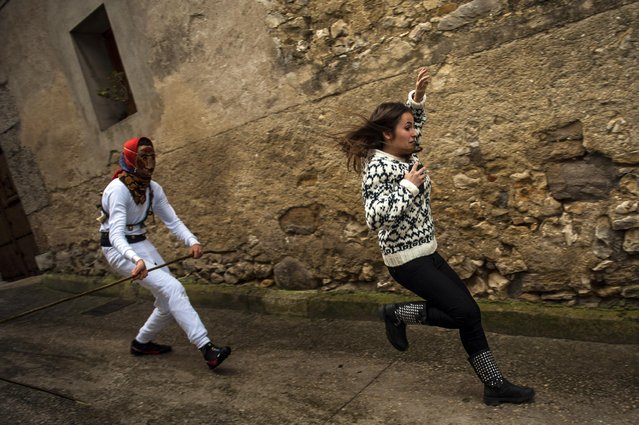
In this photo taken on Sunday, February 15, 2015 a girl runs away from a “Mamuxarro” during the carnival, in the small town of Unanu, northern Spain. While Rio de Janeiro may boast the world’s most famous carnival, the festive period of masquerades and wild and colorful costumes that precedes the Christian religious season of Lent is also a permanent and popular fixture for celebration in Spain and Portugal, with each country having its own strange and unique way of doing it. (Photo by Alvaro Barrientos/AP Photo)

In this photo taken on Sunday, February 15, 2015 a girl runs away from a “Mamuxarro” during the carnival, in the small town of Unanu, northern Spain. In the northern Spanish ancient village of Unamu, people dress up as “Mamuxarro”, folkloric figures in white with a red sash and a metal mask to cover their faces as they pursue townsfolk with sticks. According to custom, their “victims” (usually young women) must kneel and kiss the mamuxarro’s knee after he makes the sign of the cross on their forehead. (Photo by Alvaro Barrientos/AP Photo)
Details
22 Feb 2015 10:51:00
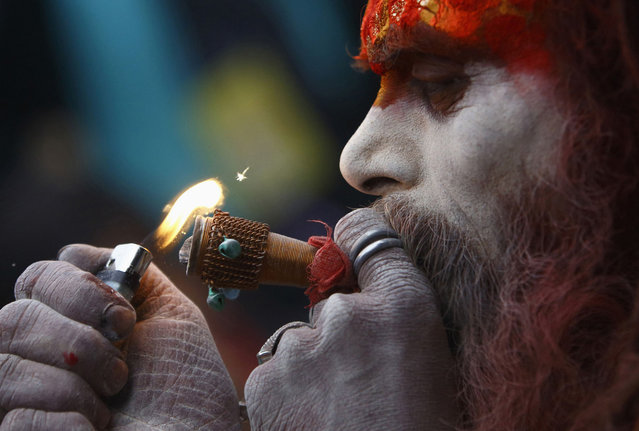
A Hindu holy man, or sadhu, smokes marijuana on a chillum (pipe) at the premises of Pashupatinath Temple during the Shivaratri festival in Kathmandu February 27, 2014. Hindu holy men from Nepal and India come to this temple to take part in the Shivaratri festival. Celebrated by Hindu devotees all over the world, Shivaratri is dedicated to Lord Shiva, and holy men mark the occasion by praying, smoking marijuana or smearing their bodies with ashes. (Photo by Navesh Chitrakar/Reuters)

A Hindu holy man, or sadhu, smokes marijuana on a chillum (pipe) at the premises of Pashupatinath Temple during the Shivaratri festival in Kathmandu February 27, 2014. Hindu holy men from Nepal and India come to this temple to take part in the Shivaratri festival. Celebrated by Hindu devotees all over the world, Shivaratri is dedicated to Lord Shiva, and holy men mark the occasion by praying, smoking marijuana or smearing their bodies with ashes. (Photo by Navesh Chitrakar/Reuters)
Details
27 Feb 2014 08:40:00