Loading...
Done
The FFZero1 by Faraday Future is displayed at CES Unveiled, a media preview event for CES International  Monday, January 4, 2016, in Las Vegas. (Photo by Gregory Bull/AP Photo)

The FFZero1 by Faraday Future is displayed at CES Unveiled, a media preview event for CES International Monday, January 4, 2016, in Las Vegas. The high performance electric concept car was unveiled during a news conference by Faraday Future. (Photo by Gregory Bull/AP Photo)
Details
06 Jan 2016 08:02:00


“Pivo”, Nissan's concept car is introduced at Nissan's Gallery on September 30, 2005 in Tokyo, Japan. “Pivo” is an electric car in which the direction of the cabin moves 180 degrees, therefore, when making a turn in a different direction, it simply needs to move the cabin without moving the car. (Photo by Koichi Kamoshida/Getty Images)
Details
17 May 2011 09:23:00
A Flash of Lightning by Bert Hickman

Hickman's experimental art, which reflects the vein-like extensions that electrical charges burn into surfaces they come in contact with, are referred to as Lichtenberg figures. The diverging patterns present in each of the artist's "paintings" are natural occurrences from subjecting the panels to tiny lightning storms through a handy device known as a particle accelerator. Hickman is like a modern-day Zeus, painting with lightning bolts.
Details
26 Nov 2012 14:15:00
Simon – a friendly fox, who often approaches tourists in the exclusion zone, asking for food. (Photo by Vladimir Mitgutin/Caters News Agency)

This fascinating photo series looks at the bleak isolation of Chernobyl as never before. Employing infrared filters, photographer Vladimir Mitgutin is able to bring out details of decay – an abandoned bus, a radar system, an amusement park, a doll, a sports hall, a piano – frozen in time. Here: Simon – a friendly fox, who often approaches tourists in the exclusion zone, asking for food. (Photo by Vladimir Mitgutin/Caters News Agency)
Details
12 Feb 2018 00:02:00
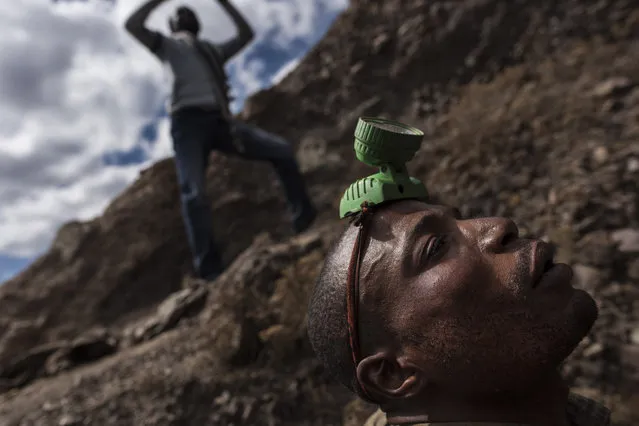
A “creuseur”, or digger, a plastic lantern on his head, readies to enter a copper and cobalt mine in Kawama, Democratic Republic of Congo on June 8, 2016. Cobalt is used in the batteries for electric cars and mobile phones. Working conditions are dangerous, often with no safety equipment or structural support for the tunnels. The diggers say they are paid on average US$2-3/day. (Photo by Michael Robinson Chavez/The Washington Post)

A “creuseur”, or digger, a plastic lantern on his head, readies to enter a copper and cobalt mine in Kawama, Democratic Republic of Congo on June 8, 2016. Cobalt is used in the batteries for electric cars and mobile phones. Working conditions are dangerous, often with no safety equipment or structural support for the tunnels. The diggers say they are paid on average US$2-3/day. (Photo by Michael Robinson Chavez/The Washington Post)
Details
30 Dec 2016 10:29:00
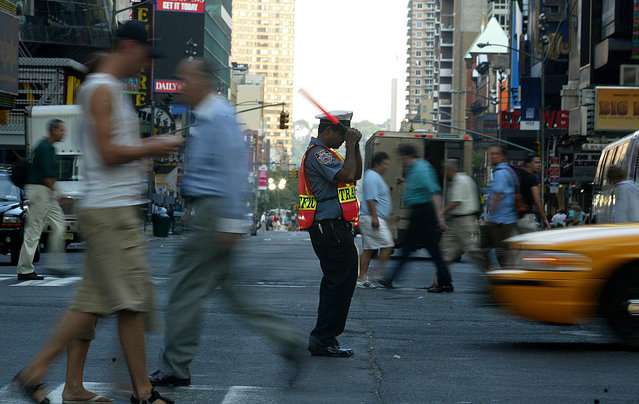
A policeman controls traffic at 42nd Street and 7th Avenue as New York City remains without electricity caused by a blackout that affected the entire city and most of the eastern part of the nation August 15, 2003 in New York, New York. More than 50 million people were affected by the outage, in Toronto, Detroit, Cleveland and New York City. (Photo by Jose Jimenez/Primera Hora/Getty Images)

A policeman controls traffic at 42nd Street and 7th Avenue as New York City remains without electricity caused by a blackout that affected the entire city and most of the eastern part of the nation August 15, 2003 in New York, New York. More than 50 million people were affected by the outage, in Toronto, Detroit, Cleveland and New York City. (Photo by Jose Jimenez/Primera Hora/Getty Images)
Details
17 Aug 2017 07:43:00
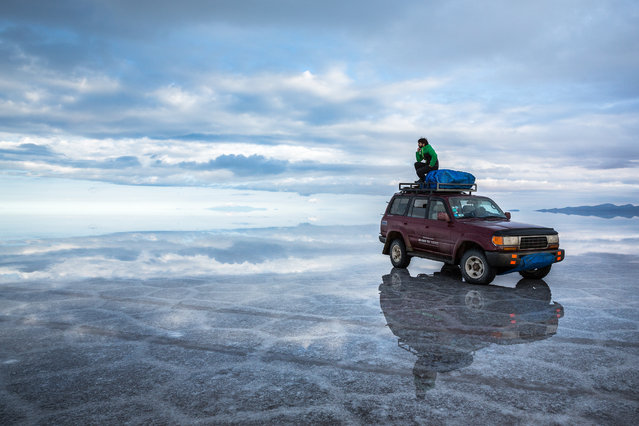
At 10,582 square kilometres, the Bolivian salt flats – otherwise known as Salar de Uyuni – are the largest on the planet and contain between 50 and 70% of the world’s lithium reserves. After exploring Chile and Argentina, photographer Joel Santos decided to travel to Bolivia in January 2017 to check the salt flats off his bucket list. With an electrical storm rolling in, Joel and his two travelling companions were the only souls left on the vast flats and captured the eerie flats without a person in sight. (Photo by Joel Santos/Barcroft Images)

At 10,582 square kilometres, the Bolivian salt flats – otherwise known as Salar de Uyuni – are the largest on the planet and contain between 50 and 70% of the world’s lithium reserves. After exploring Chile and Argentina, photographer Joel Santos decided to travel to Bolivia in January 2017 to check the salt flats off his bucket list. With an electrical storm rolling in, Joel and his two travelling companions were the only souls left on the vast flats and captured the eerie flats without a person in sight. (Photo by Joel Santos/Barcroft Images)
Details
12 Aug 2019 00:03:00
Marie Joseph bathes her friend Jean Robert outside a shelter for the internally displaced where they live due to police violence in Port-au-Prince, Haiti, Thursday, September 16, 2021. Most of the population of Port-au-Prince has no access to basic public services, no drinking water, electricity or garbage collection. (Photo by Rodrigo Abd/AP Photo)

Marie Joseph bathes her friend Jean Robert outside a shelter for the internally displaced where they live due to police violence in Port-au-Prince, Haiti, Thursday, September 16, 2021. Most of the population of Port-au-Prince has no access to basic public services, no drinking water, electricity or garbage collection. (Photo by Rodrigo Abd/AP Photo)
Details
26 Oct 2021 08:34:00