Loading...
Done
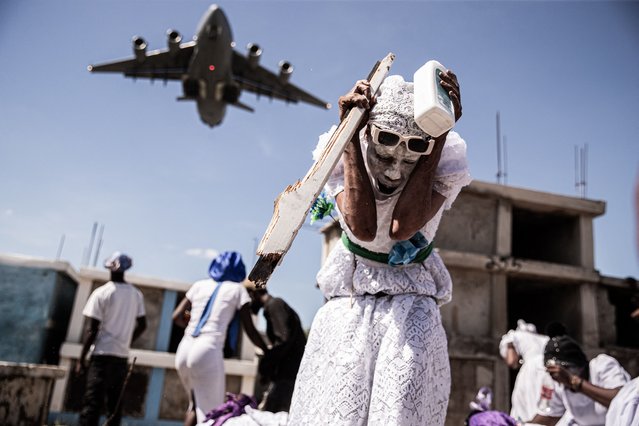
A woman reacts as she attends Fet Gede, the traditional Haitian Day of the Dead celebration at the Port-au-Prince cemetery, in Haiti, on November 1, 2025. Fet Gede is the annual celebration when practitioners of vodou parade and believe to be possessed by the spirits of the dead. (Photo by Clarens Siffroy/AFP Photo)

A woman reacts as she attends Fet Gede, the traditional Haitian Day of the Dead celebration at the Port-au-Prince cemetery, in Haiti, on November 1, 2025. Fet Gede is the annual celebration when practitioners of vodou parade and believe to be possessed by the spirits of the dead. (Photo by Clarens Siffroy/AFP Photo)
Details
18 Dec 2025 07:56:00
American actress Sydney Sweeney and a pal have a “little london getaway” while doing facemasks in a hot tub on December 10, 2025. (Photo by sydneysweeney/instagram)

American actress Sydney Sweeney and a pal have a “little london getaway” while doing facemasks in a hot tub on December 10, 2025. (Photo by sydneysweeney/instagram)
Details
06 Jan 2026 16:50:00


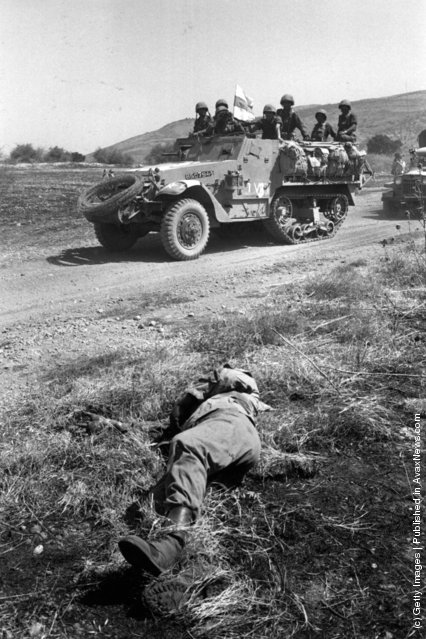
“The Six-Day War or June War, also known as the 1967 Arab-Israeli War or the Third Arab-Israeli War, was fought between June 5 and June 10, 1967, by Israel and the neighboring states of Egypt (known then as the United Arab Republic [UAR]), Jordan, and Syria. The war began with a large-scale surprise air strike by Israel on Egypt. The outcome was a swift and decisive Israeli victory. Israel took effective control of the Gaza Strip and the Sinai Peninsula from Egypt, the West Bank and East Jerusalem from Jordan, and the Golan Heights from Syria. Opinions are divided on whether Israel's attack was an act of aggression or a preemptive strike of a defensive nature”. – Wikipedia

Photo: The corpse of a soldier lying on the line of the Israeli advance into Syria during the Six-Day War. (Photo by Terry Fincher/Getty Images). 1967

Details
21 May 2011 08:29:00
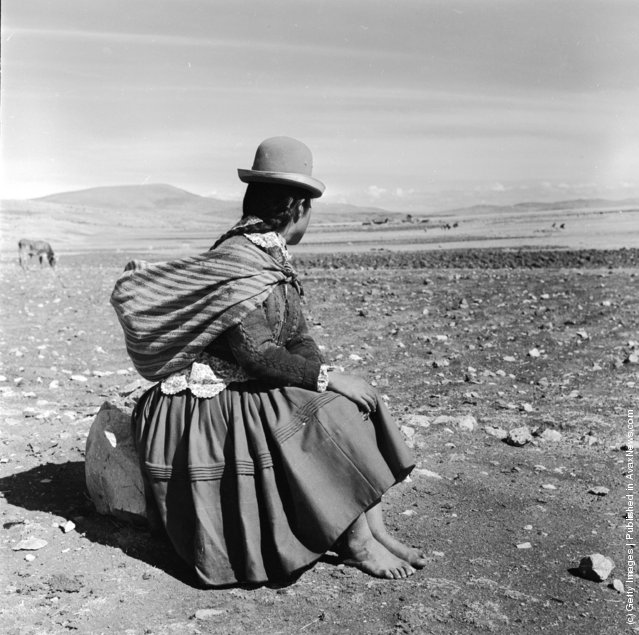
Burdened with a shawl full of her belongings, a woman stops for a rest on the road between Julaca and Puno in Peru, 1955

Burdened with a shawl full of her belongings, a woman stops for a rest on the road between Julaca and Puno in Peru. (Photo by Three Lions/Getty Images). Circa 1955
Details
09 Aug 2011 11:48:00
The Lun-class Ekranoplane was used by the Soviet Navy starting in 1987, and wasn't retired until the late 1990s, after the Soviet Union's fall. (Igor113)

“The Lun-class ekranoplan (NATO reporting name Duck) was a ground effect vehicle (GEV) designed by Rostislav Evgenievich Alexeev and used by the Soviet and Russian navies from 1987 until sometime in the late 1990s. It “flew” using the lift generated by the ground effect of its large wings when close to the surface of the water – about four metres or less. Although they might look similar and/or have related technical characteristics, ekranoplans like the Lun are not aircraft, seaplanes, hovercraft, or hydrofoils – ground effect is a separate technology altogether. The International Maritime Organization classifies these vehicles as maritime ships. The name Lun comes from the Russian for harrier”. – Wikipedia (Photo by Igor113)
Details
08 Aug 2014 10:51:00
Travel Images by Photographer Dougie Wallace

London-based, award winning, Scottish, documentary and street photographer Dougie Wallace, “Glasweegee” grew up in Glasgow. He has lived in east London for 15 years but spends a lot of time travelling abroad in search of subjects.

P.S. Unfortunately, the author doesn't make comments on the photos, therefore it's necessary to guess where there are events: in Thailand, India, Russia or France. On the other hand, photos are very fine in itself, therefore it's absolutely unimportant. Seriously – the magnificent photographer. Enjoy!
Details
19 May 2013 07:25:00
French fashion model Christiane Richard wears a bikini while drinking her morning coffee, 1950. (Photo by Nat Farbman/Time & Life Pictures/Getty Images)

French fashion model Christiane Richard wears a bikini while drinking her morning coffee, 1950. (Photo by Nat Farbman/Time & Life Pictures/Getty Images)
Details
07 Aug 2013 13:44:00
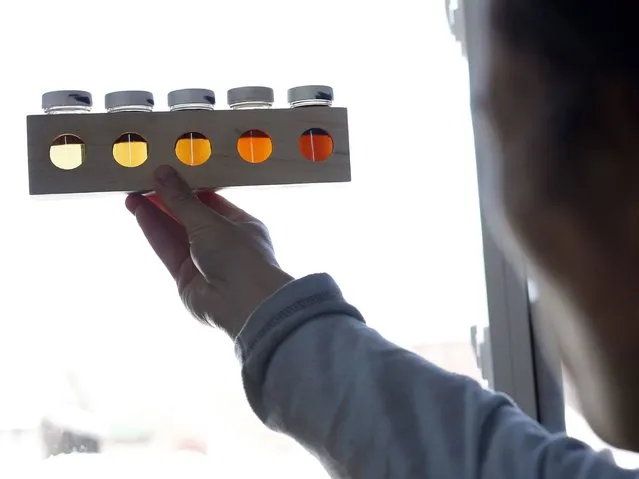
Sarah Gibbons grades a new batch of Maple Syrup at Gibbons Family Farm in Frankville, Ontario, Canada, 31 March 2014. The annual maple syrup season marks the end of the often brutal central Canadian winters and heralds the beginning of spring. The maple tree, whose leaf dominates the Canada's flag, plays both a symbolic and practical role in the identity of Canadians who produce around 95 percent of the world's supply of maple syrup. (Photo by Stephen Morrison/EPA)

Sarah Gibbons grades a new batch of Maple Syrup at Gibbons Family Farm in Frankville, Ontario, Canada, 31 March 2014. The annual maple syrup season marks the end of the often brutal central Canadian winters and heralds the beginning of spring. The maple tree, whose leaf dominates the Canada's flag, plays both a symbolic and practical role in the identity of Canadians who produce around 95 percent of the world's supply of maple syrup. (Photo by Stephen Morrison/EPA)
Details
08 May 2014 07:24:00