Loading...
Done
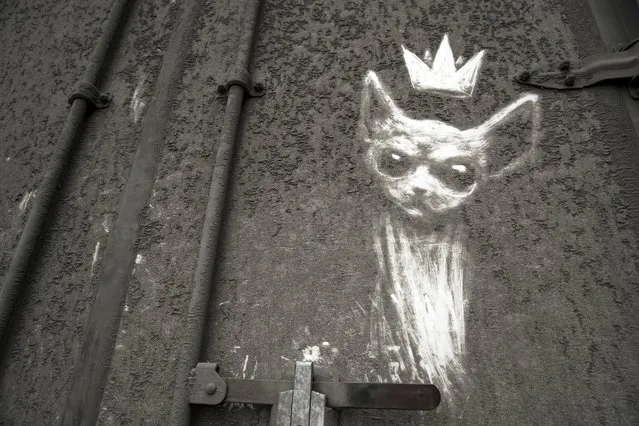
In this photo taken on Saturday, April 22, 2017, a drawing “King for a day” is made on the back of a muddy truck by artist Nikita Golubev in Moscow, Russia. The grimy trucks traversing the polluted and dusty streets of Moscow have inspired Golubev to use white vans and trucks as his canvas to create this ephemeral street art and signs his drawings Pro Boy Nick. (Photo by Pavel Golovkin/AP Photo)

In this photo taken on Saturday, April 22, 2017, a drawing “King for a day” is made on the back of a muddy truck by artist Nikita Golubev in Moscow, Russia. The grimy trucks traversing the polluted and dusty streets of Moscow have inspired Golubev to use white vans and trucks as his canvas to create this ephemeral street art and signs his drawings Pro Boy Nick. (Photo by Pavel Golovkin/AP Photo)
Details
30 Apr 2017 07:02:00
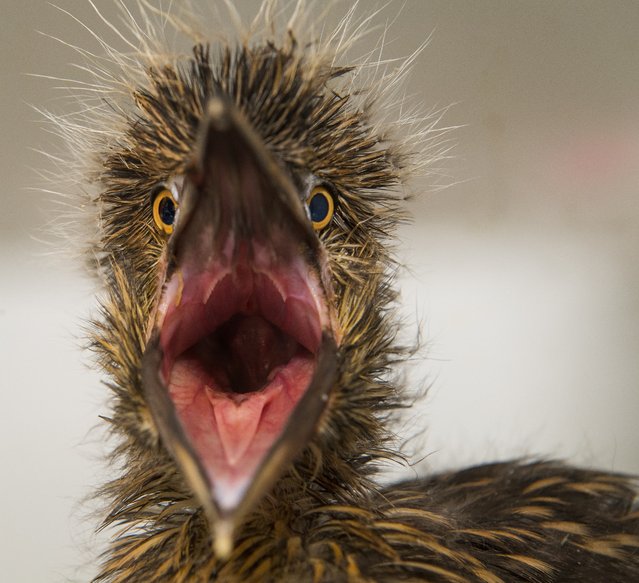
A baby Black-crowned Night Heron squawks in its incubator while being cared for at City Wildlife rescue and rehabilitation center in Washington, DC on May 31, 2017. The heron is one of several that have been brought to CW by the staff at The National Zoo over the past few years. The heron is a native bird and has made an established rookery inside the zoo grounds over a hundred years ago.  Every year at this time, some of the chicks get pushed or fall out of the nest and require human care.  Because the birds are native and not part of the Smithsonian collection, they partnered with CW to rehabilitate the herons for re-release back to the flock inside Zoo. They're reintroduced back to their flock so that they can migrate together in the Fall. The Black-crowned heron usually migrates from the DC area down to southeast North Carolina, some going as far as Jacksonville, FL in winter. The Black-crowned heron is the species of greatest conservation need in the District of Columbia because their numbers are in such rapid decline due to habitat loss. (Photo Linda Davidson/The Washington Post)

A baby Black-crowned Night Heron squawks in its incubator while being cared for at City Wildlife rescue and rehabilitation center in Washington, DC on May 31, 2017. The heron is one of several that have been brought to CW by the staff at The National Zoo over the past few years. (Photo Linda Davidson/The Washington Post)
Details
04 Jun 2017 08:04:00
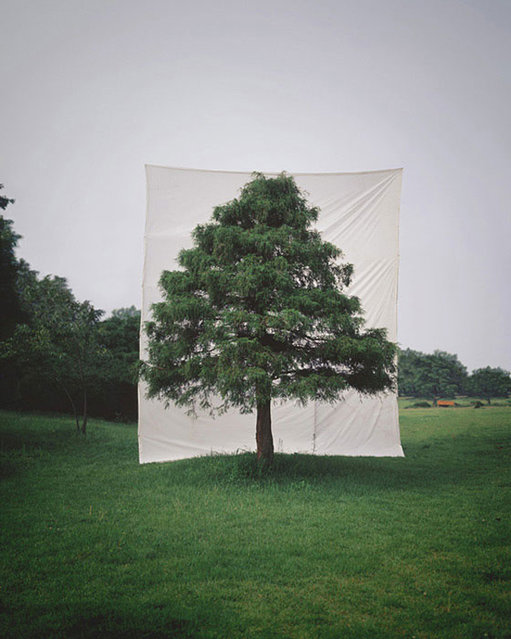
The Lonely Tree By  Myoung Ho Lee

Myoung Ho Lee‘s 2007 Tree series is about as peaceful and serene as the scenery itself. In the series, the young South Korean photographer touches upon the subjects of physical isolation and visual confirmation. By placing the tree in front of a stark white background, Lee creates a false separation that plays a delightful game with the mind’s eye.
Details
30 May 2014 09:23:00
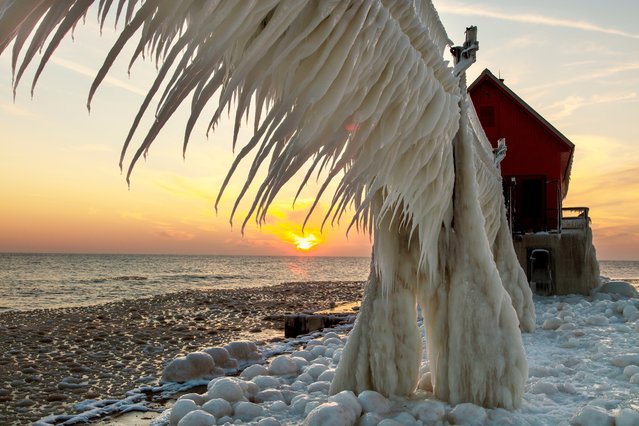
Huge icicles hang from the pier. (Photo by Mike Kline/Barcroft Media)

The twin lighthouses of St Joseph on Lake Michigan have been transformed by a winter storm. Ice encases the buildings, giant icicles hang from the piers and the beach is frosted white. Here: Huge icicles hang from the pier. (Photo by Mike Kline/Barcroft Media)
Details
23 Jan 2016 13:11:00


“Haile Selassie I (23 July 1892 – 27 August 1975), born Tafari Makonnen, was Ethiopia's regent from 1916 to 1930 and Emperor of Ethiopia from 1930 to 1974. The heir to a dynasty that traced its origins to the 13th century, and from there by tradition back to King Solomon and Queen Makeda, Empress of Axum, known in the Abrahamic tradition as the Queen of Sheba. Haile Selassie is a defining figure in both Ethiopian and African history.

Haile Selassie is revered as the returned Messiah of the Bible, God incarnate, among the Rastafari movement, the number of followers of which is estimated between 200,000 and 800,000. Begun in Jamaica in the 1930s, the Rastafari movement perceives Haile Selassie as a messianic figure who will lead a future golden age of eternal peace, righteousness, and prosperity. He himself remained an Ethiopian Orthodox Christian throughout his life”. – Wikipedia

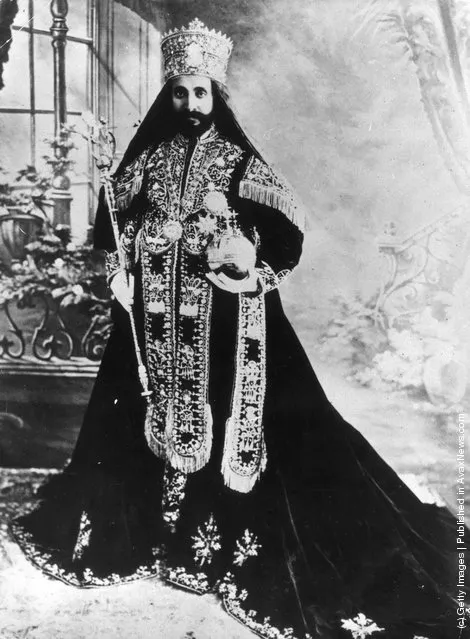
Photo: Negusa Negasti, Emperor of Ethiopia Haile Selassie I, known as “Lord of Lords”, “The Conquering Lion of the tribe of Judah”, “Light of the world”, “Elect of God”, in full ceremonial regalia following his coronation. (Photo by Hulton Archive/Getty Images)

Details
21 Jun 2011 11:04:00
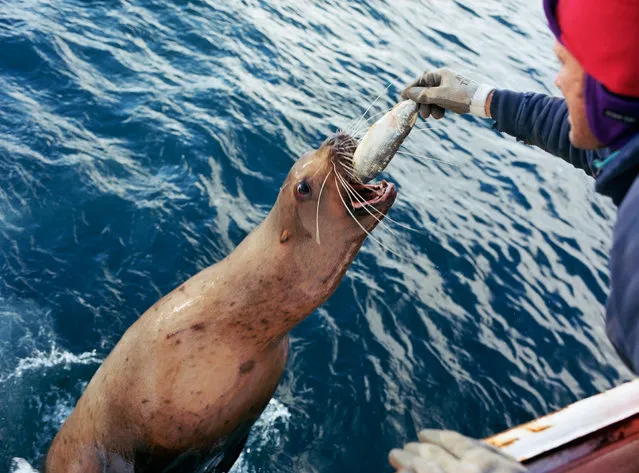
Before heading up to Alaska, the ship loads up with 3 months worth of food. Even so, it's hardly necessary. The ship's cook is constantly steaming fresh crab legs and seafood caught during the day. The hard labour of fishing requires a diet heavy in fat, protein, and omega-3s. Here, a sea lion gets a bite of the grub. (Photo by Corey Arnold)

In 2002 photographer Corey Arnold left behind a poor economy in San Francisco and headed up to Alaska to try his luck at his longtime passion of fishing. Arnold, who had worked summers during college on a salmon boat in Alaska, signed onto the f/v Rollo, a crabbing boat that fishes in the dangerous Bering Sea. While working long, strenuous hours on the Rollo, Arnold often stole away with the captain’s permission to grab his camera and photograph the crew and the ship. Arnold eventually put together “Fish Work: Bering Sea”, a documentation of his seven adventurous and dicey crab seasons aboard the Rollo. (Photo by Corey Arnold)
Details
20 Aug 2014 10:05:00


“The Ainu (アイヌ?), also called Aynu, Aino (アイノ), and in historical texts Ezo (蝦夷), are indigenous people or groups in Japan and Russia. Historically they spoke the Ainu language and related varieties and lived in Hokkaidō, the Kuril Islands, and much of Sakhalin. Most of those who identify themselves as Ainu still live in this same region, though the exact number of living Ainu is unknown. This is due to ethnic issues in Japan resulting in those with Ainu backgrounds hiding their identities and confusion over mixed heritages. In Japan, because of intermarriage over many years with Japanese, the concept of a 'pure Ainu' ethnic group is no longer feasible. Official estimates of the population are of around 25,000, while the unofficial number is upwards of 200,000 people”. – Wkipedia

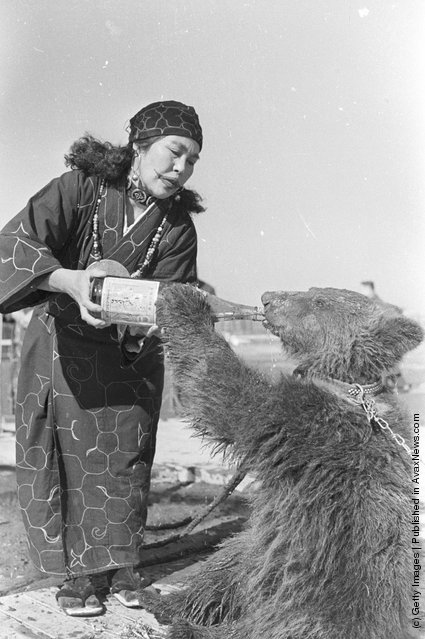
Photo: A captive bear drinking from a large bottle held by an Ainu tribeswoman. (Photo by Evans/Three Lions/Getty Images). Circa 1955
Details
24 Mar 2011 14:01:00
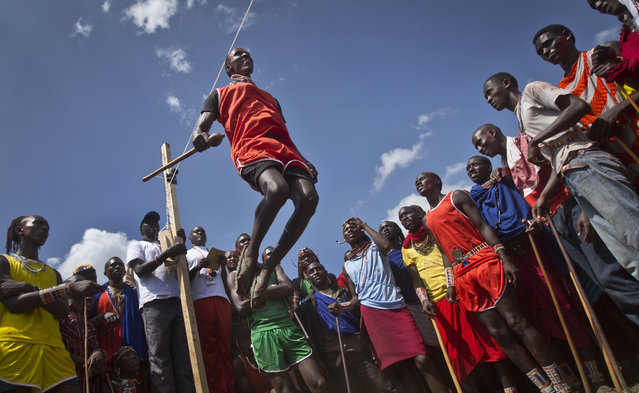
A Maasai warrior makes the high jump, in which athletes must touch a high line with the top of their heads, at the annual Maasai Olympics in the Sidai Oleng Wildlife Sanctuary near to Mt. Kilimanjaro, in southern Kenya, Saturday, December 13, 2014. (Photo by Ben Curtis/AP Photo)

A Maasai warrior makes the high jump, in which athletes must touch a high line with the top of their heads, at the annual Maasai Olympics in the Sidai Oleng Wildlife Sanctuary near to Mt. Kilimanjaro, in southern Kenya, Saturday, December 13, 2014. Maasai men and women from the Amboseli and Tsavo region compete for medals and prizes in the event which aims for a sports competition of Maasai skills such as running, jumping, and throwing, to replace lion-hunting as the traditional warrior activity. (Photo by Ben Curtis/AP Photo)
Details
16 Dec 2014 12:21:00