Loading...
Done
The eruption of Cordon Caulle began on June 4, 2011, located in the Region of Los Rios in Chile. For about 12 months, people and animals became accustomed to living with the daily fall of ash, which also caused problems in the air traffic in South America. The explosions and lightning during first days of the eruption could be seen from hundreds of miles around. This photograph was taken on the second night of eruption from the town of Lago Ranco. (Photo and caption by Francisco Negroni/National Geographic Traveler Photo Contest)

The eruption of Cordon Caulle began on June 4, 2011, located in the Region of Los Rios in Chile. For about 12 months, people and animals became accustomed to living with the daily fall of ash, which also caused problems in the air traffic in South America. The explosions and lightning during first days of the eruption could be seen from hundreds of miles around. This photograph was taken on the second night of eruption from the town of Lago Ranco. (Photo and caption by Francisco Negroni/National Geographic Traveler Photo Contest)

ATTENTION! All pictures are presented in high resolution. To see Hi-Res images – just TWICE click on any picture. In other words, click small picture – opens the BIG picture. Click BIG picture – opens VERY BIG picture.
Details
23 Jun 2013 11:24:00
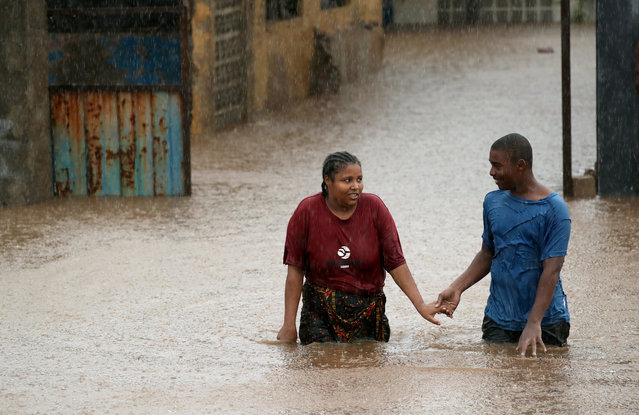
A man helps a woman through a flooded neighbourhood in the aftermath of Cyclone Kenneth, in Pemba, Mozambique, April 28, 2019. (Photo by Mike Hutchings/Reuters)

A man helps a woman through a flooded neighbourhood in the aftermath of Cyclone Kenneth, in Pemba, Mozambique, April 28, 2019. (Photo by Mike Hutchings/Reuters)
Details
10 May 2019 00:01:00
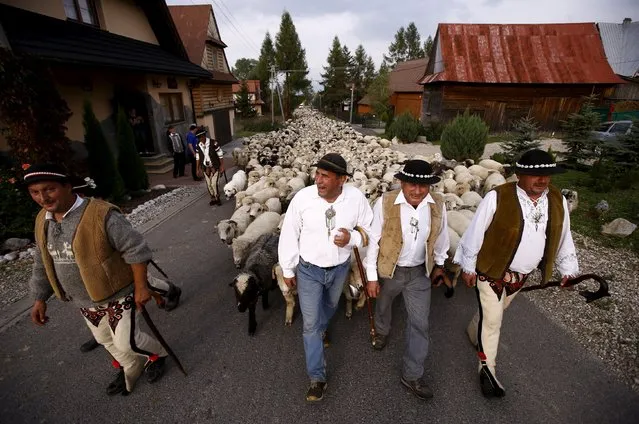
Shepherds walk with sheep through the village on their way home during autumn redyk in Gron, Tatra Mountains region of southern Poland, October 6, 2015. (Photo by Kacper Pempel/Reuters)

Shepherds walk with sheep through the village on their way home during autumn redyk in Gron, Tatra Mountains region of southern Poland, October 6, 2015. Redyk is a traditional, kilometres-long march of highlanders with flocks of sheep, which takes place twice a year: in the spring at the start of the grazing season, and in the autumn at season's end. (Photo by Kacper Pempel/Reuters)
Details
19 Oct 2015 08:01:00
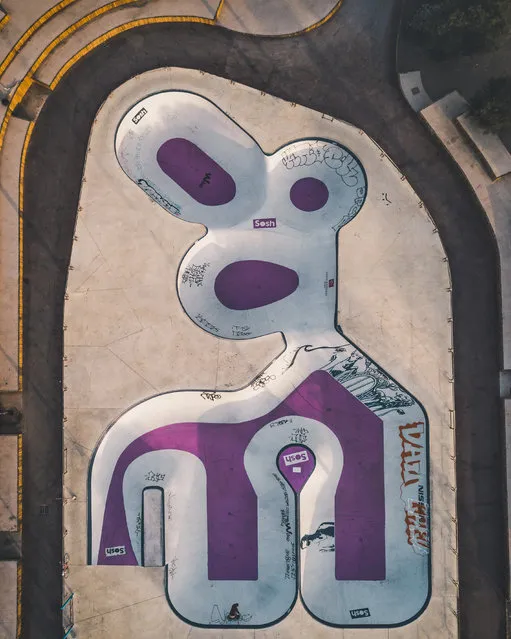
Kickflip. (Photo by J.P. Andrews/Mike Andrews/Caters News Agency)

These images are enough to make viewers do a double-take. Although they look like vibrant works of abstract art, they are actually drone photographs taken by brothers J.P. and Mike Andrews, from near Wolverhampton, England. Here: Kickflip. (Photo by J.P. Andrews/Mike Andrews/Caters News Agency)
Details
16 Jan 2018 06:19:00
Yoshkar-Ola, Matrosova Street (1995). He turned his lens upon Russians – particularly young people – in the newly liberated state. (Photo by Sergey Chilikov)

Russian pop art photographer Sergey Chilikov captures a nation liberated from the social oppression of late-era Soviet rule – at parties, in the streets, and bouncing high. His exhibition, Photoprovocations, will be at Photo London, 19-22 May. Here: Yoshkar-Ola, Matrosova Street (1995). (Photo by Sergey Chilikov)
Details
20 May 2016 13:10:00
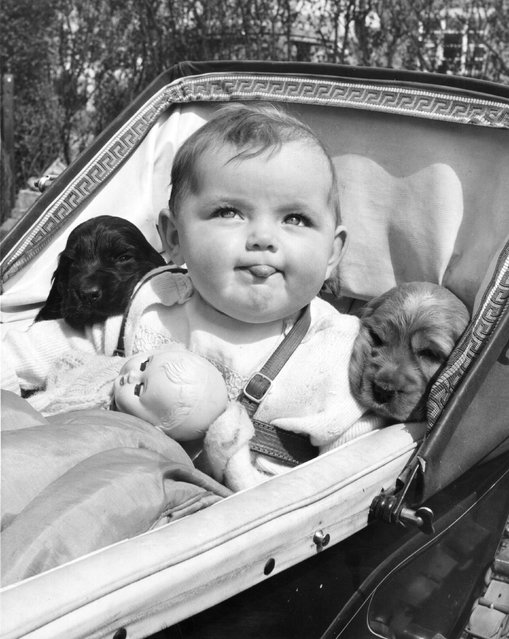
Seven month old Christine Joy shares her pram with two 5 week old Gunsure Golden Cherry's cocker spaniel pups from Gunsure Kennels in Ashford, Middlesex. 22nd May 1953. (Photo by Fred Morley/Fox Photos)

Seven month old Christine Joy shares her pram with two 5 week old Gunsure Golden Cherry's cocker spaniel pups from Gunsure Kennels in Ashford, Middlesex. 22nd May 1953. (Photo by Fred Morley/Fox Photos)
Details
08 Oct 2012 09:00:00
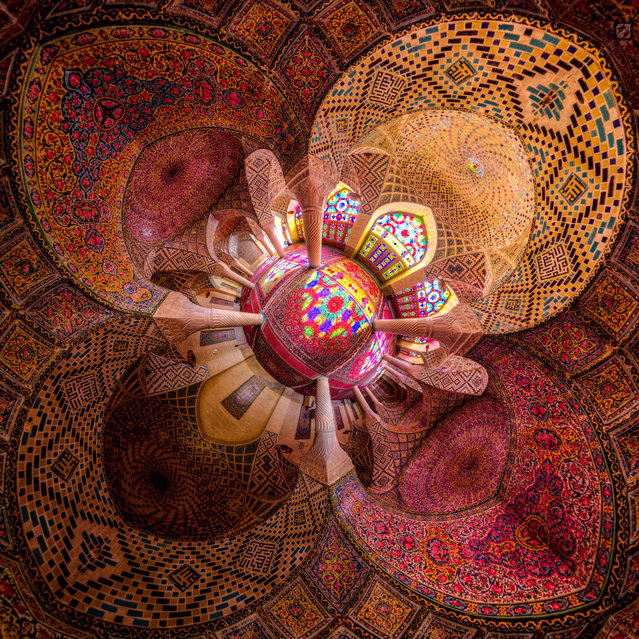
The Nasir al-mulk or “Pink” mosque in Shiraz, Iran. (Photo by Mohammad Reza Domiri Ganj)

Amateur Iranian photographer Mohammad Reza Domiri Ganji, 23 likes to learn as much as he can about a site before he photographs it. Then he utilizes a variety of wide-angle and fisheye lenses, as well as occasional panoramic techniques to create beautiful new, often mind-bending images. He usually shoots the architectural wonders of Iran, and hopes that the Iranian government will allow him to travel further from home in pursuit of other iconic architectural treasures. Photo: The Nasir al-mulk or “Pink” mosque in Shiraz, Iran. (Photo by Mohammad Reza Domiri Ganj)
Details
17 Aug 2014 08:58:00
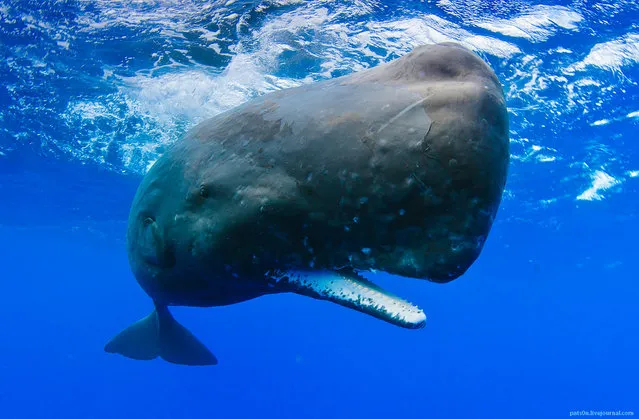
“Sperm whale opening it's huge mouth, Ogasawara Islands, Japan. Sperm whales are the biggest carnivorous animals on the planet. Each teeth in the mouth of adult specimen weights more than 1 kilogram. Interestingly enough that modern marine biologists believe that these teeth despite being fearsome play little role in capturing and eating giant squid – with their main function being mainly ritual aggression between males!”. (Alexander Safonov)

“Sperm whale opening it's huge mouth, Ogasawara Islands, Japan. Sperm whales are the biggest carnivorous animals on the planet. Each teeth in the mouth of adult specimen weights more than 1 kilogram. Interestingly enough that modern marine biologists believe that these teeth despite being fearsome play little role in capturing and eating giant squid – with their main function being mainly ritual aggression between males!”. (Photo by Alexander Safonov)
Details
30 Nov 2012 11:22:00